


Automatic Vacuum Sealers: A Practical Guide
Share:
-

-

-

-


Copied

Share:
-
-
-
-
Copied
Walk into any kitchen where people cook a lot and you'll probably spot one of these on the counter. An automatic vacuum sealer pulls the air out of the bag and seals it shut without asking you to lean on the lid the whole time. That sounds like a small thing until you've stood there sealing twenty portions on a Sunday afternoon.
If you're shopping for one, though, the word "automatic" deserves a closer look. It gets used loosely, and what you actually get varies from machine to machine.
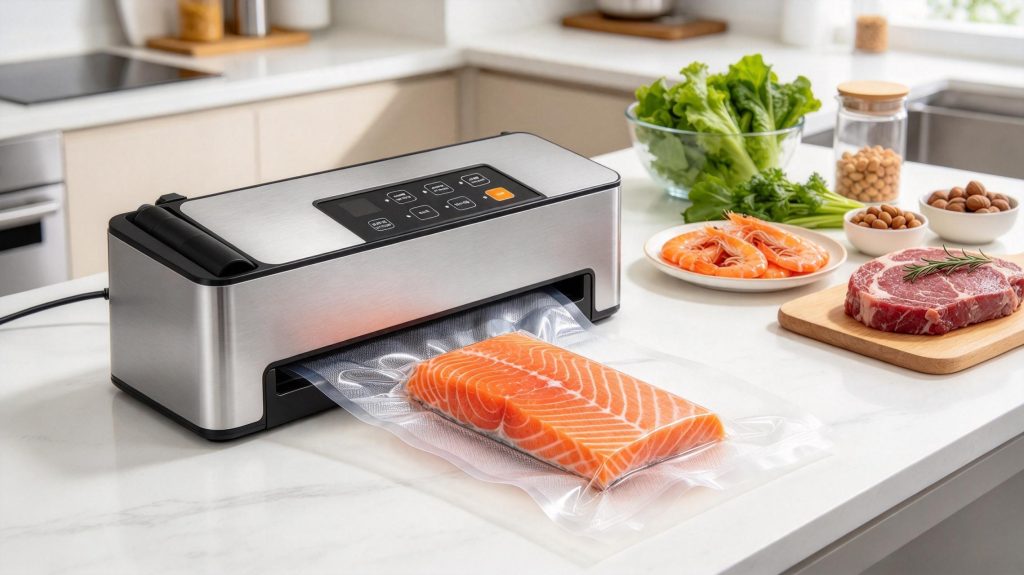
What Is an Automatic Vacuum Sealer?
An automatic vacuum sealer runs the vacuum and heat-sealing cycle on its own once you've set things up. You position the bag, press start, and the machine handles the rest.
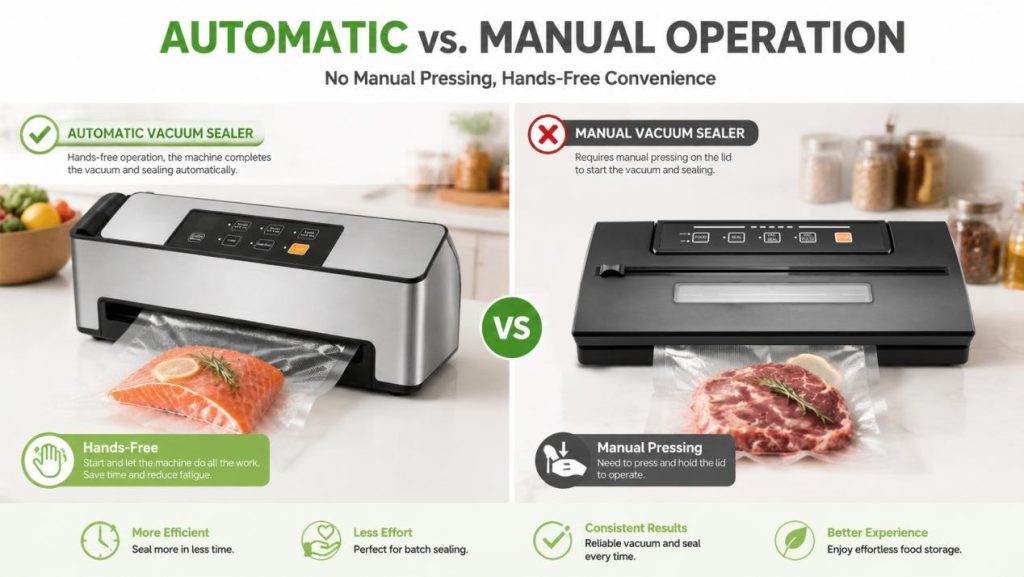
Compare that to a manual-press model, where you clamp the lid down by hand before anything happens. Neither approach is wrong, but they suit different people.
One distinction trips people up: "automatic" tells you how the machine operates. "External" and "chamber" tell you how it removes air. Mixing them up leads to bad purchasing decisions.
Automatic vs. Manual Vacuum Sealer: What's the Difference?
Manual Vacuum Sealer
A manual-press sealer asks you to clamp and lock the lid yourself before the cycle can begin. You're not holding it down the entire time—that's a common misconception—but you are responsible for fastening it every time. For occasional use, that's fine. For a marathon sealing session, the repeated locking gets old fast.
Automatic Vacuum Sealer
An automatic model takes the lid question out of your hands, or at least reduces it to a single motion. Once the bag is in place and the cycle starts, the machine runs the show. Less repetition, fewer pauses, a workflow that doesn't wear you down. One caveat: lid locking and start procedures differ between models, so read the manual.
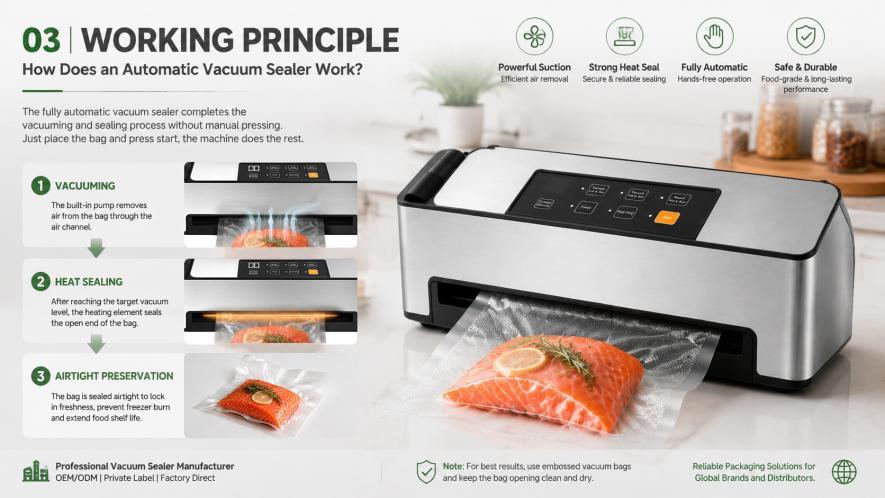
How Does an Automatic Vacuum Sealer Work?
Take a typical external automatic sealer. You lay the open end of a textured bag across the vacuum channel. Hit start, and an electric pump draws air out through the channels embossed into the bag. When the vacuum stage finishes, a heated bar fuses the inner surfaces of the bag opening. The cycle ends, the package releases, and you move on.
Three things determine whether you get a good seal: the right bag, correct positioning of the open edge, and a sealing area that's clean and dry.
Main Types of Automatic Vacuum Sealers
1. External Vacuum Sealers
These are the countertop machines most people mean when they say "vacuum sealer." The bag stays outside while air gets pulled through its open edge. You'll need embossed or channelled bags. They handle meat, fish, cheese, vegetables, dry goods, and freezer portions without complaint. Liquids are another story—anything free-flowing can get sucked into the vacuum channel.
2. Chamber Vacuum Sealers
A chamber machine puts the whole bag inside a sealed chamber and lowers the pressure around it before sealing. That's why it handles soups, sauces, and marinades that would wreck an external sealer. The trade-offs are size and price: chamber machines are bigger, cost more, and tend to show up in restaurants rather than home kitchens. They use smooth chamber pouches.
Key Benefits of an Automatic Vacuum Sealer
No Need to Keep Pressing the Lid
This is the headline benefit, and it's not marketing fluff. Once the cycle begins, you're free to label the previous package, wipe down the counter, or prep the next portion. In batch sessions, those small windows add up.
Convenient Food Storage and Meal Preparation
Removing air slows oxidation and helps stave off freezer burn, provided you store things properly. It also turns a bulk purchase into a stack of neat, labelled portions that are easy to organise and easier to grab later.
Versatile Everyday Applications
Meat, seafood, cheese, coffee, nuts, dry ingredients, prepped meals, and sous vide cooking when the bag is up to the task.
What Features Should You Look For?
Automatic Operation and Lid Design
Find out what the manufacturer actually means by "automatic." Does the machine complete the cycle without you touching the lid? Does the lid lock on its own or do you lock it manually? Demo videos and the user manual will tell you more than the product page will.
Vacuum Performance and Sealing Consistency
Vacuum pressure, pump performance, and duty cycle are worth reviewing—but they're not the whole picture. Bag quality, food moisture, sealing-bar design, and how the machine holds up over repeated cycles all shape your results.
Dry and Moist Modes
Dry and moist settings adapt the cycle to what you're packaging, and pulse control helps with delicate foods. If liquids are a regular part of your routine, a chamber model makes more sense than an external sealer with a moist mode.
Bag Compatibility and Cleaning
Check whether the machine takes standard embossed rolls and pre-cut bags or locks you into a proprietary type. Look at sealing width, whether replacement gaskets are easy to source, and whether the drip tray comes out for cleaning.
How to Use an Automatic Vacuum Sealer
Portion your food first. With an external sealer, blot away excess surface moisture, load the food into a compatible bag, and leave enough headroom at the top. Keep the sealing edge flat and free of crumbs, oil, and liquid—this is where most failed seals come from. Position the bag per the manual, close or lock the lid as instructed, and pick the right mode. Start the cycle and let it run. Check that the seal is continuous, write the contents and date on the package, and store it properly.
Food Safety and Maintenance Tips
Vacuum sealing is not sterilisation. It doesn't replace refrigeration or freezing, and it won't rescue food that was already past its prime. Keep perishables at safe temperatures, start with fresh ingredients, follow recognised food-handling guidance, and label everything.
After each session, unplug the machine, clean the removable parts and sealing area, empty the drip tray if there is one, and let everything dry. Check the gaskets and heating area periodically—worn gaskets are a quiet cause of weak seals.
Frequently Asked Questions
Does an automatic vacuum sealer work without pressing the lid?
A hands-free model finishes its cycle without you continuously pressing or holding the lid. That said, some models still want the lid closed or locked before they'll start. Check the instructions for the specific model.
Is an automatic vacuum sealer better than a manual model?
Depends on how you'll use it. Seal multiple portions at a time and want minimal hands-on work? Automatic is more convenient. Seal occasionally and prefer a simpler machine? Manual may serve you fine.
Can an automatic vacuum sealer seal liquids?
Most external suction models aren't built for free-flowing liquids—liquid gets drawn toward the vacuum channel. A chamber sealer is the better tool for soups, sauces, and marinades.
Do automatic vacuum sealers need special bags?
Most external suction models need embossed or textured bags that create air channels. Chamber machines use smooth chamber pouches. Confirm compatibility before stocking up on consumables.
Final Thoughts
Buy the machine that fits how you actually cook. Home users should prioritise simple controls, hands-free operation, reliable sealing, and easy cleaning. Restaurants and food businesses should look harder at repeatability, cycle capacity, service support, and consumable availability. If you're sourcing for a brand, ask the manufacturer to confirm specs, electrical standards, QC procedures, and OEM options. Verified requirements beat headline claims every time.
Related Articles
Countertop Ice Maker: How to Choose the Right One for Your Home
2026-11-12
BY arafatshuvo509
There's something about the right ice that makes a cold drink click. Maybe you're the type who starts the day with iced coffee. Maybe you like to mix cocktails when ...
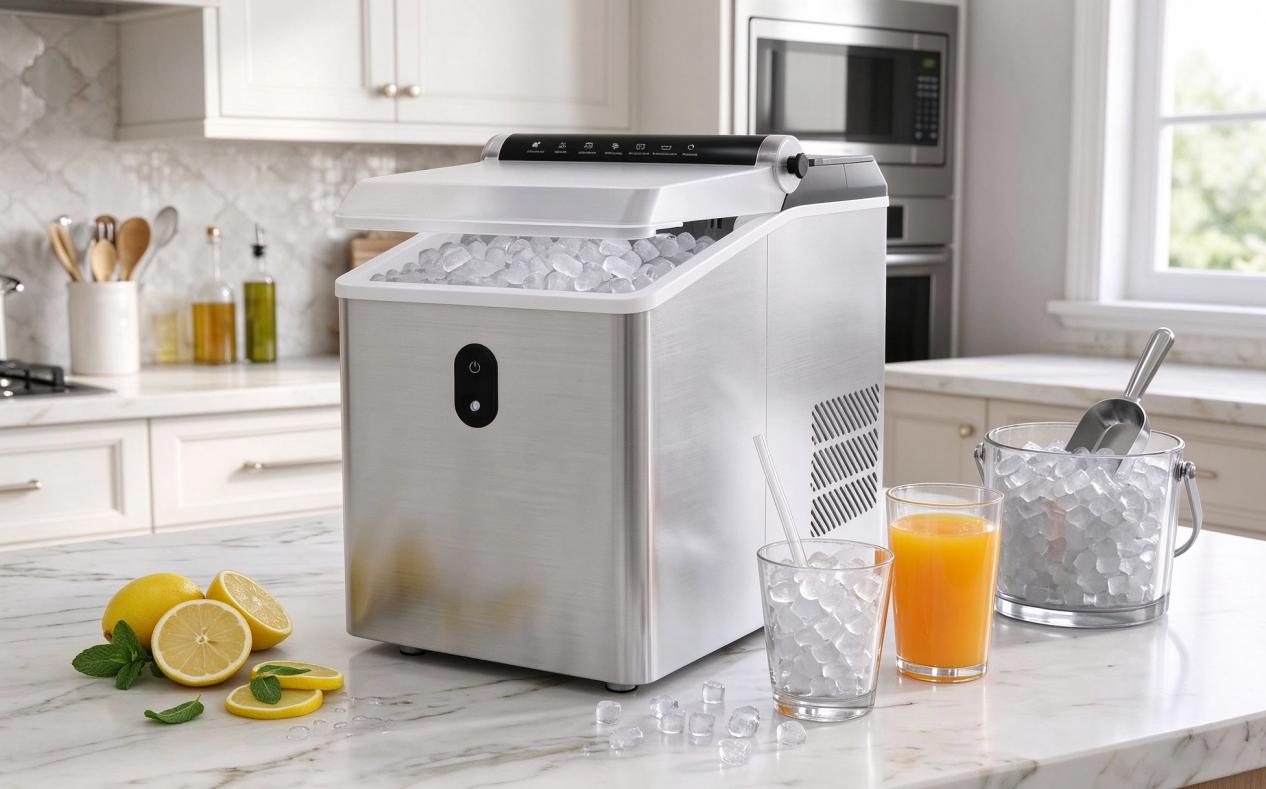
How to Choose a Reliable Nugget Ice Maker Manufacturer in China
2026-11-12
BY YUMYTH
China has become an important sourcing destination for countertop ice makers, including nugget ice machines. For overseas brands and distributors, there are plenty of suppliers to choose from. But finding ...
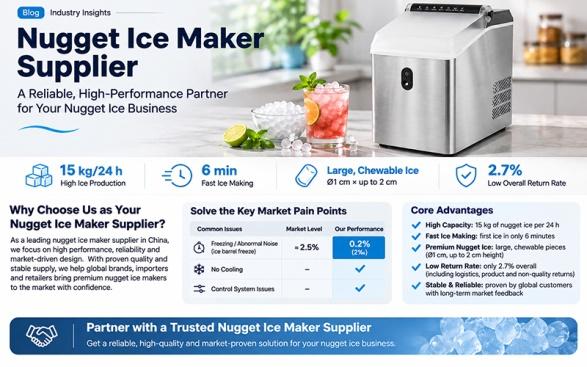
How to Choose a Reliable Nugget Ice Maker Supplier: Performance, Quality and Low Return Rates
2026-11-11
BY YUMYTH
Finding the right nugget ice maker supplier is about more than competitive pricing. For importers, brand owners, and distributors, consistent ice quality, reliable performance, and low product return rates are ...
Automatic Vacuum Sealers: A Practical Guide
2026-11-07
BY YUMYTH
Walk into any kitchen where people cook a lot and you'll probably spot one of these on the counter. An automatic vacuum sealer pulls the air out of the bag ...


