
Custom Slushie Machine Supplier: How to Find One That Actually Delivers
Share:
-

-

-

-


Copied

Share:
-
-
-
-
Copied
Choosing the right custom slushie machine supplier is the single decision that determines whether your product launch builds a brand or creates an expensive problem. Get it right and you end up with a machine that performs consistently, represents your identity credibly, and ships reliably across production runs. Get it wrong — by mistaking a trading company for a manufacturer, or by skipping the sample and documentation steps — and you are dealing with quality inconsistencies, unavailable spare parts, and warranty claims you cannot fulfill.
This guide is written for brand owners, importers, distributors, and hospitality businesses sourcing a custom slushie machine supplier for the first time or replacing one that has underdelivered. It covers what customization is genuinely available at different supplier tiers, how to tell a real manufacturer from a reseller, what questions to ask before signing anything, and what a realistic custom order looks like in terms of cost, timeline, and process.
What Does a Custom Slushie Machine Supplier Actually Offer?
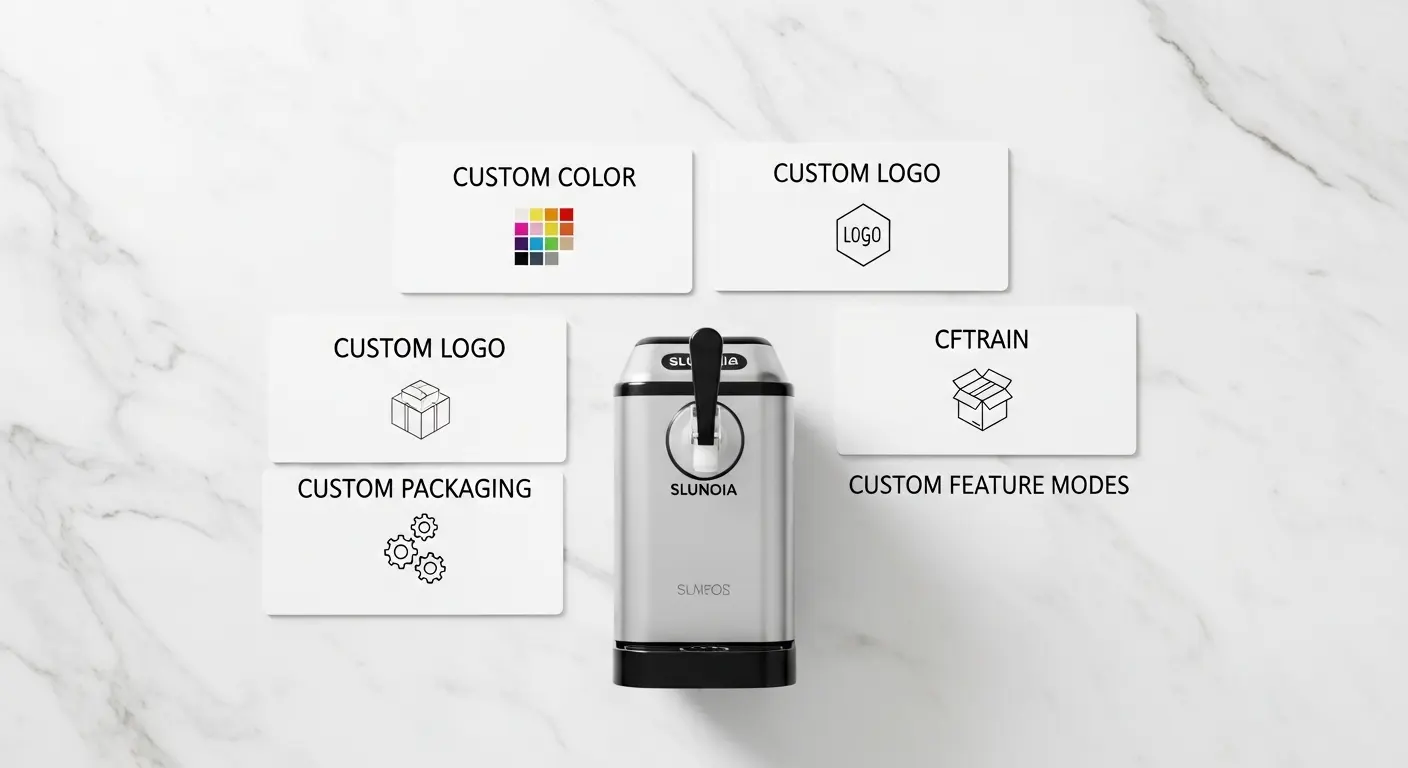
The word "custom" gets used broadly in supplier listings — and it means very different things depending on whether you are dealing with a real OEM manufacturer, an ODM supplier, or a trading company with limited modification capability. Understanding the scope of customization available at each level saves time and prevents mismatched expectations.
Branding and Appearance Customization
The most widely available customization across all supplier tiers is exterior branding — your logo and brand name applied to the machine body. Depending on the supplier's capability, this is done through silk printing, laser engraving, or panel insert replacement. Color customization — selecting from a palette of available options or commissioning a custom color run at sufficient volume — is also within reach for most real manufacturers.
A custom color run typically requires 200+ units minimum to justify the tooling and setup cost at most custom slushie machine suppliers. For smaller initial orders, selecting from the manufacturer's available color options is the standard route.
Packaging and Retail Configuration
Packaging customization is typically the fastest and most cost-accessible form of customization — and it is available from most real custom slushie machine suppliers at lower MOQs than machine-level changes. This covers box artwork, brand messaging, retail barcode placement, instruction manual localization, and packaging dimensions for specific retail or e-commerce channel requirements.
For brands entering retail channels, packaging is often the most visible product differentiator. A well-designed custom package transforms an ODM machine into a branded product with shelf presence.
Feature and Mode Customization
Some custom slushie machine suppliers allow modification of the preset mode selection — enabling, disabling, or relabeling specific programs for a target market or use case. A children's product line might remove the cocktail and wine modes. A premium coffee accessories brand might relabel and prioritize the coffee and milkshake modes on the control panel.
What stays fixed in most feature customization arrangements is the underlying control logic — freeze cycle calibration, auger timing, and texture control parameters are tied to the machine's engineering certification and cannot be changed without re-engineering and re-testing.
Full Engineering Customization (OEM)
Full OEM customization — where you bring the product specification and the supplier builds to it — gives you complete engineering ownership and maximum differentiation. Capacity, dimensions, feature set, material choices, compressor specification, and product design are all within scope. In return, OEM requires 6–12 months of development time, custom tooling investment, and higher minimum order quantities to amortize development costs. This is the right path for established brands with specific engineering requirements, not first-time sourcing buyers.
Real Manufacturer vs. Trading Company — Why It Matters for Custom Orders
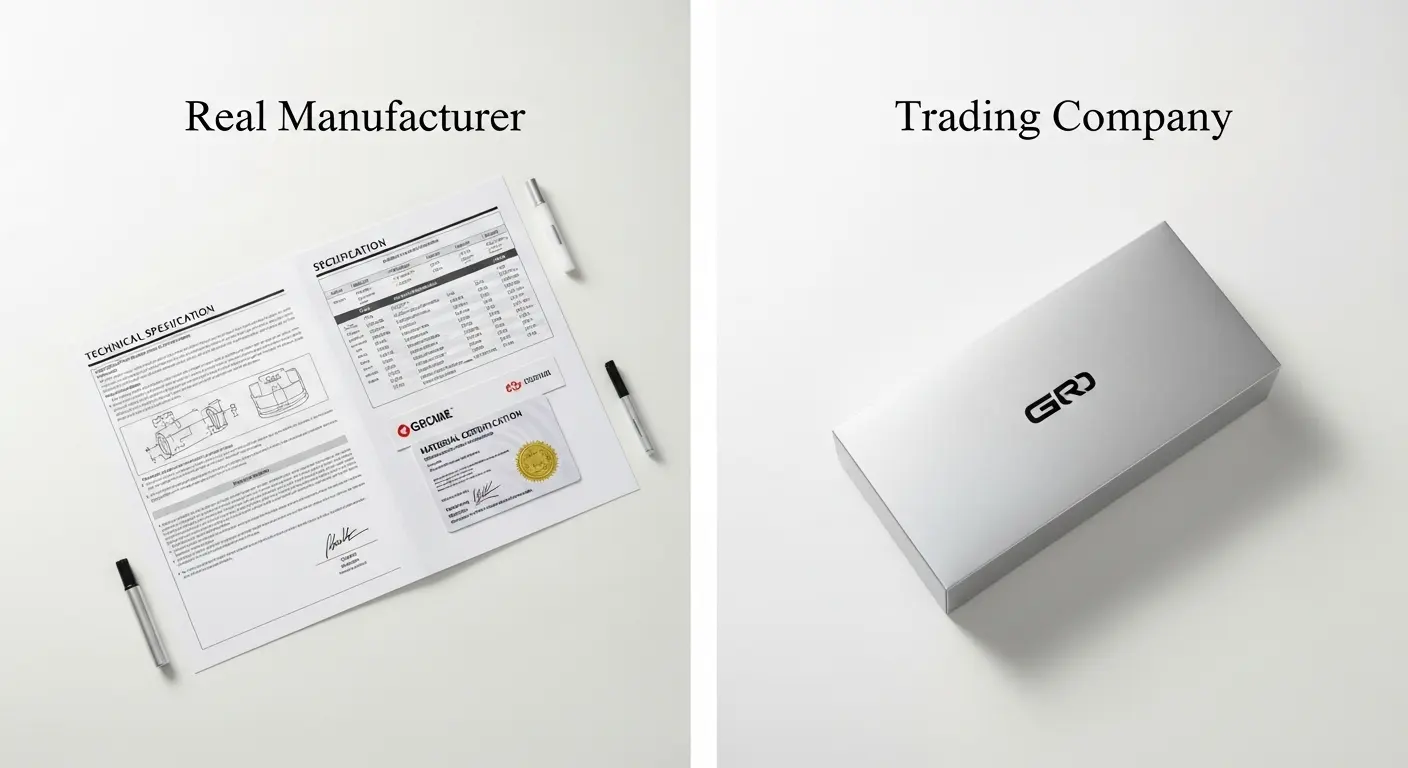
Many buyers searching for a custom slushie machine supplier encounter listings from both real manufacturers and trading companies — and from the outside, they often look identical. This distinction matters more for custom orders than it does for standard product purchases.
A real manufacturer owns the product engineering. They designed the auger system, specified the material grades, selected the compressor, and control the production quality at each stage. When you request a custom color, they change the injection mold tooling. When you request a feature configuration, they modify the firmware. When you need a replacement seal ring after 18 months, they supply it because they specified that component. Custom work is possible because they control the product.
A trading company purchased finished machines from a factory and resells them. They may offer "custom" in their listing, but in practice, their customization is limited to logo printing and packaging changes — and even these may be outsourced to a third party. They cannot modify firmware, change material specs, adjust performance parameters, or guarantee parts availability beyond the current production run. If the factory changes designs between your orders, your "custom" product changes without notice.
For custom slushie machine supplier sourcing, working with a trading company means your customization ceiling is much lower than a real manufacturer, your quality control is indirect, and your long-term supply security is significantly weaker.
Red Flags That Reveal an Unreliable Custom Slushie Machine Supplier
These are the specific warning signs that a supplier is either a trading company, a low-quality manufacturer, or simply not capable of delivering a reliable custom product.
Vague material descriptions. A real custom slushie machine supplier specifies materials with precision: food-grade ABS, SUS304 stainless steel, food-grade silicone. If a supplier's listing only says "food-safe materials" or "BPA-free" without specific grade identification, they did not make engineering decisions about those materials. Specifically, they are likely reselling a product whose specification they do not fully know.
No quantified performance data. Watts, decibels, liters, millimeters — these numbers come from engineering. A real manufacturer publishes them because they are production outputs. A trading company provides approximate ranges, or omits performance specs entirely and replaces them with marketing language like "powerful motor" and "efficient cooling."
No OEM/ODM capability detail. A genuine custom slushie machine supplier with real manufacturing capability can describe their OEM and ODM process specifically — what types of customization they support, at what MOQ, and on which platforms. Suppliers who claim "we do custom" without being able to articulate the process are typically unable to execute anything beyond logo printing.
Inability to supply spare parts. Ask specifically: can you supply a replacement seal ring for this machine in 18 months? A real manufacturer answers yes and can identify the part by component name. A trading company deflects — because the factory behind their product may have already changed designs.
Inconsistent specifications between listings. If a supplier's product dimensions, weight, wattage, or capacity differ between their own product pages or catalog documents, they are sourcing from changing suppliers and cannot guarantee production consistency across your custom orders.
How to Evaluate a Custom Slushie Machine Supplier: The Right Questions
Before committing to any custom slushie machine supplier, this is the evaluation conversation to have — and the documentation to request.
"Can you provide the full technical specification sheet for this platform?"
A real manufacturer produces this immediately: model number, material grades, power rating, noise level, coolant type, capacity in precise volume, machine dimensions, and container loading quantities. A trading company produces a marketing brochure with vague specifications and no engineering depth.
"What are the food contact material certifications for this machine?"
Ask for FDA or LFGB certification for the seal ring silicone, and material grade documentation for the ABS and stainless steel components. The certifications should be in original document form — not logos copied onto a website.
"Can you provide the CE/ETL/UL certification for this specific model?"
The certification document should list the model number exactly. If the model number on the certificate does not match the product being offered, the certification does not cover that machine.
"What does your quality control process look like during production?"
A reliable custom slushie machine supplier describes QC at three stages: incoming raw material inspection, in-process assembly checks, and finished product performance testing. A vague answer — "we check everything" — without specific checkpoints indicates a weak or absent QC structure.
"Can you supply replacement parts by component name after the production run?"
This question alone filters out most trading companies. A manufacturer who designed the product can name and supply each replaceable component — seal ring, auger section, dispense valve, control board. A reseller cannot, because the factory behind their product changes between production runs.
"What is your R&D and customization capability for this platform?"
Ask specifically what types of modifications are possible at your target volume. A manufacturer with real engineering capability can describe firmware modification scope, exterior tooling change requirements, and feature configuration options. A trading company gives a generic "yes we can customize" response that falls apart under technical follow-up.
Yumyth as a Custom Slushie Machine Supplier
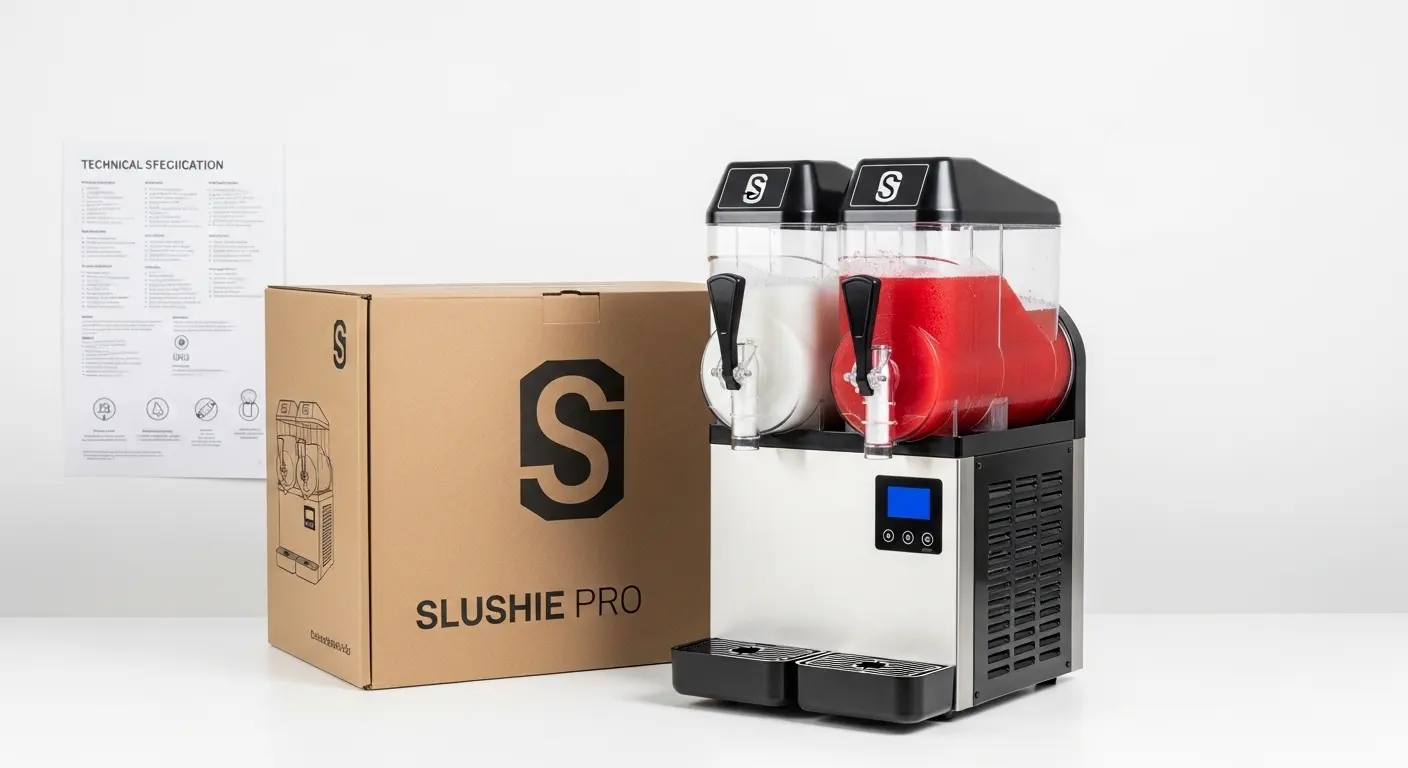
Yumyth operates as a direct custom slushie machine supplier with OEM and ODM capability on two documented home-use platforms.
The YX1801 — available as the Yumyth Mini Slush Machine — is rated at 200W, ≤55dB, 61oz/1.8L capacity, with food-grade ABS, food-grade silicone, and SUS304 stainless steel contact components. Coolant is R290. The platform features six preset programs, six-stage texture control, a patented intelligent auger reversal system with automatic jam protection, and a 3-minute quick rinse cycle with dishwasher-safe detachable parts. Container loading: 540/20GP, 1080/40GP, 1296/40HQ.
The YX1802 — the Yumyth Slush and Ice Cream Maker — adds ice cream mode alongside the six slush programs, rated at 220W with identical material standards and the same patented auger system. Machine dimensions: 452mm × 175mm × 398mm, net weight 10.2kg. For brands targeting a dual-function position — one machine for both frozen drinks and frozen desserts — the YX1802 is the right custom platform .
Both platforms support custom branding, packaging, appearance configuration, and market-specific adaptation. Yumyth's quality control covers incoming material inspection, in-process assembly checks, and finished product performance testing. OEM services support full product specification customization; ODM services support adaptation of existing platforms at lower MOQ and shorter lead time.
For custom order buyers who want to understand how slushie machines and ice cream machines compare in design and use case before specifying a platform, the ice cream vs slush machine guide covers both machine types with detailed performance comparison. And for brands building a broader frozen beverage product line, the industry insights section covers how the home-use frozen drink market is evolving — useful context for platform selection and feature positioning in a custom order.
Custom Slushie Machine Supplier Options: Home-Use vs. Commercial
Custom slushie machine supplier options look different depending on whether you are targeting home-use or commercial buyers. The engineering priorities, certification requirements, and typical customization scopes diverge significantly.
| Factor | Home-Use Suppliers | Commercial Suppliers |
|---|---|---|
| Capacity range | 48–88oz (1.4–2.6L) | 3L–45L per tank |
| Key certifications | CE, ETL, UL, LFGB | NSF/ANSI 7, dairy certification |
| Noise target | ≤55dB for countertop use | Higher noise acceptable |
| Material standard | Food-grade ABS, silicone, SUS304 | Full stainless, NSF-certified construction |
| Customization focus | Branding, color, packaging, modes | Tank number, dispensing system, panel layout |
| Typical ODM MOQ | 200–500 units | 50–200 units |
| Lead time (standard ODM) | 45–90 days | 60–120 days |
| After-sales support | Direct online support | Field service networks |
Brand owners entering the home frozen drink machine category usually benefit from home-use custom slushie machine suppliers. These suppliers offer faster turnaround, lower MOQ, and wider branding customization than commercial suppliers.
Hospitality businesses and commercial operators need a different type of partner. Commercial custom suppliers focus more on throughput capacity, NSF-level cleanability, and service infrastructure.
For buyers who also plan to include complementary appliances in a custom product line, the ice makers buying guide covers manufacturer-quality ice appliances that pair naturally with custom slushie machines in retail bundles and DTC programs. The vacuum sealers guide covers another pairing category relevant for brands building frozen drink accessory kits or subscription programs.
What a Custom Order Realistically Costs and Takes
First-time custom slushie machine supplier engagements frequently run over schedule and over budget — not because the supplier is unreliable, but because buyers underestimate the full timeline and cost structure.
Timeline Breakdown
Supplier evaluation and sample testing: 2–4 weeks. Request samples from your top two shortlisted suppliers, test both through ten or more use and cleaning cycles, and make your final selection. Skipping this stage is the most common cause of production problems discovered too late.
Artwork approval and pre-production sample: 2–3 weeks. Submit branding files, confirm color match, and approve packaging mock-up before production is authorized.
Certification under your brand name (if required): 8–16 weeks. CE, ETL, or UL certification filing adds significant time if the platform is being certified under your brand name specifically. Confirm this upfront — it is the most frequent source of launch delays in custom slushie machine projects.
Production run: 3–5 weeks. From confirmed order to finished units ready for container loading.
Sea freight: 20–35 days depending on destination port.
Total realistic timeline: 45–75 days for a standard custom ODM order on a certified platform; 90–150 days if market-specific certification under your brand name is required from scratch.
Cost Structure
For a quality home-use custom slushie machine on a documented ODM platform, FOB unit prices at standard ODM MOQ typically range from $40–$90, depending on platform, volume, and customization scope. Below this range, compromises in material grade, compressor quality, or QC process are nearly always present.
Custom color runs and packaging add cost — typically $3–$8 per unit depending on scope and volume. Certification costs (third-party testing and documentation) are usually billed per model, not per unit, and can range from $2,000–$8,000 depending on the certification type and laboratory. Factor these into your landed cost calculation before finalizing retail pricing.
Frequently Asked Questions
What is a custom slushie machine supplier?
A custom slushie machine supplier is usually an OEM or ODM factory. It builds slushie machines based on a buyer’s needs.
What customization usually includes
Customization can include branding, color, packaging, and feature setup. In full OEM projects, it can also include engineering and product design. A real supplier controls the product engineering, not just the logo on the box.
How do I find a reliable custom slushie machine supplier?
Start by checking if the supplier is a real manufacturer. Do not rely only on their website or sales claims. Ask for the full technical specification sheet.
What to check before ordering
Check material grades, power ratings, noise levels, and certifications. Ask for sample units before placing a bulk order. Test the sample carefully. Also request OEM or ODM capability documents. A reliable supplier should answer these requests clearly.
What is the minimum order for a custom slushie machine?
For simple branding on an existing ODM model, MOQ usually starts at 200–500 units. This often applies to home-use machines.
MOQ by customization type
Custom color runs usually need 500+ units. Full OEM with custom tooling needs higher order volume. This is because tooling cost must be spread across more units. Always confirm MOQ early with the supplier.
How long does a custom slushie machine order take?
A standard custom ODM order usually takes 45–75 days. This includes sample approval, pre-production approval, production, and sea freight.
Certification can extend the timeline
If new certification is needed, the timeline becomes longer. Brand-name certification may add another 8–16 weeks. Plan your product launch with this delay in mind.
Can a custom slushie machine supplier change the machine's features or modes?
Some suppliers can change the machine’s features or modes. This usually requires real OEM or ODM engineering capability.
What cannot be changed easily
Firmware settings may be adjusted for different markets. But cooling calibration, auger reversal, and texture control are harder to change. These parts are tied to the machine’s engineering and certification. A trading company usually cannot modify firmware at all.
Related Articles

Household Slush Machine: What to Know Before Buying One in 2026
2026-09-24
BY YUMYTH
A household slush machine makes frozen drinks at home. It works differently from a blender. A blender crushes ice into your drink, which adds water and waters down the flavor. ...

How Does a Nugget Ice Maker Work? A Look Inside the Ice-Making Process
2026-09-24
BY YUMYTH
Nugget ice looks simple enough. Small, soft pieces of ice drop into the bin, ready to go into a glass. But making that texture is quite different from making a ...
Nugget Ice Maker for Coffee Shop: How Ice Texture Affects Coffee
2026-09-24
BY YUMYTH
When choosing a Nugget Ice Maker for a Coffee Shop, there are many factors to consider aside from the rate of ice production. At YUMYTH, we consider the downstream implications ...
Why Nugget Ice for Soda Creates a Different Mouthfeel Than Traditional Ice Cubes
2026-09-24
BY YUMYTH
At YUMYTH, we believe there is more to Nugget Ice for Soda than just the effect on temperature. The structure of ice also changes the perception of carbonation, how quickly ...