
Ice Maker Sourcing Guide: How to Find the Right Factory
Share:
-

-

-

-


Copied

Share:
-
-
-
-
Copied
Sourcing an ice maker looks straightforward on paper. Find a supplier, agree on a price, place an order. But anyone who has actually done this knows the process is rarely that simple.
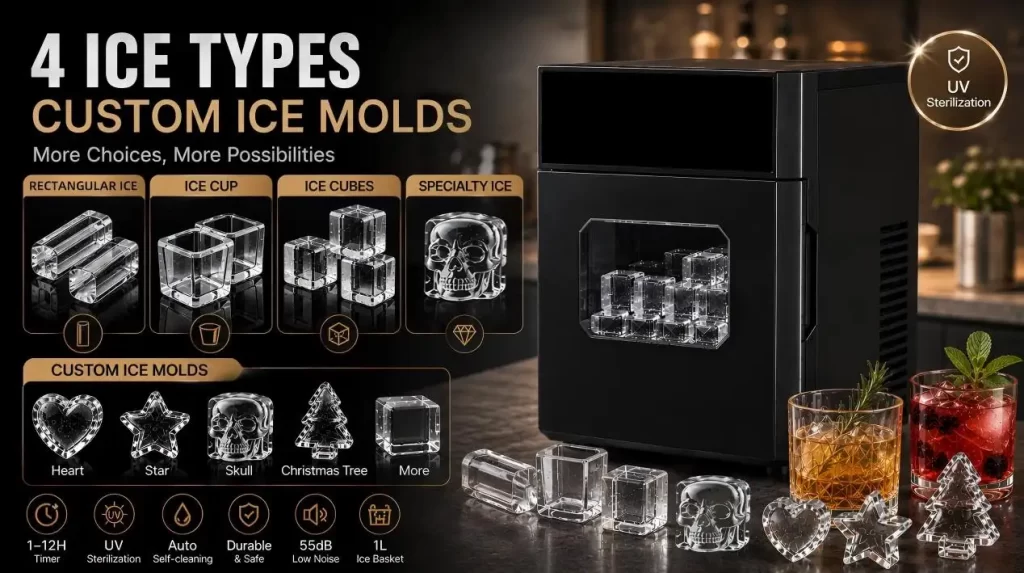
Over the years, we've spoken with quite a few brand owners and importers. The frustrations they share tend to follow a similar pattern: samples look good, but mass production tells a different story. Or the product finally lands on a marketplace, only to sit next to a dozen near-identical units priced lower than yours.
These aren't isolated issues. They usually point to a deeper problem in how the sourcing decision was made.
Let's walk through what actually matters when you're buying ice makers for a living.
If Every Ice Maker Looks the Same, Yours Will Get Lost
Spend ten minutes browsing ice makers on any major e-commerce platform, and you will notice something striking. Most of them look almost identical. Same white boxy body, same button layout, same packaging design.
When that happens, consumers make their decision the only way they can—by price. Your brand becomes an afterthought.
The way out of this is to ask a different question before you even start talking to factories. Instead of "What do they have in stock?" ask "Who is this product for?"
A machine aimed at whiskey drinkers might prioritize clear ice and slower melting characteristics. One for a young urban professional might focus on compact footprint and a muted pastel finish. A family-oriented product might emphasize output speed and capacity.
Even the shape of ice tells a story. Traditional cubes, bullet-shaped pieces, round nuggets, specialty forms—each serves a different drinking culture and lifestyle.
At the end of the day, the question is not whether the machine makes ice. It is why someone would choose yours over the dozens of other options available.
Quality Issues Have a Way of Coming Back to Bite You
In B2B, cutting corners on quality rarely saves money in the long run. It just shifts the cost to returns, chargebacks, negative reviews, and damage to your brand reputation.
Ice makers are complex enough that multiple systems need to work reliably—the refrigeration circuit, the water pump, the control board, the mechanical components. If any of these is inconsistent across production runs, you will see batch-level failures.
The most common culprits? Inconsistent ice output, slow leakage that only shows up after weeks of use, unusually loud operation, or gradual loss of cooling performance over time.
Here is the thing: most of these problems are not caught by a final inspection at the end of the line. They are prevented by a system that catches issues much earlier.
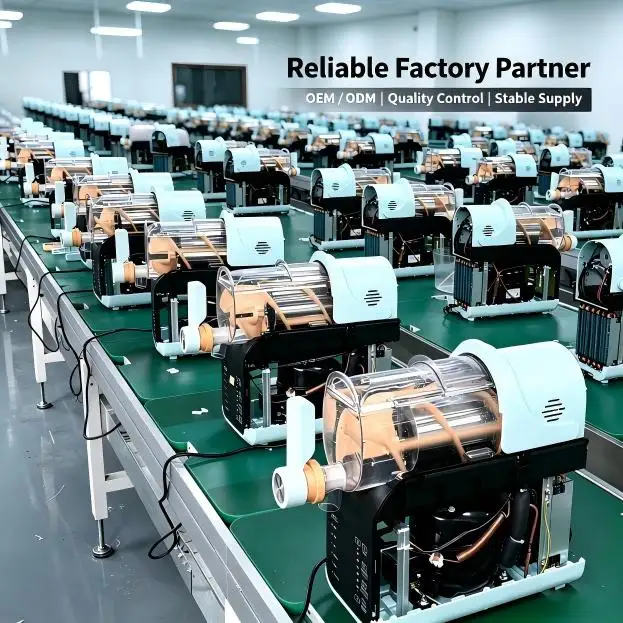
A factory with proper quality management looks like this:
- Incoming material inspection – Key parts like compressors and PCBs are checked before they enter the assembly line, not after.
- In-process control – Critical steps have documented procedures and spot checks to catch assembly errors early.
- Full functional testing – Every single unit gets tested before packaging, not a random sample.
- Final visual and packaging check – Small things like missing accessories or misaligned labels get filtered out before the container is loaded.
If you are evaluating a supplier, do not just ask about their defect rate. Ask to see how they prevent defects from happening in the first place.
Branding Is Harder When You Are Selling a White-Label Product
Private labeling an existing product is the fastest way to enter a market. It is also the fastest way to become interchangeable with your competitors.
When you and three other brands sell the exact same machine with different stickers, the consumer has no reason to remember you. Next time they need an ice maker, they will pick the one on sale, not the one you sold them last time.
Brand equity comes from making deliberate choices about what your product is and is not.
Customization does not always mean developing a completely new mold from scratch. It can start with smaller decisions:
- A distinctive color palette that matches your brand identity
- Custom packaging that communicates quality before the box is opened
- A user interface with a different flow or visual style
- Unique functions like self-cleaning cycles or programmable start timers
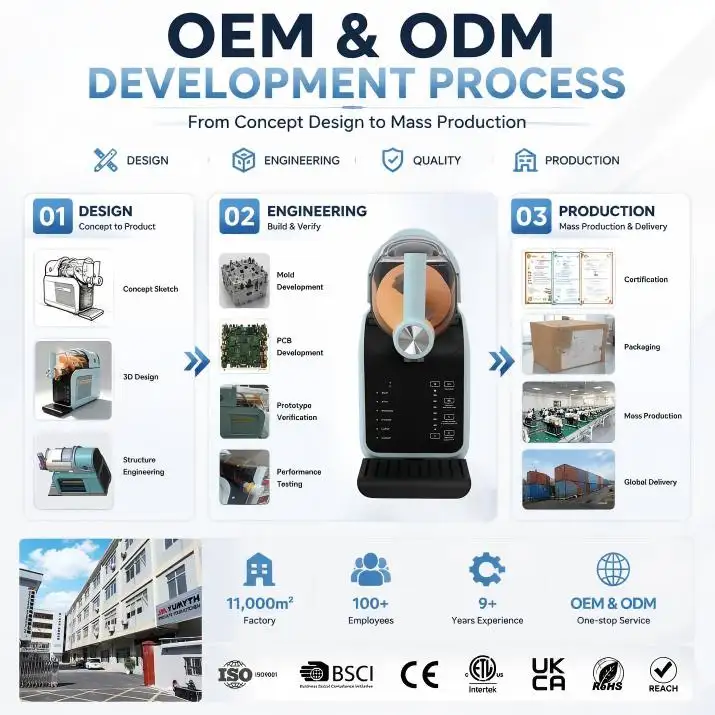
Over time, the goal is to move from cosmetic changes to genuine product development—where the machine is built around your market's specific requirements. That takes more investment upfront, but it creates a gap that competitors will struggle to close.
One Market's Best Seller Is Another Market's Flop
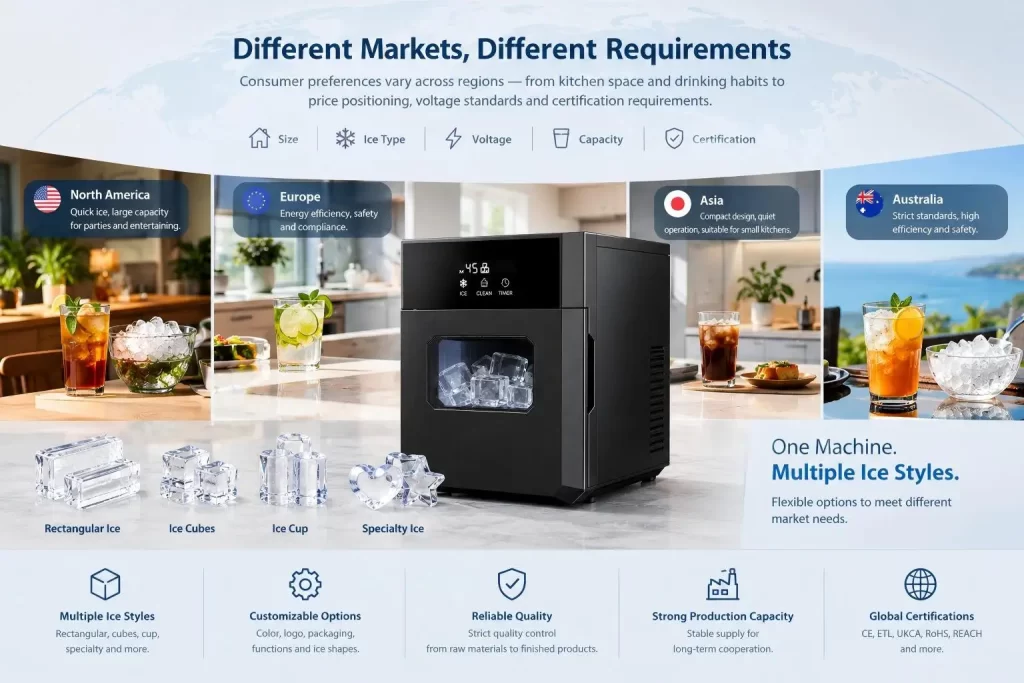
An ice maker that flies off shelves in the United States may sit dormant in Japan. The reasons are rarely about quality. They are about fit.
American households often prioritize speed and volume—large batches for parties and frequent entertaining. Japanese consumers, by contrast, have smaller kitchen counters and tend to prefer quieter operation and a compact footprint.
European buyers are increasingly conscious of energy ratings. Australian regulators enforce strict safety and efficiency standards. Each market brings its own set of constraints and preferences.
Before you decide on a product specification, get clear on the basics:
- Who is the end user—homeowners, renters, office workers, hospitality businesses?
- Where will the product be sold—online, retail chains, specialty stores?
- What is the competitive price range in that channel?
- Are there any local dimension, voltage, or plug requirements?
Once you have these answers, conversations with the factory become far more productive. You are not asking "What do you have?" but "Can you build this for our specific market?"
Late Shipments Cost More Than Just Freight
Ice makers are seasonal. Peak demand hits in spring and summer. If your shipment misses that window, you either pay premium air freight or sit on inventory until next year.
Delivery delays usually trace back to one of a few issues: poor production planning, unreliable component supply, or the factory bumping your order for a bigger client.
Before committing to a supplier, get a clear picture of their capacity and scheduling:
- What is their normal monthly output, and what is their maximum?
- Which components have long lead times, and do they keep safety stock?
- Can they split orders into multiple shipments if needed?
- How do they prioritize orders during peak season?
A factory that knows its own limits will give you a realistic timeline upfront. One that promises everything and delivers late is not worth the headache.
Talk About Certification Early, Not When the Shipment Is Ready
Certification is one of those things that seems manageable until it is not. A missing test report or an incomplete technical file can hold your shipment at customs for weeks.
The requirements vary by destination:
- North America: UL or ETL safety marks, with some states requiring energy efficiency documentation
- Europe: CE marking covering LVD and EMC, plus additional local requirements in some countries
- Australia: SAA approval and GEMS energy labeling
- General: Material compliance like RoHS and REACH
The key is to bring up certification requirements at the very beginning of product development, not after production is finished. If the factory knows which standards you need, they can design the product accordingly from day one. Retrofitting for compliance later is expensive and time-consuming.
Five Criteria for Evaluating an Ice Maker Factory
If you strip away all the marketing talk, choosing the right manufacturer comes down to five practical questions:
- Development capability – Can they modify existing designs, or are they limited to off-the-shelf products?
- Quality system – Do they have process controls, or do they rely on a final inspection only?
- Customization flexibility – What levels of change can they support—colors, packaging, UI, functionality?
- Capacity fit – Where does your order volume sit relative to their production scale?
- Communication and project management – Do they respond clearly, keep you informed, and stick to commitments?
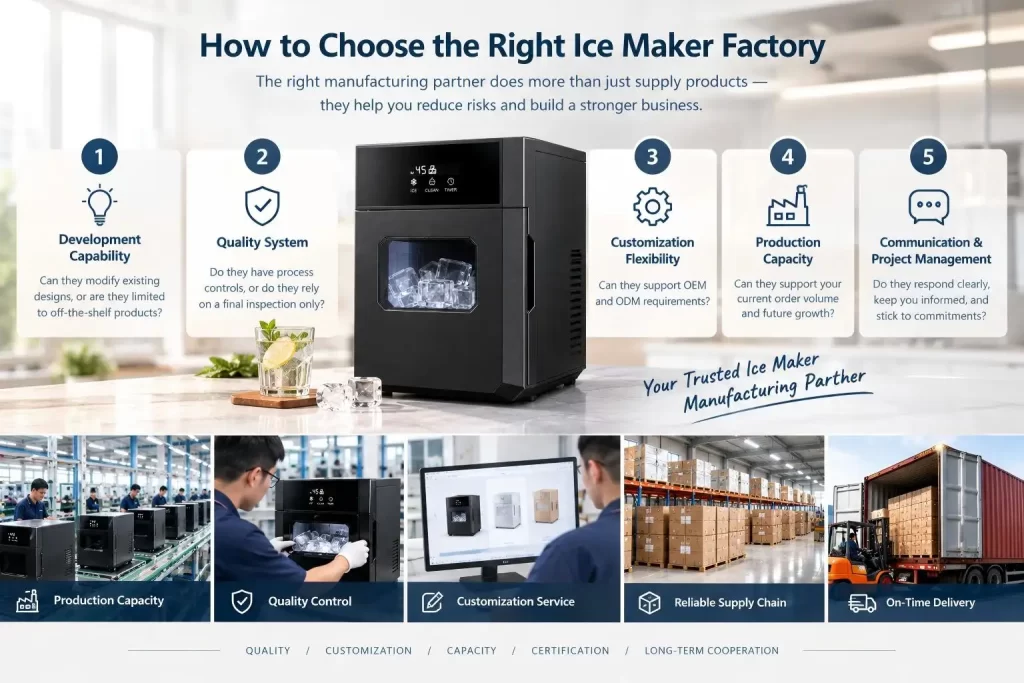
A good partner is not the one that gives you the lowest price. It is the one that reduces uncertainty at every stage—from concept to container loading.
From a Machine to a Business Advantage
Competition in the ice maker space is real. But competition is not the same as saturation. There is still room for brands that enter with a clear product story and a reliable supply chain behind them.
The brands that succeed are not necessarily the ones with the cheapest units. They are the ones that understand their customer, design accordingly, and manage their sourcing process with discipline.
If you are currently exploring a new ice maker project, or you have an idea but are not sure how to bring it to life, we are happy to have a conversation. Sometimes a clear direction starts with a straightforward discussion about what is possible.
Related Articles
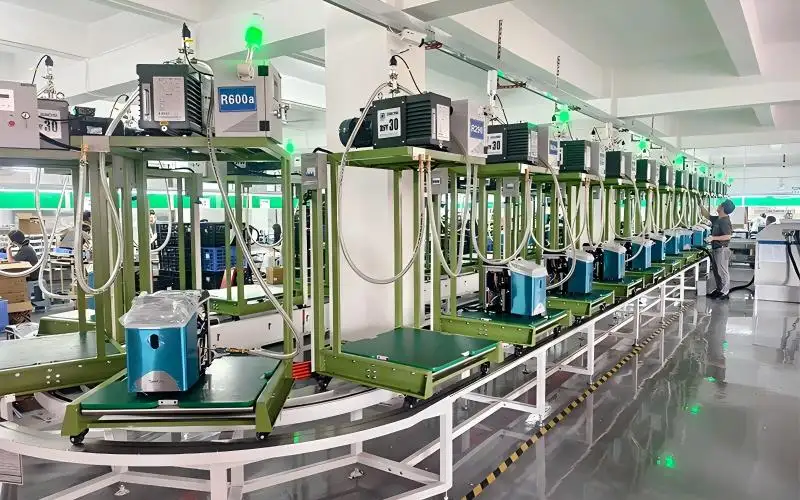
How We Test Every Ice Maker Before Packaging
2026-09-15
BY YUMYTH
A step-by-step look at refrigerant handling, cooling verification, leak detection, corrective action and electrical safety testing For an ice maker, reliable performance is determined long before the carton is sealed. ...
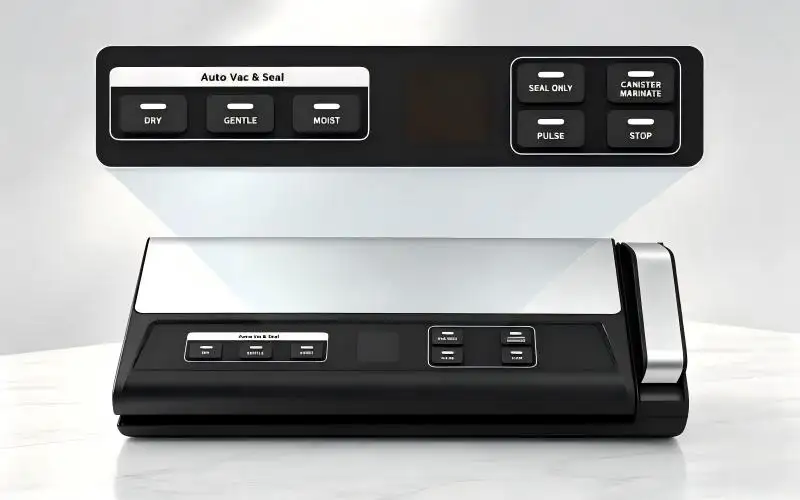
Guide for Brands Looking for a Reliable Vacuum Sealer OEM Supplier
2026-09-14
BY YUMYTH
When you are sourcing kitchen appliances for your retail brand, finding a dependable vacuum sealer OEM supplier is rarely just about getting the lowest unit price. It is about protecting ...

Why Ice Shape Matters: Understanding 10mm × 15mm Cylindrical Nugget Ice
2026-09-14
BY YUMYTH
More Than Ice Production — The Ice Itself Shapes the Consumer Experience When sourcing a nugget ice maker, buyers often focus first on production capacity, water tank size, ice basket ...
Ice Maker Sourcing Guide: How to Find the Right Factory
2026-09-10
BY YUMYTH
Sourcing an ice maker looks straightforward on paper. Find a supplier, agree on a price, place an order. But anyone who has actually done this knows the process is rarely ...