
The Ultimate Guide to OEM Suppliers and Custom-Shape Ice
Share:
-

-

-

-


Copied
Share:
-
-
-
-
Copied
Finding a factory to build an ice machine isn't exactly hard. Finding one that won't ruin your brand reputation with massive return rates? That takes some serious vetting. When you slap your company's logo on an appliance, you take on all the risk. If the compressor dies on a busy Friday night, the restaurant blames you, not your overseas factory.
If you want to dominate the commercial refrigeration market, you need to understand exactly what hospitality clients are searching for, why cheap machines fail, and how to pick an OEM Ice Maker Supplier that actually delivers on their promises.
What Users Are Actually Asking About Ice Machines
Before you issue a purchase order, you need to know what end-users complain about. Google search data shows that consumers and bar owners constantly ask a few specific questions when their machines act up. Solving these problems at the factory level is your ticket to a top-selling product.
"Why is my ice maker producing hollow or thin cubes?"
This is easily the number one complaint online. When an ice cube maker spits out hollow, fragile shells instead of solid blocks, the drinks water down instantly. Bartenders hate this.
From a manufacturing standpoint, hollow ice usually points to a weak water pump or a poorly designed evaporator grid. Water isn't flowing evenly over the freezing plate, or the harvest cycle is kicking in way too early. When vetting your supplier, demand to see their evaporator plating process. High-quality machines use nickel-plated copper evaporators that freeze water rapidly and evenly, ensuring a solid, dense cube every single time.
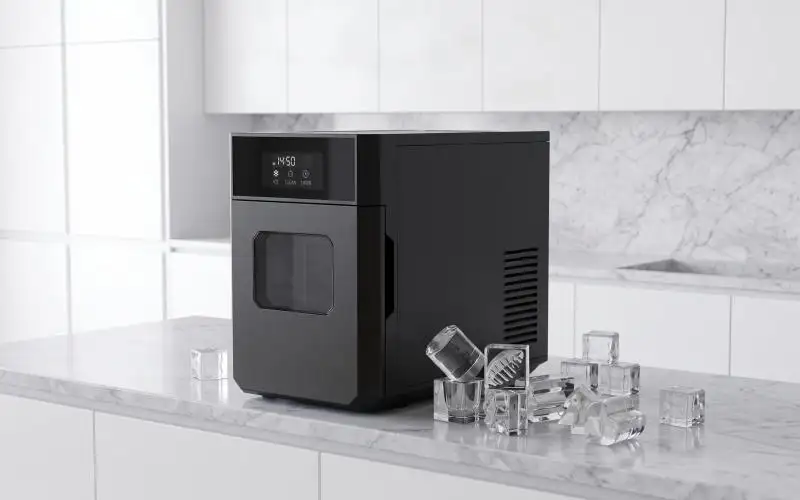
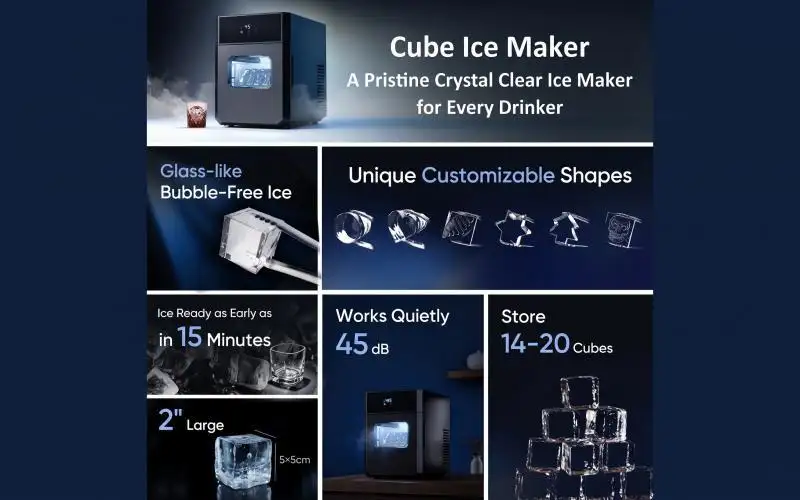
YUMYTH’s large-cube ice maker offers a variety of ice-making modes, allowing you to produce ice with the desired characteristics based on timing; we offer settings for 15, 30, 45, and 60-minute cycles. These different durations cater to diverse customer needs.
"How fast should a batch of ice take?"
Hospitality runs on speed. A solid commercial unit needs to drop a fresh batch of ice every 15 minutes. If a factory sample takes 25 minutes to complete a cycle in a 70°F room, reject it immediately. That machine will completely freeze up when placed in a hot, 90°F commercial kitchen. Your OEM partner must use heavy-duty compressors that can handle high ambient temperatures without choking.
The High-Margin Secret: Custom-Shape Ice
The cocktail industry has changed drastically over the last five years. High-end bars no longer want standard half-dice cubes. They want large-format squares, perfect spheres, or even hexagonal shapes.
This shift has created a massive opportunity for brands willing to invest in custom-shape ice.
Moving Beyond the Standard Cube
Standard ice melts quickly, diluting expensive liquors. By working with an advanced OEM factory, you can develop machines that produce oversized 2-inch solid squares. These large formats have less surface area, meaning they chill the drink without watering it down.
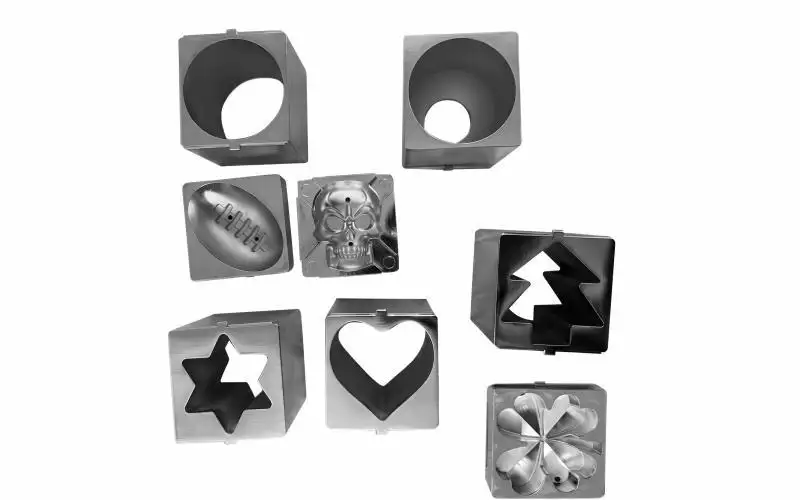
If you really want to capture the premium hospitality market, ask your factory about custom evaporator grids. Some high-tier manufacturers can now tool the freezing grid to imprint a faint logo or unique geometric pattern directly onto the ice as it freezes. Offering a machine that produces signature ice shapes gives your brand an incredible unique selling proposition (USP) that cheap competitors simply cannot match.
Evaluating Your OEM Ice Maker Supplier
Talk is cheap on B2B sourcing platforms. Every factory claims they have the best quality, but the spec sheet tells the real story. Here is exactly what you should look for when auditing a potential factory partner.
Compressor Brand and Refrigerant Type
Never accept a generic, unbranded compressor. The compressor is the engine of the ice maker. Specify global names like Anuodan or Qian Jiang. Furthermore, verify that the factory uses R290 refrigerant. It is eco-friendly, highly efficient, and legally required in many North American and European markets. If they try to push older R134a systems, find another supplier.
Cheap machines use mechanical float switches that get stuck with hard water scale, causing the machine to overflow or stop freezing entirely. Look for suppliers who use advanced photoelectric sensors or sonar-based thickness probes. These digital components measure the exact density of the ice bridge and trigger the harvest cycle flawlessly, regardless of local water conditions.
Food Safety and Sanitation Certifications
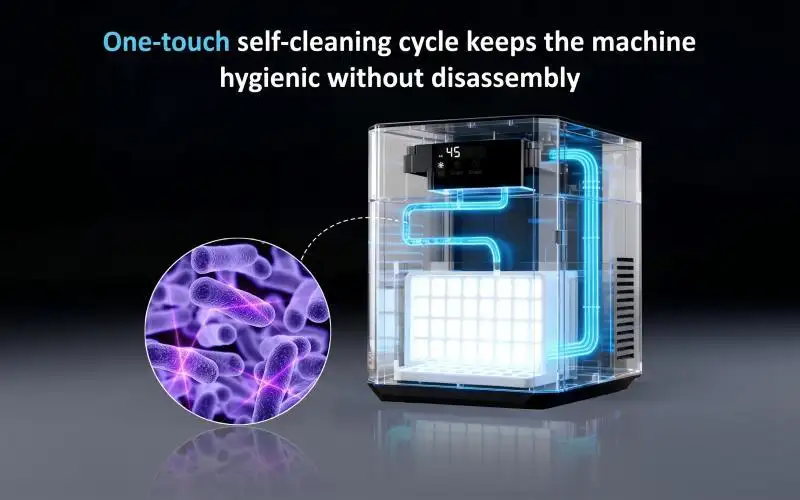
You cannot sell a food-contact appliance without aggressive hygiene standards. An ice machine is essentially a wet, dark box—the perfect breeding ground for mold. The interior food zone must be constructed from food-grade, BPA-free plastics, and the unit must carry NSF or ETL Sanitation marks for the US market. Bonus points if the factory integrates UVC sterilizing lights into the water trough, a feature that significantly reduces routine maintenance for the end-user.
Conclusion: Make the Right Move for Your Appliance Line
Launching a reliable commercial ice equipment line comes down to asking the right questions before production starts. You need an OEM Ice Maker Supplier that treats quality control as a religion, not an afterthought.
By demanding solid evaporator designs, specifying premium compressors, and tapping into the highly profitable trend of custom-shape ice, you can build a product catalog that bar owners and restaurant managers actually trust. Stop competing in the race to the bottom on price, and start selling the heavy-duty performance that the hospitality industry is begging for.
Related Articles

Household Slush Machine: What to Know Before Buying One in 2026
2026-09-24
BY YUMYTH
A household slush machine makes frozen drinks at home. It works differently from a blender. A blender crushes ice into your drink, which adds water and waters down the flavor. ...

How Does a Nugget Ice Maker Work? A Look Inside the Ice-Making Process
2026-09-24
BY YUMYTH
Nugget ice looks simple enough. Small, soft pieces of ice drop into the bin, ready to go into a glass. But making that texture is quite different from making a ...
Nugget Ice Maker for Coffee Shop: How Ice Texture Affects Coffee
2026-09-24
BY YUMYTH
When choosing a Nugget Ice Maker for a Coffee Shop, there are many factors to consider aside from the rate of ice production. At YUMYTH, we consider the downstream implications ...
Why Nugget Ice for Soda Creates a Different Mouthfeel Than Traditional Ice Cubes
2026-09-24
BY YUMYTH
At YUMYTH, we believe there is more to Nugget Ice for Soda than just the effect on temperature. The structure of ice also changes the perception of carbonation, how quickly ...