
Slushie Machine Manufacturer: Top Brands, What They Make, and How to Choose
Share:
-

-

-

-


Copied

Share:
-
-
-
-
Copied
Knowing which slushie machine manufacturer actually built the machine you are buying — or considering for your business — changes what you can expect from it long-term. Material quality, spare parts availability, warranty coverage, and after-sales support all trace back to the manufacturer. Buying from a trusted brand name without understanding who makes it is how people end up with a machine that works perfectly for six months and then becomes impossible to repair.
This guide covers who the main slushie machine manufacturers are, what distinguishes them from distributors and resellers, what quality indicators to check before buying, and how home-use and commercial-use manufacturers differ in design approach, pricing, and support.
What Is a Slushie Machine Manufacturer? (vs. Reseller or Distributor)
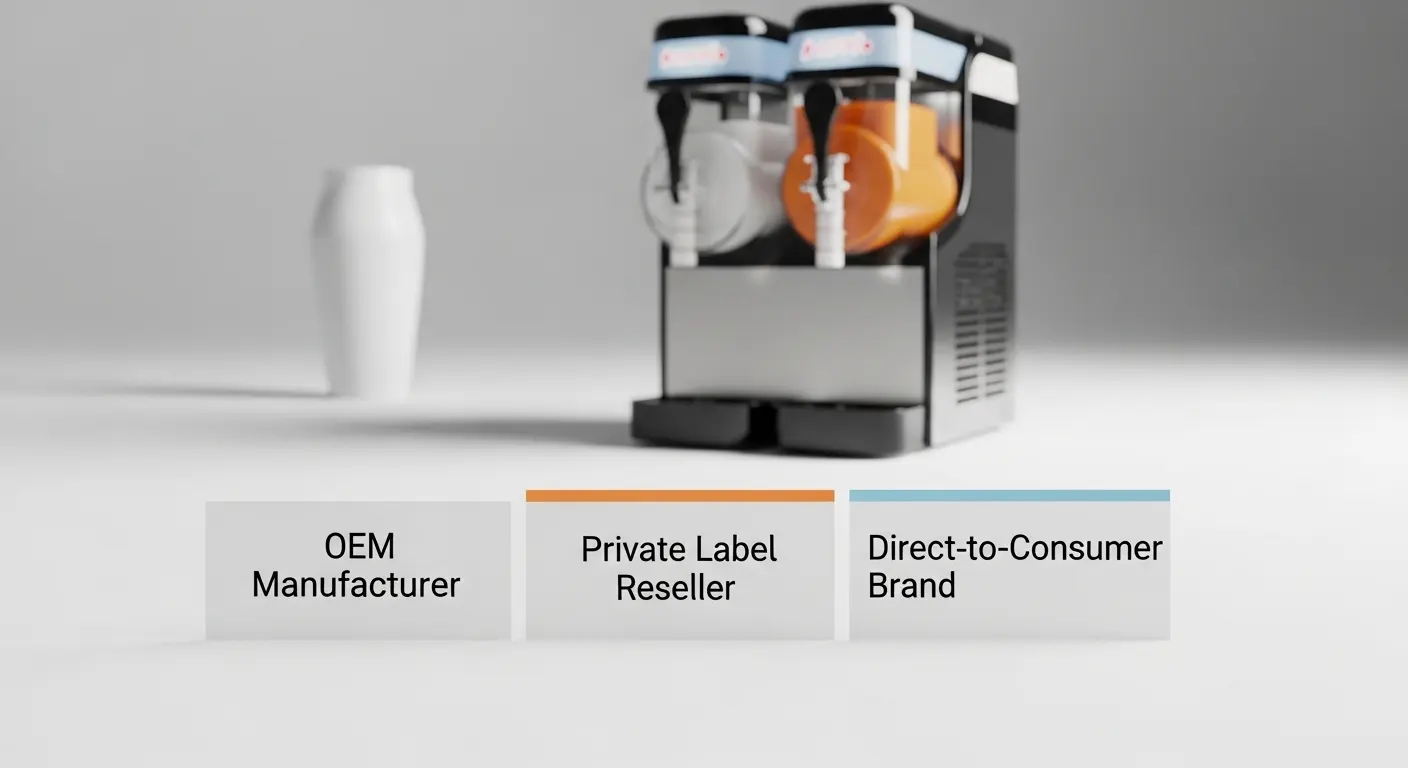
Not every company that sells slushie machines under its own name actually makes them. The difference between a manufacturer, a reseller, and a private-label distributor is significant — and it directly affects what you get in terms of quality control, warranty support, and spare part access.
OEM Manufacturers
An OEM (Original Equipment Manufacturer) designs and builds the machine from engineering through final assembly. They control the materials, the component specifications, the testing process, and the quality checks. When you contact an OEM manufacturer about a warranty claim or a replacement seal ring, you are dealing with the organization that made the decision to use SUS304 stainless steel in the auger, not a company that purchased finished units from a factory overseas.
Taylor, Icetro, and SharkNinja (the company behind Ninja appliances) are OEM manufacturers. They design, engineer, and build their machines under their own brand identity.
Private-Label Resellers
A private-label reseller purchases machines built by a factory — often in Guangdong or Zhejiang province in China — and sells them under their own brand name. The reseller may specify certain features, colors, or modifications, but the core engineering is not theirs. When quality problems arise, private-label resellers often have limited ability to source replacement parts or authorize repairs because the underlying manufacturer may change between product generations.
Many budget slushie machines on Amazon and large retail platforms fall into this category. The brand name on the machine does not correspond to any manufacturing organization — it is a trading company name.
Direct-to-Consumer Brands with Own Engineering
A third category — increasingly common in the home appliance space — is a direct-to-consumer brand that designs its own machines and controls manufacturing through long-term factory partnerships with specific quality specifications. These brands own the product design and engineering, even if physical production runs through a contracted facility. They control material specifications, testing protocols, and product iteration.
Yumyth operates in this category — designing machines with documented material specs (food-grade ABS, food-grade silicone, SUS304 stainless steel), specific auger engineering (intelligent reversal with jam protection), and a defined product line developed through controlled manufacturing partnerships. The result is a product identity that is consistent across units and supported by a team that actually knows how the machine was built.
Top Home-Use Slushie Machine Manufacturers
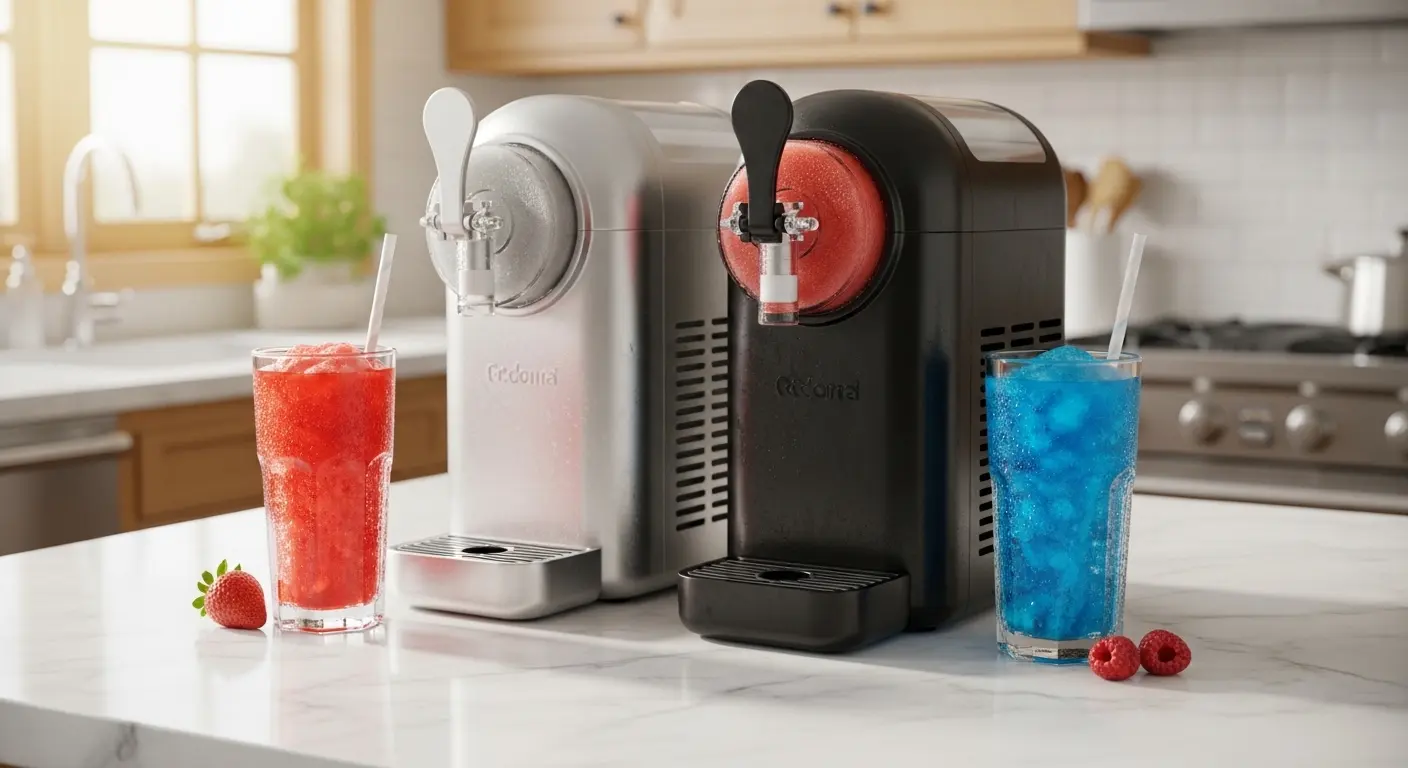
These brands design and produce machines for household and small-event use, with direct-to-consumer distribution and product support.
Yumyth
Yumyth is a direct-to-consumer slushie machine manufacturer that controls its product engineering from design through specification. Its current home-use lineup includes the Yumyth Mini Slush Machine and the Yumyth Slush and Ice Cream Maker — both built with food-grade ABS, food-grade silicone, and SUS304 stainless steel contact components.
The machines feature a documented intelligent auger reversal system with jam protection — an engineering feature, not a marketing description. Six texture levels, six preset programs, a 3-minute quick rinse cycle, and whisper-quiet 55dB operation define the product across both models. At 61oz capacity, both machines target household and small-party use, with full support for dairy, alcohol, fruit juice, and thick syrup mixes.
For buyers who want to understand how Yumyth machines compare against ice cream appliances in design and day-to-day use, the ice cream vs slush machine guide provides a detailed side-by-side breakdown.
SharkNinja (Ninja)
SharkNinja is an OEM manufacturer based in the US, with design and engineering teams that develop and control the Ninja product line. The Ninja SLUSHi series — specifically the FS301 and the 88oz model — is widely reviewed as among the best-performing home slushie machines in the market. SharkNinja owns its product design, controls quality through its own manufacturing partnerships, and provides direct warranty and spare parts support in most major markets.
Cuisinart
Cuisinart is a well-established kitchen appliance manufacturer operating under Conair Corporation. Its Frost Fusion slushie machine is one of the top-rated home models in 2026, consistently earning editorial picks from BBC Good Food and independent testers. Cuisinart controls its appliance design and provides product support through its established retail and direct channels.
Chefman (RJ Brands)
The Iceman by Chefman Slush-Ease is produced by RJ Brands, which designs and markets a range of kitchen appliances under the Chefman name. For buyers looking for a mid-range slushie machine manufacturer at a lower price point than Ninja or Cuisinart, Chefman provides product support and a documented warranty structure.
Top Commercial Slushie Machine Manufacturers
These manufacturers produce machines for foodservice, retail, and event operations — higher capacity, more durable construction, and designed for continuous daily use.
Taylor Company
Taylor is consistently rated the gold standard among commercial slushie machine manufacturers. Operating since 1926, Taylor manufactures both carbonated and uncarbonated slush machines, milkshake machines, and frozen dessert equipment. Their C300 and C349 commercial slush models deliver fast freeze cycles, high-volume output, and gross margins of 70–80% per drink according to operator data. Taylor machines are built for high-volume continuous use with precision refrigeration control.
Icetro
Icetro is a Korean-engineered commercial slushie machine manufacturer with a strong reputation for rapid freeze cycles (20–30 minutes) and tool-free cleaning design. Their SSM-series machines (SSM-180, SSM-280, SSM-420) scale from single-barrel to triple-barrel configurations — 12L to 36L total capacity — with overnight refrigeration modes that hold product temperature without staff supervision. Icetro machines are built for cafes, convenience stores, and quick-service restaurants.
BUNN
BUNN is a US-based commercial equipment manufacturer that produces the ULTRA-2 frozen drink machine among other beverage equipment. The ULTRA-2 is a dual-tank commercial unit with a touchscreen interface, commonly found in convenience stores and cafes. BUNN provides strong service infrastructure and spare parts availability in North America.
VEVOR
VEVOR positions as a budget-to-mid-range commercial slushie machine manufacturer, producing dual and triple-tank machines in the $200–$600 price range. Their machines suit small-to-medium businesses with lower peak volume requirements. VEVOR sells directly through Amazon and its own platform, with limited but functional warranty support.
Elmeco
Elmeco is an Italian commercial slushie machine manufacturer with a focus on energy-efficient design and self-cleaning functions. Their machines are priced at a premium above VEVOR and BUNN but below Taylor in the commercial market. Elmeco is particularly common in European commercial foodservice environments.
What to Look for in a Slushie Machine Manufacturer
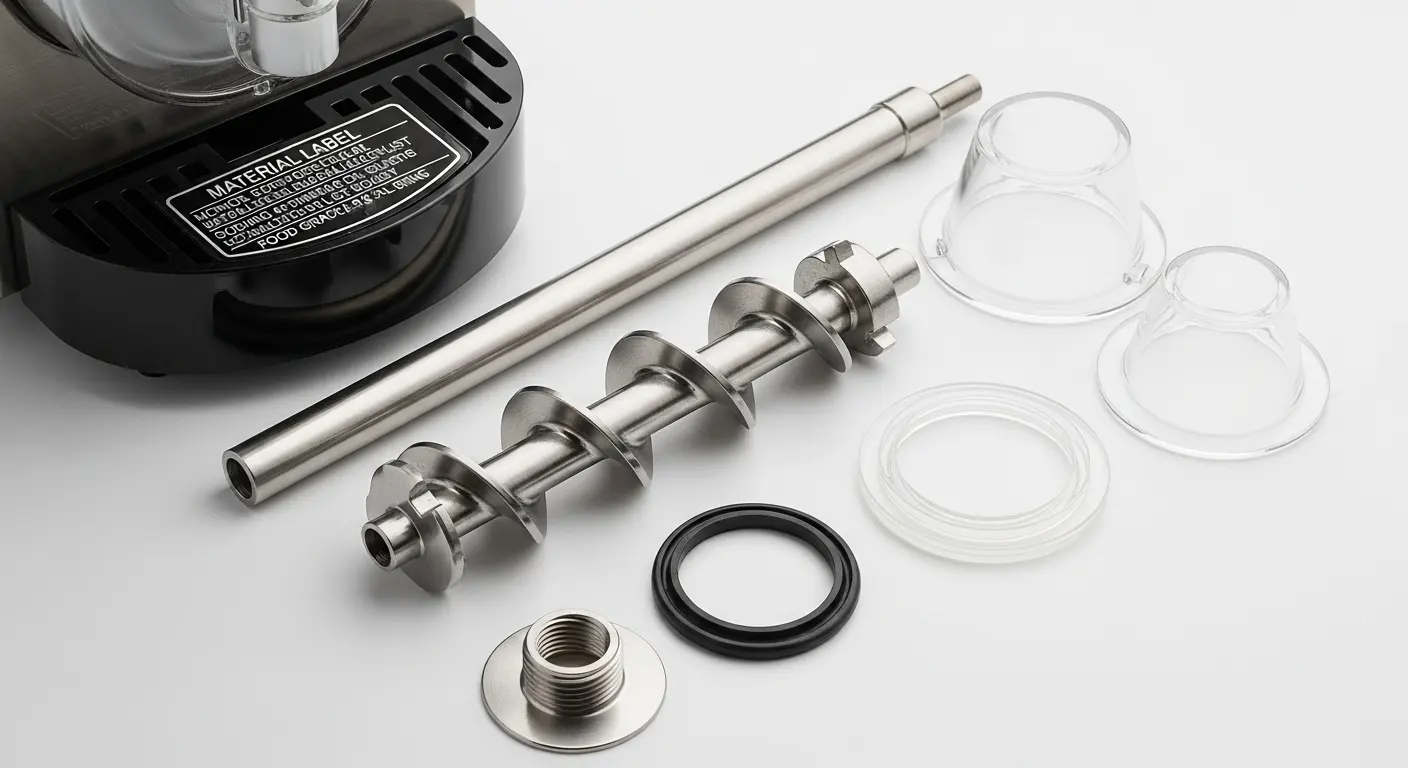
Whether you are buying for home use or commercial use, these are the specific quality signals worth checking before committing to a manufacturer.
Material Certifications
A reputable slushie machine manufacturer specifies its contact materials explicitly. Food-grade ABS for the bowl and body, food-grade or FDA/LFGB-compliant silicone for the seal ring, and SUS304 stainless steel for internal components are the baseline standard for quality machines. If a manufacturer's product listing does not specify materials — just "food-safe materials" or "BPA-free" in general terms — that absence is informative.
After-Sales Support and Spare Parts
A manufacturer who controls their own product engineering can supply replacement parts — seal rings, auger components, dispense valves — because they specified those parts in the original design. A private-label reseller often cannot, because the factory that made their machine may change between production runs. Before buying, check whether the manufacturer sells replacement parts directly, and whether those parts are identifiable by component name rather than just a generic bundle.
Warranty Coverage and Service Network
Direct OEM manufacturers typically provide more substantive warranty coverage because they can authorize service and supply parts. For commercial buyers specifically, a 1-year parts-and-labor plus 5-year compressor warranty (as offered by Icetro through distributors like TFI) is the kind of manufacturer-backed coverage that reduces operational risk significantly. For home buyers, a one-year warranty with direct manufacturer support is the standard expectation.
Engineering Documentation
Quality slushie machine manufacturers document their engineering features with specific language — intelligent auger reversal, jam protection, SUS304 stainless, specific decibel ratings, watt ratings, and capacity in precise measurements. Vague descriptions ("powerful motor," "advanced cooling") without specific numbers or certifications are typical of private-label resellers who did not engineer the product themselves.
Why the Manufacturer Matters for Long-Term Ownership
Buying from a credible slushie machine manufacturer is a decision that matters most 18 months after purchase — not at the point of sale. Here is where the gap shows up in practice.
Spare parts. A seal ring that degrades after two years of regular use needs a direct replacement from the manufacturer. If the brand is a private-label reseller and the factory changed suppliers between production runs, the original seal ring specification no longer exists. You either buy a generic part that may not fit correctly, or you replace the machine.
Warranty claims. An OEM manufacturer can authorize a repair or replacement because they have a service infrastructure. A reseller's warranty often requires shipping the unit back to a warehouse with no clear repair pathway — effectively meaning you get a replacement unit of the same quality if the claim is honored at all.
Product consistency. A manufacturer who controls their own engineering produces consistent units across production runs. Private-label products can shift in component quality between batches without the brand being aware.
For commercial buyers in particular, these long-term ownership factors determine the total cost of operating a frozen drink program. The industry insights section covers how manufacturer relationships and supply chain transparency are becoming key considerations for foodservice operators buying frozen beverage equipment.
For households combining slushie machine ownership with other frozen food appliances, the vacuum sealers guide covers how pairing a quality manufacturer's slushie machine with proper ingredient storage extends both drink quality and machine life. And if your frozen beverage setup includes dedicated ice production, the ice makers buying guide covers manufacturer-quality ice appliances compatible with home frozen drink stations.
Slushie Machine Manufacturer Comparison: Home vs. Commercial
| Factor | Home-Use Manufacturers | Commercial Manufacturers |
|---|---|---|
| Key brands | Yumyth, Ninja, Cuisinart, Chefman | Taylor, Icetro, BUNN, VEVOR, Elmeco |
| Capacity range | 48–88oz (1.4L–2.6L) | 3L–45L per tank |
| Price range | $150–$350 | $300–$5,000+ |
| Material standard | Food-grade ABS, silicone, SUS304 | NSF-certified, stainless construction |
| Warranty typical | 1 year direct | 1-year parts + 5-year compressor (premium) |
| Spare parts | Available from direct-to-consumer brands | Available through commercial distributors |
| After-sales support | Online direct or retailer | Field service networks in most regions |
| Best use case | Household, small gatherings | Cafes, food trucks, restaurants, events |
Frequently Asked Questions
Who are the top slushie machine manufacturers for home use?
The main home-use slushie machine manufacturers are Yumyth, SharkNinja (Ninja), Cuisinart, and Chefman. Yumyth and Ninja are the two most engineering-documented options — both control their product design, specify materials explicitly, and provide direct product support. Cuisinart and Chefman are established appliance brands with reliable warranty structures.
Who makes commercial slushie machines?
The leading commercial slushie machine manufacturers are Taylor Company, Icetro, BUNN, VEVOR, and Elmeco. Taylor is consistently rated the top choice for high-volume operations. Icetro is preferred for fast freeze cycles and clean design. BUNN is widely deployed in convenience stores. VEVOR suits smaller commercial operations on a tighter equipment budget.
What is the difference between a slushie machine manufacturer and a reseller?
A slushie machine manufacturer designs and controls the engineering of the machine — materials, components, and build quality. A reseller purchases finished machines from a factory and sells them under their own brand name without owning the product design. The practical difference shows up in spare parts availability, warranty support, and build consistency across production runs.
How do I know if a slushie machine brand is a real manufacturer?
A real slushie machine manufacturer specifies materials with precision (food-grade ABS, SUS304 stainless, LFGB-compliant silicone), documents engineering features (auger type, motor wattage, decibel rating), sells replacement parts by specific component names, and provides a warranty backed by a service infrastructure. Brands that list only vague material descriptions and no specific engineering details are typically private-label resellers.
Does the manufacturer affect how long a slushie machine lasts?
Directly and significantly. OEM manufacturers control material quality, component tolerances, and build consistency — all of which determine how a machine holds up over time. Machines from verified manufacturers with food-grade material specs and engineering documentation consistently outlast budget private-label units under the same use conditions. Access to manufacturer-supplied spare parts also extends usable machine life well beyond what is possible when the brand cannot supply replacement components.
Related Articles
How We Test Every Ice Maker Before Packaging
2026-09-15
BY YUMYTH
A step-by-step look at refrigerant handling, cooling verification, leak detection, corrective action and electrical safety testing For an ice maker, reliable performance is determined long before the carton is sealed. ...
Guide for Brands Looking for a Reliable Vacuum Sealer OEM Supplier
2026-09-14
BY YUMYTH
When you are sourcing kitchen appliances for your retail brand, finding a dependable vacuum sealer OEM supplier is rarely just about getting the lowest unit price. It is about protecting ...
Why Ice Shape Matters: Understanding 10mm × 15mm Cylindrical Nugget Ice
2026-09-14
BY YUMYTH
More Than Ice Production — The Ice Itself Shapes the Consumer Experience When sourcing a nugget ice maker, buyers often focus first on production capacity, water tank size, ice basket ...

Ice Maker Sourcing Guide: How to Find the Right Factory
2026-09-10
BY YUMYTH
Sourcing an ice maker looks straightforward on paper. Find a supplier, agree on a price, place an order. But anyone who has actually done this knows the process is rarely ...