
Vacuum Sealer Exporter: A Worldwide Buyer's Sourcing Guide
Share:
-

-

-

-


Copied

Share:
-
-
-
-
Copied
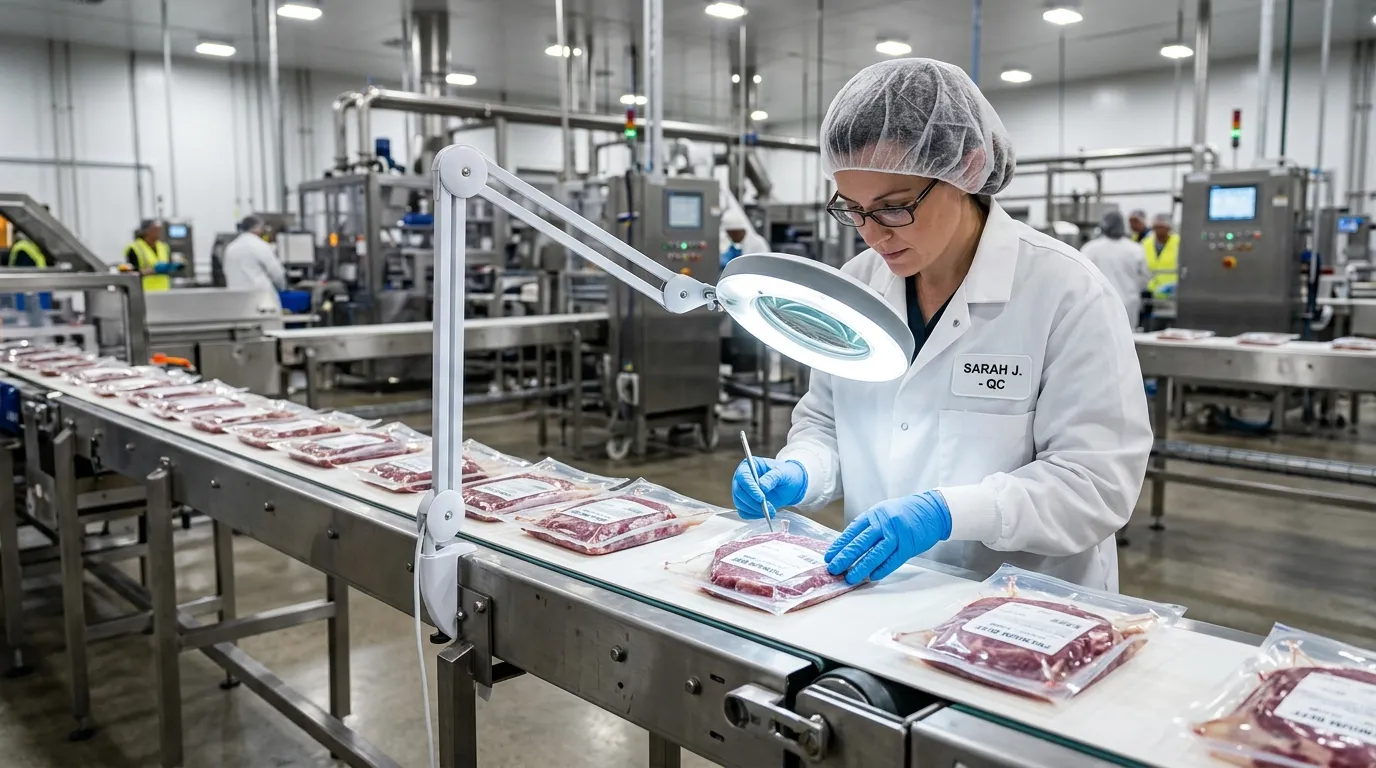
Choosing a vacuum sealer exporter involves more than comparing machine prices. An international buyer must confirm that the exporter can supply the right product type, electrical configuration, packaging, documentation, quality controls, and commercial terms for the destination market.
This guide focuses on food vacuum sealers for household retail, private-label programmes, e-commerce, food service, and light-commercial use. It explains what to verify before approving a sample, paying a deposit, or arranging an international shipment.
What Should a Vacuum Sealer Exporter Provide?
A capable exporter should coordinate the complete commercial path from product selection to shipment. Its role may include:
-
Recommending suitable models
-
Preparing technical specifications
-
Coordinating OEM or private-label requirements
-
Confirming minimum order quantities
-
Providing samples
-
Managing production communication
-
Supplying available compliance documents
-
Supporting quality inspections
-
Preparing commercial and shipping documents
-
Coordinating warranty claims and replacement parts
The exact level of control depends on whether the exporter manufactures the machines itself or purchases them from another factory.
Manufacturer-Exporter vs Trading Company
A manufacturer-exporter produces the goods and handles overseas sales. A trading company normally sources products from one or more factories and manages communication with the buyer.
| Supplier type | Potential advantage | Possible limitation | Evidence to request |
|---|---|---|---|
| Manufacturer-exporter | Direct access to production, engineering, components, and customization | Product range may be limited to the factory’s own platforms | Business licence, factory address, production records, model samples, quality process |
| Trading company | Broader model selection and experience combining products from different factories | Longer communication chain and less direct production control | Factory authorization, manufacturing-site details, inspection plan, certificate holder |
| Marketplace supplier | Fast discovery and initial price comparison | Marketplace verification does not prove exact product compliance or order performance | Legal company information, sample, exact certificates, contract terms, factory evidence |
A manufacturer-exporter is not automatically the best choice, and a trading company is not automatically unsuitable. The buyer should evaluate transparency, technical competence, document accuracy, quality control, and contractual responsibility.
Buyers who need a deeper review of direct production and customization can visit YUMYTH’s page about working with a vacuum sealer manufacturer china.
Define Your Product and Market Requirements Before Requesting Quotes
Suppliers cannot prepare accurate quotations from a message that only says, “Please quote your best vacuum sealer.”
A useful request for quotation should identify:
-
Destination country or region
-
Sales channel
-
Intended user
-
Household or commercial application
-
Expected daily usage
-
Required bag sizes
-
Dry, moist, pulse, accessory, or liquid functions
-
Voltage and frequency
-
Plug type
-
Label and manual language
-
Initial order quantity
-
Estimated annual quantity
-
Logo and packaging requirements
-
Required compliance documents
-
Inspection requirements
-
Delivery destination
-
Target shipment date
These details affect model selection, components, documentation, packaging, cost, and production time.
For example, a compact external sealer for online retail has different requirements from a chamber machine used repeatedly in a restaurant. The electrical configuration may also change between markets even when the external housing looks identical.
Standard Model, Partial Customization, or New Development?
Buyers should decide how much customization the project actually needs.
| Sourcing route | Suitable when | Commercial effect |
| Existing model | The supplier already has a suitable product platform | Lower development complexity and normally faster preparation |
| Branding and packaging customization | The product functions are acceptable but the buyer needs private-label presentation | Additional artwork, packaging approval, and usually a higher MOQ |
| Partial product customization | The buyer needs changes to the housing, controls, accessories, or selected functions | May require engineering work, new tests, tooling, and longer production time |
| New model development | No existing platform meets the project requirement | Highest engineering commitment, cost, documentation burden, and lead time |
YUMYTH publishes support for branding, packaging, accessories, exterior changes, functional tuning, partial customization, and new-model development. Buyers planning a fully customized project should review the company’s OEM and ODM development process rather than treating a new design like a standard wholesale order.
Select the Right Vacuum Sealer Type for the Application
Product class should be selected before suppliers are compared. A quotation for the wrong type of machine has little value, even when the unit price appears attractive.
| Product type | Common use | Packaging consideration | Important buying factors |
| External vacuum sealer | Household use, private-label retail, meal preparation, light food-service tasks | Normally uses compatible textured or embossed bags | Sealing length, vacuum modes, pulse control, moist-food handling, accessory port, duty cycle |
| Chamber vacuum sealer | Liquids, sauces, moist foods, repeated commercial use | Can use suitable smooth chamber pouches | Chamber dimensions, pump flow, vacuum level, cycle time, maintenance access |
| Dual-mode machine | Buyers needing both chamber and external operation | May support more than one packaging workflow | Mode switching, chamber capacity, external-bag support, cleaning, intended duty |
Vacuum pressure should not be evaluated alone. Pump flow influences how quickly air is removed, while cycle time and duty cycle affect practical throughput. Sealing length determines the maximum bag width, and seal width can affect seal robustness.
Bag compatibility is equally important. External suction machines depend on bag structures that allow air to move toward the vacuum channel. Chamber machines operate differently and can often use suitable smooth pouches. The buyer should test the intended bag material and thickness with the actual sample machine.
Restaurants, delis, caterers, and other higher-demand users may need a commercial vacuum sealer rather than a household model. Buyers evaluating current control systems, pump arrangements, sealing functions, and packaging compatibility can also review the modern vacuum sealer guide.
Verify the Exporter, Factory, and Contracting Entity
“Factory direct” is a marketing statement until the supplier provides evidence.
Before placing an order, confirm:
-
Registered legal company name
-
Registered business address
-
Manufacturing-site address
-
Name appearing on the sales contract
-
Name issuing the commercial invoice
-
Bank-account beneficiary
-
Exporting entity
-
Manufacturer or applicant shown on product documents
-
Factory responsible for final assembly
-
Location where the sample and bulk goods are produced
These names do not always have to be identical. A group may use separate manufacturing, sales, and export entities. The relationships should, however, be documented and commercially understandable.
A buyer should investigate unexplained inconsistencies. For example, payment instructions from an unrelated company, a certificate issued to a different factory, or a sample carrying another model number requires clarification before deposit payment.
Factory verification may include a video audit, third-party visit, business records, production photographs, inspection reports, or a review of the supplier’s factory and production overview. Published factory information can support due diligence, but it should not replace transaction-specific evidence.
Product Evidence, Factory Evidence, and Social-Audit Evidence Are Different
Different documents answer different questions.
-
Product conformity evidence concerns a defined product, model, configuration, or standard.
-
ISO 9001 certification concerns a quality-management system within a stated legal entity, location, and scope.
-
A social audit examines working conditions and supply-chain practices at a production site.
-
A factory visit confirms that a facility exists but does not prove that the product complies with destination-market rules.
The International Organization for Standardization explains that ISO develops standards but does not itself certify companies. Certification is performed by an independent certification body.
Similarly, amfori describes BSCI as an audit and due-diligence system, not a product or factory certification. Buyers should ask for the audit date, production site, available findings, and corrective-action status rather than requesting a generic “BSCI certificate.”
Check Compliance Evidence for the Exact Model and Destination Market
Certification logos on a supplier page are not enough. Evidence should be checked against the exact machine being purchased.
A document review should confirm:
-
Legal manufacturer or applicant
-
Product name and model number
-
Covered model family, if applicable
-
Rated voltage and frequency
-
Manufacturing location where relevant
-
Applicable standard
-
Certificate or report number
-
Issue date and validity
-
Certification-body or laboratory identity
-
Covered components and configuration
-
Searchable listing where available
-
Whether customization changes the approved product
The destination market determines what evidence is needed. An importer should not assume that a document accepted in one country automatically permits sale in another.
The European Commission’s CE marking guidance explains that CE marking represents the manufacturer’s declaration that applicable European requirements have been met. It is not a universal approval issued by the European Union, and importers retain compliance responsibilities.
For North American product-safety evidence, buyers may encounter ETL or another Nationally Recognized Testing Laboratory mark. The OSHA NRTL programme explains that recognized laboratories certify products within defined standards and scopes. The buyer should verify the exact model in the relevant listing rather than relying on a logo.
The IECEE CB Scheme supports international acceptance of electrical-safety test reports and certificates. A CB document can assist certification activity in participating markets, but it does not create automatic worldwide approval.
Food-contact claims also require precise wording. The U.S. Food and Drug Administration’s food-contact guidance focuses on substances, intended uses, and applicable authorizations. “FDA-certified vacuum sealer” is normally less useful than a material declaration or test report identifying the relevant food-contact components and conditions of use.
YUMYTH’s website lists CE-LVD, CE-EMC, ETL, CB, ERP, LFGB, FDA, RoHS, REACH, PAHS, and SCCP among its published compliance categories. Buyers should review the company’s published certification information and then request evidence for the exact model, voltage, factory, and target market.
Avoid Misleading Compliance Shortcuts
| Weak claim | Better buyer question |
| “CE approved” | Which EU legislation and standards are listed in the Declaration of Conformity for this exact model? |
| “ETL available” | Is the ordered model and voltage shown in the current NRTL listing? |
| “CB certified worldwide” | Which CB Test Certificate and report cover the product, and what additional national approvals are needed? |
| “FDA certified” | Which materials contact food, and what declaration or test evidence supports their intended use? |
| “BSCI certified factory” | When was the production site last audited, and what was the corrective-action status? |
Approve the Sample and Control Bulk-Production Quality
A sample should represent the intended production configuration, not a similar machine selected only for demonstration.
The buyer should test:
-
Vacuum function
-
Seal consistency
-
Intended bag materials
-
Dry and moist modes
-
Pulse or manual control
-
Liquid handling where applicable
-
Consecutive operating cycles
-
Noise and vibration
-
Cleaning access
-
Gaskets and sealing elements
-
Included accessories
-
Voltage, frequency, and plug
-
Labels and manuals
-
Retail and shipping packaging
Any approved deviation should be recorded before mass production.
YUMYTH publishes a charged-sample policy, with shipping paid by the buyer and a stated sample delivery range of 3–10 days after confirmation. Availability and timing should still be reconfirmed for the selected model.
Create a Golden Sample and Change-Control Record
The approved unit should become a golden sample: a dated and identified reference for bulk production and final inspection.
Record:
-
Model and revision
-
Electrical configuration
-
Housing and control layout
-
Main components
-
Firmware or programme version where relevant
-
Labels and markings
-
Accessories
-
Packaging
-
Manual
-
Approved test results
The purchase agreement should also require written approval before the supplier changes important materials, components, firmware, factory location, labels, or packaging.
YUMYTH states that its quality process includes incoming inspection, in-process checks, final functional testing, and acceptance of third-party pre-shipment inspection. For an actual order, the buyer should define what the inspection will test, when it will occur, and how failures will be handled.
Compare Quotations Beyond the Unit Price
Two suppliers may quote the same-looking machine while including very different products and responsibilities.
A proper quotation comparison should include:
| Comparison item | What to confirm |
| Product | Exact model, version, functions, materials, accessories |
| Electrical setup | Voltage, frequency, plug, rated power |
| Packaging | Retail box, master carton, inserts, artwork, manuals |
| Quantity | MOQ, order quantity, annual forecast |
| Customization | Logo, housing, control panel, packaging, functions |
| One-time costs | Tooling, artwork, engineering, testing, NRE |
| Sample | Sample price, freight, deduction policy |
| Compliance | Included reports, certificates, declarations, testing costs |
| Production | Lead time and what starts the lead-time count |
| Inspection | Factory inspection, third-party inspection, reinspection cost |
| Payment | Deposit, balance, currency, bank charges |
| Warranty | Duration, exclusions, evidence, remedy, freight responsibility |
| Spare parts | Included parts, pricing, future availability |
| Trade term | Incoterms rule, named place, included freight and insurance |
| Local costs | Duties, taxes, broker fees, port charges, inland delivery |
YUMYTH currently publishes indicative vacuum-sealer MOQs of 500 units for non-customized products and 1,000 units for branding, packaging, or accessory customization. New-model quantities are described as negotiable.
Its published production ranges are:
-
4–6 weeks for basic customization
-
8–10 weeks for a new cover or functional changes
-
12–16 weeks for new-model development
These ranges should be confirmed against the chosen model, order quantity, artwork status, component availability, testing requirements, and production schedule. Shipping time is separate from production time.
YUMYTH also publishes standard payment terms of 30% T/T deposit and 70% before shipment, with L/C at sight available for qualified orders. Its stated warranty is 12 months from shipment for manufacturing defects, with exclusions including misuse, incorrect voltage, unauthorized repair, and commercial use of household models.
Buyers needing more detail about bulk models and order structures can review Vacuum Sealer Wholesale.
Incoterms and the Named Place Must Appear Together
An Incoterms rule should always be paired with a named location. “FOB price” is incomplete without the named port, just as “DAP” or “DDP” requires a stated destination.
The International Chamber of Commerce’s Incoterms 2020 rules allocate specific seller and buyer obligations, costs, and risks.
Before comparing quotations, confirm:
-
Export customs responsibility
-
Main freight
-
Cargo insurance
-
Destination handling
-
Import customs clearance
-
Duties and taxes
-
Inland delivery
-
Point of risk transfer
No single Incoterms rule is best for every buyer. The correct choice depends on the buyer’s importing experience, freight arrangements, destination, and need for cost control.
Confirm the Export and Shipping Document Package
Document requirements should be agreed before production, not discovered after the goods reach the port.
A typical shipment may require:
-
Commercial invoice
-
Packing list
-
Bill of lading or air waybill
-
Certificate of origin where applicable
-
Product certificates and reports agreed in the contract
-
Declaration of Conformity where applicable
-
Inspection report
-
Product labels
-
User manuals
-
Warranty information
-
Packing specifications
-
Insurance document where included
-
Other destination-specific records
The Harmonized System provides the international basis for customs classification, but national tariff systems may extend the code. The World Customs Organization’s HS overview explains that the system uses a six-digit international structure.
A buyer should not accept an invented universal HS code from a generic guide. The actual product should be reviewed with a customs broker or the relevant customs authority before shipment.
Watch for These Vacuum Sealer Sourcing Red Flags
Pause the transaction and request clarification when:
-
The certificate model does not match the quotation
-
The certificate holder has no documented connection to the supplier
-
Payment is requested to an unexplained third party
-
The supplier refuses sample testing
-
The factory refuses reasonable inspection
-
The quotation says “worldwide certified” without exact documents
-
Bag compatibility is unclear
-
No written specification is attached to the contract
-
Components can be changed without buyer approval
-
Production or delivery promises appear unrealistic
-
The warranty gives a duration but no remedy
-
The quotation omits the named Incoterms place
-
Testing, packaging, accessories, or local charges are excluded without explanation
-
A household model is recommended for continuous commercial work without duty-cycle evidence
One inconsistency does not automatically prove fraud or poor quality. It does mean the buyer should resolve the issue before paying a deposit.
YUMYTH’s Published Support for International Vacuum Sealer Buyers
YUMYTH publishes a vacuum sealer range that includes compact external machines, automatic models, and the CVS101 chamber/external model. Its published external examples include the VS6606X and VS6612X.
The company states that it supports:
-
Standard model orders
-
Logo and private-label projects
-
Customized packaging
-
Accessory changes
-
Exterior changes
-
Functional tuning
-
Partial customization
-
New-model development
Its published order process moves from model selection and sample testing to deposit, production, inspection, balance payment, and shipment arrangement.
YUMYTH also states that it accepts third-party pre-shipment inspection and provides a 12-month warranty for manufacturing defects under its published terms. All MOQs, timelines, documents, warranty conditions, and payment arrangements should be reconfirmed in the final quotation and sales contract for the selected model.
Buyers can review the company’s current vacuum sealer product range before preparing an enquiry.
Prepare Your RFQ Before Contacting an Exporter
A complete RFQ should contain:
-
Target country
-
Intended application
-
Sales channel
-
Preferred machine type
-
Required functions
-
Bag sizes and materials
-
Voltage, frequency, and plug
-
Initial order quantity
-
Annual forecast
-
Branding requirements
-
Packaging requirements
-
Required compliance documents
-
Inspection plan
-
Delivery location
-
Target schedule
Attach reference images or specifications when available, but state which features are mandatory and which are optional.
Once these details are ready, buyers can submit their sourcing requirements and request a bulk quotation. Ask for the recommended model, technical datasheet, exact compliance evidence, sample terms, production schedule, Incoterms quotation, warranty conditions, and available spare parts in the same enquiry.
Related Articles
How We Test Every Ice Maker Before Packaging
2026-09-15
BY YUMYTH
A step-by-step look at refrigerant handling, cooling verification, leak detection, corrective action and electrical safety testing For an ice maker, reliable performance is determined long before the carton is sealed. ...
Guide for Brands Looking for a Reliable Vacuum Sealer OEM Supplier
2026-09-14
BY YUMYTH
When you are sourcing kitchen appliances for your retail brand, finding a dependable vacuum sealer OEM supplier is rarely just about getting the lowest unit price. It is about protecting ...

Why Ice Shape Matters: Understanding 10mm × 15mm Cylindrical Nugget Ice
2026-09-14
BY YUMYTH
More Than Ice Production — The Ice Itself Shapes the Consumer Experience When sourcing a nugget ice maker, buyers often focus first on production capacity, water tank size, ice basket ...

Ice Maker Sourcing Guide: How to Find the Right Factory
2026-09-10
BY YUMYTH
Sourcing an ice maker looks straightforward on paper. Find a supplier, agree on a price, place an order. But anyone who has actually done this knows the process is rarely ...