
How much does custom slush machine tooling cost?
Share:
-

-

-

-


Copied

Share:
-
-
-
-
Copied
The price of custom slush machine tooling varies from a small, simple plastic part to well over $100,000 for a complex mold or entire set of production tools.
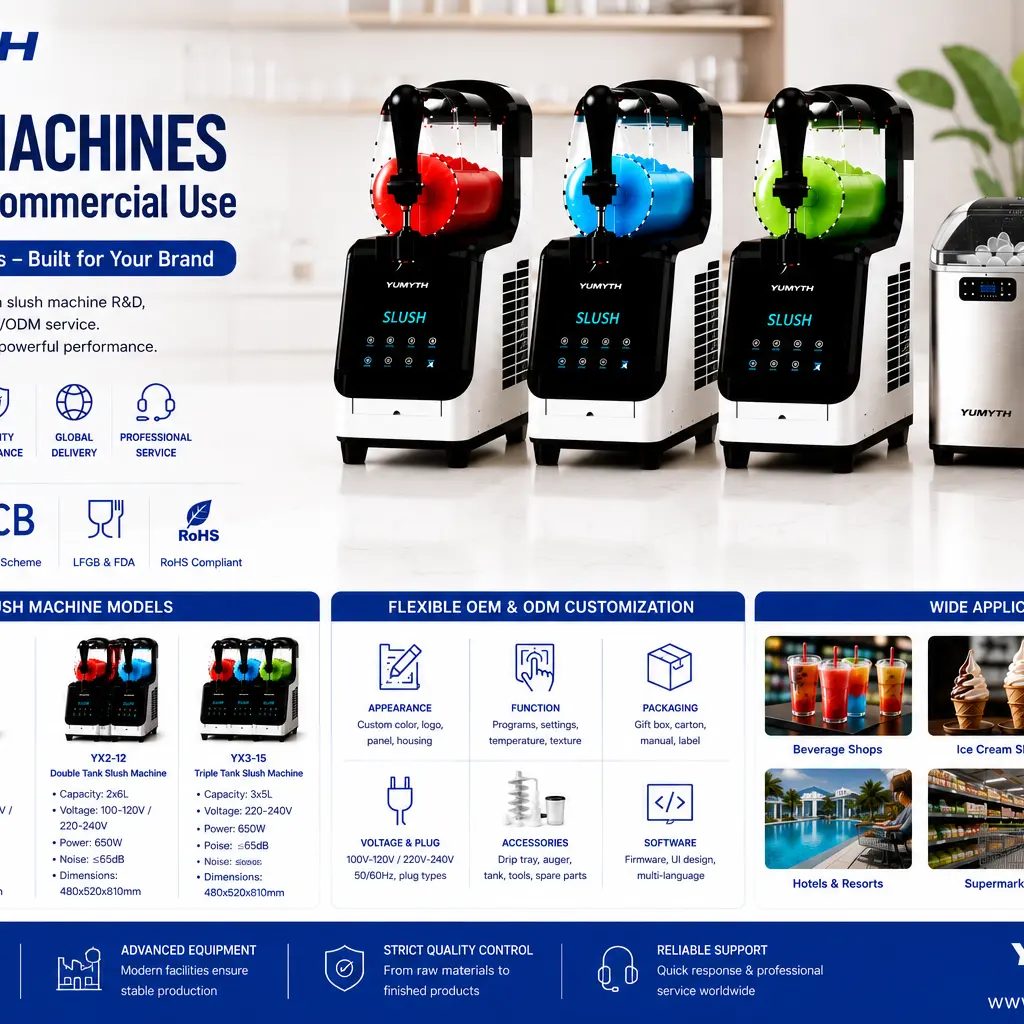
Depending on the design of the custom slush machine, the machine housing, beverage tank, lid, auger, dispensing handle, valve components, drip tray, control-panel frame, ventilation grilles and internal supports may all need separate injection moulds. Thus, the overall tooling cost is not only the cost of one mold, but also the number of original parts in the project.
The cost of tooling for general injection molding ranges from about $3,000 to $100,000 or more, depending on mold size, complexity, material, cavity count and production volume. Simple, quick moulds can start as low as this, and large or complicated production molds can go higher.
The following are typical ranges for tooling costs.
Initial slush machine project planning is done by using the following ranges:
- Small, simple component mold: About $3000-$10,000;
- Medium housing, lid, tray or panel mold: about $8,000-$25,000;
- * Large or complex structural mold: $20,000 - $50,000 or more;
- High-clarity tank or precision food-contact mold: about $15,000 – $50,000 or more;
- Exclusive tooling for appliances: around $50,000-200,000, or more.
These represent engineering-budget ranges and not quotes from suppliers. Several different molds might be required for a complete machine, making the total investment greater than that of a single mold in the standard investment range.
Only an accurate quotation can be given when the final 3D files, 2D drawings, resin specification, surface requirements, defined production volume and defined mold-life expectations are given.
The size of the part directly relates to the cost of the mold.
The larger steel blocks, the heavier mold bases, the greater amount of machining, the stronger support structure and the larger injection-molding machines needed are all due to the size of the large slush machine parts.
A small button or seal-retainer, for instance, can be fabricated from significantly less material and can be machined in a simpler manner than a full rear housing or clear beverage tank. More elaborate cooling channels might also be required for larger molds to reduce warping and shrinkage.
The housing therefore can be a lot more expensive than a number of small interior components.
However, product designers can reduce the cost of this as long as the enclosure is split up into smaller pieces which brings new requirements for assembly, enclosure sealing, look and quality control. Design-for-manufacturing analysis needs to be used to select the lowest cost structure, not just to make the mold smaller.
The more complex the geometry, the longer the machine will take to make.
One of the principle factors of mold cost is the amount of time it takes to produce the mold. If there is more complex geometry, then more CNC machining, electrical discharge machining, polishing, fitting and trial correction is needed.
Generally, the more of the following in a component, the higher the cost.
- * Deep cavities;
- * Thin walls;
- * Narrow grooves;
- * Tall ribs;
- * Complex locking features;
- * Internal hooks;
- * Multiple sealing surfaces;
- * Difficult ejection areas;
- * Tight dimensional tolerances.
For a simple drip tray with an open design, a relatively simple two-part mold may be needed. A dispensing component with internal liquid passages, side holes, locking tabs and seal grooves can need several mold actions or sliders, lifters, removable inserts or several.
The more mechanisms there are, the more time is spent designing, the more expensive the product is, the more maintenance it needs, and the more time that can be lost in production.
Undercuts and Side Actions Add Cost
Undercut makes it impossible to remove the molded part in the usual direction of mold opening.
Undercuts around the following parts of the slush machine can be found in:
- * Tank locking features;
- * Dispensing-valve connections;
- * Handle pivots;
- * Lid clips;
- * Decorative side openings;
- * Internal mounting structures.
Most of the features need to have slides, lifts or some kind of side action. Reducing the pull direction and eliminating undercuts can lower tooling costs and increase mold stability. Protolabs specifically points to part complexity and avoidable side actions as factors that drive up the cost of injection molding.
Sometimes, a single complex molded component can be broken down to two simpler components that are later joined together. The engineering team should assess the extra assembly labour requirement and possible reliability concerns with the lower mould cost.
Transparent Tanks need the best equipment.
A clear drink tank is typically more challenging than a regular plastic brackets in the back.
The mold may require:
- * High-quality tool steel;
- * Optical polishing;
- * Precise wall-thickness control;
- * Stable cooling;
- * Carefully positioned gates;
- * Minimal weld lines;
- * Accurate sealing surfaces;
- Close control of warping and shrinkage.
Any scratch, flow mark, haze, black spot, or any bumps or dips are very noticeable on a clear tank.
Tool steel is often used for high gloss or optically clear applications such as NAK80 tool steel, which polishes well. But, Fictiv states NAK80 is typically more expensive and has about 20-25% higher tooling-production time, compared to standard P20 steel.
The cost may then be higher for a clear tank mould than for a mould for the exterior of a tank.
Mold Steel and Expected Service Life
Aluminum or lower cost steel can be used with prototype and low volume molds, and long production programs typically require a more durable tool steel.
The choice of tools should be consistent with the number of moulding operations to be run.
We don't have to use a one-million cycle tool for a low volume launch. On the other hand, if the low cost prototype mold needs to be frequently repaired or replaced when the product is put into mass production, it will be costly.
Fictiv says that the mold classes correspond to different predicted production volumes and construction levels. The higher life molds employ more durable materials and construction and raise the initial cost, but allow for longer production programs.
The quotation should include:
- * Mold-base material;
- * Steel plate, mesh or wire frame; and
- * Steel hardness;
- * Expected service life;
- * Replaceable inserts;
- * Maintenance schedule;
- * Warranty conditions.
If two suppliers are quoting different tool lives, a price comparison doesn't make any sense.
Single Cavity vs Multi Cavity Molds
This one-cavity mold makes one part per cycle. The multi-cavity mold creates a number of identical components at a time.
A multi-cavity mold is more expensive due to the extra cavities, runners, gates, cooling channels and flow balancing that are necessary. It can improve the cost of the molded part, however, it can also enhance the production capacity.
The recipient of the information:
- * Annual machine volume;
- * Required production speed;
- * Part dimensions;
- * Resin cost;
- * Cycle time;
- * Long-term unit-cost targets.
Protolabs considers production quantity, material and part geometry to be significant factors in deciding between single versus multi-cavity tooling.
If a slush machine brand is new with not sure demand, a singlecavity mold may help minimize initial investment. For a well-established program with a production run of tens of thousands of units, multi-cavity tooling might be a useful method.
Surface Finish and Branding Requirements
If decoration surfaces must be high quality, the tooling cost can increase.
Possible requirements include:
- * High-gloss polishing;
- * Matte textures;
- * Leather-like textures;
- * Fine decorative patterns;
- * Molded logos;
- *Low draft steady velocity; and
- * Fitting the end of one material with the start of the other.
The preparation and finishing of textures and high polish surfaces are more intricate and require expertise. The component should also have enough draft to allow the removal of the part without damage to the surface, in certain situations.
Brands need to determine what surfaces are customer-facing and which are not. The use of high quality finishes in internal or lesser visible spaces is more expensive but not adding value to the user.
Logos and decorative elements should also be determined prior to the beginning of the tooling. This could involve welding, new inserts or replacement of moulded part for a change in a logo at a later stage.
Tolerances and Sealing Performance
It is not necessary to be exact with all of the dimensions on a slush machine.
Some of the critical dimensions can be:
- * Tank-to-base alignment;
- * Auger clearance;
- * Seal compression;
- * Valve fit;
- * Motor-coupling position;
- * Lid locking;
- * Housing ventilation gaps.
More accurate machining, checking, mold correction and process control are needed in tight tolerances. Exceeding standard cosmetic specifications can be a waste of tooling dollars.
In the engineering drawing, the safety, sealing, moving and assembly dimensions should be distinguished from noncritical dimensions. Focus on precision in the areas where it will impact performance and reliability.
Check that the tool is in good condition and make sure it is adjusted correctly.
When the first quotation is sent, the number of rounds that will be needed for trial and correction should be specified.
Following the first trial (T1), engineers can discover:
- * Warping;
- * Sink marks;
- * Short filling;
- * Difficult ejection;
- * Incorrect dimensions;
- * Leakage;
- * Surface defects;
- * Assembly interference.
This tool may then need to be machined, welded, polished, be changed in gate or have new inserts fitted.
The corrections made as a result of a tool-manufacturing error are usually handled differently than the corrections made because of a customer's design change. If the brand alters the product after the drawings are approved, there are likely to be further costs and delays.
The more mold machining is done, the more the design costs.
Additional charges in addition to the cost of the mold.
Please note that the quoted mold price does not necessarily contain all the project costs.
The purchaser should inquire about the following in the quotation:
- * Design-for-manufacturing review;
- * Mold-flow analysis;
- * Prototype parts;
- T1, T2 and subsequent samples;
- * Resin for trials;
- * Texture application;
- * Polishing;
- * Inspection reports;
- * Sample shipping;
- * Assembly fixtures;
- * Spare inserts;
- * Packaging;
- * Taxes and freight.
Global sourcing may also entail currency conversion, insurance, transportation, customs, and warehousing costs. These costs must be added onto the supplier's price, rather than just the “upfront” tooling cost and should be part of the overall “landed cost.”
The cost of custom slush machine tooling can be reduced by following these steps.
Brands of appliances can regulate the investment in tooling by:
- 1. Re-using successful tanks, augers, valves and internal structures;
- 2. Modifying exterior panels instead of entire machine;
- 3. Avoiding unnecessary undercuts and side actions;
- 4. Using realistic tolerances;
- 5. Mold design finalization of resin;
- 6. Restricting premium finishes to the exposed parts;
- 7. Beginning on single cavity tooling when quantity is an unknown;
- 8. Finishing DFM review prior to machining;
- 9. Freezing the design prior to making the tools;
- 10. Logo or regionalized interchangeable inserts.
Protolabs suggests that to control tooling costs it is best to simplify geometry, maintain appropriate wall thickness, select appropriate materials and avoid excess side actions.
What is acceptable in a Tooling Agreement?
The contract should include the following prior to paying a tooling deposit:
- * Mold ownership;
- * Exclusivity;
- * Storage location;
- * Expected service life;
- * Maintenance responsibility;
- * Included trial rounds;
- * Approval criteria;
- * Transfer rights;
- * Tool-identification number;
- * Application of colors, fonts, designs, and patterns; and
- Treatment of unused toolings.
Just because a mold was paid for does not mean that it is the legal property or has full transfer rights. It is advisable to have these terms agreed in writing prior to development.
Conclusion
The price of custom slush machine tooling can be thousands of dollars for a small component or over $100,000 for a complex mold. A full original appliance that needs a number of new housings, tanks, augers, valves, panels and internal structures can cost $50,000-$200,000 or more to tool.
The final cost will be affected by the size of the parts, their complexity, the type of mold steel, the number of cavities, the surface finish, tolerances, optical requirements, the number of times that a mold is expected to be used, the number of trial corrections, and the amount of production.
The best approach is likely always to keep a production-grade refrigeration and mechanical facility and spend money on the parts that will make the brand “visible” and bear some value for the user.
A full quotation for any tooling should be based on the final drawings and include all of the following: ownership, mold life, trial stages, corrections, maintenance and all additional development costs.
Related Articles
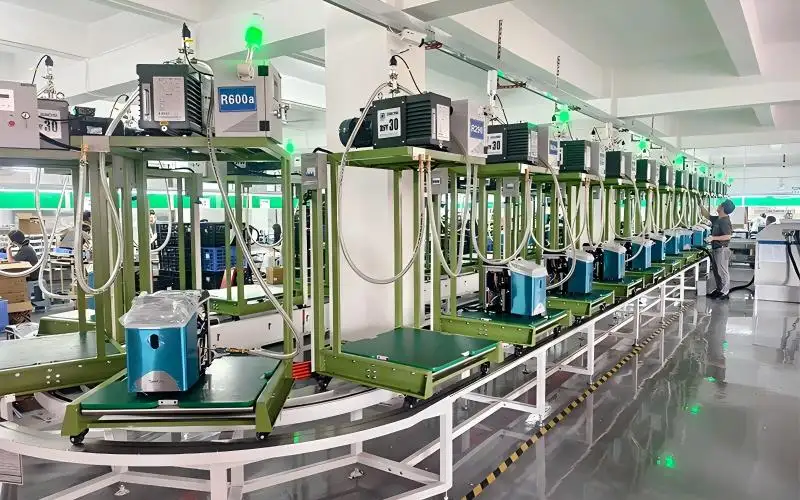
How We Test Every Ice Maker Before Packaging
2026-09-15
BY YUMYTH
A step-by-step look at refrigerant handling, cooling verification, leak detection, corrective action and electrical safety testing For an ice maker, reliable performance is determined long before the carton is sealed. ...
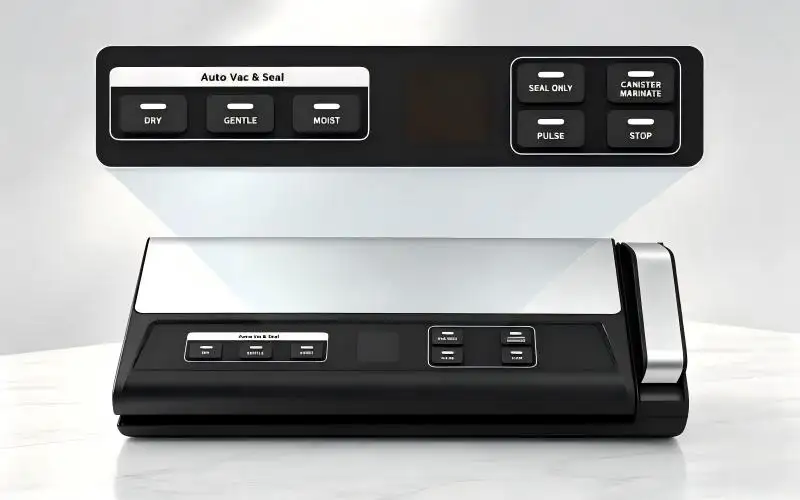
Guide for Brands Looking for a Reliable Vacuum Sealer OEM Supplier
2026-09-14
BY YUMYTH
When you are sourcing kitchen appliances for your retail brand, finding a dependable vacuum sealer OEM supplier is rarely just about getting the lowest unit price. It is about protecting ...

Why Ice Shape Matters: Understanding 10mm × 15mm Cylindrical Nugget Ice
2026-09-14
BY YUMYTH
More Than Ice Production — The Ice Itself Shapes the Consumer Experience When sourcing a nugget ice maker, buyers often focus first on production capacity, water tank size, ice basket ...

Ice Maker Sourcing Guide: How to Find the Right Factory
2026-09-10
BY YUMYTH
Sourcing an ice maker looks straightforward on paper. Find a supplier, agree on a price, place an order. But anyone who has actually done this knows the process is rarely ...