
Custom Slush Machine Manufacturing Guide: From Initial Concept to Production Launch
Share:
-

-

-

-


Copied

Share:
-
-
-
-
Copied
Developing a Custom Slush Machine for a home appliance brand involves far more than changing colors, logos, or control-panel graphics. Capacity, refrigeration performance, auger load, temperature logic, cleaning structure, electrical configuration, and compliance requirements all interact.
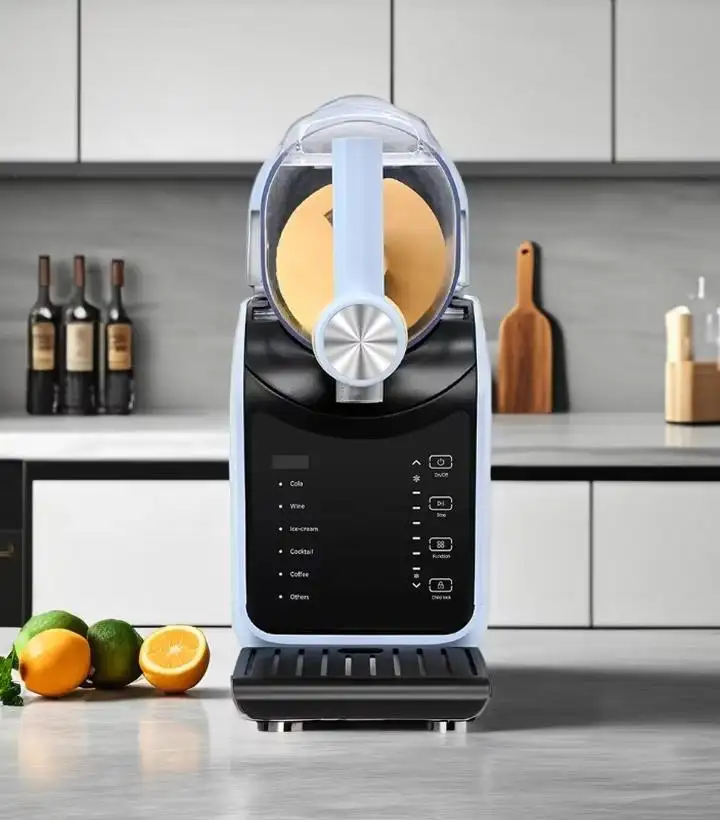
At YUMYTH, Custom Slush Machine development is therefore approached as a staged engineering process: define the performance target, select the customization depth, match the cooling and mixing system, validate the prototype, verify compliance, and then confirm repeatability through pilot production.
Define the Custom Slush Machine Specification Before Exterior Design
A common OEM development problem is completing industrial design before the internal engineering envelope is fixed.
Before housing geometry or tooling is approved, the project should define:
•Target beverage capacity
•Expected freezing-cycle range
•Number of preset and custom programs
•Texture or temperature adjustment levels
•Target household noise level
•Cleaning and disassembly method
•Target voltage and frequency
•Intended destination market
•Required food-contact materials
YUMYTH's existing platform provides a useful engineering reference: approximately 1.8 L capacity, 200–220 W rated power, adjustable temperature control, operation cycles around 20–45 minutes, and household-oriented noise levels below approximately 55 dB.
These parameters cannot be considered separately. Increasing liquid capacity, for example, increases the amount of heat that must be removed and may affect evaporator sizing, freezing time, auger resistance, compressor duty, and housing dimensions.
Cooling, Auger Mixing and Temperature Control Work as One System
A Custom Slush Machine must create partial freezing without allowing the beverage to become a solid block.
The basic process is:
Heat Removal → Ice Crystal Formation → Continuous Mixing → Temperature Feedback → Texture Control
Evaporator and Cooling System
The evaporator creates the low-temperature heat-transfer surface. Its performance must match:
•Liquid volume
•Starting beverage temperature
•Ambient temperature
•Desired processing time
•Available heat-transfer area
Rated electrical power alone cannot predict freezing speed. A 200 W machine does not automatically reach the same texture in the same time under every operating condition.
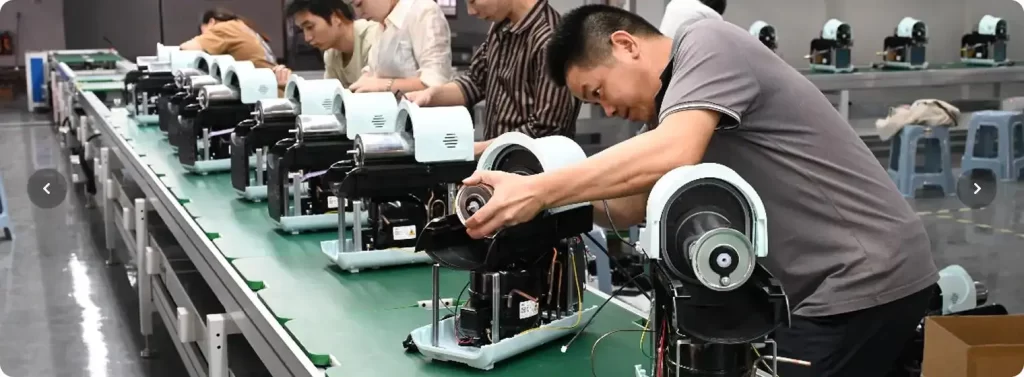
Auger and Motor Load
As ice fraction increases, mixture resistance also changes. The auger must continuously move the beverage across the cold surface while avoiding excessive ice accumulation.
YUMYTH uses a patented dual-direction / intelligent auger reversal system on its current Custom Slush Machine platform. Reversal is not simply an additional feature; it helps manage resistance when local freezing increases and reduces the risk of auger jamming.
This creates an important engineering relationship:
Lower Temperature → More Ice Formation → Higher Mixing Resistance → Higher Auger Load → Greater Need for Motor-Control Protection
Choose Platform Customization or Structural Redesign
Not every Custom Slush Machine OEM project should start from a completely new architecture.
| Development Area | Platform-Based Customization | Structural Redesign |
| Color / Logo | Easy | Easy |
| Control Panel | Adjustable | Fully redesigned |
| Programs | Firmware-based changes | New control strategy |
| Capacity | Usually retained | May change |
| Jar / Auger | Existing structure | New tooling likely |
| Cooling System | Proven platform | Re-engineering required |
| Validation Scope | More controlled | Wider |
| Development Risk | Lower | Higher |
For brands expanding an existing appliance line, retaining the proven refrigeration, evaporator, and auger system while customizing appearance, programs, UI, packaging, or selected functions usually reduces engineering risk.
By contrast, changes to capacity, auger geometry, evaporator structure, or refrigeration layout require deeper thermal, mechanical, and safety validation.
Match the Custom Slush Machine as a Complete System
Before prototype tooling, component specifications should be reviewed together rather than approved independently.
| Parameter Change | Direct Impact | Secondary Impact |
| Capacity increases | Thermal load increases | Freezing time may increase |
| Colder texture setting | Ice fraction increases | Auger torque demand rises |
| Auger geometry changes | Flow pattern changes | Texture and motor load change |
| Housing becomes smaller | Internal space decreases | Cooling airflow may be restricted |
| Program logic changes | Operating sequence changes | Additional validation required |
| Voltage changes | Electrical architecture changes | Components require verification |
This is why a Custom Slush Machine should not be developed by independently selecting a compressor, motor, jar, and PCB.
Program and Texture Control
YUMYTH's 2-in-1 platform supports 5 preset programs, 1 custom program, and 6 temperature settings.
For OEM buyers, the choice is not simply "more programs are better."
| Control Strategy | Benefit | Development Requirement |
| Fixed Program | Simple operation | Limited texture adjustment |
| Multiple Presets | Better scenario matching | More software validation |
| Preset + Custom | Flexible user control | Temperature mapping required |
| Single-Direction Auger | Simpler control | Less resistance management |
| Intelligent Reversal | Better jam management | Motor and firmware coordination |
Each program should correspond to an actual operating logic rather than serving only as a marketing label.
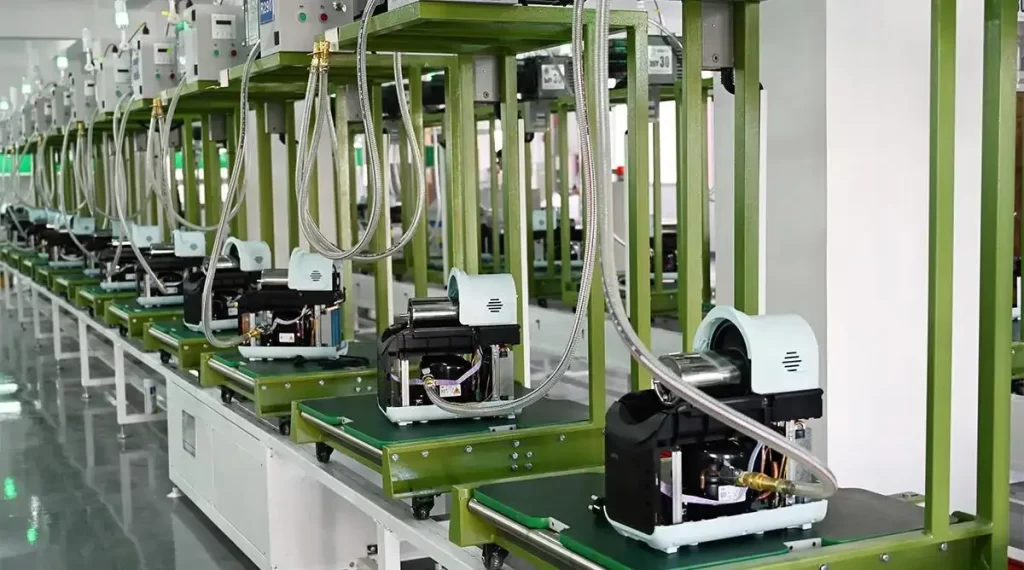
Prototype Testing Must Go Beyond "It Makes Slush"
A working prototype proves basic feasibility. It does not prove that the Custom Slush Machine is ready for production.
Prototype validation should examine:
•Freezing time under defined test conditions
•Texture uniformity from different areas of the jar
•Auger resistance during progressive freezing
•Reversal and stall-protection behavior
•Seal leakage
•Motor and compressor noise
•Control-panel response
•Repeatability across multiple cycles
•Handle removal and reassembly
•Cleaning access
A particularly important check is whether performance remains stable when liquid volume, initial temperature, and ambient conditions vary within the defined operating range.
Cleaning Structure Must Be Designed Into the Machine
Cleaning cannot be treated as an accessory feature because the jar, auger, seal, and dispensing areas repeatedly contact beverages.
YUMYTH's current design includes:
•Fully detachable handle
•Tool-free reassembly
•Removable food-grade silicone jar-rim seal
•Removable beverage-contact components
•Quick-rinse / one-touch cleaning cycle
•Smooth surfaces intended to reduce residue accumulation
The distinction between daily rinsing and deep cleaning should remain clear. Quick rinse removes routine residue, while detachable components provide access to areas that require periodic manual cleaning.
Build the Custom Slush Machine Around a Proven Engineering Platform
A successful Custom Slush Machine is not defined by how many elements are customized. It is defined by whether the selected capacity, cooling system, auger, temperature logic, cleaning structure, electrical configuration, and manufacturing process continue to work as one stable system.
YUMYTH combines established slush-machine platforms with configurable programs, intelligent auger reversal, removable cleaning structures, household-oriented noise control, and OEM development support. For brands preparing a new Custom Slush Machine project, defining the required capacity, functions, market version, and customization depth first makes it easier to determine which proven structures can be retained and which areas require dedicated engineering.
FAQs
Q1. What Does YUMYTH Customize on a Custom Slush Machine?
YUMYTH can customize appearance and color. They can also insert their logo and adjust the configuration of the control panel and writing programs. They can adjust the configuration of the electrical system, temperature settings, and the selected structural features. They can also adjust the design and configuration of packaging.
Q2. Does YUMYTH Build Custom Slush Machines from an Existing Platform?
This can be done. Many OEM projects can keep cooling, auger control systems and control platforms as is. From there, selected traits can be adjusted: appearance/design, user control system, programming, brand, packaging, and other features. This can speed up the development process and reduce unnecessary changes.
Q3. What Is a Reference Example from YUMYTH for the Development of a Custom Slush Machine?
YUMYTH currently has a slush machine intended for use in the home with a reference capacity of ~1.8 L. If a customer wanted to have a different capacity, the impact on the dimensions of the jar, thermal load, auger, cooling, and housing structure would need to be considered.
Q4. How Long Does it Take to Make a Slush on a YUMYTH Custom Slush Machine?
YUMYTH machines have a short preparation time of ~20-45 minutes. However, this can vary with volume of beverage, starting liquid temperature, external conditions, selected temperature, configuration, etc.
Q5. How does YUMYTH prevent the auger from jamming during freezing?
The use of the intelligent auger reversal system helps avoid ice auger freezing in YUMYTH's current product range. The control strategy builds up resistance while forming ice, and eliminates local ice buildup and improves process mixing, thereby avoiding the use of more powerful motors.
Related Articles
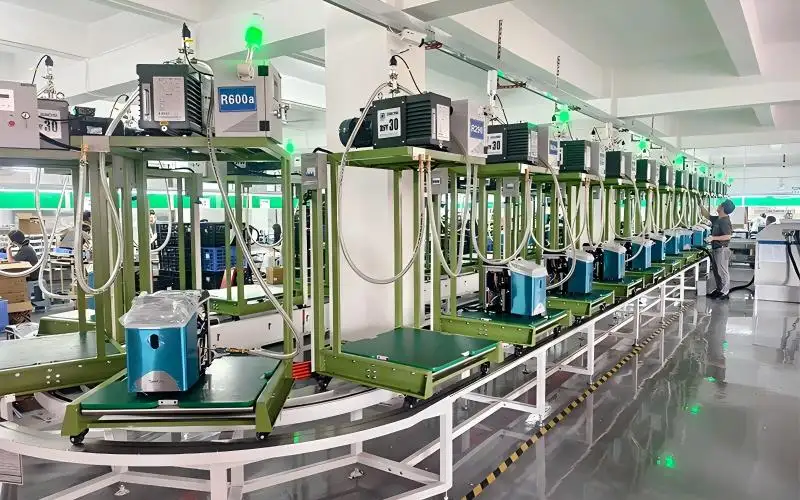
How We Test Every Ice Maker Before Packaging
2026-09-15
BY YUMYTH
A step-by-step look at refrigerant handling, cooling verification, leak detection, corrective action and electrical safety testing For an ice maker, reliable performance is determined long before the carton is sealed. ...
Guide for Brands Looking for a Reliable Vacuum Sealer OEM Supplier
2026-09-14
BY YUMYTH
When you are sourcing kitchen appliances for your retail brand, finding a dependable vacuum sealer OEM supplier is rarely just about getting the lowest unit price. It is about protecting ...
Why Ice Shape Matters: Understanding 10mm × 15mm Cylindrical Nugget Ice
2026-09-14
BY YUMYTH
More Than Ice Production — The Ice Itself Shapes the Consumer Experience When sourcing a nugget ice maker, buyers often focus first on production capacity, water tank size, ice basket ...

Ice Maker Sourcing Guide: How to Find the Right Factory
2026-09-10
BY YUMYTH
Sourcing an ice maker looks straightforward on paper. Find a supplier, agree on a price, place an order. But anyone who has actually done this knows the process is rarely ...