
Home Frozen Drink Appliance Market Engineering Trends
Share:
-

-

-

-


Copied
Share:
-
-
-
-
Copied
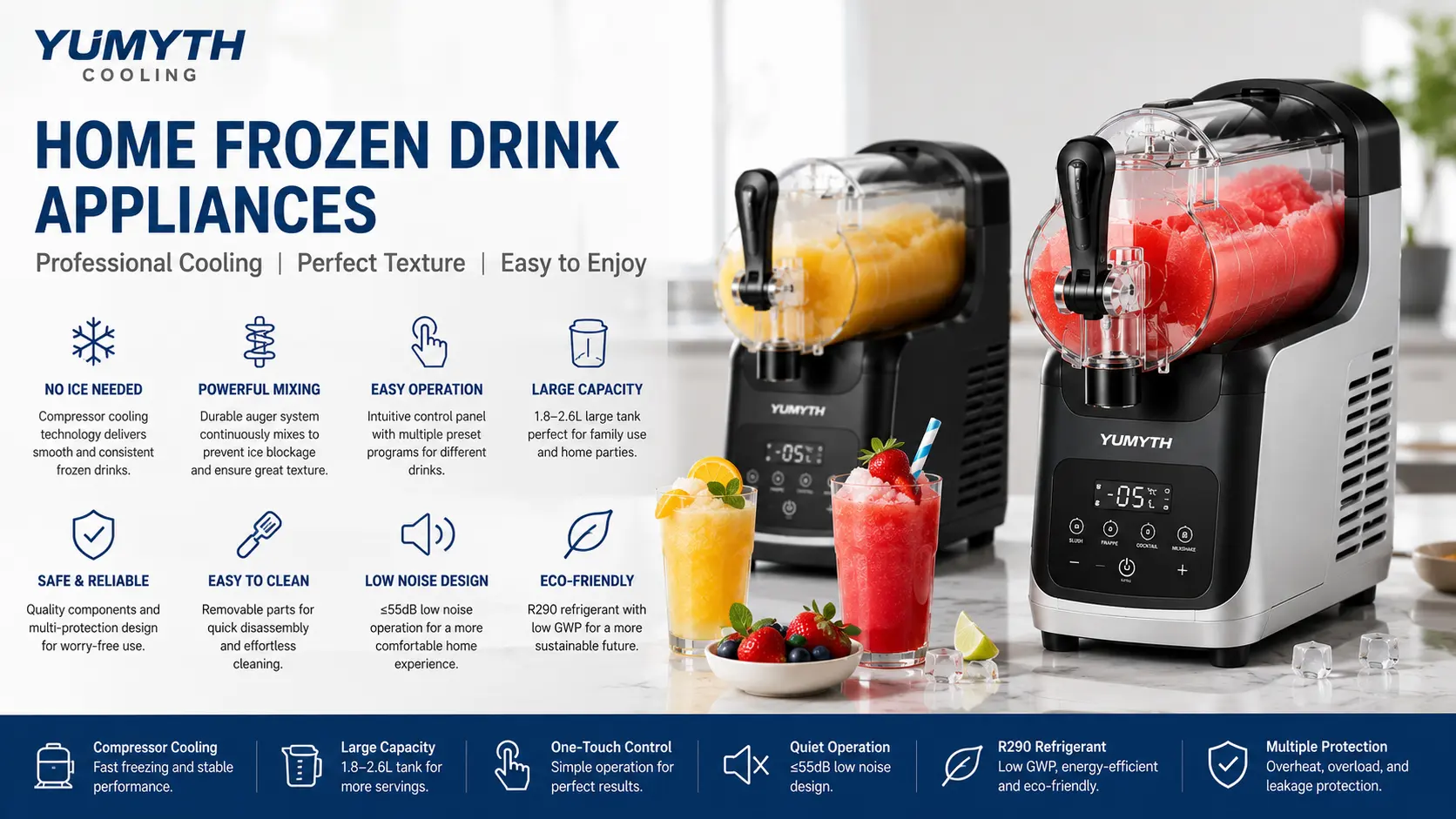
Home frozen drink equipment are changing from mere seasonal gadgets into a different class of counter-top refrigeration machines. These types of machines are expected to turn all kinds of drinks into smoothies, frozen cocktails, frappes, milkshakes, and other cold desserts, all without a separate blender or ice cubes.
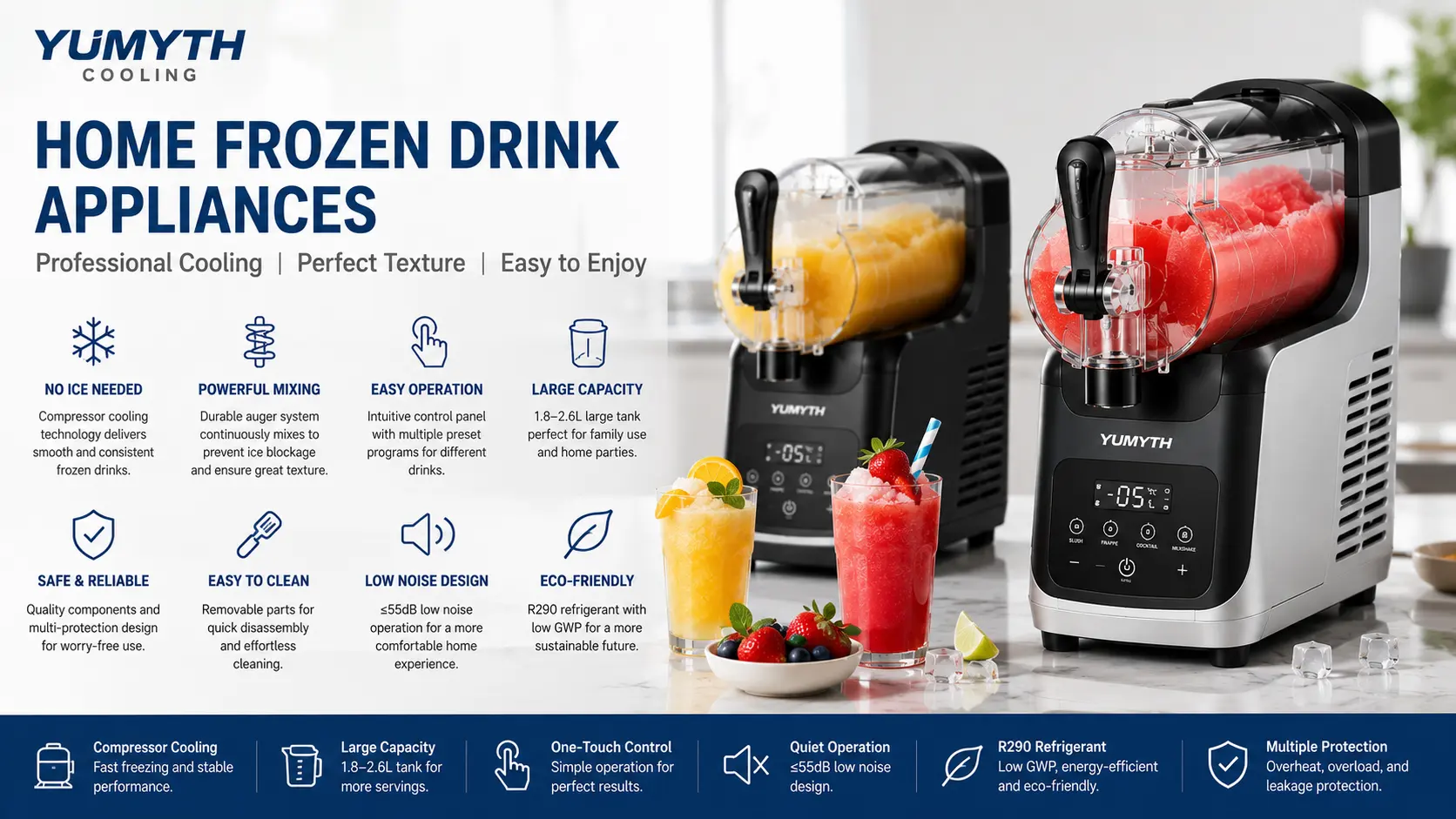
This change is altering the design of the frozen drink appliances made by manufacturers. While cooling speed is significant, other areas such as beverage chemistry, beverage texture control, motor protection, noise reduction, cleaning, refrigerant selection, capacity, safety and long-term serviceability must also be taken into account during the process of modern product development.
The appliance industry and Original Equipment Manufacturers (OEM) will have to keep in mind the features that will define the future generation of home frozen drink machines:
The new standard for compressor-based no-ice cooling.The new standard in compressor-based no-ice cooling.
Preparing frozen drinks at home often used to involve a blender, crushed ice and flavored syrup. This method is quick, but can reduce the drink's strength and cause the drink to become inconsistent.
The beverage is cooled directly within a mixing vessel with compressor based machines. An evaporator extracts heat and a rotating auger continually scrapes and mixes the ice crystals that are being formed. The appliance controls the refrigeration and agitation so the result may be smoother and more uniform.
More products are now touting “no ice” operation as an integral part of their marketing. SharkNinja, for instance, claims its SLUSHi line makes frozen soft drinks without ice or blending, and that is a consumer expectation now.
This is an architecture that is more advanced than a regular blender. In a compact countertop enclosure, manufacturers have to synchronize compressor capacity, evaporator geometry, the design of the capillary tube, the charge of refrigerant, auger speed, insulation and temperature control.
Texture Control Moves Beyond Simple Timers was created for the classroom.
If the compressor is run for a set amount of time, a frozen drink machine will not make uniform products. The freezing point and viscosity of each beverage is different.
Sugar reduces the freezing point of water and contributes to the semi-frozen consistency. The freezing point is further reduced with the addition of alcohol. Other ingredients – such as dairy ingredients, fruit pulp, syrups and artificial sweeteners – also have an effect on the speed of freezing and resistance to the auger.
More and more appliances are employing operating signals other than time. These signals can be:
- * Beverage temperature;
- * Evaporator temperature;
- * Motor current;
- * Auger torque;
- * Compressor operating time;
- * Ambient temperature;
- * Change in temperature per unit of time.
Motor-current monitoring is of special value, since it is frequently a sign of too thick of a mixture. The control system can do one or more of the following: stop compressor, change auger direction, raise target temperature, alert user.
The best systems will not just offer the ability to press more buttons. They will employ adaptive control logic to ensure that the selected texture is achieved even with varying recipe and environment.
The dual-flavor and larger-capacity designs are extended.Dual-Flavor and Larger-Capacity Designs are Extended.
Single-vessel machines are on the way out in the market. Back in May 2026, SharkNinja released the two independently controlled 48-ounce dual vessel frozen drink maker. The design enables users to make two different recipes at once or mix them together in one swirl cocktail.
It captures an overall trend in engineering of appliances geared toward families, parties, and home entertaining.
There are a number of technical challenges involved with larger or dual-vessel systems:
- * Greater refrigeration load in both load and condenser sections; and
- * Faster Start-up/Shut-Down and Emergency Shutdown times; and
- * Recycling and reusing refrigerants; and
- * Increased countertop dimensions;
- * Higher noise of motors and fan;
- * Greater heat rejection;
- * Low to zero maintenance;
- * Additional cleaning components.
The manufacturers need to ensure that one vessel does not interfere with the performance of the other. In cases where both parties use the same refrigeration platform, independent sensing and control could be needed as well.
Modular Product Platforms can help OEM brands deal with this complexity. Several capacities and vessel configurations can be supported by one compressor base, architecture, and one set of components, decreasing tooling and supply-chain expenses.
Low-Sugar Recipe Compatibility is a Competitive Feature.
Increasingly consumers are demanding low sugar drinks; however, low sugar is one of the biggest engineering challenges in frozen drink appliances.
If the dissolved solids in a beverage are not present in an adequate amount, it may change to a hard ice layer rather than a soft slush. This will increase auger resistance, activate motor overload protection or jam the machine.
Manufacturers can now enhance a product to be more compatible with low sugar products by:
- More precisely controlled evaporator temperature;
- * Improved temperature-sensor positioning;
- * Motor-current monitoring;
- * Automatic auger reversal;
- * Variable auger speed;
- * Optimized scraper geometry;
- Replace sugar with a substitute, such as a sweetener; and
- * Software-based error detection.
The aim is not to declare that all zero sugar drinks are “always” going to work. Rather, brands should provide verified ranges of recipes along with an explanation of the performance of different sweeteners when frozen.
Recipe Correction Guided Machines will be better than products that just stop and show a generic error code.
R290 Refrigeration is becoming increasingly important.
Refrigerant selection is shifting from component to product platform selection. This R290, or propane, has a GWP of about 3.3, significantly lower than many of the traditional HFC refrigerants.
Manufacturers are considering alternative refrigeration systems with reduced GWP (RFGs) due to new environmental policy.Lower GWP refrigeration systems (RFGs) are being considered by manufacturers as a result of new environmental policy. The following HFCs are not allowed in the indicated sectors of the refrigeration and appliance market under theUnited States EPA Technology Transitions Program because they have higher GWP. The Regulation of the European Union (2024/573) also tightens up regulation of fluorinated GHGs.
R290, however, is a flammable refrigerant, and is not a drop-in replacement. In designing a countertop appliance, the following should be taken into account:
- * Maximum amount of refrigerant to be used in the system; and
- * Leak prevention;
- * Protected tubing routes;
- * Cabinet ventilation;
- * Potential ignition sources;
- * Air flow characteristics; and
- * Factory charging controls;
- * Leak testing;
- * Warning labels;
- The transportation and service procedures.
IEC 60335-2-24:2025 specifies particular safety requirements for appliances for household refrigerating and ice-cream uses, and ice makers. During the early design process, manufacturers should verify the exact standard(s) and national requirement(s) applicable to their devices with a qualified certification laboratory.
Noise and vibration are given more attention.Noise and vibration (NVS) are given more attention.
Frozen drink machines are in use a lot longer than home ice blenders. This can lead to a kitchen or living area hearing compressor hum, condenser-fan noise, auger contact, refrigerant flow and cabinet vibration.
Acoustic engineering must thus start in the development of the platforms, not when the appliance is finished.
Noise control measures can include:
- * Resilient compressor mounts;
- * Balanced condenser fans;
- * Optimized airflow passages;
- * Stiffer cabinet structures;
- * Accurate auger alignment;
- * Isolated motor mounts;
- * Reduced panel resonance;
- * Controlled compressor cycling.
Test sound during entire freezing cycle. The maximum noise may be under conditions of high beverage viscosity and/or high auger loading and not at the initial start.
For the published noise claims the following must be included: Test distance, operating mode, fill volume, beverage type, room conditions.
Said to be in an "easy cleaning" class will impact product architecture.
They will accept a long preparation time if the resulting drink is of good quality, but they will not accept a machine which is hard to clean.
The frozen drink appliances are designed for sugar, dairy products, acids in fruit, coffee, color and alcohol. Residues can build up around the auger shaft, seals, dispensing valve, corners of the vessel and around the drip tray.
Engineering teams are thus focusing on:
- * Removable beverage vessels;
- * Detachable augers;
- * Accessible dispensing valves;
- * Replaceable seals;
- * Smooth internal surfaces;
- * Rounded corners;
- * Built-in rinse programs;
- * Dishwasher-compatible components;
- Drainage paths to exclude water.
Also, the washable food area should be isolated from the compressor, electronics, motor and control system. Drip lines should never fall into the base of the appliance when the appliance is being removed.
Good cleaning design enhances hygiene, minimises odour, avoids leakage and will increase the chances of regular use by the consumers.
Highly reparable and Modular Parts Support Product Life.
With the maturity of the category, appliance brands will be required to supply more components for replacement. Even if the refrigeration system operates normally, vessels, augers, lids, seals, handles, valves and drip trays can stain, wear, be lost or damaged.
These can be designed as replaceable units thus allowing the product to have a longer life cycle and fewer complete-product returns.
A common component platform can also ease:
- * Spare-parts inventory;
- * Distributor training;
- * Warranty support;
- * Repair instructions;
- * Model development;
- * Supplier management.
In OEM programs, brands should negotiate with the customer prior to the start of mass production regarding the availability of spares, control of parts, control of development tools, and after-sales support.
Conclusion
Home Frozen Drink Appliance market is getting increasingly technical. Future products will go head-to-head in more than just looks, capacity, or number of preprogrammed items.
The ideal platforms are going to integrate compressor-based direct freezing, adaptive texture control, low-sugar compatibility, intelligent overload protection, quieter operating, safer low GWP refrigeration, removable food contact parts, and after-sales parts-all of which are modular.
The best bet for appliance brands is to simplify the process of using sophisticated refrigeration technology. For OEM manufacturers, success will be based on bringing the refrigeration, mechanical mixing, electronics, software, materials, acoustics, compliance and manufacturing quality functions together under one roof to create a single reliable OEM countertop platform.
Brands with outlined testing conditions, real recipe information and clear engineering specifications will likely have an edge in gaining consumer trust and competing in this fast-growing appliance segment.
Related Articles
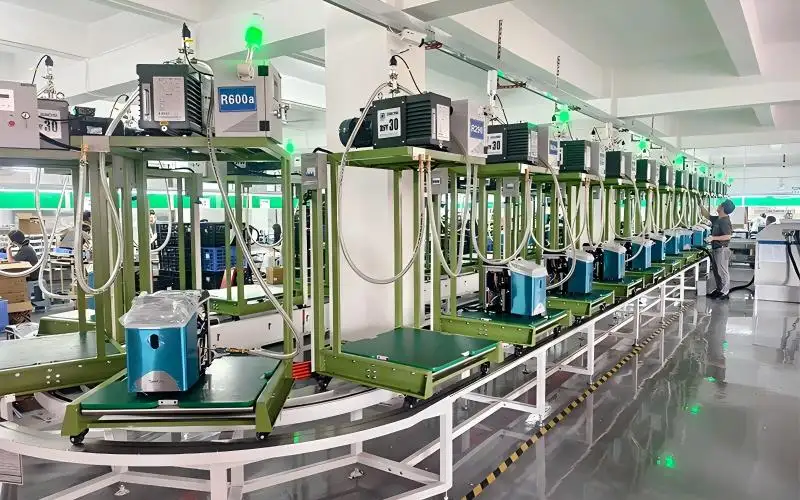
How We Test Every Ice Maker Before Packaging
2026-09-15
BY YUMYTH
A step-by-step look at refrigerant handling, cooling verification, leak detection, corrective action and electrical safety testing For an ice maker, reliable performance is determined long before the carton is sealed. ...
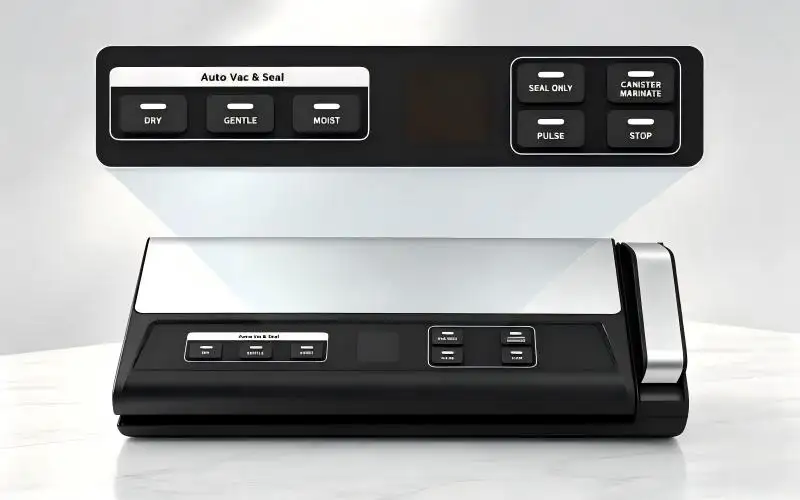
Guide for Brands Looking for a Reliable Vacuum Sealer OEM Supplier
2026-09-14
BY YUMYTH
When you are sourcing kitchen appliances for your retail brand, finding a dependable vacuum sealer OEM supplier is rarely just about getting the lowest unit price. It is about protecting ...
Why Ice Shape Matters: Understanding 10mm × 15mm Cylindrical Nugget Ice
2026-09-14
BY YUMYTH
More Than Ice Production — The Ice Itself Shapes the Consumer Experience When sourcing a nugget ice maker, buyers often focus first on production capacity, water tank size, ice basket ...

Ice Maker Sourcing Guide: How to Find the Right Factory
2026-09-10
BY YUMYTH
Sourcing an ice maker looks straightforward on paper. Find a supplier, agree on a price, place an order. But anyone who has actually done this knows the process is rarely ...