
What is a suitable noise level for a home slush machine?
Share:
-

-

-

-


Copied

Share:
-
-
-
-
Copied
Typically, a good noise level for a home slush machine is 55 dBA or less when measured under clearly defined operating conditions. This is the stage where the machine can be heard in the room, but doesn't typically interfere with conversation, family activities or casual entertaining.
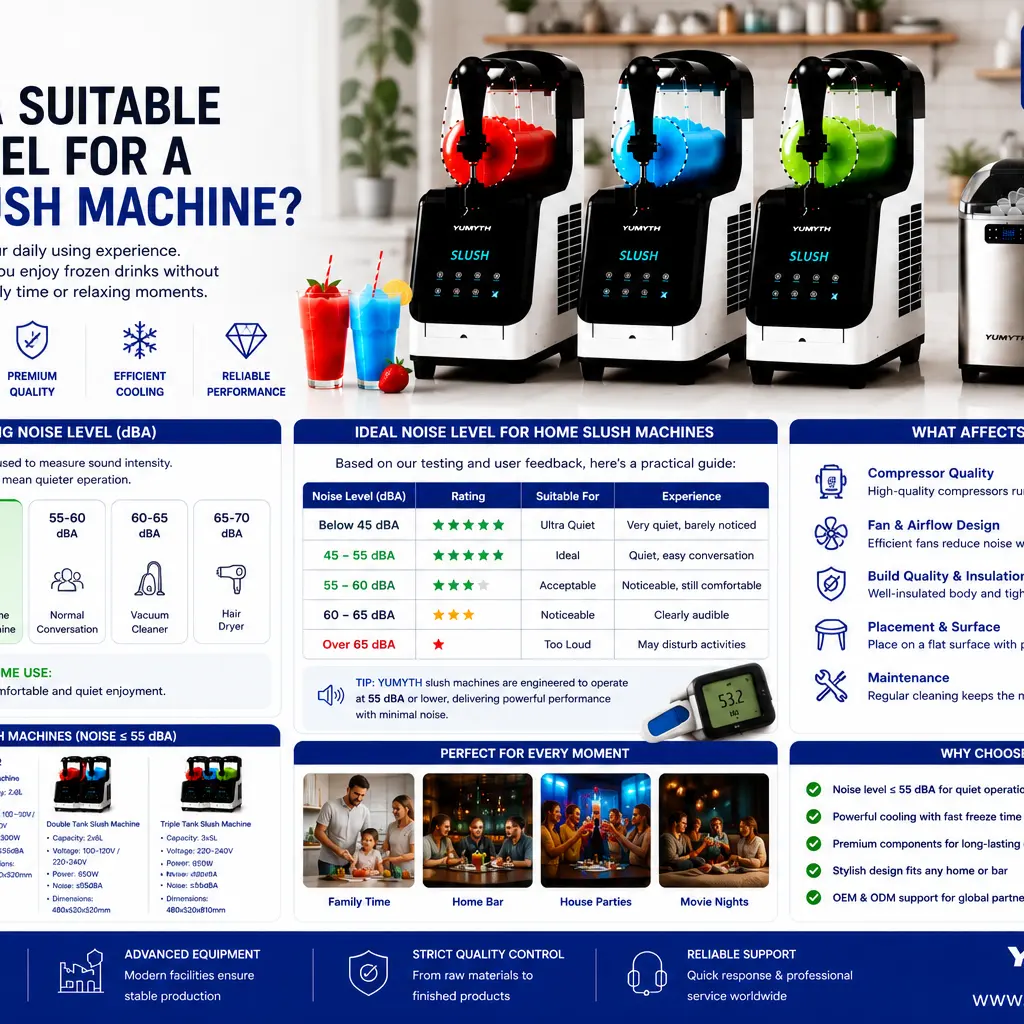
For a compressor based countertop machine, a reading of 55 dBA to 60 dBA typically is acceptable. Between 60 and 65 dBA, the sound begins to be more apparent, especially in an open plan kitchen or a quiet home bar. Machines that run continuously at more than 65-70 dBA can be "intrusive" for a 20 minute or longer freezing cycle.
The YX1801 Mini Slush Machine is designed to produce a noise level of 55 dB, which is acceptable for everyday household use, and is published by YUMYTH.
Recommended Noise Ranges
The “rule” for home slush machines is:
- Below 45 dBA: Very quiet (unusual for a compressor machine that is running actively).
- * 45–55 dBA: Ideal for most homes.
- * 40–50 dBA: Suitable for bedrooms and dining rooms.
- 60-65 dBA: Audible, may be appropriate for occasional party use.
- Use for extended indoor use, is relatively loud level of 65-70 dBA.
- > 70 dBA: Typically not acceptable for a contemporary home frozen drink machine.
According to YUMYTH's published guidance, most compressor-based home machines are in the range of about 45-60 dB, and a range of 50-55 dB is where normal conversation is possible without the need for people to raise their voices.
These ranges are more for comfort and product quality and not for hearing safety. A machine may be loud enough inside of a house to cause discomfort, but not be considered a hazardous workplace exposure.
The limits for hearing safety are not the same as the comfort standards.
An OEL of 85 dBA based on an eight-hour duty cycle is recommended by the US National Institute for Occupational, Safety and Health. This limit is not intended to set an acceptable noise level for domestic appliances.
NIOSH reference material defines a whisper as being around 30 dBA and normal conversation as being around 60 dBA.
Therefore, a home slush machine at 60 dBA is far below the hearing risk threshold, but may be loud enough to be heard during a family meal, watching TV or a quiet conversation.
The question of whether the sound is safe is not as useful as it is when it comes to creating a sound in a household product. The manufacturer should consider if users can be comfortably near the appliance during the preparation and holding period.
Why do Compressor Machines Make Noise?
The sound of a no ice slush machine is comprised of several operation parts.
The primary sources are:
- * Compressor vibration;
- * Condenser fan airflow;
- * Refrigerant movement;
- * Auger motor operation;
- * Gearbox tones;
- * Ice scraping;
- * Cabinet resonance;
- * Loose removable components.
Tones of the sound also change in the cycle. The auger can rotate in a liquid beverage with a relatively low resistance. Ice growth and increasing drink thickness causes an increase in the mechanical load, which can lead to an increase in noise from the auger or gearbox.
The compressor can turn on and off once the drink is set to the desired consistency. This can result in variations in sound instead of a constant steady sound.
A meaningful product specification should therefore reflect the whole operating cycle, not just the most silent phase, after start up.
The Type of Sound Matters
A measured decibel level can indicate the same level of sound from two different machines, but be very different experiences.
A humming compressor may not be that noticeable. High frequency whining, repeated vibration, auger scraping, intermittent clicking and rattling panels can be more distracting.
Key sound-quality concerns are:
- Sharp compressor startup impacts;
- * Gearbox knocking;
- Fan blades being in contact with a grille;
- * Cabinet to cabinet connections; or
- * Lifting the rear of the vehicle and dumping the material; or
- * Toys and games that jangle;* Music or sound tapes that jingle;
- * High-pitched electronic tones.
Therefore, the sound level number and the sound qualities should be considered by manufacturers.
The “55 dB” rating could be combined with negative feedback that is generated by the product when the noise it makes is irregular or tonal. Acoustic testing must be used in conjunction with trained listening testing in a realistic kitchen environment.
Decibels Use a Logarithmic Scale
The decibel scale is a logarithmic one. NIOSH says that a loud sound is 10 dB louder than a quiet sound means that it is 10 times as loud.
This means that the difference between 55 and 65 dBA is significant. The 65 dBA machine is not simply a bit louder physically than the 55 dBA machine.
Even if it's only on a minor level, it can impact on user comfort. A few decibels less vibration, fan noise or cabinet resonance can make an appliance more usable in an open-plan home.
A 3–5 dB engineering improvement should thus not be dismissed as a minor improvement by manufacturers.
The place where the machine will be applied.
The acceptable sound level is dependent in part on the installation environment.
A machine working in a different kitchen can be quieter than the same machine working in:
- An open plan kitchen and living room;
- * A small apartment;
- * A bedroom-adjacent kitchenette;
- * A quiet office;
- A home theatre space;
- The "home-bar" for talking.
A good design goal of 50-55 dBA is appropriate for common household applications. Candidates who like a machine at the lower end of this range may opt for a machine in open plan rooms, where there are young children or for late evening use.
If background conversations or music can cover up the appliance noise, a 60–65 dBA product can still be appropriate for parties, outdoor entertaining, or occasional use.
The conditions of the measurement must be specified.
A noise specification is useless without a specified test method.
A test report should contain the identification of:
- The equivalence of sound level in dBA;
- * Microphone distance;
- * Microphone height;
- * Ambient background noise;
- * Room construction;
- * Beverage formulation;
- * Fill volume;
- * Operating program;
- * Texture stage;
- * Maximum and average readings.
The Sound Level Meter application allows you to measure and calculate LEQ, LAmax, LApeak and LA TWA. Under the following conditions, it is known to be accurate within approximately ±2 dBA.
For a slush machine, measurements should be done at the initial cooling, during active ice formation, final thickening, dispensing, holding, and automatic cleaning stages.
The maximum value can be found when the mixture is rich and not at the start of the compressor.
The distance between the item and the observer can alter the result reported.
The closer the microphone is to the appliance, the higher noise readings will be. Two manufacturers with different measurements (one measuring 1 meters and the other measuring 3 meters) are not directly comparable with each other.
The machine must also be tested to a representative countertop. Vibrations can be magnified by lightweight, hollow, or uneven surfaces.
The following should be used in useful comparative testing:
- * The same microphone height; and
- * The same room;
- * The same countertop;
- * The same recipe;
- * The same water level;
- Operating stage of the same stage.
A decibel rating that has been published can be misleading if the conditions are not standardized.
How Manufacturers Can Reduce Noise
When it comes to noise reduction, the whole appliance needs to be taken into consideration.
Engineering improvements can involve:
- * Vibration-isolated compressor mounts;
- * Balanced fan blades;
- * Optimized fan speed;
- * Secure refrigerant tubing;
- * Improved cabinet stiffness;
- * Rubber isolation feet;
- * Better gearbox alignment;
- * Controlled auger clearances;
- * Make sure lids and drip trays are secured;
- Acoustic barriers at appropriate compartments.
Changes should not compromise refrigeration safety or performance though. Reducing the fan speed can cut down on the noise, but can also raise the condenser's temperature and lengthen the freezing time. Less vibration with more movement during shipping may result from softer compressor mounts.
All acoustic alterations should be tested in conjunction with cooling performance, electrical safety, transport durability and component temperature.
The following are items that buyers should inspect:
When purchasing or approving an OEM 'home slush machine', ask:
- 1. Does the advertised value indicate dBA?
- 2. What was its distance from where it was measured?
- 3. Is it a typical or maximum noise?
What is the operating stage that has been tested?
- 5. How many and what kind of beverages were consumed?
- 6. Is there any clicking, rattling or scraping from the machine?
- 7. Does the sound get louder as the contents get thicker?
- 8. Has the machine been tested on a normal countertop?
A 55 dBA rating or lower is helpful to consider but a production representative sample should be played with a full freezing cycle.
Conclusion
The normal recommended operating range for most home slush machines is 45 – 55 dBA. A lower level of 55 dBA or below is ideal for a home bar, family time and a normal kitchen.
The 55-60 dB range is acceptable, and it might be "too loud" at 60-65 dB for long use. Machines that emit sound levels above 65–70 dBA should be considered with care to be located as quiet household appliances.
The assessment of noise should be done both subjectively and objectively. Operating noises such as compressor hum, fan airflow, auger loading, cabinet vibration and intermittent tones all impact the user experience.
A good machine will produce uniform drinks of ice and maintain a low noise level so that the operator can be heard, converse, entertain, and be comfortable in the room he or she is operating the machine.
Related Articles
How We Test Every Ice Maker Before Packaging
2026-09-15
BY YUMYTH
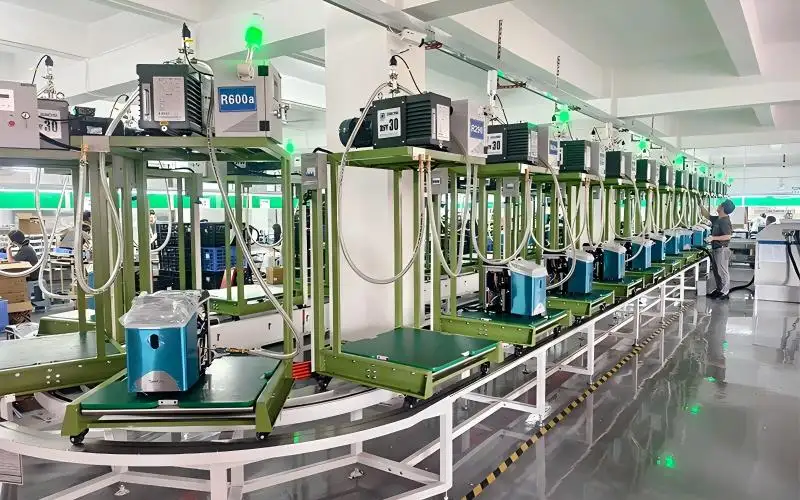
A step-by-step look at refrigerant handling, cooling verification, leak detection, corrective action and electrical safety testing For an ice maker, reliable performance is determined long before the carton is sealed. ...
Guide for Brands Looking for a Reliable Vacuum Sealer OEM Supplier
2026-09-14
BY YUMYTH
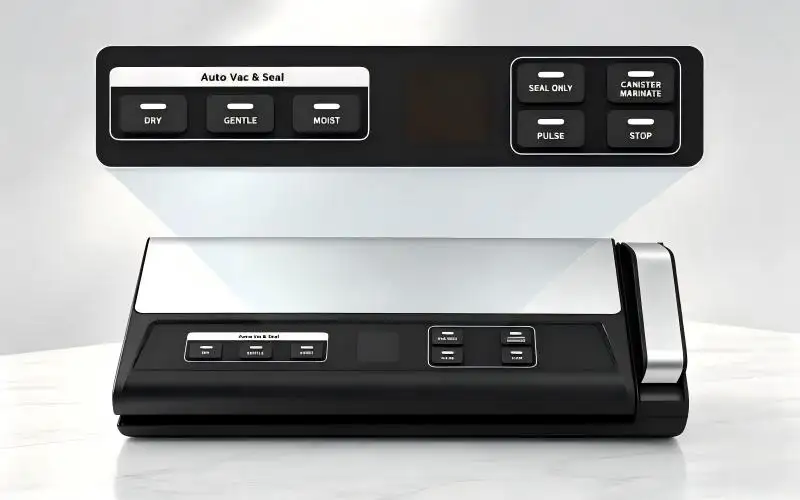
When you are sourcing kitchen appliances for your retail brand, finding a dependable vacuum sealer OEM supplier is rarely just about getting the lowest unit price. It is about protecting ...

Why Ice Shape Matters: Understanding 10mm × 15mm Cylindrical Nugget Ice
2026-09-14
BY YUMYTH
More Than Ice Production — The Ice Itself Shapes the Consumer Experience When sourcing a nugget ice maker, buyers often focus first on production capacity, water tank size, ice basket ...

Ice Maker Sourcing Guide: How to Find the Right Factory
2026-09-10
BY YUMYTH
Sourcing an ice maker looks straightforward on paper. Find a supplier, agree on a price, place an order. But anyone who has actually done this knows the process is rarely ...