
How to Choose a Slushie Machine for Home (2026 Buying Guide)
Share:
-

-

-

-


Copied
Share:
-
-
-
-
Copied
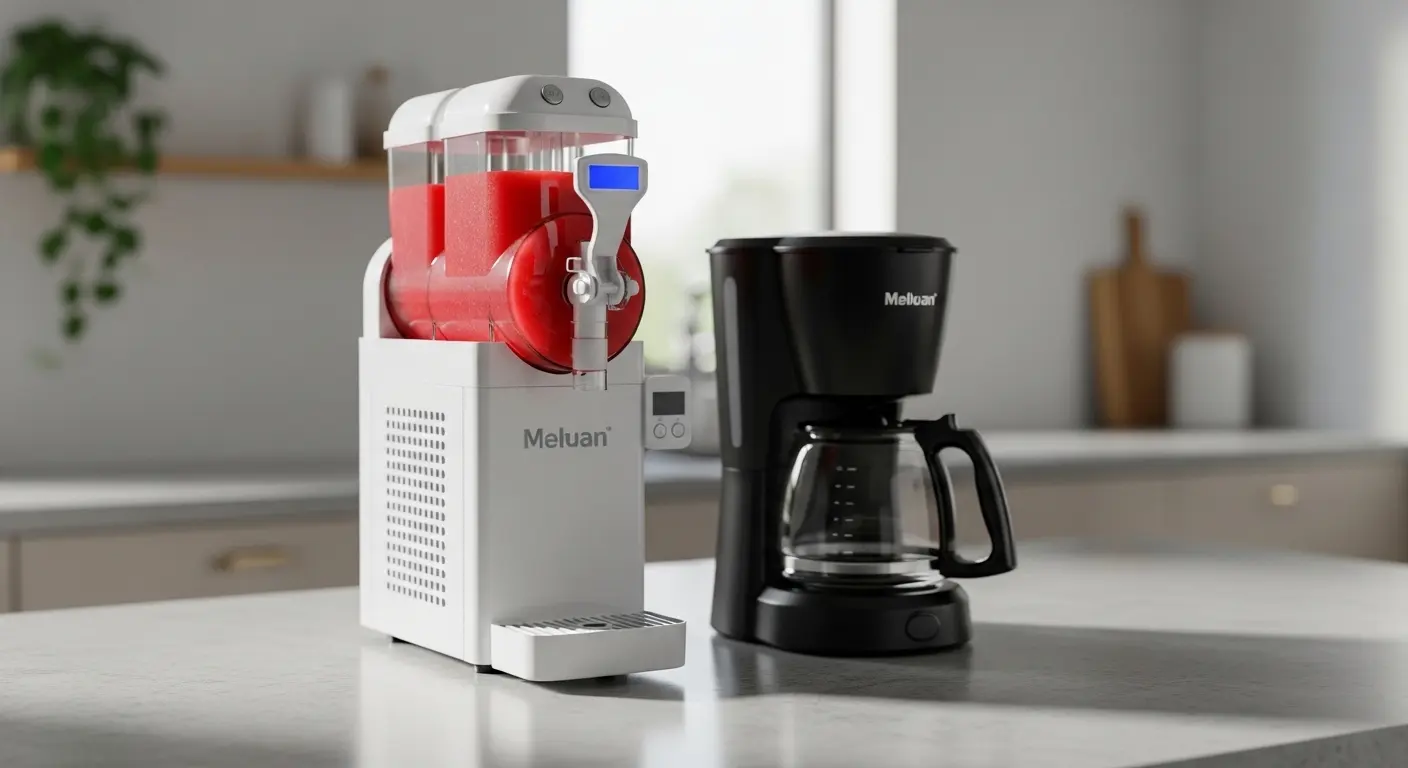
To choose a slushie machine for home, focus on five things: tank capacity (1–2L covers most families), freezing mechanism (compressor-based means no ice needed), freeze time (20–30 minutes is the real-world benchmark), noise level, and ease of cleaning. Get those five right and you'll have the perfect machine for your kitchen.
You're in the kitchen on a summer afternoon, everyone's asking for a cold drink, and the last thing you want is to drive to a gas station for a $4 slushie. A home slushie machine solves that — but only if you pick the right one.
In 2026, the market for frozen drink makers has exploded. You'll find everything from compact no-ice-needed compressor machines to dual-tank units that serve two flavors at once. That variety is great, but it makes the decision confusing. This home slushie machine buying guide walks you through exactly what matters — no fluff, no filler — so you can confidently choose the slushie maker that fits your kitchen, your household size, and your budget.
How a Home Slushie Machine Actually Works
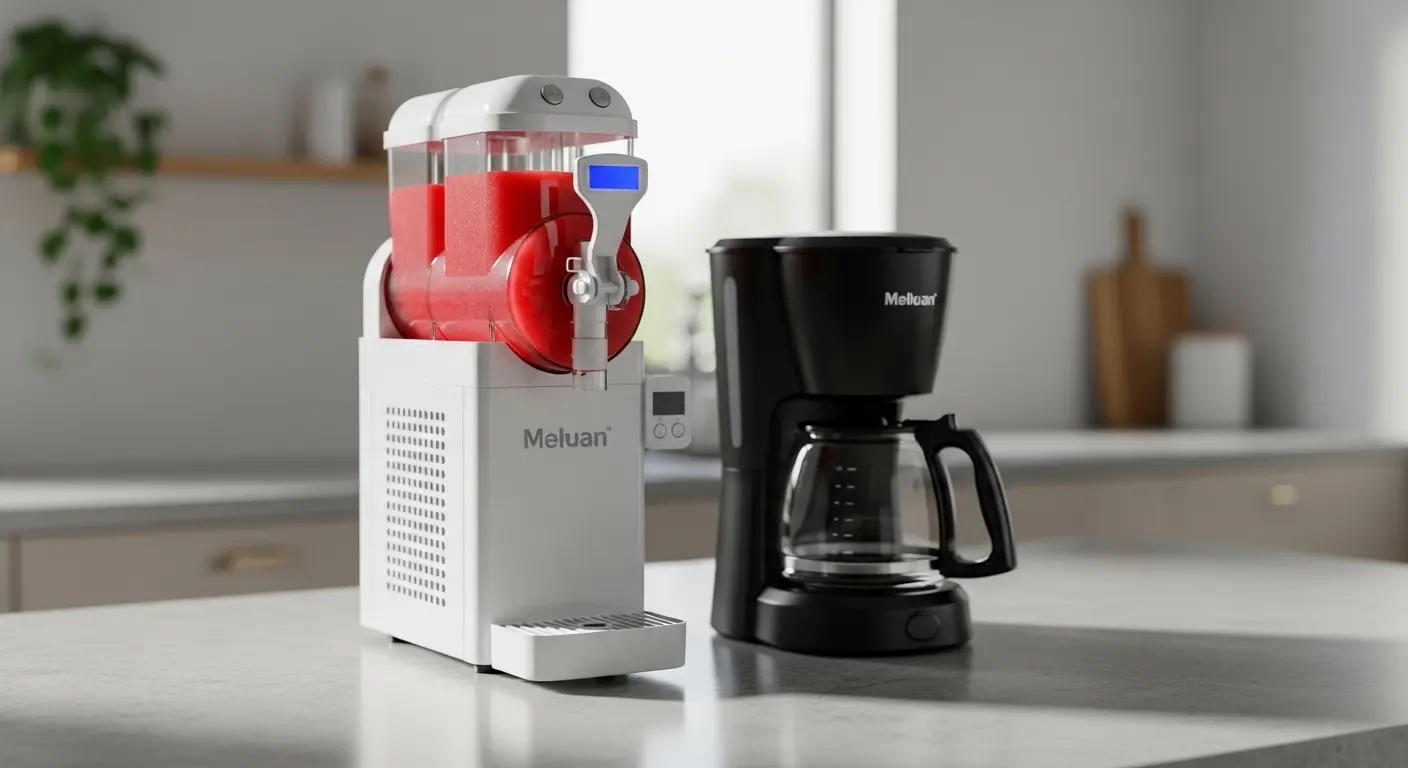
Before you spend a dollar, it helps to understand what's happening inside the machine. Most modern countertop slush machines use one of two approaches: a built-in compressor that self-freezes, or a pre-iced design that relies on ice you add manually.
The compressor draws heat out of the liquid inside the tank, slowly dropping its temperature while a rotating auger (a mixing paddle or spiral arm) stirs it constantly. That stirring is critical — without it, your drink would freeze into a solid block instead of the soft, scoopable slush texture you want. The auger keeps ice crystals small and evenly distributed throughout the liquid.
What most guides don't tell you is that the sugar content of your drink — measured in degrees Brix — determines whether your slush actually forms properly. Water freezes into a hard block. A correctly sweetened liquid freezes into smooth slush. We'll explain exactly what that means in practical terms below.
Compressor vs. No-Compressor: Which Type Do You Need?
This is the single most important decision in your frozen drink maker for home use purchase. Here's the honest difference:
| Feature | Compressor Machine | No-Compressor (Ice-Required) |
|---|---|---|
| How it works | Self-freezing — built-in cooling | Requires pre-made ice cubes |
| Setup time | Fill & press start | Make/buy ice first |
| Freeze time | 20–30 minutes | 10–15 min (but ice prep adds 30+ min) |
| Price range | $100–$200+ | $30–$80 |
| Counter mess | Minimal | Ice melt, wet counter |
| Best for | Daily home use, convenience | Occasional use, budget shoppers |
For most home users in 2026, a compressor-based machine is the strong recommendation. The convenience gap between the two types is significant — you'll actually use a compressor machine regularly, whereas ice-required models often end up stored in a cabinet.
At YUMYTH, our slushie machine line is built around compressor-cooled technology with dual-direction mixing motors specifically engineered to prevent clogging and produce stable, smooth texture — the two most common frustrations with lower-quality home machines.
What the Brix Value Means for Your Slush
Here's the kitchen science no one else explains: Brix is a measurement of dissolved sugar concentration in liquid. It directly determines whether your chosen drink will freeze into slush or stay stubbornly liquid.
- Plain water: 0° Brix — freezes solid, unusable
- Standard cola: ~10–11° Brix — slightly too low for optimal slush
- Sweet slush zone: 14–18° Brix — the ideal range for smooth, scoopable slush
- Over-sweetened: 22°+ Brix — won't freeze at all, stays syrupy
Practical fix: If you're using a drink that's too low in sugar (diluted juice, flavored water, light sodas), simply dissolve 50–80g of sugar per 1.5L of liquid before adding it to the machine. That's roughly 3–4 tablespoons. This single trick solves the most common reason home slushie machines "don't work."
For households that want slush and ice cream in one machine, see our guide on how slush machines compare to ice cream makers — the freezing mechanisms are different in important ways.
The 5 Factors That Actually Matter When Choosing
Think of this section as your personal slushie maker selection checklist. If you only read one section of this guide, make it this one. Every factor below is drawn from real-world machine performance — not marketing copy.
Factor 1 — Tank Capacity (and How Many Drinks You'll Actually Get)
Capacity is measured in liters, but what you actually care about is servings. Here's the real math:
| Tank Size | Approx. Servings (12 oz each) | Best For |
|---|---|---|
| 1–1.5L | 2–3 drinks per cycle | 1–2 people, daily personal use |
| 2–2.5L | 4–5 drinks per cycle | Family of 3–4 |
| 3L+ | 6–8 drinks per cycle | Parties, larger households |
| 10L+ | 20+ drinks | Commercial use — overkill for home |
A common mistake is buying a commercial-grade 10L machine for home use. It's overpowered, wastes product if you don't fill it properly, takes longer to freeze, and is a pain to clean. For the vast majority of home users, 1.5–2.5L is the sweet spot.
If your household has mixed preferences — adults who want margarita slushies and kids who want fruit punch — a dual-tank machine lets you run two flavors simultaneously. That leads us to another factor we'll cover shortly.
Our Mini Slush Machine is designed specifically for the 1–2 person household: compact footprint, full compressor performance, easy daily cleaning.
Factor 2 — Freeze Time (What's Realistic?)
Marketing claims can be wildly misleading here. "Ready in 5 minutes!" usually means the machine assumes you pre-chilled your liquid in the refrigerator overnight.
The honest benchmark for a quality home compressor slushie machine:
- Starting from room-temperature liquid (25°C): 20–30 minutes to soft slush
- Starting from refrigerator-cold liquid (4–6°C): 12–18 minutes to soft slush
- Reaching creamy, thick slush texture: add another 5–8 minutes to either timeline
Plan for 25 minutes from room temperature. That's enough time to prep snacks, set up glasses, and get the kids settled. If a machine claims 10 minutes from room-temperature liquid with no pre-chilling, treat that claim with skepticism.
YUMYTH engineering note: Our machines use high-performance motors with dual-direction mixing that significantly reduces freeze time compared to single-direction auger models — the bidirectional agitation creates smaller, more uniform ice crystals faster.
Factor 3 — Noise Level (More Important for Home Use Than You'd Think)
Commercial slushie machines are loud. Home machines shouldn't be — but "quiet" means different things on different spec sheets. Here's a reference frame using everyday sounds:
| Sound | Approximate dB Level |
|---|---|
| Library / quiet bedroom | 30–40 dB |
| Refrigerator hum | 40–45 dB |
| Normal conversation | 55–60 dB |
| Quality home slushie machine | 55–68 dB |
| Standard kitchen blender | 80–90 dB |
| Lawn mower | 90 dB |
A good quiet slushie machine for home should operate in the 55–65 dB range — noticeable but not intrusive. If you have young children napping, an open-plan living space, or thin walls, prioritize machines that specifically engineer for noise reduction (sealed compressor housings, vibration-dampened bases).
Machines with dual-direction mixing motors typically run quieter than single-direction equivalents because the load on the motor is more balanced. Noise spikes usually happen at startup; they settle after the first few minutes of operation.
Factor 4 — Ease of Cleaning
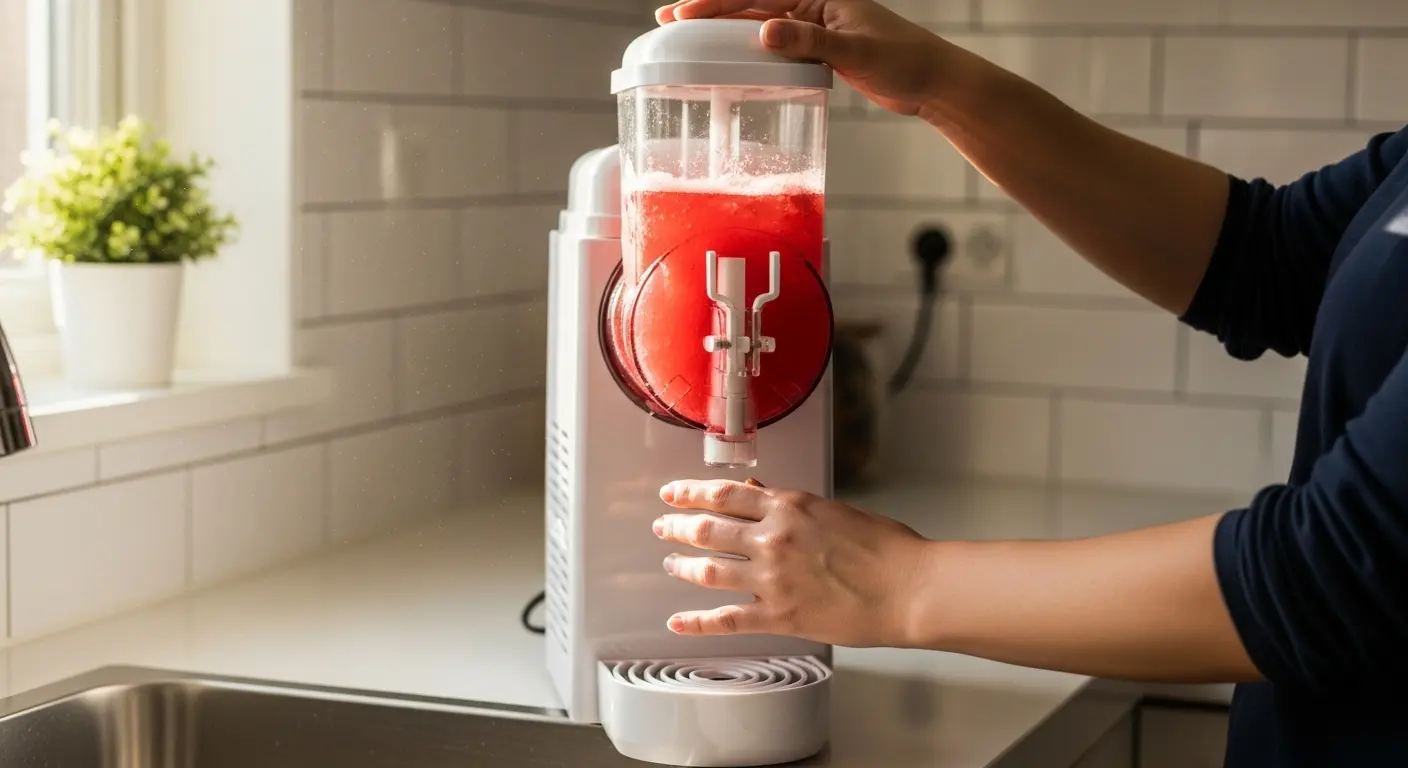
Cleaning is the #1 reason people stop using a slushie machine. If it's a hassle, it moves to the back of a cabinet within a month.
The 30-second disassembly test: Before you buy, check whether the tank is removable in under 30 seconds without tools. If a machine requires you to unscrew, twist, and pry to access the interior, daily cleaning will feel like a chore.
Look for these cleaning features:
- Removable tank — lifts or pulls out cleanly
- Dishwasher-safe components — tank and drip tray go straight in the dishwasher
- Self-clean / rinse cycle — fill with water, press a button, done in 5 minutes
- Seamless interior design — no grooves or crevices where sugary residue can hide and grow bacteria
- Detachable drip tray — prevents sticky counter buildup
A quick daily rinse after use keeps the machine in top condition. For a full deep-clean, remove the tank, wash with warm soapy water, and run a plain-water rinse cycle through the machine itself. Weekly is sufficient for regular home use.
Factor 5 — Price Tiers and What You Actually Get
Here's an honest breakdown of the home slushie machine market by price band:
| Price Range | Type | What You Get | Best For |
|---|---|---|---|
| $30–$70 | Ice-required, blender-style | Basic slush, manual ice prep, smaller tank | Occasional use, tight budgets |
| $80–$130 | Entry compressor | No ice needed, 1–1.5L, basic controls, ~30 min freeze | Daily personal use |
| $130–$180 | Mid-range compressor | Faster freeze, dual texture modes, quieter motor, better materials | Families, regular entertaining |
| $180–$250+ | Premium smart machine | Smart controls, large capacity, premium build, rapid freeze | Enthusiasts, frequent parties |
For most home users, the $100–$160 range offers the best balance of performance, durability, and value. Spending less usually means compromising on freeze time or cleaning convenience. Spending more buys you speed and smart features — worthwhile if you use the machine several times a week, unnecessary if you use it on weekends.
Single Tank vs. Dual Tank — Which Do You Need?
This is a quick decision once you know your household:
Choose a single-tank machine if:
- You'll always make one flavor at a time
- Counter space is limited
- You want simpler cleaning
- Budget is a consideration
Choose a dual-tank machine if:
- Your household has mixed preferences (adult frozen cocktails + kids' fruit slushies)
- You entertain regularly and want to serve two flavors simultaneously
- You want to experiment with flavor layering
The trade-off is clear: dual-tank machines are typically 40–60% larger on the counter, cost more upfront, and take longer to clean. They're genuinely worth it for families and entertainers — unnecessary for solo users or couples.
Our Slush and Ice Cream Maker takes a different approach to versatility — instead of two slush tanks, it lets you switch between frozen drinks and home ice cream from one machine. That's an especially strong option for households that want multiple frozen treat options without buying two appliances.
Can You Put Alcohol in a Home Slushie Machine?
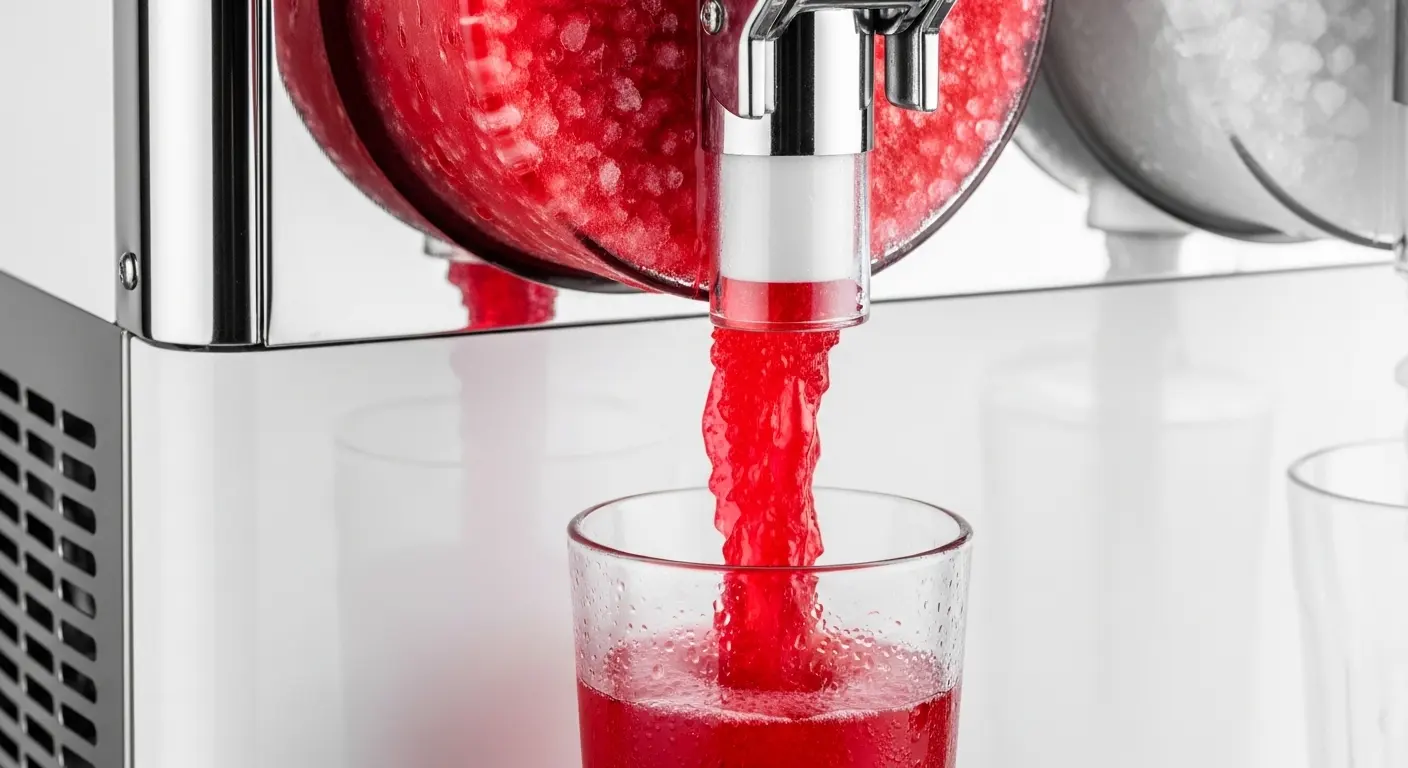
Yes — and this is one of the most asked questions about slushie makers for home use, yet almost no buying guide answers it properly.
The science: Alcohol lowers the freezing point of liquid (called freezing point depression). The higher the alcohol content, the harder it is for the machine to freeze the mix into slush.
Practical rules for frozen cocktails at home:
- Under 5% ABV (wine spritzers, hard seltzers): Works great with no modification
- 5–10% ABV (most wines, ciders): Works well — add an extra 2–3 tablespoons of sugar to compensate
- 10–15% ABV (strong wine, low-proof spirits mixed heavily): Add extra sugar and pre-chill your mix in the fridge before adding to the machine
- Over 20% ABV undiluted (straight spirits): Will NOT freeze — always dilute with juice, soda, or mixer first
A frozen margarita made with tequila, lime juice, triple sec, and simple syrup at ~8–10% ABV total will freeze perfectly in a good compressor machine. Keep your ABV below 10% in the final mix and you'll get excellent results every time.
How to Use and Maintain Your Slushie Machine
Using it the first time:
- Wash the tank and all removable parts before first use
- Prepare your liquid — check brix level, add sugar if needed
- Pour liquid into the tank (don't overfill past the MAX line)
- Power on and select your temperature/texture setting
- Wait 20–30 minutes — check consistency at the 20-minute mark
- Dispense and enjoy — the auger keeps remaining slush fresh for hours
Daily maintenance routine:
- After each use: drain remaining slush, rinse the tank with warm water
- Wipe the exterior and dispensing spout with a damp cloth
- Remove and rinse the drip tray
Weekly deep-clean:
- Remove the tank fully
- Wash with warm water + mild dish soap (avoid abrasive scrubbers on food-grade ABS surfaces)
- Run a plain-water rinse cycle through the machine for 5 minutes
- Check the dispensing spout for any sugar residue buildup — clear with a small brush if needed
- Leave to air-dry fully before reassembling
For broader insights on machine care and appliance performance trends, explore our industry insights blog. Our team also builds compact home ice makers if you're looking for a standalone ice solution to complement your frozen drink setup.
Home Slushie Machine Decision Matrix
Use this table to match your situation to the right machine type:
| Your Situation | Recommended Capacity | Mechanism | Price Target |
|---|---|---|---|
| Solo daily use | 1–1.5L | Compressor | $80–$130 |
| Couple / small household | 1.5–2L | Compressor | $100–$150 |
| Family of 4 | 2–2.5L | Compressor | $130–$180 |
| Regular home entertaining | 2.5–3L | Compressor, dual tank option | $150–$220 |
| Frozen cocktails at home | 1.5–2L | Compressor | $120–$160 |
| Kids' slushies only | 1–1.5L | Compressor or ice-required | $60–$120 |
Frequently Asked Questions
What size slushie machine do I need for home use?
For 1–2 people, 1–1.5L is sufficient and yields 2–3 drinks per cycle. A family of 3–4 should target a 2–2.5L machine, which produces 4–5 servings per batch. Only consider 3L+ if you regularly host gatherings or entertain guests.
Do home slushie machines need ice?
Modern compressor-based home slushie machines do not need ice — they freeze the liquid internally using a built-in cooling system, exactly like a mini refrigerator. Only older, budget blender-style models require pre-made ice cubes. Compressor machines are more convenient, faster in real terms, and produce better-quality slush.
How long does a home slushie machine take to make a slush?
Starting from room-temperature liquid, a quality compressor machine reaches soft slush consistency in 20–30 minutes at standard room temperature (around 25°C). Pre-chilling your liquid in the fridge first cuts that to 12–18 minutes. Any claim of "5-minute slush" assumes pre-chilled liquid.
Can you put alcohol in a home slushie machine?
Yes, as long as the final mix stays below approximately 10% ABV. Alcohol lowers the freezing point, so high-proof spirits must be diluted with juice or mixer. Add extra sugar to compensate for the anti-freeze effect of alcohol. Frozen margaritas, wine slushies, and hard seltzer slushies all work excellently in a good home compressor machine.
How do you clean a slushie machine at home?
Remove the tank after each use, rinse with warm water and mild soap, and run a plain-water rinse cycle through the machine for 5 minutes. Most quality machines have a self-clean function that handles this automatically. Clean the dispensing spout and drip tray after every use to prevent sugary residue from hardening.
What is the difference between a slushie machine and a frozen drink maker?
The terms are largely interchangeable for home use. "Slushie machine" typically refers to a compressor-cooled appliance that freezes liquid into a granular icy texture using an auger. "Frozen drink maker" is a broader term that sometimes includes blender-based machines that crush ice into a frozen drink. For home kitchens, a compressor slushie machine is the more capable and convenient option.
Is a slushie machine worth buying for home use?
For families or households that regularly buy store-bought slushies or frozen drinks — especially in warm months — yes, absolutely. A mid-range machine ($120–$160) pays for itself within 1–2 months versus the cost of store-bought frozen drinks. The key is choosing a machine that's easy enough to clean that you'll actually use it daily. If it's a chore to maintain, it won't get used.
Ready to Find Your Perfect Home Slushie Machine?
YUMYTH engineers slushie machines built for real home use — compressor-cooled, easy to clean, and designed for daily reliability. Our machines are compliance-ready (CE, ETL, CB, RoHS, LFGB) and built on an independent R&D and production line that validates function and durability before any unit ships.
Browse our home range:
- Mini Slush Machine — compact, powerful, perfect for 1–2 person households
- Slush and Ice Cream Maker — dual-function versatility: frozen drinks and home ice cream from one machine
Have a question about which model fits your kitchen? Contact the YUMYTH team — our engineering team is happy to help you find the right fit.
Related Articles
How We Test Every Ice Maker Before Packaging
2026-09-15
BY YUMYTH
A step-by-step look at refrigerant handling, cooling verification, leak detection, corrective action and electrical safety testing For an ice maker, reliable performance is determined long before the carton is sealed. ...
Guide for Brands Looking for a Reliable Vacuum Sealer OEM Supplier
2026-09-14
BY YUMYTH
When you are sourcing kitchen appliances for your retail brand, finding a dependable vacuum sealer OEM supplier is rarely just about getting the lowest unit price. It is about protecting ...
Why Ice Shape Matters: Understanding 10mm × 15mm Cylindrical Nugget Ice
2026-09-14
BY YUMYTH
More Than Ice Production — The Ice Itself Shapes the Consumer Experience When sourcing a nugget ice maker, buyers often focus first on production capacity, water tank size, ice basket ...

Ice Maker Sourcing Guide: How to Find the Right Factory
2026-09-10
BY YUMYTH
Sourcing an ice maker looks straightforward on paper. Find a supplier, agree on a price, place an order. But anyone who has actually done this knows the process is rarely ...