
Quiet Slushie Machine for Home: What's Actually Quiet and Why It Matters
Share:
-

-

-

-


Copied

Share:
-
-
-
-
Copied
Finding a genuinely quiet slushie machine for home is harder than it should be. Most product listings describe their machine as "quiet operation" without providing a decibel rating, a test methodology, or any way for a buyer to verify that claim before purchase. Then the machine arrives, runs at the volume of a food processor in a kitchen during a party, and the negative reviews start piling up around noise.
Noise is consistently one of the top complaints in home slushie machine reviews — and it is entirely avoidable when you know what causes it and what engineering decisions produce quiet operation. This guide explains why slushie machines get noisy, what decibel ratings mean in real kitchen context, how to verify a quiet slushie machine for home before buying, and which specific machines have documented noise specifications rather than marketing language.
Why Slushie Machines Get Noisy (And Most Reviews Don't Explain This)
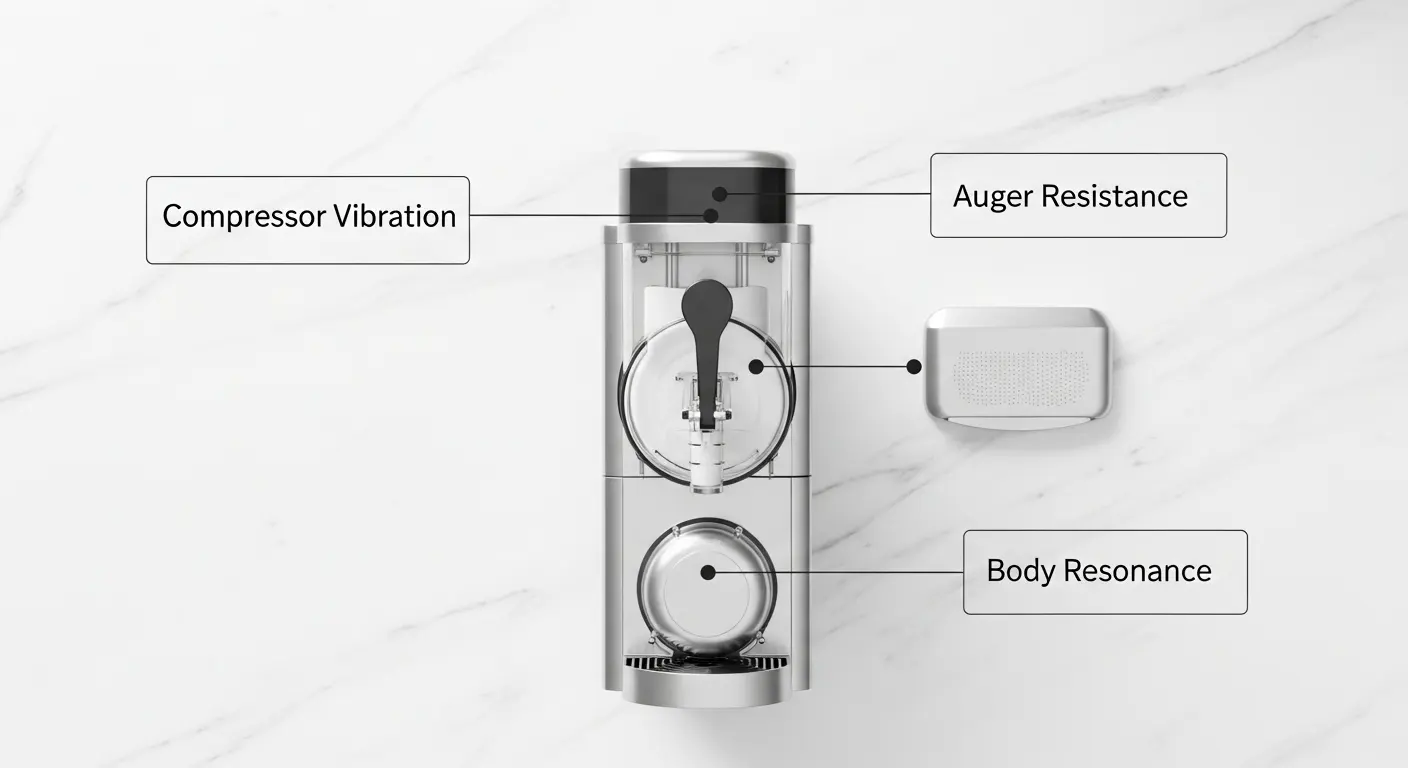
Noise in a home slushie machine comes from three distinct sources. Understanding them helps you evaluate whether a machine's "quiet" claim is engineering-backed or just a product description.
Compressor Vibration
A slushie machine cools through a refrigeration cycle that uses a compressor — the same core technology as a refrigerator. The compressor runs continuously during the freeze cycle, and if it is not properly isolated or if the mounting points allow vibration to transfer to the machine body, that vibration becomes audible noise. A quiet slushie machine for home uses a high-quality compressor with effective anti-vibration mounting. A budget machine uses a low-cost compressor with minimal isolation.
Compressor quality is not visible from a product photo. It shows up in the noise rating and in how the machine behaves after 50–100 use cycles, when vibration mounting starts to wear. A documented ≤55dB rating is the benchmark that confirms a manufacturer made a deliberate engineering decision about compressor quality and mounting — not just added "quiet" to a marketing description.
Auger Resistance and Motor Strain
The auger is the mixing rod that keeps liquid moving during the freeze cycle. When liquid thickens near the freeze point — especially with sugar-heavy or dairy-based mixes — the auger meets resistance. On a basic machine, the motor simply pushes harder against that resistance, which produces a loud grinding or straining sound that is alarming to first-time users and genuinely disruptive in a domestic environment.
A quality quiet slushie machine for home solves this with an intelligent auger reversal system. When the auger detects resistance buildup — before it reaches strain level — it reverses direction to break up the forming ice layer and then continues the cycle. The result is a steady, consistent machine sound rather than intermittent loud strain cycles. This is an engineering feature, not a software setting. It requires a control system that monitors motor load in real time.
Bowl and Body Resonance
Even a quiet compressor can create noise if the machine's bowl or body panels resonate at the compressor's operating frequency. Cheap plastic housing and poorly fitted bowl components act like a speaker cone — amplifying small vibrations into audible rattling or buzzing. A quiet slushie machine for home uses thicker food-grade ABS panels, properly fitted seal rings, and bowl-to-body connections designed to minimize vibration transfer rather than inadvertently amplify it.
What Decibel Ratings Actually Mean in a Home Kitchen
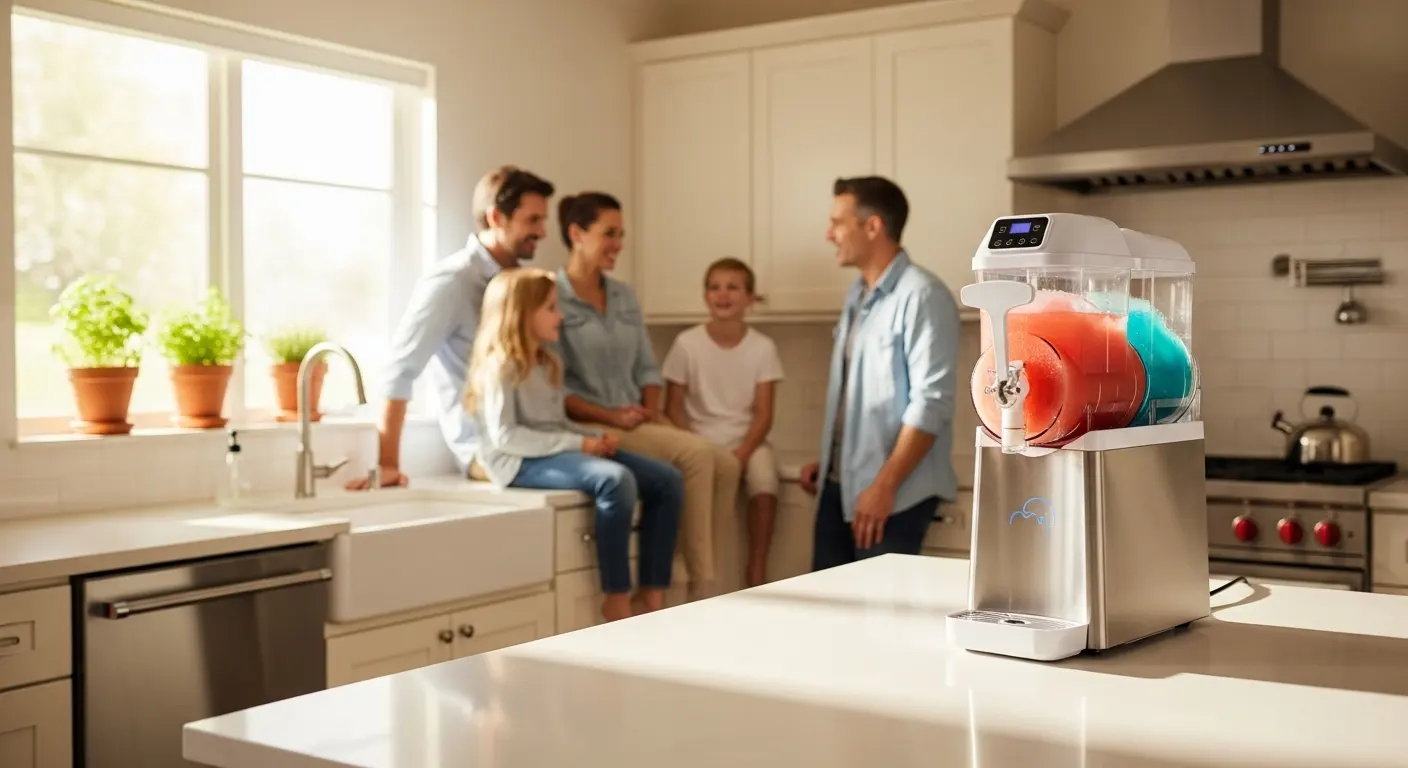
Most buyers encounter decibel ratings without a useful reference point. Here is what the numbers actually mean in a kitchen environment.
- 40–45dB — Library volume. A refrigerator hum. You can barely tell the machine is running from the next room.
- 50–55dB — Normal conversation level. You can talk at normal volume in the same room without raising your voice. A ≤55dB quiet slushie machine for home sits in this range — present but not disruptive.
- 60–65dB — Slightly elevated conversation. Similar to background noise in a café. Noticeable during the freeze cycle but not uncomfortable.
- 70–75dB — Loud. Comparable to a vacuum cleaner. Most blender-style home frozen drink machines and many budget slushie machines operate in this range.
- 80dB+ — Very loud. Standard consumer blenders at full speed. Not appropriate for a machine that runs for 20–40 minutes in a residential kitchen.
A quiet slushie machine for home at ≤55dB sits in the same noise category as a refrigerator — you are aware it is running, but it does not disrupt conversation, television, or a gathering in the same room. In contrast, a machine operating at 65–70dB during a 30-minute freeze cycle becomes the loudest thing in the room, which is not what most buyers want in their kitchen.
The practical test: if a product listing describes the machine as "quiet" without a specific decibel number, that claim is unverified. Ask in product Q&A, check whether reviewers mention the noise level with specific comparisons, or look for brands that publish the dB rating in their technical specification sheet.
How to Verify a Quiet Slushie Machine for Home Before Buying
"Quiet operation" appears in hundreds of slushie machine listings. Here is how to separate verified quiet performance from unverifiable marketing.
Look for a published decibel rating. A real quiet slushie machine for home has a documented noise rating — ≤55dB is the benchmark standard. If a product listing mentions "quiet" but provides no decibel figure anywhere in the spec sheet, technical documentation, or product description, the claim has not been verified against a standard. That absence is meaningful.
Read review language carefully. Real user reviews describe noise in comparative terms: "quieter than my blender," "I can hear it from the next room but it doesn't bother anyone," "louder than expected for something called quiet." Reviews that describe audible strain noises, intermittent grinding, or disruptive operation during the freeze cycle indicate an auger system without intelligent reversal — regardless of how the listing describes noise.
Check for independent test results. Consumer Reports and BBC Good Food both test noise as part of their evaluation methodology. If a machine appears in these reviews with notes on noise level — positive or negative — that is verified third-party data. Use it.
Verify the auger system. As covered above, intelligent auger reversal with jam protection eliminates the strain-cycle noise that makes many slushie machines disruptive. If a machine's spec sheet describes an intelligent auger reversal system specifically — not just a "self-cleaning" or "anti-jam" marketing claim, but a named, engineered feature — that indicates noise-reducing design investment.
Best Quiet Slushie Machines for Home in 2026
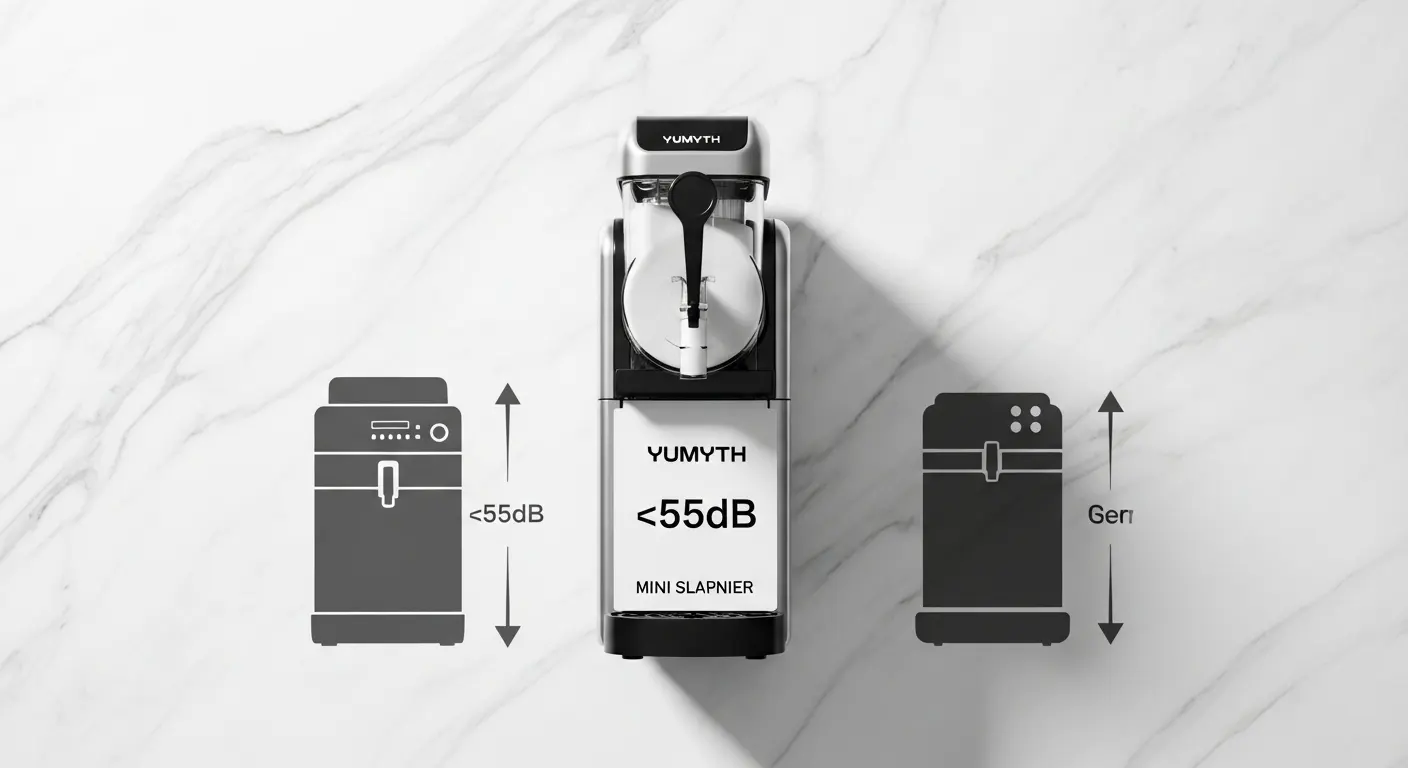
These are the home slushie machines that either carry documented noise specifications or have independent review verification of quiet operation in home kitchen environments.
Yumyth Mini Slush Machine (YX1801) — ≤55dB Documented
The Yumyth Mini Slush Machine is the most precisely documented quiet slushie machine for home in the category. Its ≤55dB noise rating is published in the product's technical specification sheet — not in marketing copy, but in the engineering documentation alongside wattage (200W), coolant (R290), capacity (61oz/1.8L), and machine dimensions. That level of documentation means the rating was verified at a specific operating condition, not estimated for a listing.
The machine uses a high-quality compressor with anti-vibration mounting and food-grade ABS body panels that minimize resonance. The patented intelligent auger reversal system eliminates the strain-cycle noise common in machines without this feature — the auger reverses before resistance builds to the strain point, keeping the machine in a consistent, low-noise operating state throughout the freeze cycle.
Six preset programs (Slush, Wine, Milkshake, Cocktail, Coffee, Custom), six-stage texture control, 3-minute quick rinse cycle, and child lock function complete the feature set. The detachable handle and dishwasher-safe silicone seal ring make cleaning genuinely quick.
Yumyth Slush and Ice Cream Maker (YX1802) — ≤55dB Documented
The Yumyth Slush and Ice Cream Maker carries the same ≤55dB noise specification at 220W — rated slightly higher than the YX1801 to support the additional ice cream mode. The same anti-vibration compressor mounting, intelligent auger reversal, and food-grade ABS construction produce identical quiet operation in a slightly larger form factor (452mm × 175mm × 398mm, 10.2kg) .
For households who want both a quiet slushie machine for home and a machine that doubles as a frozen dessert maker, the YX1802 covers both use cases without a second appliance on the counter. For a detailed comparison of how the slush and ice cream maker differs from a dedicated slush-only machine in design and daily use, the ice cream vs slush machine guide covers both machine types side by side.
Ninja SLUSHi FS301 — Quiet Verified by Independent Review
The Ninja SLUSHi FS301 earns consistent "quiet" notes from independent reviewers including Ormeohome and YouTube testing channels, though SharkNinja does not publish a specific decibel rating in the product spec. User reviews describe it as noticeably quieter than blender-style machines and comparable to a refrigerator during operation. The SlushAssist Technology — SharkNinja's proprietary mixing system — manages auger behavior and reduces the strain-cycle noise seen in basic machines. Consumer Reports rates it among its top picks.
Cuisinart Frost Fusion — Quiet Verified by BBC Good Food
The Cuisinart Frost Fusion earns BBC Good Food's best-overall award for 2026 and is specifically noted for quiet operation during independent testing. Cuisinart does not publish a specific decibel rating in consumer-facing documentation, but the independent testing result from a credible editorial source carries meaningful weight. Five programs, adjustable thickness settings, and 1.6L capacity at £299.99.
Wilfa Icy Slush Machine — "Quiet" in Product Positioning
Wilfa explicitly positions its Icy machine as a "quiet slush machine" in its product title and marketing — one of the few brands to specifically target this search intent in their product identity. The machine makes slush in 15–45 minutes with smart programs and easy cleaning. Wilfa does not publish a decibel specification in the publicly available product documentation, but the brand's direct positioning on quiet operation indicates a design priority.
Tower Slushie Fusion T19058
Tower's Slushie Fusion earns mention in multiple 2026 best-slushie-machine roundups and is positioned at a more accessible price point (£165.60). Independent review notes do not specifically focus on noise, but the machine appears in lists of quiet home slushie machines on YouTube channels comparing top models.
Why the Yumyth Is the Most Documented Quiet Slushie Machine for Home
Among all the machines in this guide, only the Yumyth YX1801 and YX1802 publish a verified ≤55dB noise rating in their engineering specification documentation. Every other machine on this list relies on marketing descriptions ("quiet operation"), reviewer observations, or brand positioning — none of which can be verified against a specific measured standard before purchase.
For buyers who specifically searched for a quiet slushie machine for home and want to verify the claim before buying, the Yumyth's ≤55dB documented rating provides exactly that verification. It is a number, not a description. It was measured at a specific operating condition by the manufacturer who controls the product engineering. And it appears in the same technical document as the wattage, coolant type, and machine dimensions — alongside engineering data that is held to the same accuracy standard.
The Yumyth Mini Slush Machine brings this verified quiet operation in a compact form (322mm × 175mm × 392mm, 9.2kg) that fits standard countertop spaces. For buyers who also want dedicated ice production for their home frozen drink setup, the ice makers buying guide covers kitchen-grade ice appliances that complement a slushie machine in a home bar or party setup. And for buyers who prepare slush mixes ahead of events and want to store them without texture degradation, the vacuum sealers guide covers how vacuum sealing maintains mix consistency between uses.
Does Quiet Mean Slower? Noise vs. Performance
This is the most common concern buyers raise when considering a quiet slushie machine for home — and it is worth addressing directly. The assumption is that reducing noise requires reducing power, which reduces freeze speed. In practice, that trade-off is not how quality quiet operation works.
Noise reduction in a quality quiet slushie machine for home comes from compressor isolation, body panel design, and auger control — not from reducing compressor output. The Yumyth YX1801 operates at 200W with a ≤55dB noise rating and a freeze-to-slush time of approximately 20–30 minutes depending on liquid type and ambient temperature. The Ninja SLUSHi, which is reviewed as quiet but uses higher power, achieves similar freeze times.
In contrast, budget machines that are described as loud are often not significantly faster. The noise comes from poor vibration isolation and basic auger systems — not from higher power output or faster compressor cycles. A loud machine is not a faster machine. It is a machine that did not prioritize noise engineering in its design.
For buyers who want a broader understanding of how the home frozen drink machine category is developing — including how noise performance has become a key differentiator at the premium end — the industry insights section covers where the market is heading and which features are setting new category standards.
Frequently Asked Questions
What is the quietest slushie machine for home use?
The most documented quiet slushie machine for home is the Yumyth YX1801, with a verified ≤55dB noise rating published in its engineering specification. At 55dB, the machine operates at normal conversation level — present but not disruptive in a kitchen environment. The Ninja SLUSHi FS301 and Cuisinart Frost Fusion are also reviewed as quiet by independent testers, though neither publishes a specific decibel rating in their consumer-facing documentation.
Why are some slushie machines so noisy?
Slushie machine noise comes from three sources: compressor vibration (a low-quality compressor or poor anti-vibration mounting transfers vibration to the machine body), auger motor strain (when the auger hits resistance in thickening liquid, a basic motor pushes harder and produces a loud grinding sound), and bowl or body resonance (thin plastic panels vibrate at the compressor's operating frequency). Quality quiet machines address all three through compressor isolation, intelligent auger reversal, and rigid food-grade ABS construction.
Does "quiet operation" in a product listing mean anything?
Not without a verified decibel rating. "Quiet operation" is a marketing description that appears in hundreds of product listings without any measured standard behind it. A machine listing with "quiet" but no decibel figure provides no verifiable basis for that claim. Look for a specific dB rating — ≤55dB is the benchmark — published in the product's technical specification sheet rather than in the product description or marketing copy.
Can a quiet slushie machine for home still make slushies fast?
Yes. Quiet operation and freeze speed are independent performance characteristics. In quality machines, noise reduction comes from compressor isolation and auger engineering — not reduced power output. The Yumyth YX1801 achieves ≤55dB operation at 200W with a 20–30 minute freeze time depending on liquid type. Noise reduction in budget machines often comes from simply using a smaller, weaker compressor — but in quality machines, the quietness is an engineering achievement, not a performance compromise.
Related Articles
How We Test Every Ice Maker Before Packaging
2026-09-15
BY YUMYTH
A step-by-step look at refrigerant handling, cooling verification, leak detection, corrective action and electrical safety testing For an ice maker, reliable performance is determined long before the carton is sealed. ...
Guide for Brands Looking for a Reliable Vacuum Sealer OEM Supplier
2026-09-14
BY YUMYTH
When you are sourcing kitchen appliances for your retail brand, finding a dependable vacuum sealer OEM supplier is rarely just about getting the lowest unit price. It is about protecting ...

Why Ice Shape Matters: Understanding 10mm × 15mm Cylindrical Nugget Ice
2026-09-14
BY YUMYTH
More Than Ice Production — The Ice Itself Shapes the Consumer Experience When sourcing a nugget ice maker, buyers often focus first on production capacity, water tank size, ice basket ...

Ice Maker Sourcing Guide: How to Find the Right Factory
2026-09-10
BY YUMYTH
Sourcing an ice maker looks straightforward on paper. Find a supplier, agree on a price, place an order. But anyone who has actually done this knows the process is rarely ...