
How to Evaluate Cooling Performance, Brix Limits, and Factory Quality Before Mass Production
Share:
-

-

-

-


Copied

Share:
-
-
-
-
Copied
Getting burned on a batch of faulty frozen beverage machines is a nightmare for any brand. When you source an OEM or ODM slushie machine for the consumer market, the unit price isn't your biggest risk—it’s the return rate. You need machines that won't leak sticky syrup across a customer's kitchen counter or burn out a motor after three weekend parties.
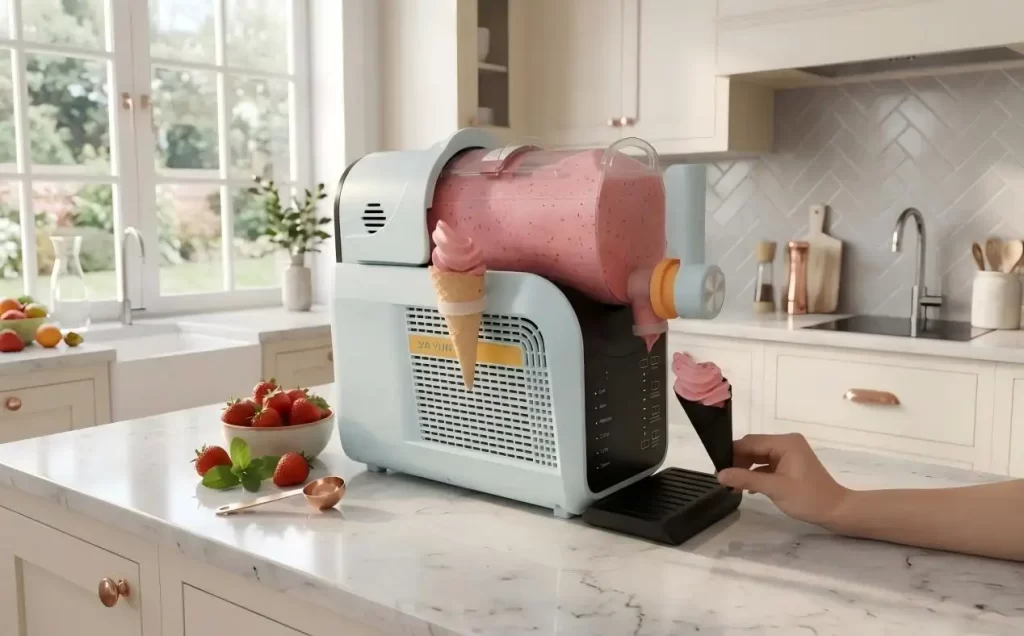
A viable unit has to freeze a batch consistently in under 45 minutes, handle summer room temperatures, and manage different sugar levels (Brix) without jamming. Based on hundreds of bench tests in our facility, here is how you separate the reliable appliances from the junk before you ever place a PO.
Technical Comparison: Home vs. Light Commercial: Know Your Specs
Don't try to sell a modified home unit to a busy cafe. You have to align your internal components with your actual retail channel.
| Specification / Metric | Household Compact Slush Maker | Light-Commercial Countertop Model | Full Commercial Slush Machine |
| Target Retail Price | $149 – $299 | $399 – $699 | $1,200 – $2,500+ |
| Cooling Architecture | Direct expansion evaporator + Compact compressor (R290 / R134a) | Dedicated scroll/piston compressor (R290) + Dual ventilation | Dual high-displacement compressor system |
| Batch Pull-Down Time | 35–45 mins (1.5L–2.5L capacity) | 25–35 mins (3L–5L) | 45–60 mins (10L+) |
| Supported Brix Range | 8% – 14% | 5% – 16% | 0% – 18% |
| Continuous Dispense Run | 1–2 hours max | 4–8 hours | 24/7 capable |
| Noise Level (dB) | < 55 dB(A) at 1 meter | < 60 dB(A) at 1 meter | 65–72 dB(A) |
| Target Channel | Amazon, DTC Brand, TV Shopping | Cafes, Bars, Boutique Rental Agencies | Convenience stores, Fast food chains |
3 Critical Failure Points to Inspect During Pre-Production Sample Testing
Three main flaws are the focus of consumer complaints about frozen beverage appliances: melting during ambient temperature rises, cylinder jamming, and liquid leakage into the motor casing. Examine the following subassemblies when reviewing the prototype:
1. Torque on the auger drive and automatic reverse protection
Extreme kinetic resistance is produced by frozen sugar syrup. Standard plastic spur gears used in inexpensive OEM systems shred teeth after 100 hours of continuous spinning.
What to make clear: Make sure your manufacturer employs a full metal planetary reduction gearbox rated for at least 12 N·m stall torque or carbon-reinforced POM gears.
Sensor logic: An auto-reverse cycle or torque-detection cutoff must be incorporated into the PCB firmware. The auger should automatically pulse or reverse to break clumps if ice crystallization causes an overload rather than exhausting the motor.
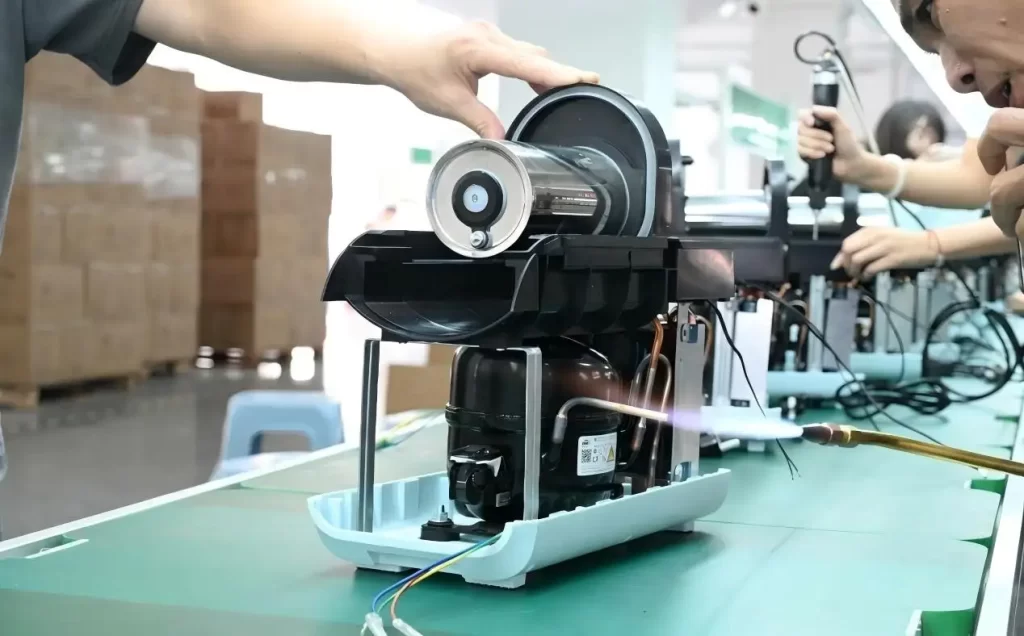
2. Mechanical Seals for Food Contact (The Zero-Leakage Benchmark)
Syrup leakage damages internal circuitry and jeopardizes food safety.
Material standard: Use food-grade silicon seals or dual-lip fluororubber (FKM) approved by the FDA and LFGB.
Dynamic cycle test: Request a 1,000-cycle continuous rotation test report from your supplier under water and 12% Brix acidic liquid (such as pH 2.8 lemonade) without fluid outflow.
3.Heat Dissipation in Tight Spaces
People shove these machines against kitchen walls, blocking the vents.
The compressor gets hot, and the thermal switch trips.
The Fix: A good factory tests prototypes in a 35°C (95°F) hot box. If the machine can't pull a liquid down to slush in under an hour in that heat, the condenser design is flawed.
Temperature Pull-Down & Brix Sensitivity Factory Test Data
We used a standardized 12% sucrose solution at room temperature of 25°C (77°F) at our R&D testing lab to compare our unique compact cylinder construction to popular commercial alternatives:
Minutes 0–20: Rapid sensible heat loss causes the liquid's temperature to decrease from 22.0°C to 0°C.
Minutes 20-30: Latent heat transition phase; ice nucleation starts along the inner cylinder wall as the liquid remains between 0°C and -1.8°C.
Minute 35: The first fine cola slush consistency is reached.
Minute 40-45: The compressor switches to an energy-saving maintenance mode when the peak slush density reaches (-2°C core temperature)
Engineering Rule of Thumb: You can't just freeze pure water in these machines. If a supplier tells you their standard home slushie maker works perfectly with zero-sugar water, walk away.
Is This the Right Product for Your Catalog?
Who should source these:
Direct-to-Consumer (DTC) Brands & Retailers: Looking for a unique, high-margin summer home appliance ($199–$349 MSRP) with contemporary countertop esthetics and verified low-noise performance (< 52 dB).
Cocktail & Beverage Syrup Brands: Seeking cobranded promotional devices that let customers make specialized slush, frozen margaritas, and frosé at home.
Importers Demanding Complete Compliance: Customs clearance and department store placement need pre-certified ETL, CE, CB, FDA, LFGB, and RoHS certification.
Who should pass:
Stadiums or festivals. If you need 50 liters of output an hour, you need a massive 3000W industrial rig, not a compact unit.
Bargain hunters looking to retail below $70. You simply cannot build a safe, compressor-driven freezing unit at that price point.
Sourcing FAQ for B2B Procurement Managers
Q1: What is the standard minimum order quantity (MOQ) for private-label packaging, tooling, and custom colors?
The MOQ for private-labeled silk-screen branding and custom housing colors (Pantone matching) is 1000 units. To offset mold costs, custom project development for customized structural tooling (modified bowl capacity or unique injection body) begins at 1000-2000 units.
Q2: How does your factory make sure that US and European electrical requirements are followed?
Our production lines follow BSCI and ISO9001:2015. North American-bound units have complete ETL markings. Units sent to the EU use environmentally friendly R290 refrigerant with a low Global Warming Potential and comply with CE-LVD, CE-EMC, and ErP energy efficiency requirements.
Q3: How long does it take for manufacturing to go from sample confirmation to port delivery?
Delivery of functional samples: 7–10 working days.
First mass manufacturing run: 45 days following acceptance of the artwork and deposit.
30 to 35 days FOB Shenzhen Shekou for repeat manufacturing orders.
Finally, Use YUMYTH to Create Your Next Successful Frozen Drink Line
Give up using generic, unproven white-label equipment to jeopardize your brand's reputation. Join together with a seasoned OEM manufacturer that has fully computerized end-of-line testing, automated refrigerant charging lines, and internal tooling workshops.
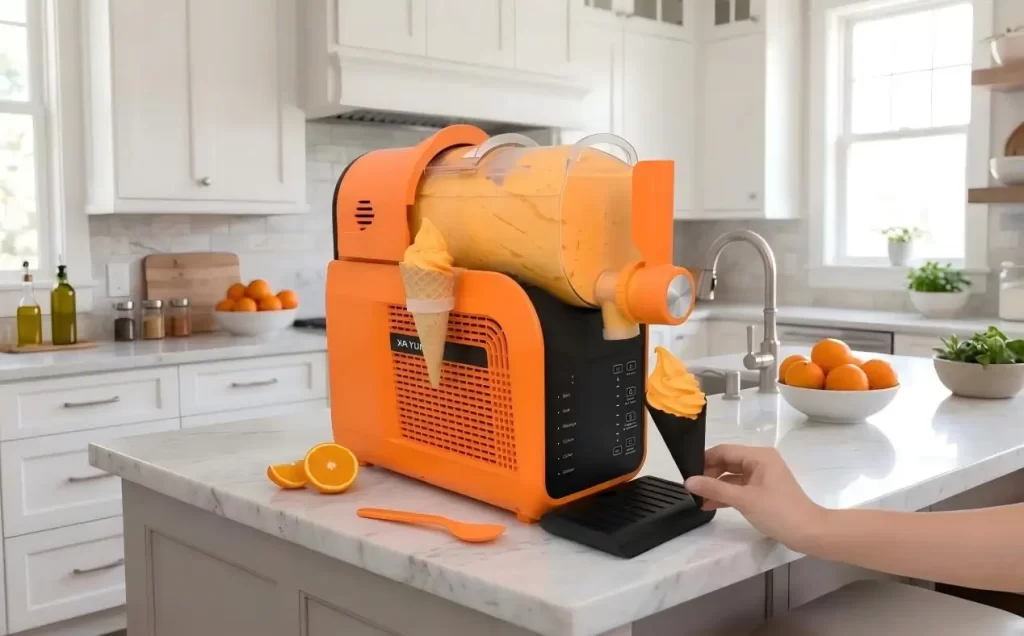
Visit our Slushie Machine OEM/ODM Product Catalog to see our whole selection of certified equipment.
To get all technical specifications, or a sample evaluation kit for bench testing, get in touch with our Sourcing Team right now.
Related Articles
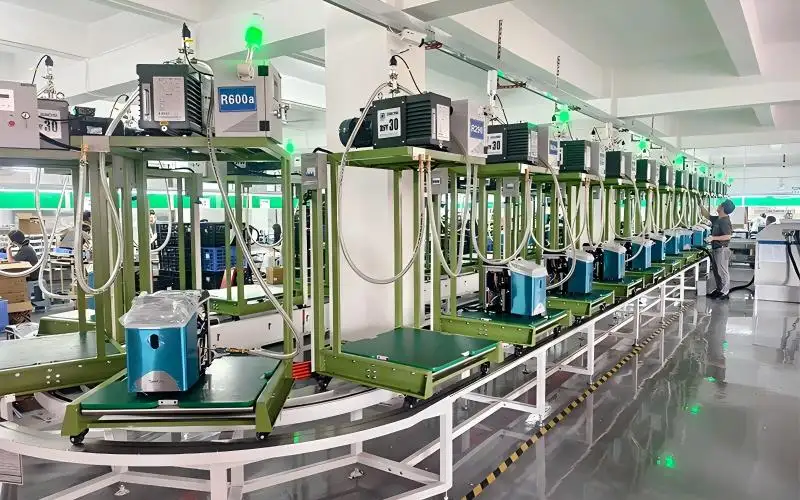
How We Test Every Ice Maker Before Packaging
2026-09-15
BY YUMYTH
A step-by-step look at refrigerant handling, cooling verification, leak detection, corrective action and electrical safety testing For an ice maker, reliable performance is determined long before the carton is sealed. ...
Guide for Brands Looking for a Reliable Vacuum Sealer OEM Supplier
2026-09-14
BY YUMYTH
When you are sourcing kitchen appliances for your retail brand, finding a dependable vacuum sealer OEM supplier is rarely just about getting the lowest unit price. It is about protecting ...
Why Ice Shape Matters: Understanding 10mm × 15mm Cylindrical Nugget Ice
2026-09-14
BY YUMYTH
More Than Ice Production — The Ice Itself Shapes the Consumer Experience When sourcing a nugget ice maker, buyers often focus first on production capacity, water tank size, ice basket ...

Ice Maker Sourcing Guide: How to Find the Right Factory
2026-09-10
BY YUMYTH
Sourcing an ice maker looks straightforward on paper. Find a supplier, agree on a price, place an order. But anyone who has actually done this knows the process is rarely ...