Bullet Ice Machine vs Nugget Ice Maker: Which Is Better?
Share:
-

-

-

-


Copied
Share:
-
-
-
-
Copied
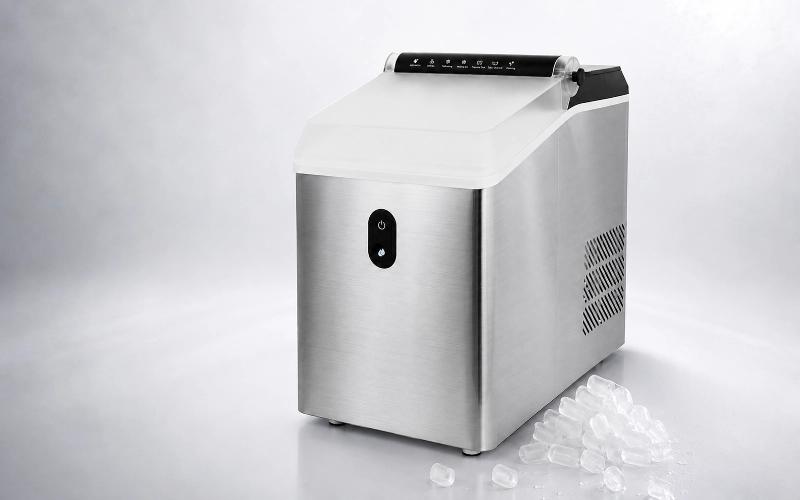
A bullet ice machine can release nine pieces in less than four minutes, yet a nugget ice maker with a slower startup may produce considerably more ice over 24 hours. For appliance distributors, comparing these figures without examining the freezing mechanism can lead to the wrong product selection.
Shape is only one of the factors differentiating ice types. The mechanisms that create bullet and nugget ice place different requirements on a machine's evaporator, water circulation system, drives, and cleaning mechanisms. Consequently, bullet and nugget ice machines tend to differ in their production stability, beverage dilution, maintenance requirements, and risk of warranty claims.
At YUMYTH, when assessing potential ice machine platforms for OEM and private-label projects, we review operating characteristics, among other factors.
What is the Impact of the Ice-Making Mechanism on Reliability?
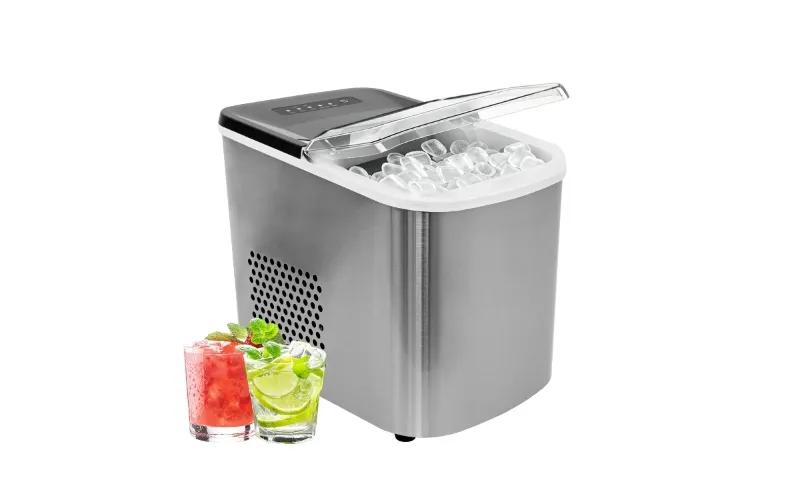
The mechanism to make bullet ice usually involves a bank of metal fingers immersed in or supplied with circulating water. Ice builds up on the fingers until a controller initiates a harvest cycle. The cycle releases the ice by warming the metal fingers.
Due to ice being made in batches, variability in thickness of ice can occur. Also, ice can stick to the metal fingers, blocking the release of the next batch of ice, stopping the process all together.
Nugget ice is made differently. It is made by freezing water against the wall of a cylindrical evaporator. Once the water freezes, an auger comes in contact with the wall to scrape the ice and transport it to a small opening where the ice is compressed to create small nugget-like pieces of ice.
Which Type of Ice Performs Better in Cold Drinks?
Bullet ice has a solid outer wall with a hollow center, which allows heat transfer along the outer wall and the interior.
Nugget ice is made up of compressed flakes with small voids and boundaries, and as a result melts faster. The softer texture is a result of the liquid penetrating the structure.
Nugget ice, due to the particle nature, tends to have a more chewable texture. Therefore, nugget ice is often preferred for iced coffees and sodas. Bullet ice tends to retain its shape and firmness and is therefore preferred for drinks that require firmer ice, like regular soda.
However, just because a bullet is bigger, doesn't mean that it will melt faster than a nugget.
The rate of melting is determined by the mass of ice, surface area, the temperature of the ice and drink at the beginning of the process, and the amount of agitation. Compression density of nugget ice varies with the equipment.
For equal comparison, use the same mass of each type of ice and record the time it takes for the drink to reach a certain temperature, as well as the mass of the ice and the volume of the drink at the end. Comparing pieces by count produces misleading results.
Why Can a Slower-Starting Nugget Machine Produce More Ice?
First-ice time and daily production measure different aspects of refrigeration performance.
YUMYTH's specifications illustrate this distinction.
| Specification | YZ1501 Bullet Ice Maker | YJ2001 Nugget Ice Maker |
| Daily ice production | 12 kg/24 h | Up to 20 kg/24 h |
| First ice | 9 small pieces in 3.5 min | As little as 6 min at 25°C ambient |
| Water tank | 1.52 L | 2.1 L |
| Rated power | 170 W | 150 W |
| Refrigerant | R290 | R600a |
| Dimensions | 340 × 241 × 295 mm | 402 × 240 × 402 mm |
Source: YUMYTH's published YZ1501 and YJ2001 product specifications.
The YZ1501 can complete its first small-ice batch quickly, whereas the YJ2001 has a higher published daily production figure. These figures are not directly comparable without matching test conditions.
Ambient temperature, incoming water temperature, condenser ventilation, and collection-bin interruptions all influence actual output.
A full basket can stop production even when refrigeration capacity remains available. Water refilling and accumulated ice melting further reduce usable output.
Rated electrical power is not an energy-efficiency measurement either. A 150 W machine does not necessarily consume less electricity per kilogram of ice than a 170 W alternative.
For procurement comparisons, we recommend measuring usable ice production and total electrical consumption over the same operating period.
Where Do Maintenance Problems Usually Develop?
Water quality is a major variable in both systems, although the resulting failure mechanisms differ.
Bullet style systems can have mineral deposits on freezing surfaces that can obstruct heat transfer. Deposits around water passage ways can also obstruct passage ways, leading to non-uniform ice thickness.
Nugget systems can also have scale build up between the auger and evaporator wall.
As scale or other deposits build up, scraping becomes more difficult, and the drive system experiences a higher torque demand. Severe build up or blocked ice discharge can cause abnormal operating conditions or a complete mechanical shut down.
Evaluation of auger ice clearance, surface finish, bearing condition, and compression geometry should be considered during nugget ice maker evaluations. External Stainless Steel Construction does not indicate the material or quality of the internal components.
YUMYTH's YJ2001 includes a few features designed to support routine operation and self-cleaning. However, these features should not be interpreted as eliminating the need for routine descaling or mechanical inspection.
Buyers should see sample cleaning procedures to determine if critical water contacting surfaces can be accessed without extensive disassembly.
What Should OEM Buyers Test Before Approving an Ice Machine?
A short demonstration to confirm that a machine can make ice does not test all factors that effect a machine's long term durability.
For sample approval, we evaluate the following:
•Thermal performance: Evaluate the ability of a machine to retain cold during various conditions it may face in the end-use market.
•Mechanical reliability: Evaluate the behavior of a machine during incomplete harvests, discharge blockage, and repeated cycles.
•Maintenance: Evaluate the condition of the wetted components after testing, and assess the ease of drainage and cleaning.
•Refrigerant systems: Report energy consumption and operating noise for a defined mass (1 kg).
Compliance documentation requires separate verification. Published refrigerants R290 and R600a are flammable hydrocarbons and thus refrigerant system safety and applicable market requirements are relevant to the OEM approval.
What Type of Ice Machine Is Best for Your Product Line?
A bullet ice machine is the better option for cost-sensitive, countertop applications where simple maintenance, small size, and standard beverage cooling are important.
A nugget ice maker fits a product line where chewable ice is preferred and the target market can accept the increased mechanical complexity and maintenance.
When making the decision, distributors must consider customer usage, expected peak demand, and service accessibility as well as verified production consistency rather than first-ice speed.
YUMYTH manufactures bullet and nugget ice maker platforms for OEM/private label. Explore our ice machines to compare features and contact us for a discussion about your product requirements.
FAQs
Q1: What is the main difference between a bullet ice machine and a nugget ice maker?
A: A bullet ice machine produces hollow ice through freezing and harvesting cycles. A nugget ice maker compresses scraped ice flakes into soft, chewable pellets.
Q2: Which YUMYTH ice machine has higher daily production capacity?
A: The YUMYTH YJ2001 nugget ice maker is rated for up to 20 kg/24 h, compared with 12 kg/24 h for the YZ1501 bullet ice maker.
Q3: How quickly do YUMYTH ice makers produce ice?
A: The YZ1501 produces nine small bullet ice pieces in as little as 3.5 minutes. The YJ2001 starts producing nugget ice in approximately 6 minutes at 25°C ambient temperature.
Q4: Does nugget ice melt faster than bullet ice?
A: Nugget ice generally melts faster because of its compressed flake structure. Actual melting rates depend on ice mass, temperature, surface area, and beverage conditions.
Q5: Which YUMYTH ice maker is better for cafés and beverage businesses?
A: The YZ1501 suits conventional iced beverages and smaller-volume applications. The YJ2001 is better suited to customers who prefer chewable nugget ice. Buyers should verify peak-demand capacity.
Related Articles

How Does a Slush Machine Work Without Ice?
2026-10-29
BY arafatshuvo509
Traditional blender's use of crushed ice to mix an ingredient into a thick, cold drink is replaced by today's slush makers which are able to achieve the same result using ...
Compressor Slush Machine: Cooling System and Mixing Technology
2026-10-29
BY arafatshuvo509
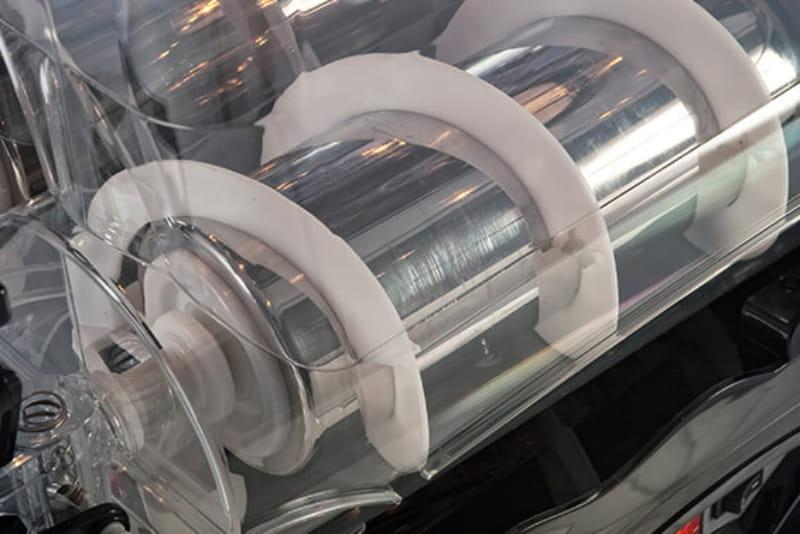
A compressor slush machine utilizes an integral refrigeration process with continuous mechanical agitation of the refrigerated liquid to produce semi-frozen (slushy) liquids by creating ice crystals directly from the liquid. ...
Ice Maker for Small Kitchen: Compact Design for Apartment Living
2026-10-27
BY YUMYTH
An ice maker that fits on an apartment countertop may still be difficult to operate. A wall can obstruct condenser airflow, an overhead cabinet can prevent the lid from opening ...
2026 Freestanding Ice Maker Trends: Clear Ice, R290, and Smart Controls
2026-10-27
BY YUMYTH
A freestanding ice maker that can produce 12.6 kg of ice in a day may still not meet expectations. Its ice may turn cloudy because of short freezing cycles, it ...