Portable Ice Maker: Portable Ice Maker: How to Choose the Right One
Share:
-

-

-

-


Copied
Share:
-
-
-
-
Copied
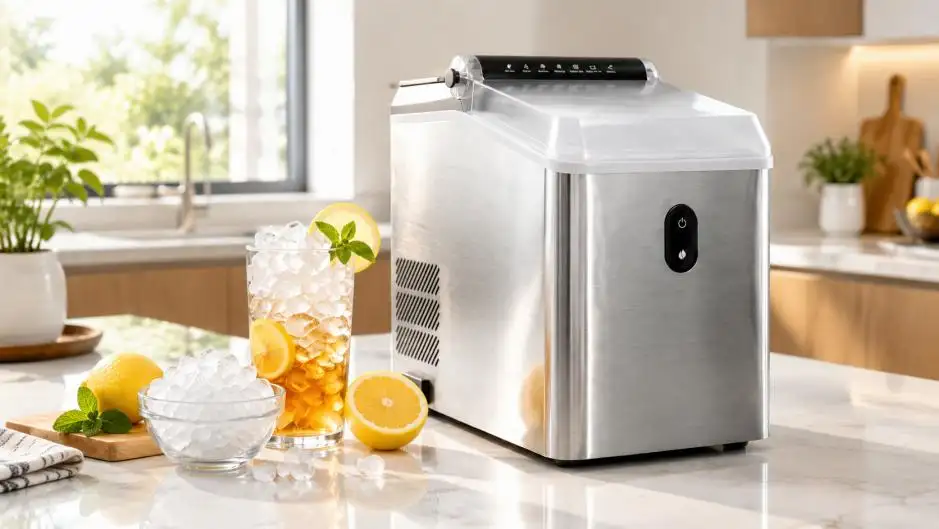
Running out of ice is one of those small problems that gets annoying fast. Freezer trays take hours. Built-in refrigerator ice makers aren't in every home. A portable ice maker solves this without much fuss.
These compact countertop machines make ice without a permanent water connection. Depending on the model, you get bullet ice, cube ice, or the soft, chewable nugget ice that's grown popular in recent years.
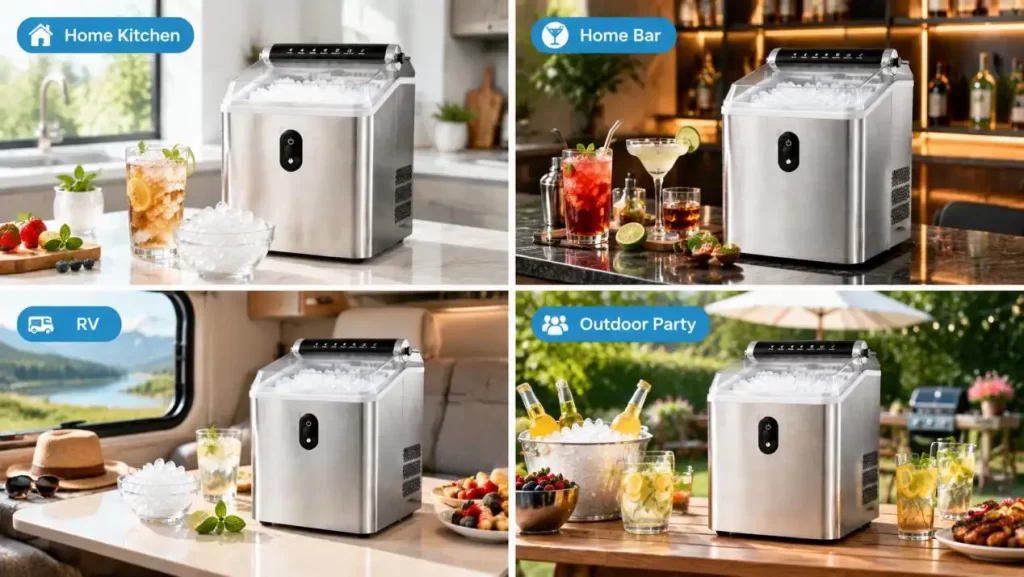
If you're shopping for one—for the kitchen, an RV, the office, a home bar, or backyard gatherings—the question isn't just how portable it is. Ice type, production capacity, tank size, noise, dimensions, cleaning, and ease of use all matter.
What Is a Portable Ice Maker?
It's a compact appliance that makes ice without being hooked to a water line.
Unlike a fridge ice maker, a portable unit usually has its own water reservoir. Fill it, turn it on, come back to fresh ice.
People use "portable" and "countertop" interchangeably. Countertop describes where it sits. Portable emphasizes that it's compact and movable.
Good for:
- Home kitchens
- Apartments and small spaces
- Home bars
- RVs and campers
- Offices
- Outdoor parties
- Weekend gatherings
How Does It Work?
You add water to the reservoir. The machine circulates it through the cooling system, where it gradually forms into ice. Once the ice reaches the right shape, it drops into the storage basket.
No permanent connection means you can move it wherever you need it.
One thing often overlooked: a portable ice maker makes ice, but it isn't designed to keep it frozen for hours. Ice will slowly melt and return to the reservoir. For longer storage, move it to a freezer or cooler.
Which Ice Type Should You Choose?
Ice shape is one of the biggest decisions.
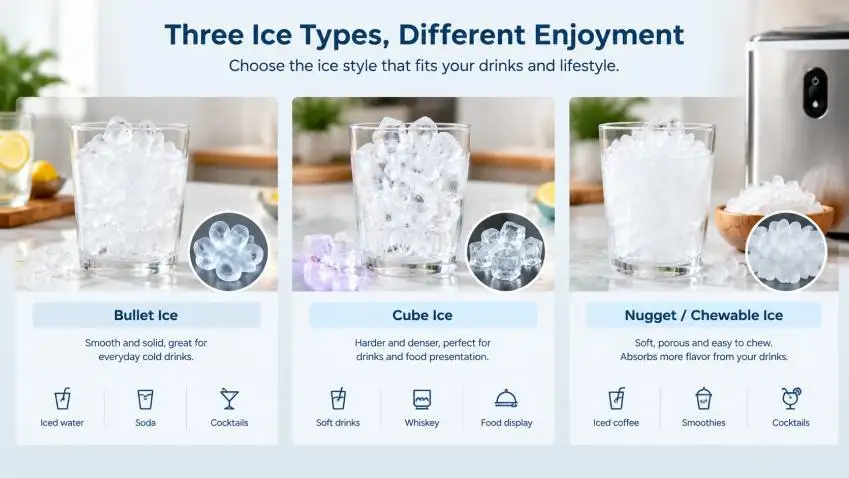
Bullet Ice
The most common type in compact machines. Easy to produce, fine for everyday cold drinks. A practical pick if fast, convenient ice is your priority.
Cube Ice
Harder and denser than nugget ice. Used for water, soft drinks, cocktails, and presentation. Worth considering if you want traditional-looking ice for a home bar.
Nugget or Chewable Ice
For many people, this is the most appealing option.
It's softer and more porous, easy to chew, and absorbs some of the drink's flavor. Popular for soft drinks, iced coffee, smoothies, and cocktails.
This isn't the same as crushed ice. Crushed ice is broken-down hard ice. Nugget ice is made through a dedicated forming and compression process.
If soft, chewable ice is what you want, look for a nugget ice maker rather than a standard bullet machine.
What to Look For
Compare a few specs instead of fixating on the advertised first-batch time.
1. Daily Ice Production
How much ice the machine makes in 24 hours. Moderate output suits individual use. Higher capacity means fewer refills if you host often or need ice all day.
2. Water Reservoir
A bigger tank means less refilling. But weigh tank size against the machine's overall footprint.
3. Ice Texture
Think about how you actually use ice. Bullet or cube works for general cooling. For iced coffee, smoothies, or if you chew ice, nugget is the better experience.
4. Noise
These machines end up in kitchens, bedrooms, offices, and RVs. Noise matters. A quieter compressor and solid mechanical design make a real difference day to day.
5. Cleaning and Maintenance
Water quality and regular cleaning affect ice quality directly. Look for self-cleaning programs, accessible tanks, and easy-to-clean internals. Drain remaining water after use and keep the machine dry during longer storage.
6. Size and Placement
Measure your counter space before buying. A machine that looks compact online can still crowd a small kitchen. Check the footprint, not just the height, and leave room for airflow around the vents. If it's headed for an RV or office desk, confirm it fits the spot you have in mind.
7. Power Requirements
Voltage and amperage vary by model and region. If you plan to use the machine in an RV, a camper, or while traveling, match the machine's electrical specs to your power source before you commit. A mismatch means it simply won't run.
8. Speed vs. Consistency
A fast first batch is nice, but steady output over time usually matters more. A machine that produces a quick first round and then slows down can be frustrating at a party. Look at how the machine performs across a full cycle, not just at the start.
Portable vs. Refrigerator Ice Maker
The main advantage of a portable unit is flexibility.
A fridge ice maker is convenient if you have a compatible fridge, but it's tied to that appliance. A portable one goes where you need it and stores away when you don't.
It's also a practical fix for households that need more ice than the fridge can produce.
There's a cost angle too. A portable machine costs far less than upgrading a refrigerator, and it doesn't require installation or plumbing work. For renters or anyone not ready to replace a major appliance, that's a real advantage.
Where Portable Ice Makers Fall Short
Worth being honest about the limits.
Ice storage is limited. Most models hold enough for a few rounds of drinks, not a full day. Ice melts over time. The machine needs a level surface and decent ventilation. And it still needs someone to refill the tank.
None of these are dealbreakers, but going in with clear expectations beats being disappointed later.
Final Thoughts
The best portable ice maker isn't the one with the fastest first batch or the biggest advertised capacity. It depends on how you use ice.
For simple everyday cooling, bullet or cube ice may be enough. If you prefer soft, flavorful, easy-to-chew ice, a nugget or chewable ice maker is worth considering.
For brands, retailers, importers, and distributors developing their own portable ice maker products, OEM and ODM cooperation can be a practical starting point.
Frequently Asked Questions
How long does a portable ice maker take to make ice?
Varies by model, ice type, room temperature, water temperature, and operating conditions. Check the manufacturer's tested specs rather than relying on the advertised first-batch time.
Does it need a water line?
Most countertop portable ice makers use a built-in reservoir. No permanent plumbing required.
What's the best ice for chewing?
Nugget ice, also called chewable or pellet ice. Softer and more porous than cube or bullet ice, making it easier to chew.
Can it be used in an RV?
Yes, when the power supply matches the machine's requirements and it sits on a stable surface.
How do I keep it clean?
Follow the manufacturer's instructions, drain unused water regularly, and use the self-cleaning function when available. Regular maintenance keeps ice fresh and the machine running properly.
Related Articles

How Does a Slush Machine Work Without Ice?
2026-10-29
BY arafatshuvo509
Traditional blender's use of crushed ice to mix an ingredient into a thick, cold drink is replaced by today's slush makers which are able to achieve the same result using ...
Compressor Slush Machine: Cooling System and Mixing Technology
2026-10-29
BY arafatshuvo509
A compressor slush machine utilizes an integral refrigeration process with continuous mechanical agitation of the refrigerated liquid to produce semi-frozen (slushy) liquids by creating ice crystals directly from the liquid. ...
Ice Maker for Small Kitchen: Compact Design for Apartment Living
2026-10-27
BY YUMYTH
An ice maker that fits on an apartment countertop may still be difficult to operate. A wall can obstruct condenser airflow, an overhead cabinet can prevent the lid from opening ...
2026 Freestanding Ice Maker Trends: Clear Ice, R290, and Smart Controls
2026-10-27
BY YUMYTH
A freestanding ice maker that can produce 12.6 kg of ice in a day may still not meet expectations. Its ice may turn cloudy because of short freezing cycles, it ...