Portable Vacuum Sealer with Pulse Control for Delicate Foods
Share:
-

-

-

-


Copied
Share:
-
-
-
-
Copied
A vacuum sealer can produce an airtight package while damaging the food it was intended to protect. A soft bread roll may lose half its height before the sealing cycle ends. Ripe berries can rupture where the packaging film presses against their surfaces. Even when the heat seal remains intact, the product may no longer meet acceptable appearance or texture requirements.
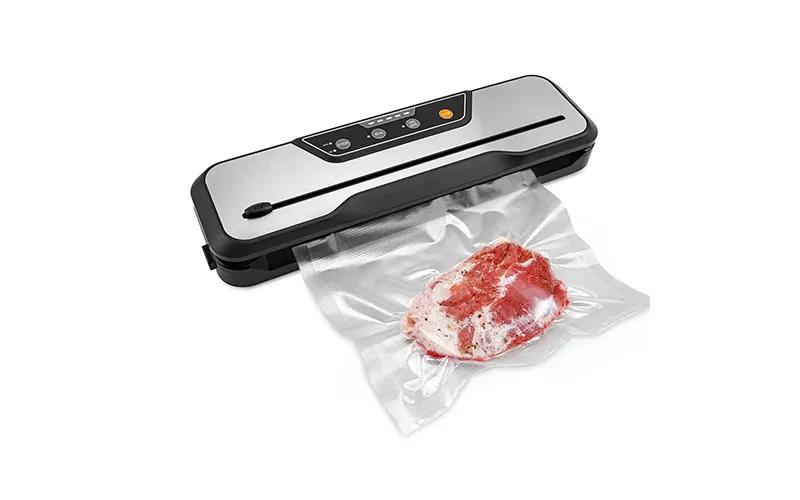
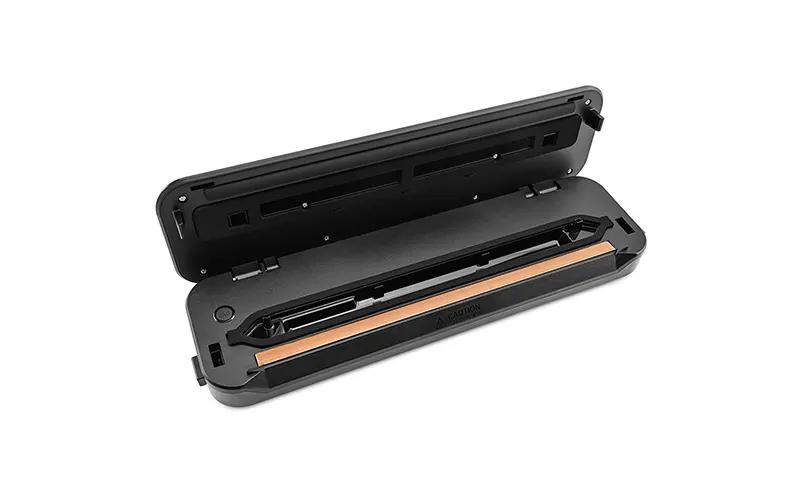
For buyers evaluating a Portable Vacuum Sealer, maximum suction is therefore not always the most useful performance indicator. The real engineering challenge is controlling air extraction before the packaging film applies excessive pressure to fragile food.
Our VS6612X Compact Vacuum Sealer has a manual STOP/PULSE function for applications where extra control is desired by the operator. The Sealer value is a function of the relationship between vacuum pressure and pump response, the packaging materials, and the product being sealed.
Why Does Automatic Vacuum Sealing Damage Delicate Foods?
In externally-suctioned vacuum sealing, air is removed through the open end of a flexible bag. As internal pressure decreases, the surrounding air pressure (and thus, the vacuum level) increases. This creates an outward force on the bag, forcing the bag against the food.
Compressing rigid food products isn't an issue, but delicate food products have structures that offer little resistance to mechanical loading, and, as a result, can be damaged by vacuum sealing.
There are 3 main ways delicate food products can be damaged:
• Cellular collapse: Air and water-filled structures in the food product can be damaged and collapse by the application of mechanical loading, such as in breads and sponges.
• Localized contact stress: In soft fruits and berries, there can be rupturing of the food due to pressure being concentrated by the bag film in a localized area.
• Moisture displacement: Delicate food items, such as soft cheeses and seafood, can release liquids trapped in the food and be damaged by the moisture coming in contact with the food by the sealing film.
Excessive food compression can't always be distinguished by an automatic vacuum cycle.
Pulse control gives a manual way to stop vacuum extraction. The operator can see how the bag conforms to the product, and stops the extraction when satisfactory packaging condition is reached.
This is different from closed-loop vacuum control. Pulse operation should not be considered as maintaining a set vacuum level.
What Is the Actual Need for Vacuum Pressure?
YUMYTH's VS6612X allows for nominal vacuum pressure ratings of -60 kPa or -80 kPa, in combination with 5 L/min or 8 L/min pumps.
A stronger vacuum can result in a greater pressure reduction. Still, maximum vacuum capability does not mean that a given pressure is suitable for all foods.
When package sensitive items, three variables need to be optimized:
• Pressure differential: Less internal pressure means more external (ambient) pressure, which forces the film against the food. After the film is in contact with food, further evacuation can lead to deformation of the food.
• Pump flow: Higher flow pumps allow quicker evacuation and reduce the time available for operator intervention. Actual evacuation speed depends on the system flow, resistance of the packaging, and system leaks.
• Film contact geometry: Irregular food surfaces experience uneven contact loading. A package may appear loosely evacuated overall while individual pressure points damage the contents.
The pressure measured at the pump is not necessarily identical to the pressure throughout a partially collapsed bag. Restricted airflow channels can create temporary pressure differences during evacuation.
For procurement teams, the practical question is not whether -80 kPa is better than -60 kPa. It is whether the selected configuration gives users sufficient control before product deformation begins.
Packaging Film Can Determine Whether Pulse Control Works
Pulse operation cannot fully compensate for incompatible packaging materials.
External suction machines generally require textured or embossed vacuum bags. Surface channels preserve an air path as opposing film layers approach each other.
Smooth bags intended for chamber vacuum equipment may collapse around the extraction opening before sufficient air has escaped.
Film construction also changes the mechanical behavior of the package.
Flexible polyethylene-based sealing layers support heat bonding, while polyamide-containing multilayer structures can contribute puncture resistance and oxygen-barrier performance. The final properties depend on the complete film construction, thickness, and operating conditions.
A thicker bag is not automatically safer for delicate food. Greater stiffness may reduce conformity in some areas but concentrate load elsewhere.
The YUMYTH VS6612X supports bags 30 cm wide and has a 3 mm single sealing bar. Film compatibility and seal strength must be validated by the buyer's specific bags.
Bag size is also important. If the bag is too large, the volume of air that needs to be evacuated increases. If the bag is too small, there may not be sufficient clearance from the bag opening to the product, causing product to block the sealing area, or contamination of the sealing area.
Which Foods Benefit Most from Pulse Control?
The vacuum strategy to be employed will depend on the level of risk associated with product deformation, residual air, and moisture migration.
| Food Category | Primary Failure Mode | Practical Vacuum Strategy |
| Bread and soft pastries | Loss of volume and surface deformation | Stop extraction before significant structural compression |
| Fresh berries | Skin rupture and juice leakage | Apply short pulses; consider rigid containers |
| Soft cheese | Shape distortion and moisture migration | Limit compression and protect the seal area |
| Delicate seafood | Tissue deformation and liquid extraction | Use controlled evacuation with appropriate moisture handling |
For products containing free liquid, the Dry/Moist setting and pulse function perform different tasks.
Pulse control affects the extraction process. The selected food mode affects the machine's sealing operation according to its control design. Neither function guarantees that liquid entering the sealing zone will be harmless.
Moisture trapped between heat-sealing layers can interrupt polymer bonding and create leakage paths.
Where even limited film compression causes unacceptable damage, a rigid vacuum-compatible container may be more suitable than a flexible bag.
The VS6612X includes an accessory hose and dedicated VAC function for compatible external containers and bottles. Container compatibility and achievable evacuation levels should be confirmed for the intended accessories.
How Should OEM Buyers Verify Pulse-Control Performance?
A product demonstration showing an intact sealed bag provides limited evidence of suitability for delicate foods.
A more useful evaluation compares automatic extraction and pulse operation under controlled conditions.
For a representative food product, keep bag material, bag dimensions, fill quantity, food temperature, and initial product condition consistent.
Next consider the following four acceptance criteria:
• Physical deformation: Record changes in product height, visible compression marks and document the number of damaged units.
• Extraction repeatability: Compare the amount of residual air and the appearance of the packages removed, cycle after cycle, and by different operators.
• Heat-seal integrity: Assess seal continuity and integrity and contamination. Follow with appopriate leakage or seal strength tests.
• Operating consistency: Determine how easy it is for users to consistently stop the evacuation process, and complete the sealing process, without damaging the product.
Testing should evaluate the actual pump and vacuum configuration to be purchased. Rated pump capacity does not determine or define how quickly an operator can be served, in the real world.
The VS6612X also includes NTC overheating protection and a thermal fuse. These are protective design features, not proof of a particular continuous-duty rating. Thermal behavior, required cooling intervals, and repeated-cycle sealing performance should be checked against the intended workload.
For private-label projects, additional verification should cover the selected AC100–120V or AC220–240V version, plug configuration, labeling, and applicable market requirements.
Where Does Manual Pulse Control Reach Its Limits?
Compression can't reduce the internal pressure any further. It can, however, leave residual air in the package, thus maintaining its shape. If maintaining the shape of the package is critical, this may be an acceptable trade-off.
However, partial vacuum packaging should not be presented as equivalent to maximum evacuation for oxygen-sensitive products.
Manual operation introduces another limitation: two users may stop at different stages. A repeatable packaging procedure needs observable stopping criteria, not simply an instruction to vacuum gently.
Vacuum packaging also does not sterilize food or eliminate refrigeration requirements. Perishable foods still require suitable temperature control and safe storage practices.
For buyers comparing compact vacuum sealing equipment, pulse control is most useful when its operation can be matched to a defined product-damage threshold and verified with representative packaging materials.
YUMYTH offers the VS6612X with manual pulse operation, vacuum configurations, Dry/Moist settings and accessory vacuum functionality. Potential OEM customers can review the available configurations, and inquire about sample evaluation through our Compact Vacuum Sealer page.
FAQs
Q1. What Is Pulse Control on the YUMYTH VS6612X?
The STOP/PULSE function allows users to manually control air extraction and stop vacuuming before delicate foods become excessively compressed.
Q2. Can YUMYTH's Portable Vacuum Sealer Package Soft Foods?
Yes. The VS6612X supports controlled vacuum extraction for bread, berries, and soft foods. Results depend on food structure, packaging material, and operator control.
Q3. What Vacuum Pressure Options Does YUMYTH Offer?
The VS6612X offers optional -60 kPa and -80 kPa vacuum configurations. Pulse control adjusts extraction duration rather than providing a verified digital pressure setpoint.
Q4. What Vacuum Pump Capacities Are Available?
YUMYTH offers 5 L/min and 8 L/min pump options. Buyers should evaluate evacuation speed, product deformation, and the selected configuration before ordering.
Q5. Which Vacuum Bags Are Suitable for the VS6612X?
Textured or embossed bags are generally suitable for external suction sealing. The VS6612X supports bags up to 30 cm wide. Film and heat-seal compatibility require testing.
Related Articles

How Does a Slush Machine Work Without Ice?
2026-10-29
BY arafatshuvo509
Traditional blender's use of crushed ice to mix an ingredient into a thick, cold drink is replaced by today's slush makers which are able to achieve the same result using ...
Compressor Slush Machine: Cooling System and Mixing Technology
2026-10-29
BY arafatshuvo509
A compressor slush machine utilizes an integral refrigeration process with continuous mechanical agitation of the refrigerated liquid to produce semi-frozen (slushy) liquids by creating ice crystals directly from the liquid. ...
Ice Maker for Small Kitchen: Compact Design for Apartment Living
2026-10-27
BY YUMYTH
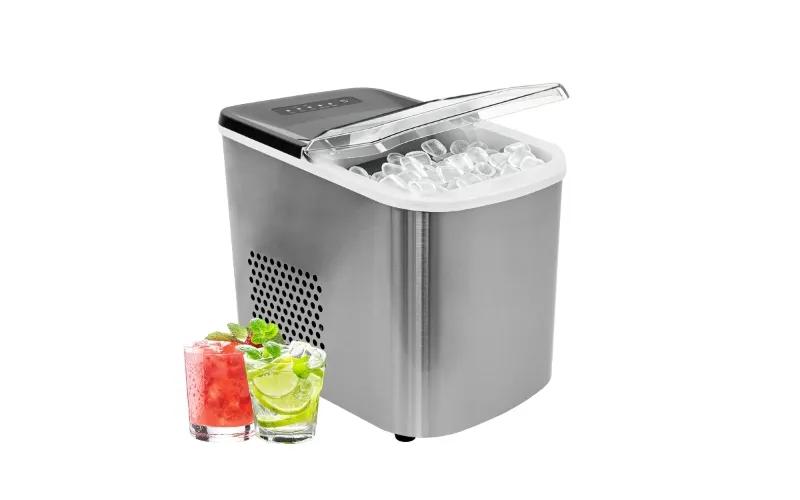
An ice maker that fits on an apartment countertop may still be difficult to operate. A wall can obstruct condenser airflow, an overhead cabinet can prevent the lid from opening ...
2026 Freestanding Ice Maker Trends: Clear Ice, R290, and Smart Controls
2026-10-27
BY YUMYTH
A freestanding ice maker that can produce 12.6 kg of ice in a day may still not meet expectations. Its ice may turn cloudy because of short freezing cycles, it ...