
Clog-Resistant Slushie Machines: How to Avoid Sticky Mix, Fruit Pulp, and Spout Problems
Share:
-

-

-

-


Copied

Share:
-
-
-
-
Copied
A clog resistant slushie machine works best when the mix is smooth, correctly sweetened, and easy to clean after use. Most clogs come from thick syrup, fruit pulp, low sugar freeze-up, sticky residue, or narrow spout parts. Start by fixing the recipe, then check the tap, seal ring, auger, and cleaning routine before blaming the machine.
Sticky slush mix can turn a simple drink service into a slow, messy problem. One cup pours fine, then the next one drips, stalls, or comes out uneven. That does not always mean the machine is weak. In many cases, the issue starts with mix thickness, pulp size, sugar level, or dried syrup inside the tap path. The fastest fix is to find where the flow is being restricted.
Why does a slushie machine clog in the first place?
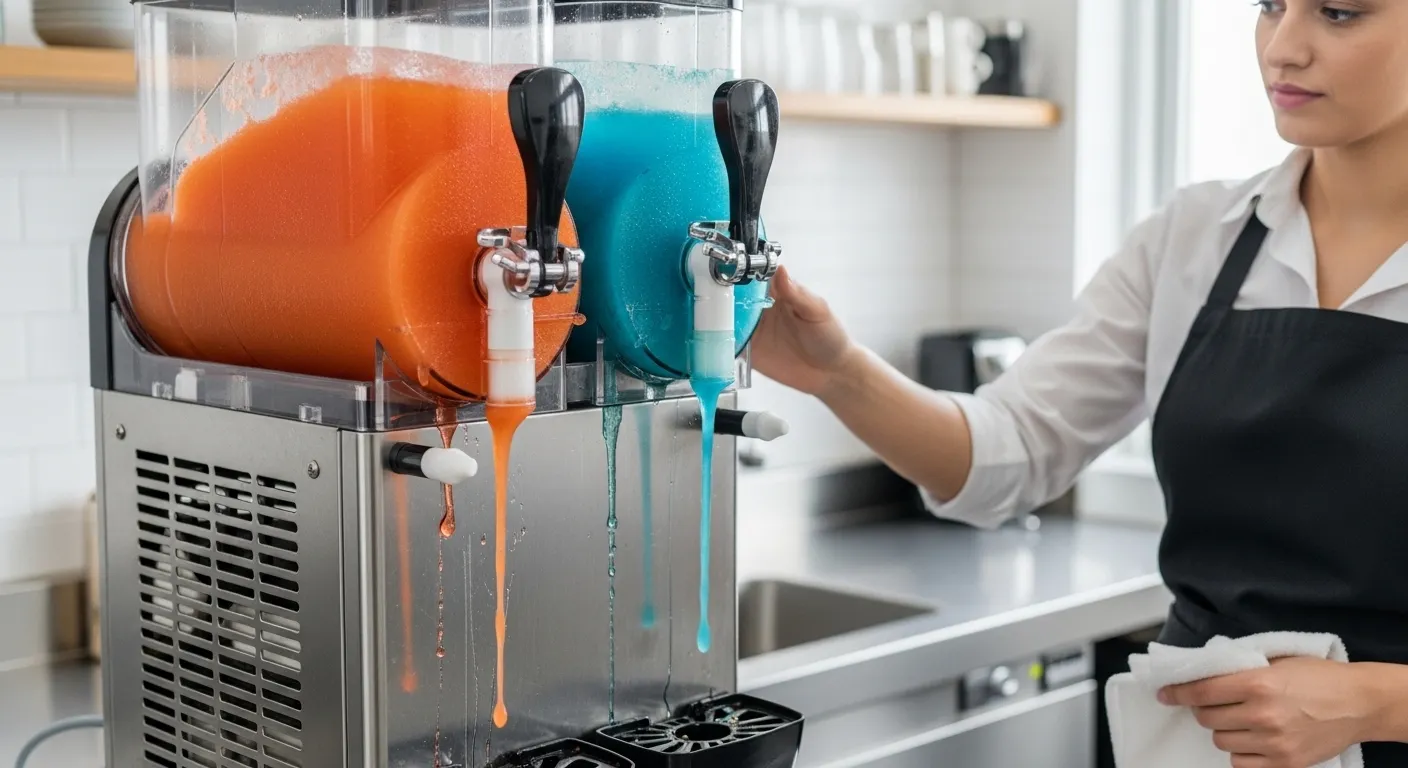
A slushie machine usually clogs because the mix is too thick, too pulpy, too low in sugar, or because sticky residue has built up around the spout, seal ring, or auger. The fix starts with the recipe, then the parts.
Most clog problems happen at the narrowest point of the machine. That is usually the dispensing tap, valve, or spout. The bowl may look smooth, but pulp, syrup, or icy chunks can still collect near the outlet and slow the flow.
The second common cause is poor mix behavior. A slush mix needs the right balance of water, sugar, and flavor base. If it freezes too hard, the auger has to push a thicker texture. If it stays sticky, it can coat parts and dry around the spout.
- Is the mix very thick before freezing?
- Does it contain fruit fiber, seeds, or skins?
- Is the sugar level too low for slush freezing?
- Is syrup drying around the tap or seal?
- Was the spout fully cleaned after the last use?
A clogged tap is a common dispensing issue in slush machines, and thick mix can make the problem worse. General troubleshooting guides also point to blocked dispensing taps as a cause of poor pouring, so start with the flow path before replacing parts.
Is your mix too thick, too sticky, or too low in sugar?
The right slush mix needs enough sugar to stop the liquid from freezing solid, but not so much syrup that it becomes sticky and slow. If the drink is icy, watery, or hard to dispense, check the ratio before blaming the machine.
Sugar is not only for taste. In slush machines, sugar helps control how the liquid freezes. If the mix has too little sugar, it can freeze into hard ice instead of soft slush. If it has too much syrup, the drink may become sticky and slow to pour.
Some commercial slush guidance uses °Brix, a simple way to measure dissolved sugar. TFI Canada explains that many slush machines work around a 12 to 16 percent °Brix range, depending on the machine and recipe. That range helps the auger scrape soft ice crystals instead of fighting a frozen block.
Signs the mix ratio is wrong
A few symptoms can tell you the recipe needs adjustment before the machine does:
- Hard icy chunks: sugar may be too low.
- Sticky, slow flow: syrup or puree may be too thick.
- Watery drink: mix may not be freezing evenly.
- Long freeze time: sugar, alcohol, or batch temperature may be affecting the cycle.
- Auger strain: the mix may be too hard or too dense.
Normal drinks can work in some machines, but they need the right sugar and texture. Plain water, unsweetened tea, or very low-sugar drinks can freeze too hard. Thick smoothies, dairy blends, and syrup-heavy drinks may need thinning before they pour cleanly.
Can fruit pulp and chunky ingredients block the spout?
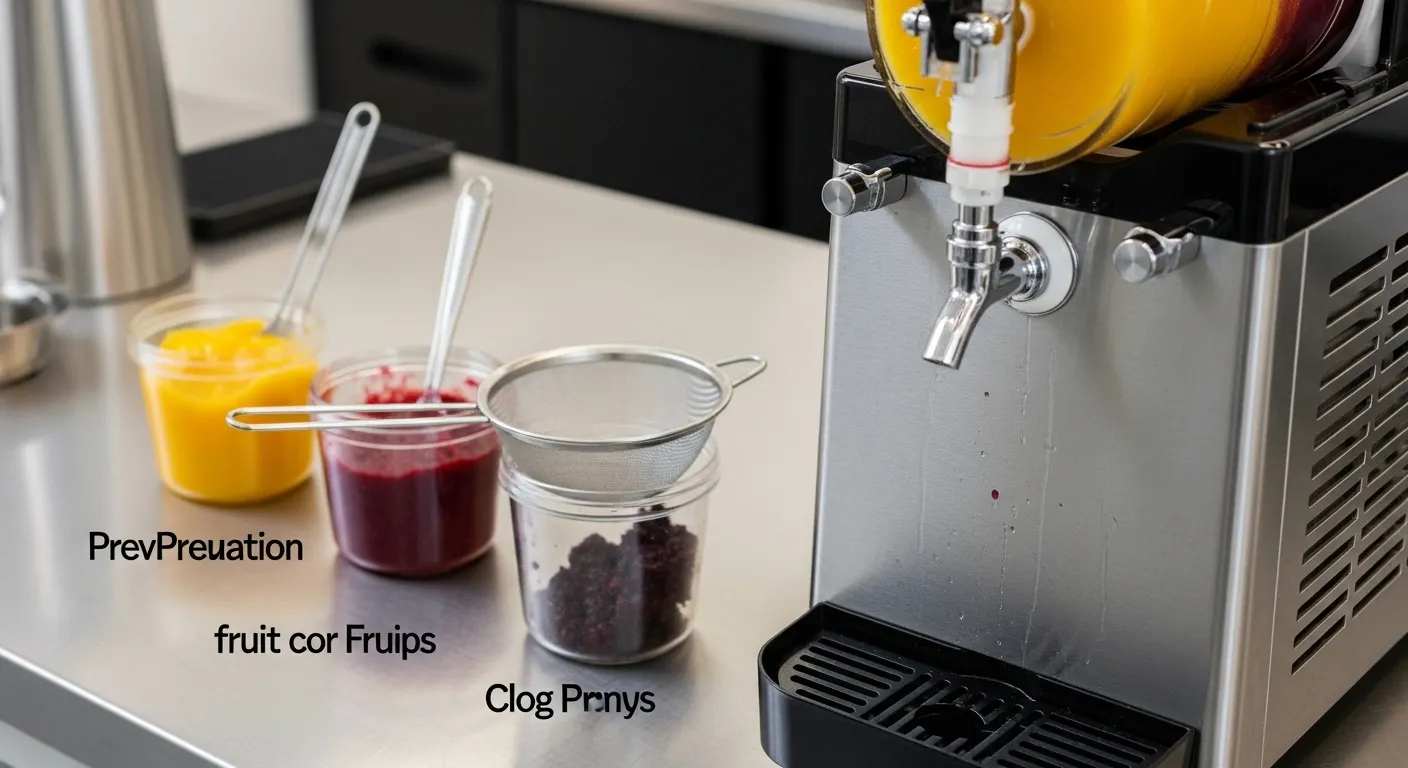
Fruit pulp can clog a slushie machine when fiber, seeds, or skins collect near the tap or auger. Use smooth puree, strain heavy pulp, and avoid large chunks if the machine is not designed for thick fruit blends.
Fruit sounds simple until it reaches the tap. Mango fiber, berry seeds, citrus pulp, and fruit skins can collect at small openings. The machine may keep mixing inside the bowl, but the spout can still slow down because the pulp settles near the outlet.
For a mango pulp cafe, the first batch may pour well because the machine is clean. After several servings, thick puree starts sticking around the tap. The better fix is not more force. Strain the puree, thin the base slightly, and clean the spout before the pulp dries.
- Use smooth puree for fruit slushies.
- Strain heavy pulp when flow matters.
- Avoid large fruit chunks in the bowl.
- Do not add seeds or skins unless the machine is built for them.
- Test one small batch before running a full service.
Fruit pulp can still work, but it needs control. A drink can taste fresh without pushing fiber through a narrow tap all day.
Why does the spout clog even when the bowl looks fine?
A clear-looking bowl does not mean the spout is clear. Sticky syrup, pulp, or dried residue can collect inside the tap path, so the drink may look smooth but still pour slowly or stop at the valve.
The spout is where many clog problems show up first. It is smaller than the bowl and handles every serving. If syrup dries inside the tap, the opening gets narrower. If pulp settles near the outlet, flow slows even when the mix above still looks even.
This is why removable tap parts matter. A machine can look clean from the outside, but the seal ring, valve, and faucet path may still hold sticky residue. If those parts cannot be removed easily, cleaning becomes guesswork.
| Spout issue | What it usually means | Quick fix |
|---|---|---|
| Slow drip | Thick mix or early residue buildup | Thin the mix slightly and rinse the tap |
| No flow | Blocked valve or frozen outlet | Stop dispensing and inspect the spout path |
| Sticky handle | Dried syrup near the tap | Remove and wash the tap parts |
| Flow starts then stops | Pulp settling near the outlet | Strain the mix and clear the valve |
A stronger motor is not automatically a clog-resistant design. It helps only after the recipe and flow path are right. For daily use, a removable spout and cleanable seal often matter more than extra power.
What features make a machine more clog resistant?
A machine becomes more clog resistant when it gives sticky mix fewer places to hide and makes cleaning simple. The best features are practical: removable contact parts, clear access to the spout, steady mixing, and a rinse function that flushes wet residue before it dries.
Look for easy-clean design details before buying. A rinse cycle is useful, but it should not be the only cleaning feature. FDA guidance treats food-contact surfaces and processing equipment as areas where material safety matters, so cleanable food-contact parts should be part of the buying decision.
Recipe tolerance is not the same as clog resistance
Some machines can handle thicker drinks better than others, but that does not mean every recipe will pour cleanly. A pulp-heavy smoothie can still block a small tap. A syrup-heavy cocktail can still dry around the valve after service.
| Feature | Why it helps with clogs |
|---|---|
| Removable spout path | Lets you clear sticky residue and pulp |
| Detachable seal ring | Reduces hidden buildup around the valve |
| Removable auger | Helps clean frozen mix and fruit residue |
| Rinse cycle | Flushes wet syrup before it dries |
| Strong mixing action | Keeps texture more even inside the bowl |
| Food-contact material clarity | Helps buyers judge safety and durability |
| Replacement gasket access | Makes long-term maintenance easier |
Fruit pulp sounds premium, but too much pulp is a service problem in a small spout machine. Smooth puree is safer for repeated pouring, and chunky fruit belongs in a blender instead of the tap path.
How do you troubleshoot slow flow, blocked spouts, and uneven texture?
Match the symptom first. Slow flow usually points to thick mix or early clogging, no flow points to a blocked spout, and uneven texture often points to the wrong sugar ratio, poor mixing, or poor airflow.
Do not adjust everything at once. Change one thing, test the result, then move to the next likely cause. If the machine pours slowly after a thick smoothie batch, start with recipe thickness and the spout. If the texture is icy, start with sugar level and freeze behavior.
A dual mixing design can help keep texture consistent, but it cannot fix seeds, skins, or dried syrup trapped in a narrow tap. Mixing and cleaning need to work together.
| Symptom | Likely cause | Quick check | Fix now | Prevention |
|---|---|---|---|---|
| Slow flow | Mix is too thick | Compare mix texture before freezing | Thin the mix slightly | Use smoother recipes |
| No flow | Spout or valve is blocked | Inspect the tap path | Stop and clean the spout | Remove and wash tap parts daily |
| Icy chunks | Sugar may be too low | Check recipe ratio | Adjust mix before refreezing | Follow machine recipe guidance |
| Sticky spout | Syrup dried near the tap | Pull the handle and feel resistance | Wash tap and seal ring | Rinse before residue dries |
| Uneven bowl texture | Weak mixing or poor ratio | Look for watery and icy zones | Stir, reset, or adjust ratio | Use tested slush bases |
| Repeated freeze-up | Low sugar or airflow issue | Check mix and ventilation | Correct ratio and clear vents | Do not overload the bowl |
A home smoothie user may add banana, yogurt, and syrup, then wonder why the drink barely pours. The decision point is simple: thin the mix, remove fibrous chunks, and clean the spout right after use. Forcing the handle only pushes the problem deeper.
How should you clean a clog-resistant slushie machine after each use?
Clean the machine before residue dries. A rinse cycle helps flush liquid, but clog prevention depends on removing and washing the spout, seal ring, auger, bowl, and drip tray after use.
Cleaning matters because slush machines handle sugar, color, flavor concentrate, and sometimes fruit or dairy. WebstaurantStore’s commercial slushie machine guide also points to regular cleaning for tanks, moving parts, faucet areas, and drip trays. Sticky residue becomes harder to remove after it dries.
- Drain leftover mix from the bowl.
- Run the rinse cycle if the machine has one.
- Remove the spout, seal ring, auger, and bowl parts that are designed to detach.
- Wash food-contact parts with the correct cleaner for the material.
- Clean the drip tray and faucet area.
- Dry parts fully before reassembly.
For food-contact surfaces, FDA guidance explains that food-contact substances include items used in processing equipment and preparation surfaces. That is why food-safe parts and cleanable materials matter in a slushie machine.
A rinse cycle is useful, but it is not full cleaning. It flushes wet residue, but the spout, seal ring, auger, bowl, and drip tray still need removal and washing. This is the difference between a machine that looks clean and one that pours cleanly tomorrow.
When should you stop troubleshooting and inspect the machine?
Stop troubleshooting when the machine shows signs of strain, damage, or repeated clogging after the recipe and cleaning routine have been corrected. If the same issue returns after every batch, the problem may be a worn seal, damaged valve, blocked part, or setup issue.
Do not keep forcing the tap if the handle sticks or the motor sounds stressed. That can make a small blockage worse. Shut the machine down according to the manual, inspect removable parts, and check whether the spout, gasket, or auger needs cleaning or replacement.
- Grinding or unusual motor noise
- A cracked seal ring or warped tap part
- Leaking around the faucet
- Clogs after every cleaning
- Repeated hard freeze-up with a correct recipe
- Texture problems in every batch
For imported machines, buyers may also need product documents before customs or local approval. Trade.gov notes that some destination countries may require documents connected to cleanliness, standards, health, or safety. Keep this as a buying check, not a daily troubleshooting step.
Getting the Next Step Right
A clog resistant slushie machine works best when the recipe, flow path, and cleaning routine all match the drink you serve. Start with the simplest fix: smooth the mix, check sugar level, avoid large pulp, and clean the spout before residue dries. Then look at machine design.
For home users, that may mean straining fruit and washing the tap after each batch. For cafes, it means choosing removable parts, steady mixing, and clean food-contact surfaces. If the machine keeps clogging after those steps, inspect the spout, seal ring, and auger before running another full batch.
Frequently Asked Questions
What liquid do you put in a slushie machine?
Use a smooth liquid mix that matches the machine’s recipe guidance. Premade syrup mixes are easiest, but juice, coffee, tea, and fruit blends can work if the sugar level and texture are suitable. Avoid chunky pulp unless the machine supports it.
Can you put normal drinks in a slush machine?
Some normal drinks can work, but they need enough sugar or dissolved solids to freeze into slush instead of hard ice. Plain water or very low-sugar drinks can freeze too hard and strain the auger.
Do you need ice for a slush machine?
Commercial-style slush machines do not need added ice because they create ice crystals through refrigeration and mixing. Adding bagged ice can dilute the recipe, disrupt texture, and increase blockage risk if pieces enter the spout path.
How long does a slush machine take to freeze?
Freeze time depends on the machine, mix temperature, sugar level, batch size, and room heat. Do not rely on one universal number. Watch the texture and follow the machine manual for the right batch size and starting temperature.
What are the most common issues with slushie machines?
The most common issues are slow flow, uneven texture, freeze-up, leaking, and clogged taps. For clog-related problems, check mix thickness, sugar balance, pulp, spout residue, seal condition, and cleaning routine first.
Why do I need to add salt to my slush machine?
You usually do not add salt to a refrigerated commercial-style slush machine. Salt is used in some ice-and-salt home machines, not in machines that freeze liquid internally with a compressor and auger.
Related Articles
How We Test Every Ice Maker Before Packaging
2026-09-15
BY YUMYTH
A step-by-step look at refrigerant handling, cooling verification, leak detection, corrective action and electrical safety testing For an ice maker, reliable performance is determined long before the carton is sealed. ...
Guide for Brands Looking for a Reliable Vacuum Sealer OEM Supplier
2026-09-14
BY YUMYTH
When you are sourcing kitchen appliances for your retail brand, finding a dependable vacuum sealer OEM supplier is rarely just about getting the lowest unit price. It is about protecting ...

Why Ice Shape Matters: Understanding 10mm × 15mm Cylindrical Nugget Ice
2026-09-14
BY YUMYTH
More Than Ice Production — The Ice Itself Shapes the Consumer Experience When sourcing a nugget ice maker, buyers often focus first on production capacity, water tank size, ice basket ...

Ice Maker Sourcing Guide: How to Find the Right Factory
2026-09-10
BY YUMYTH
Sourcing an ice maker looks straightforward on paper. Find a supplier, agree on a price, place an order. But anyone who has actually done this knows the process is rarely ...