
Dual-Mixing Slushie Machines: Better Texture or Just Another Feature?
Share:
-

-

-

-


Copied

Share:
-
-
-
-
Copied
A dual mixing slushie machine can improve texture when drinks contain pulp, dairy-style bases, coffee, alcohol, or heavier syrups. It keeps ingredients moving more evenly, which may reduce ice clumps and clogging. For simple syrup slushies, single mixing can still be enough if the mix ratio, sugar level, and cooling are correct.
Dual mixing sounds like a serious upgrade, but buyers should look past the label. The real question is simple: will it improve the drinks you actually serve? For some menus, yes. For others, it adds cost and cleaning work without changing much. This guide breaks down where dual mixing helps, where it doesn’t, and how to read the feature before choosing a machine.
Does a dual mixing slushie machine actually improve texture?
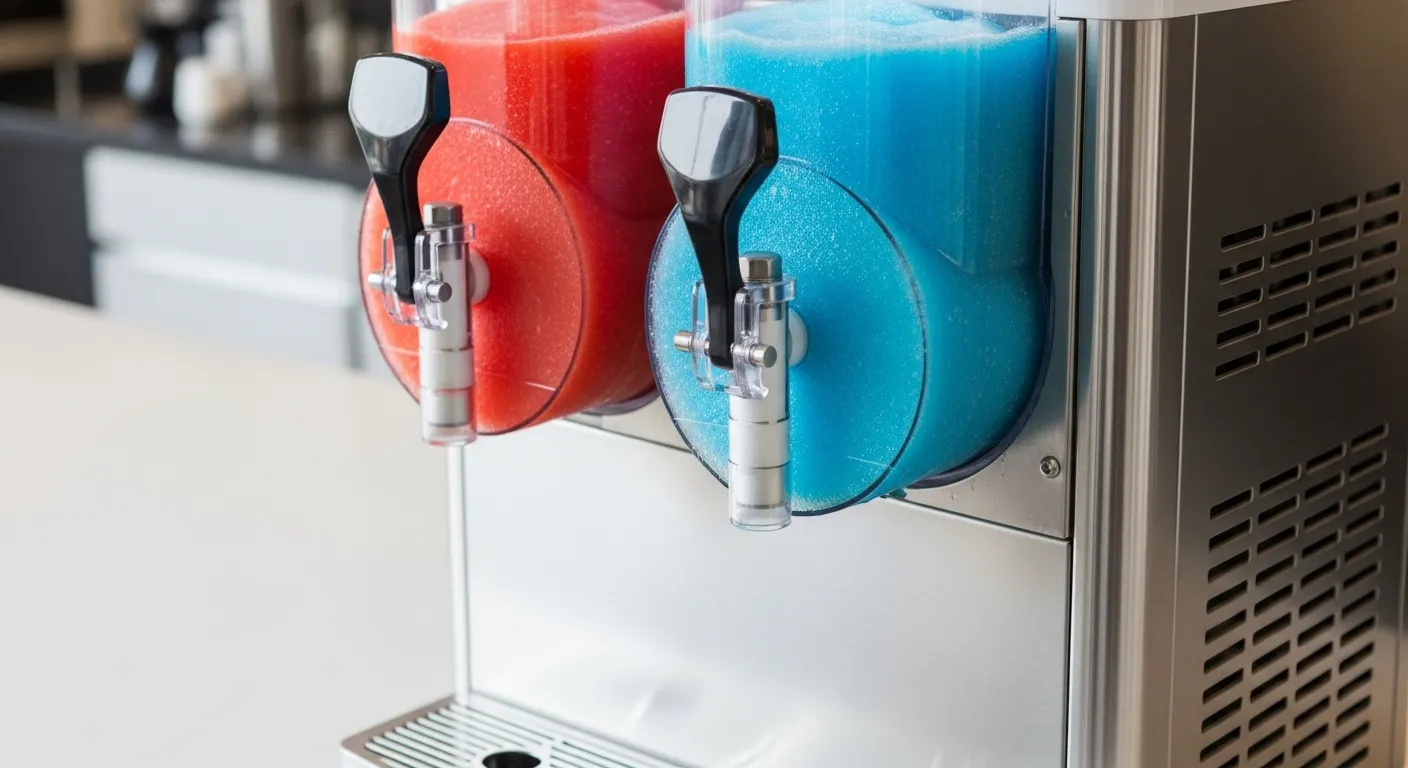
A dual mixing slushie machine can improve texture when the recipe has pulp, dairy-style ingredients, coffee, alcohol, or heavier syrup. For basic syrup-and-water slush, single mixing may still produce good results when the Brix level and cooling are correct.
Texture problems usually come from uneven freezing, poor ingredient movement, or the wrong drink balance. A better mixing system can keep liquid moving around the cold surface more evenly. That can help reduce coarse ice, heavy syrup pockets, and thin sections near the tap.
But dual mixing is not automatically worth paying for. It works best when the drink is thick, pulpy, creamy, alcoholic, or texture-sensitive. Single mixing is safer for buyers who only make basic syrup slush and want the simplest machine to run.
Sugar level still matters. Frozen beverage equipment depends on the right Brix range, which measures dissolved sugar in the mix. If the mix is too weak, the drink can freeze too hard, no matter how strong the mixing system is. Spaceman USA explains that Brix levels affect frozen beverage performance, so recipe balance should come before feature hype.
What does “dual mixing” mean, and how is it different from dual tank?
Dual tank and dual mixing are not the same. Dual tank usually means two separate drink bowls, while dual mixing refers to how the liquid is agitated inside the bowl to keep ice crystals, syrup, and ingredients moving evenly.
This difference matters because many product pages use “dual” in different ways. A dual tank machine may let you serve strawberry in one bowl and cola in another. That is useful for variety, but it does not always mean each bowl has a stronger or smarter mixing action.
Dual mixing focuses on movement inside the drink chamber. It may refer to double paddles, opposite movement, improved auger design, or a system made to reduce ice buildup. The exact design depends on the supplier, so buyers should ask for the mixing structure instead of trusting the phrase alone.
| Feature term | What it usually means | What to check |
|---|---|---|
| Dual tank | Two bowls or two flavors | Bowl size, independent controls, cooling power |
| Dual flavor | Two drink options | Whether each bowl works separately |
| Dual mixing | Improved internal drink movement | Auger design, paddle structure, cleaning access |
| Double mixing system | Stronger mixing claim | Whether it reduces ice buildup or improves suspension |
Do not confuse dual tank with dual mixing. Two bowls give you two flavors, but they do not automatically mean better ingredient movement inside each bowl.
How does dual mixing change how a slushie machine works?
Dual mixing does not replace refrigeration or proper recipe balance. It supports the freezing process by keeping liquid moving more evenly around the cold surface, which can reduce ice clumps and help maintain a smoother serving texture.
A slushie machine works by cooling liquid while a moving part, often an auger or paddle, keeps scraping and stirring the mix. Without movement, the drink would freeze unevenly or turn into hard ice near the coldest surface.
Dual mixing improves that movement. It can help syrup, water, pulp, and ice crystals stay more evenly distributed. This is useful when the drink is heavier than a simple syrup mix, such as mango puree, frozen coffee, or a dairy-style base.
A simple way to think about it:
- The compressor chills the bowl or freezing surface.
- The auger or paddle moves the liquid across that cold area.
- Better movement helps the drink freeze into a smoother, more consistent slush.
Dual mixing still cannot fix a bad formula. If the sugar level is too low, the liquid may freeze too hard. If alcohol is too high, the mix may struggle to freeze. If pulp is too heavy, the machine still needs cleaning and recipe control.
Single-mix vs dual-mix slushie machine: what changes in real use?
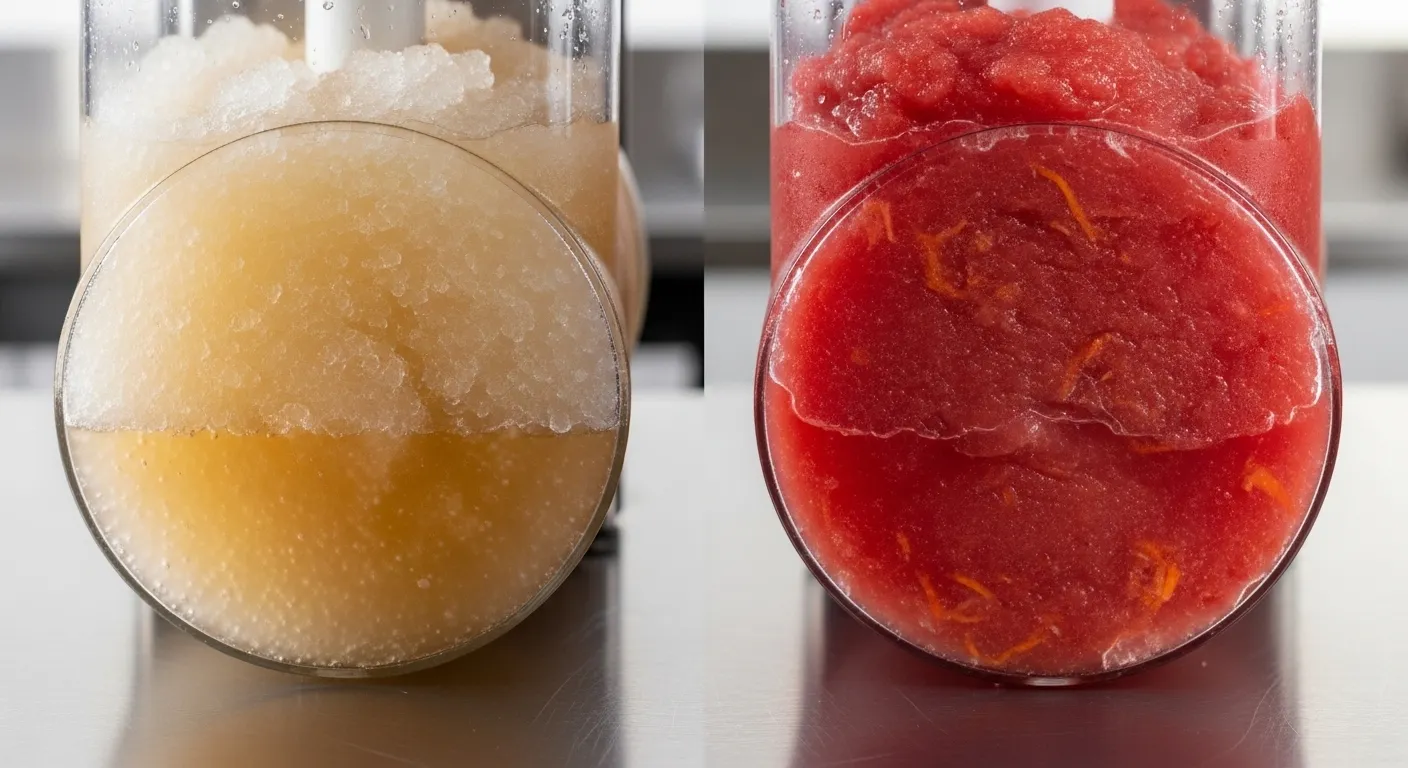
Single mixing is enough for many basic drinks. Dual mixing becomes more useful when the recipe is thicker, separates faster, or creates more serving problems.
| Buyer factor | Single mixing | Dual mixing | Buyer takeaway |
|---|---|---|---|
| Simple syrup slush | Usually enough | Better movement, but not always needed | Do not overpay for basic use |
| Fruit pulp | Can settle or collect | Better suspension | Dual mixing helps smoothie-style menus |
| Dairy-style drinks | Higher risk of uneven texture | More stable movement | Better fit for creamy drinks |
| Alcohol slush | Recipe balance still controls freezing | Helps consistency after balance is right | Mixing cannot solve too much alcohol |
| Frozen coffee | Can separate or thicken unevenly | Better texture support | Useful for cafes |
| Clog risk | Higher with thick bases | Lower when design is good | Helps with heavier recipes |
| Cleaning | Usually simpler | More moving parts to rinse | Check removable parts before buying |
Think about a cafe selling frozen coffee and mocha drinks. Those recipes may include coffee concentrate, milk-style bases, chocolate syrup, or toppings. A dual-mix design makes more sense there because texture and suspension matter during long service hours.
Now compare that with a kids party setup using blue raspberry syrup and water. If the syrup ratio is correct, a single-mix machine can be enough. In that case, easy cleaning and low cost may matter more than a stronger mixing claim.
Which drinks benefit most from dual mixing?
Dual mixing matters most for drinks that separate, thicken, or contain suspended ingredients. Smoothies, fruit-pulp drinks, frozen coffee, dairy-style bases, and cocktails usually benefit more than simple syrup slush.
The best way to judge dual mixing is to match it to the menu. A fruit-pulp smoothie bar has a different problem than a home user making cola slush. One needs ingredient suspension. The other mainly needs correct syrup dilution and stable cooling.
| Drink type | Dual mixing value | Risk without it | Buyer recommendation |
|---|---|---|---|
| Simple syrup slush | Low to medium | Watery or icy texture if ratio is wrong | Single mixing is often enough |
| Fruit-pulp slush | High | Pulp settling, tap clogging, uneven texture | Choose dual mixing |
| Smoothie-style drinks | High | Thick pockets near the bowl or tap | Choose dual mixing |
| Frozen coffee | Medium to high | Separation, uneven sweetness, grainy texture | Dual mixing is useful |
| Dairy-style drinks | High | Heavy texture and uneven freezing | Choose dual mixing carefully |
| Frozen cocktails | Medium | Alcohol may stop proper freezing | Use dual mixing with balanced recipes |
A juice shop using mango puree and strawberry pulp should treat dual mixing as a practical feature, not a luxury. Those ingredients can settle or build up around the tap. A machine with better movement and food-safe parts gives the buyer more control over texture and hygiene.
For frozen margaritas, the decision is slightly different. Dual mixing can help the texture once the recipe is balanced, but alcohol changes freezing behavior. Too much alcohol can keep the drink soft or liquid, even with strong mixing.
Can dual mixing reduce clogs and freeze-up?
Dual mixing can reduce clog and freeze-up risk, but it cannot fix a poor recipe. If the mix has too little sugar, poor dilution, blocked airflow, or thick residue, even a better mixing system can struggle.
Clogs usually happen when thick ingredients, ice buildup, or cleaning residue collect near the tap or moving parts. Dual mixing can help because it keeps the drink moving instead of letting heavy ingredients settle in one place. That is why it can be useful for fruit bases, creamy drinks, and cocktail mixes.
A better mixing system can reduce clogging risk, but it cannot rescue a poor recipe. If the sugar level, dilution, or cleaning routine is wrong, the machine can still freeze badly. Many slush mixes follow a syrup-to-water ratio, and WebstaurantStore notes that slushy mix instructions often guide the correct mixing ratio for frozen drinks.
Use this quick check when the tap clogs or the drink freezes too hard:
- Check whether the syrup or base was diluted correctly.
- Check whether pulp or puree is too thick for the machine.
- Check whether the mix was pre-chilled before use.
- Check whether airflow around the machine is blocked.
- Check whether residue is building up near the tap.
- Check whether the machine has a clean, hygienic drink-contact design.
For an over-thick mango mix, dual mixing may help keep the drink moving. But if the puree is too dense or the bowl is not cleaned well, the tap can still slow down or block.
When is single mixing enough?
Single mixing is enough when you mostly make simple syrup slushies, use properly diluted mixes, and do not need heavy ingredient suspension. Dual mixing becomes more valuable when the recipe or serving volume gets more demanding.
Single mixing is the better choice when your menu is simple. Think cola slush, lemon slush, blue raspberry, or other standard syrup flavors. These drinks rely more on the correct mix ratio and freezing power than on advanced ingredient movement.
A home buyer making syrup slush for family use may not need dual mixing. Lower cost, fewer parts, and easier cleaning could be the smarter decision. If the machine freezes evenly and the recipe stays within the correct sugar range, the texture can still be smooth enough.
Choose single mixing when:
- You use ready-made slush syrup.
- You do not use pulp, milk-style bases, or thick puree.
- You serve low to medium volume.
- You want simpler cleaning.
- You care more about price than menu flexibility.
This is where honest buying matters. Dual mixing looks better on a product page, but it may not change the result for a basic syrup drink.
What specs should buyers check before trusting a dual-mixing claim?
A dual-mixing claim is only useful if the product design supports it. Buyers should check the mixing structure, removable parts, food-contact materials, and certification details before treating the feature as a real upgrade.
Look for clear information about the auger, paddle, or stirring system. If the supplier only says “dual mixing” without explaining the mechanism, ask for a product photo, parts diagram, or short operation video. You want to know how the drink moves, not only what the label says.
Use this buyer checklist:
- Does the machine explain the mixing direction or auger design?
- Are the mixing parts removable for cleaning?
- Can each bowl operate independently if it is a dual-tank model?
- Does the supplier mention food-contact materials?
- Is there motor protection for thick or frozen mixes?
- Does the product list suitable drink types?
- Are sanitation or food equipment standards mentioned?
Food safety should not be an afterthought. NSF lists standards for food equipment, including NSF/ANSI 18 for manual food and beverage dispensing equipment. Buyers should use a food-safe slushie machine when drinks touch bowls, taps, seals, and mixing parts for long service periods.
Final verdict: is dual mixing worth it?
Dual mixing is worth it when texture consistency, ingredient suspension, and clog reduction matter to your menu. It is less important if you only serve simple syrup slush and prefer the lowest-cost, simplest machine.
The best choice depends on the drink list. A cafe with frozen coffee, a smoothie counter using fruit puree, or a bar-style setup serving frozen cocktails has a stronger reason to choose dual mixing. These menus need more stable movement inside the bowl.
For simple syrup slush, single mixing may be the smarter buy. Put the budget into stable cooling, easy cleaning, tank size, and safe materials first. A dual mixing slushie machine should solve a real menu problem, not simply sound better in the spec sheet.
Frequently Asked Questions
How does a slushy machine work?
A slushy machine cools the liquid while an auger or paddle keeps it moving. That movement helps scrape ice from the cold surface and stops the drink from freezing into one solid block.
How does the double mixing system help?
A double mixing system helps by moving the drink more evenly around the freezing surface. This can reduce ice buildup and support smoother texture, especially with thicker or more complex recipes.
Can you put any drink in a slush machine?
No, not every drink works well in a slush machine. The mix needs enough dissolved sugar or solids to freeze into soft slush instead of becoming hard ice or staying watery.
Do you need ice for a slushie machine?
Most compressor-based slushie machines do not need added ice. They chill the liquid directly while the mixing system moves the drink, although small manual slush makers may use a different method.
Can alcohol turn to slush?
Yes, alcohol can turn to slush when it is diluted and balanced with sugar or other mixers. Too much alcohol lowers the freezing point and can stop the machine from forming proper slush.
How long does it take for my slushy machine to freeze?
Freeze time depends on starting liquid temperature, ambient heat, airflow, recipe balance, and machine power. Pre-chilled mix usually freezes faster than warm mix, and poor ventilation can slow the process.
Are sugar-free slushies safe for a slush machine?
Sugar-free slushies need special formulation because sugar helps create soft slush texture. If the mix freezes too hard, it can strain the auger or motor, so buyers should follow machine and mix guidance.
Related Articles
How We Test Every Ice Maker Before Packaging
2026-09-15
BY YUMYTH
A step-by-step look at refrigerant handling, cooling verification, leak detection, corrective action and electrical safety testing For an ice maker, reliable performance is determined long before the carton is sealed. ...
Guide for Brands Looking for a Reliable Vacuum Sealer OEM Supplier
2026-09-14
BY YUMYTH
When you are sourcing kitchen appliances for your retail brand, finding a dependable vacuum sealer OEM supplier is rarely just about getting the lowest unit price. It is about protecting ...
Why Ice Shape Matters: Understanding 10mm × 15mm Cylindrical Nugget Ice
2026-09-14
BY YUMYTH
More Than Ice Production — The Ice Itself Shapes the Consumer Experience When sourcing a nugget ice maker, buyers often focus first on production capacity, water tank size, ice basket ...

Ice Maker Sourcing Guide: How to Find the Right Factory
2026-09-10
BY YUMYTH
Sourcing an ice maker looks straightforward on paper. Find a supplier, agree on a price, place an order. But anyone who has actually done this knows the process is rarely ...