
R290 refrigeration design in countertop appliances
Share:
-

-

-

-


Copied
Share:
-
-
-
-
Copied
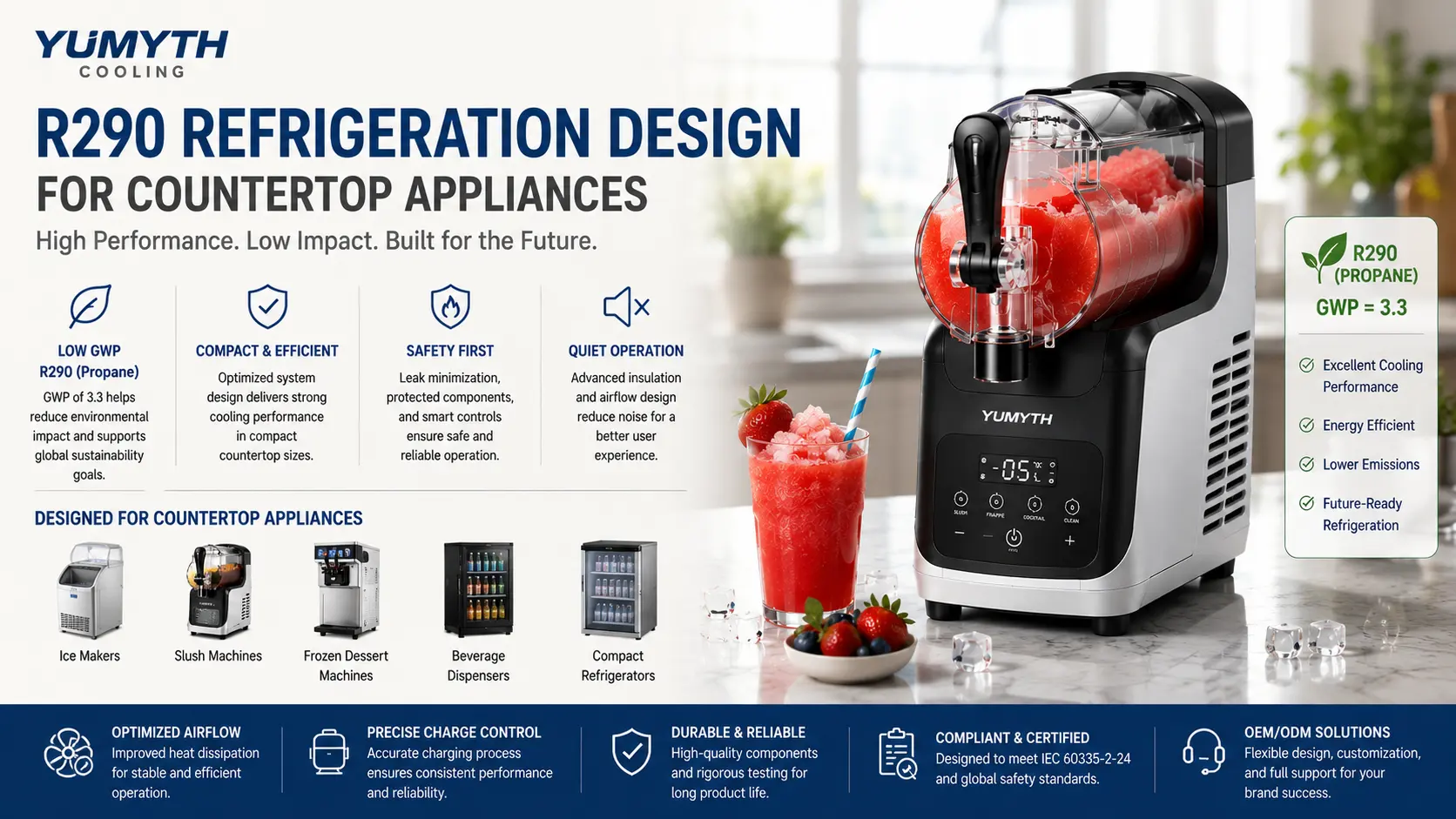
R290 refrigeration is gaining momentum for use in countertop refrigeration products, including home slush machines, compact ice makers, frozen dessert machines, and beverage dispensers. R290 is also known as propane, blends low environmental impact and excellent refrigeration performance in small, factory-sealed systems.
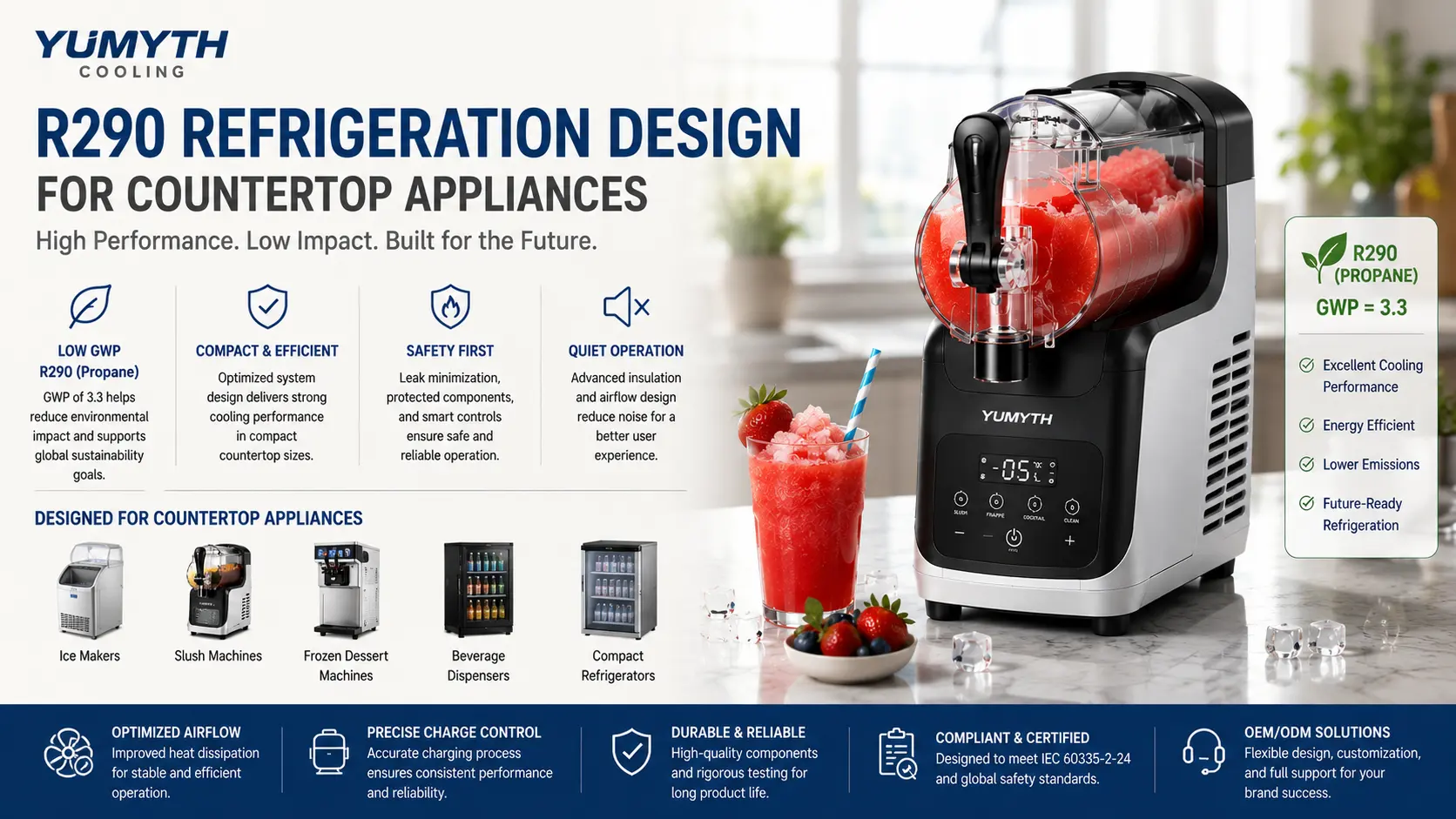
R290 is also on the list of U.S. Environmental Protection Agency (EPA) with a GWP of 3.3, which is well below the GWP values of many conventional HFC refrigerants. R290 however is a flammable hydrocarbon and a different system approach is required, one based on safety, rather than just replacing the refrigerant.
To understand the real operating environment.
Uses of countertop appliances are not necessarily the same as those in controlled laboratory tests. A slush machine can be set up near a wall or next to other warm spaces such as a heat-producing machine or a warm kitchen. Users can add warm beverage, run repeated batches, partially obstruct the ventilating openings or leave the machine in holding mode for longer period of time.
The ambient temperature, clearance for installation, beverage temperature for starting, maximum cooling loads, operating time, and any potential flow restriction should thus be established as realistic conditions by the engineer.
It is not enough to test just one volume of the beverage at one room temperature. A platform that is reliable should be tested for minimum and maximum fill level, various starting temperatures, multiple batches and longer holding time.
For frozen drink machines, there's also the composition of the recipe to take into account. Sugar, alcohol, dairy ingredients, fruit pulp and syrup may alter the freezing point, viscosity, cooling load and auger resistance.
Do Not Use R290 as a drop in replacement.
Switching an R134a or other HFC refrigeration system running in place to the HFC R290 system will not be a simple process of replacing the compressor.
Refrigerant properties influence:
- * Compressor displacement;
- * Capillary-tube selection;
- * Evaporator dimensions;
- * Condenser capacity;
- * Internal system volume;
- * Lubricating oil compatibility;
- * Operating pressure;
- * Refrigerant charge;
- * Protection settings.
The compressor, evaporator, condenser, capillary tube, filter drier, tubing and the control logic should be designed as a single unit.
It is possible that a combination of components that has been designed for use with a different refrigerant might not have the same capacity, efficiency, temperature stability or safety margin when used with R290. Electrical architecture should also be checked as the risk assessment for relays, switches, motors, connectors, and other potential ignition sources will be affected by the change in the refrigerant.
Reduce charging time without compromising on performance.
Minimizing the charge of R290 refrigerant is a key design criterion for R290 appliances. A low charge will limit how much flammable refrigerant may be emitted in the event of abnormal refrigerant leakage, however, just draining the refrigerant is not a complete engineering solution.
If the system is undercharged, it could develop:
- * Poor evaporator feeding;
- * Unstable cooling;
- * Longer freezing times;
- * High compressor temperatures;
- Warm Environments: reduced performance.
The correct charging current should be determined using controlled test over the entire declared operating range of the appliance.
Optimizing evaporator passages, condenser tubing, pipe lengths, placement of components and heat-exchanger design can help reduce the internal volume of the system, allowing engineers to boost the performance of their system. Refrigerant lines will be shorter and may result in less volume, but these lines must still be protected from vibration, abrasion, assembly tools, shipping damage, and areas that the user can reach.
This charge control should also be reproducible in mass production. A design with a very small or tight tolerance on the charge may result in the product having varying results with normal manufacturing variations.
Develop the Cabinet Around the Possibility of Leakage
When designing a cabinet, the possibility of refrigerant flowing in a leaky pipe, joint or part must be taken into account.
If the applicable safety evaluation allows, designers should not allow needless enclosed areas around the refrigeration circuit and should allow appropriate airflow and separation per the safety evaluation.
All potential leakage paths should be considered along with the positions of:
- * Electrical connections;
- * Relays and switches;
- * Motors;
- * Control boards;
- * Heating components;
- * Power-supply components.
Changes to an electrical component, the addition of a protective barrier, an opening modification or a change to a ventilation route may alter the final risk assessment.
Regular cleaning should also be avoided as it endangers the safety of the refrigerant tubing. Tanks, augers, seals, lids, dispensing parts and drip trays are commonly removed from frozen drink appliances by the users. These activities should not cause any tubing to be impacted, scraped, bent or subjected to repeated mechanical stress.
Manage Ignition Sources and Unusual Operation
Potential ignition sources can include normal electrical switching or foreseeable component failure. Engineers should find parts that could generate arcs, sparks or excessive surface temperatures and determine where they are located, enclosed, and relate to potential refrigerant leak sites.
The control system should also be able to react safely in the case of abnormal conditions like:
- * Condenser-fan failure;
- * Blocked ventilation;
- * Temperature-sensor faults;
- * Compressor overheating;
- * Unstable input voltage;
- * Repeated compressor restarting;
- * Auger motor overload.
Refrigeration AND Mixing Protection must be active on slush machines. If the beverage freezes too solid, it can jam the auger as the compressor removes the heat.
A recipe problem can be avoided from becoming a mechanical failure through motor-current sensing, evaporator temperature limits, automatic auger reversal, temporary compressor interruption and clear error messages.
Optimize Condenser airflow and heat rejection
A smaller cabinet may limit condenser flow, but smaller size is desirable in countertop appliances. Poor airflow can cause a higher operating temperature, higher compressor stress and can lengthen beverage freezing time.
The distance between the air inlet and the outlet should be minimized to minimize hot air recirculation. The above should be evaluated together as they are all important to the fan noise.
Thermal testing should not be only for the final beverage temperature. Engineers should monitor:
- * Compressor shell temperature;
- * Discharge-line temperature;
- * Electronic-component temperature;
- * Cabinet surface temperature;
- * Condenser airflow;
- * Auger motor load.
Testing should be done for initial cooling and extended holding. Some appliances will work fine on the first batch, but slowly heat up when repeated or used for a consistent duration.
If you have a plan, you should have it in place before you start the tooling process.
The IEC 60335-2-44:2025 generally addresses the safety requirements of domestic and similar refrigerating appliances, ice-cream appliances and ice makers. The type of machine, and the nationality requirements for a countertop slush/frozen drink machine, should be established early in development with a qualified certification body.
Certification review may impact:
- * Refrigerant charge;
- * Cabinet openings;
- * Warning labels;
- * Electrical-component placement;
- * Refrigerant-tube protection;
- * Abnormal-operation tests;
- * User instructions;
- * Service documentation.
Once plastic molds and metal tooling are finished, the problems can mean significant re-design and product launch delays.
Additionally, Regulation (EU) 2024/573 provides new restrictions on fluorinated GHGs, thereby emphasizing the need for lower-GWP refrigerant strategies for products destined for European markets.
Establish a controlled R290 Production Process
Even a safe design can have a failure with poor factory controls. The production of R290 needs skilled personnel, charging equipment, ventilation, leak detection, process control and record keeping.
- * Verified brazing procedures;
- * Evacuation monitoring;
- * Calibrated refrigerant-charging equipment;
- * Refrigerant identification;
- * Leak testing;
- * Electrical safety testing;
- * Functional cooling tests;
- * Serial-number traceability.
A controlled bill of materials should be kept at the factory. Performance and compliance may change if substitutions are made unauthorized, such as on the compressor, relay, fan, tubing, filter drier, wiring, insulation or control board.
For pilot production, the final tooling, approved suppliers, production workers and the planned inspection process should be used. The following should be compared with the approved engineering sample: cooling speed, charge accuracy, noise, temperature, leakage, electrical safety and control behaviour of pilot units.
Design Serviceability Carefully
R290 appliances should allow for easy access to the non-refrigeration parts, but not interfere with the sealed refrigeration circuit unnecessarily.
Replaceable modules can be designed for beverage tanks, augers, seals, valves, sensors, fan/control panels. Service documents should provide a clear and concise identification of the refrigerant, charge, safety information, parts that can be used, diagnostic guidelines, and limits for sealed system work.
The refrigeration circuit should only be serviced using proper tools and techniques by properly qualified personnel.
By adopting a modular architecture, complete product replacement can be minimized, and appliance brands can control their spares inventories, distributor training, warranty service, and product support.
Conclusion
R290 can enable low-GWP, compact and efficient countertop refrigeration platforms, but all of this requires disciplined engineering.
Successful products incorporate charge optimization, protected tubing, controlled airflow, ignition source management, abnormal operation protection, early certification planning and repeatable manufacturing.
When considering an R290 OEM platform for appliance brands, the major one is: Can a supplier install an R290 compressor? The answer is, whether the supplier can provide a full development and production system with a risk analysis, engineering testing, compliance files, controlled components, factory records, and production-representative validation.
Related Articles
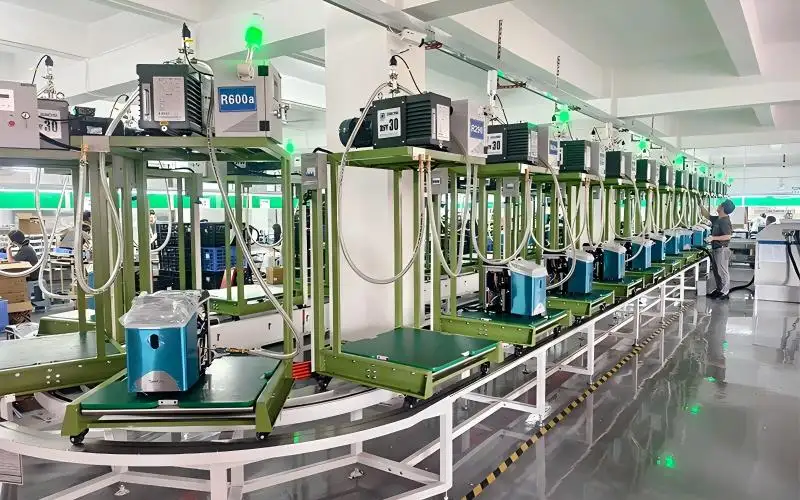
How We Test Every Ice Maker Before Packaging
2026-09-15
BY YUMYTH
A step-by-step look at refrigerant handling, cooling verification, leak detection, corrective action and electrical safety testing For an ice maker, reliable performance is determined long before the carton is sealed. ...
Guide for Brands Looking for a Reliable Vacuum Sealer OEM Supplier
2026-09-14
BY YUMYTH
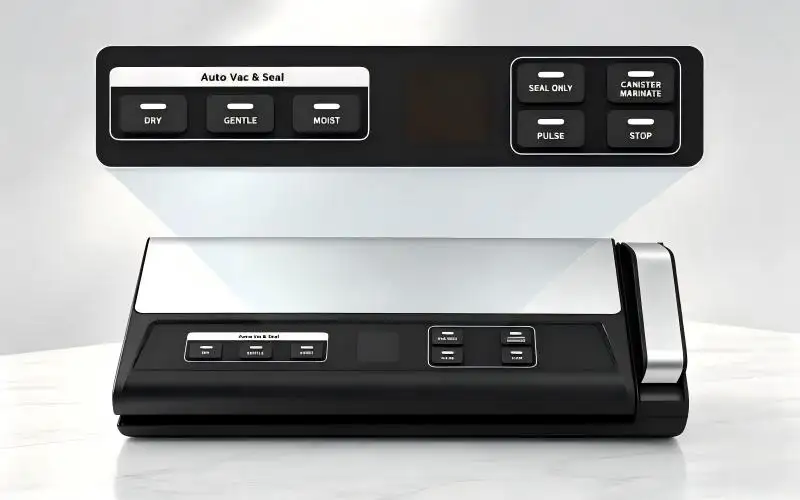
When you are sourcing kitchen appliances for your retail brand, finding a dependable vacuum sealer OEM supplier is rarely just about getting the lowest unit price. It is about protecting ...

Why Ice Shape Matters: Understanding 10mm × 15mm Cylindrical Nugget Ice
2026-09-14
BY YUMYTH
More Than Ice Production — The Ice Itself Shapes the Consumer Experience When sourcing a nugget ice maker, buyers often focus first on production capacity, water tank size, ice basket ...

Ice Maker Sourcing Guide: How to Find the Right Factory
2026-09-10
BY YUMYTH
Sourcing an ice maker looks straightforward on paper. Find a supplier, agree on a price, place an order. But anyone who has actually done this knows the process is rarely ...