
What Brix level is suitable for a slush machine?
Share:
-

-

-

-


Copied

Share:
-
-
-
-
Copied
A good mix for many of the conventional frozen drink machines is about 13-18°Bx. A good starting point for a standard nonalcoholic slush is approximately 13–15°Bx to avoid hard-freezing, but have sufficient dissolved solids to produce a thick slush that can be dispensed.
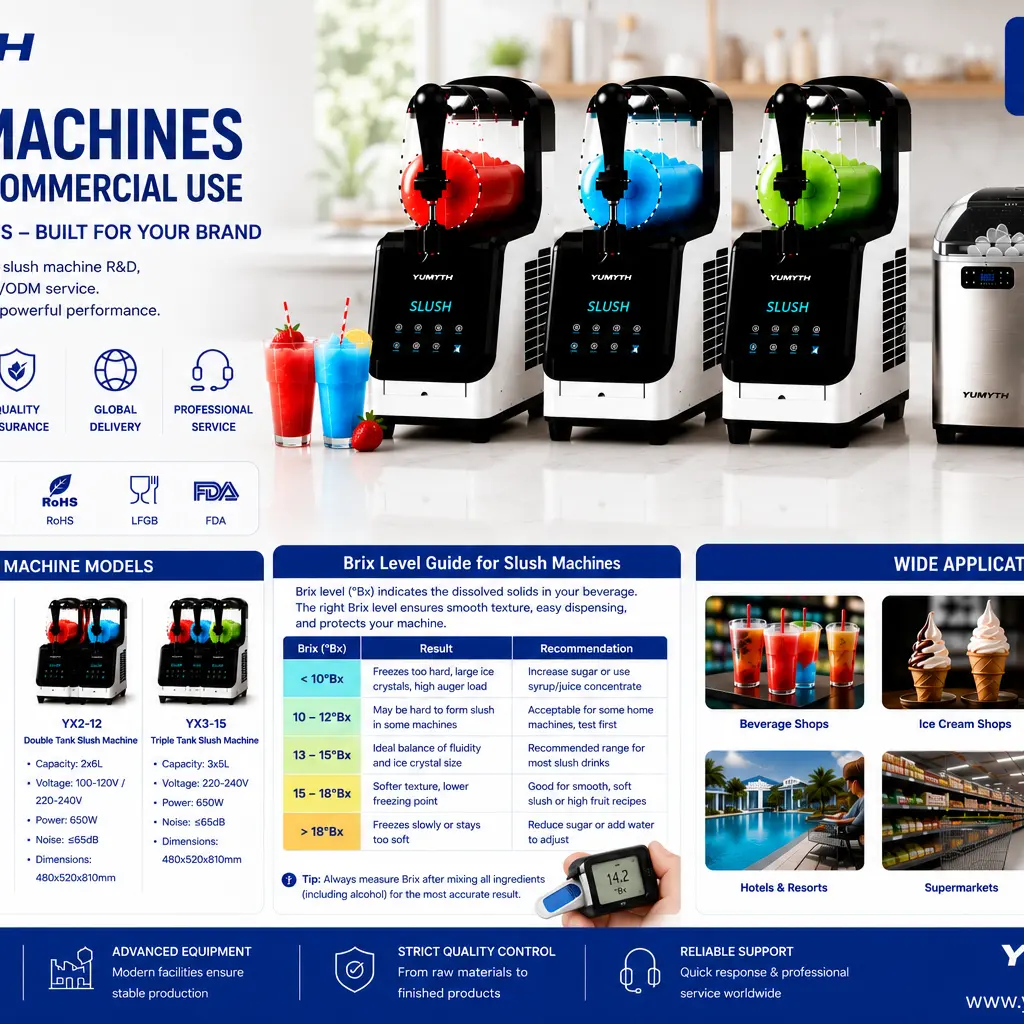
However, there is no one standard value of Brix for all machines. Formulations may vary depending on the type of compressor machine, such as a household machine, a commercial bowl machine, a frozen cocktail machine or a multifunctional slush and dessert machine.
The appropriate range depends on the refrigeration capacity, the viscosity setting, the design of the auger, the control of the temperature, the temperature of the beverage ingredients, the alcohol level, and the desired beverage texture.
What is meant by "Brix"?
The Brix scale is used to indicate the amount of dissolved solid in a beverage. One degree Brix of a pure sucrose and water solution is around one gram of sucrose in 100 grams of solution.
Refractometric dry substance is defined as the mass fraction of the dissolved solids in a sugar-containing solution determined with a refractometer in grams per 100 grams, using the International Commission for Uniform Methods of Sugar Analysis. It also indicates that refractometer readings are accurate for suitable pure sugar solutions, but become approximations in the presence of unknown nonsugar material.
This is important because fruit acids, salts, dairy products, flavourings, alcohol, pulp, or stabilisers might be also be included in the slush recipe. The refractometer reading should thus be regarded as an operating-control value and not as a pure sugar value.
The ideal Brix range for Commercial Slush Machines.
For most frozen beverage items, Spaceman USA suggests a Brix level of 13-18. It does not suggest running below 12°Bx (only applies to newer models that have selectable viscosity controls).
As stated in its product-mix guide, it is important to ensure the cells are not too large, as this can lead to a machine jamming or freezing up, nor contain too much sugar; otherwise, there will be a longer freezing time.
Refer to the following commercial guidance based on this commercial guidance:
- Above 10–12°Bx: greater likelihood of hard freezes and coarse ice;
- Approximately 13–15°Bx: good starting point for many common slush drinks;
- -15-18°Bx: less firm texture and lower freezing point;
- >18-20°Bx: May freeze slowly or be too soft.
These are average planning ranges. Always follow the instructions given by the manufacturer of the machine.
Brix Requirements for Home Slush Machines
There may be variations in the temperature control, auger system and recipe requirements between home compressor based machines and large commercial dispensers.
According to the YUMYTH published house machine guidance, the minimum recommended range for the formation of stable crystals in compressor based home appliances is around 10-13°Bx.
Other home-appliance brands advertise what they require via the nutrition panel of the drink instead of by using a refractometer reading. For instance, while Ninja's FS300 platform requires a minimum sugar level of 4%, the newer guidance from SLUSHi Max has a minimum sugar level of 4.5%.
Sugar percentage and refractometer Brix are not synonymous. Brix refers to the beverage's refractive response to all soluble materials, while the label might only contain the amount of some sugars per serving.
If there is no published Brix requirement for a home machine, it is generally better to start at about 10–15°Bx and then do some controlled recipe tests than to just pick a recipe by its perceived sweetness.
If Brix is low, What Happens?
A low-Brix drink will have relatively low amount of sugar or other dissolved material.
The evaporator being a cold surface, a low solids mixture can freeze quickly against the evaporator due to the freezing point reduction effect of the sugar. This may create:
- * Large ice crystals;
- * Hard frozen layers;
- * Increased auger resistance;
- * Frequent automatic reversal;
- * Motor-overload warnings;
- * Slow dispensing;
- * Complete machine freeze-up.
The technical guidance from Spaceman says that the lower Brix the higher the freezing point for the product, which will freeze more easily. It states that all batches should be measured as Brix will have an impact on the right viscosity setting, which will cause run and/or freeze-up.
There is no solution to a low-Brix problem by increasing the amount of refrigeration. It can cause the product to freeze even more.
What to do in case Brix is too high?
A high-Brix mixture is one with a greater amount of dissolved sugar (or solids) and so will have a lower freezing point.
The refrigerating system has to extract more heat to allow more ice crystals to be created. Possible results include:
- * Longer preparation time;
- * Wet, soft mud;
- * Insufficient ice formation;
- * Excessively sweet flavor;
- * Sticky residue;
- * Difficult cleaning;
- Product which does not get to the chosen texture.
Spaceman's technical advice verifies that the higher the Brix, the lower the freezing temperature, and the higher the viscosity setting.
If there is no liquid in the drink when the machine is operating normally, the answer is not always to change to the coldest setting. Too much of a sugar, alcohol, or other ingredient that affects the freezing point is added to the recipe.
What Effect Does Alcohol Have On Brix & Freezing?
Frozen cocktails are a bit more complex, as both sugar and alcohol have a freezing point that is lower.
For example, a cocktail can have a reasonable refractometer reading, but have so much alcohol that it doesn't freeze. Alcohol also has an impact on refractive index and, therefore, the standard Brix reading cannot always be used to determine the actual Brix value of an alcoholic mixture.
ICUMSA says that dry-substance measurements by refractometer are only an approximation if there are unknown materials in a solution other than sugar. It is ATAGO's recommendation that a conversion relationship be developed for a product when a refractometer is used with a solution other than normal sugar.
If the cocktail is being frozen, the operator needs to monitor both:
- * Final Brix or refractometer reading;
- * Final alcohol by volume (ABV).
A cocktail should be tested as a whole mixed recipe. Taking a sample of syrup prior to spirits addition is not the actual product coming into the machine.
Sugar-Free drinks do need special formulation.
Beers, flavored water and other beverages with no sugar are sweet, but do not have enough dissolved solids to make normal slush.
Sweeteners with a high intensity may impart a high sweetness to a small amount. They do not need to provide the freezing point effect provided by sugar, allulose or any other bulk soluble ingredient.
There are home machines that have some newer versions that have recipes for low sugar drinks that are approved by the manufacturer, using liquid allulose or other additions. For instance, on the SLUSHi Max platform, Ninja offers a specific formula of allulose and lemon-juice for any diet or low-sugar drinks.
It is important that users follow the manufacturer's recipe and add a quantity of sweetener, rather than an amount that may be arbitrary. The taste is not an adequate test to determine if the beverage has an acceptable freezing profile.
To measure Brix with a refractometer.
Handheld Digital or Optical Refractometers are used to quickly measure the consistency of every batch of beverage.
ICUMSA has agreed that refractive-index measurements can be used as a quick method of estimating the soluble dry-substance content of sugar solutions. For juices, soft drinks, syrups and other food products, ATAGO provides beverage refractometers with a range appropriate for the beverage.
A feasible measurement method is:
- Calibrate refractometer with distilled water.
- 2. Thoroughly mix the complete beverage.
- 3. Let the excess foam or bubbles settle.
- 5. Put a few drops of the solution on the clean prism.
- 5. Put the cover back on or begin digital reading.
- Note down the brix value.
- 8. Wipe and dry the prism afterwards.
Record the final drink when all water, syrup, juice, flavoring and alcohol is added.
During production or recipe development, document the Brix and ambient temperature, liquid temperature at start, fill volume, selected program, time for freezing and final texture.
Adjusting Mixture
If it's too low, the formulation can frequently be corrected by adding:
- * Simple syrup;
- * Liquid sugar;
- * Approved bulk sweetener;
- * Fruit concentrate;
- An improved beverage base with higher solids content.
If the Brix value is too high add water slowly to:
- * Water;
- * Unsweetened juice;
- * Tea;
- * Coffee;
- Another suitable low solids ingredient.
Do small adjustments, mix well, and measure again. Too much addition to the recipe without re-checking may shift the recipe from one operating problem to another.
The flavor should also be judged based after adjustment. If the drink becomes too sweet or too dilute, a technically appropriate Brix measurement is not helpful.
Create a Machine-Specific Recipe Window.
There should not be one Brix value for each program as advertised by the OEM manufacturers or appliance brands.
All declared beverage categories to be tested at:
- * Minimum and maximum fill levels;
- * Several Brix values;
- * Different starting temperatures;
- * Declared ambient temperatures;
- * Multiple texture settings;
- * Relevant alcohol concentrations.
Freeze time, beverage temperature, auger current, reverse cycle, dispense behavior and holding stability should be recorded during the test.
Based on these results, the manufacturer can set a recipe window that is validated for juice slush, soda, coffee, cocktails, milk-based drinks and reduced sugar drinks.
Conclusion
For most conventional slush machines an appropriate range of 13–18°Bx is recommended and 13–15°Bx is a good starting point for many standard nonalcoholic frozen beverages. For most of its commercial frozen beverage equipment, Spaceman USA recommends 13–18°Bx.
As with all compressor machines, some household models may offer a lower range, or may require a minimum amount of sugar instead of a published Brix specification. The range is estimated by YUMYTH to be around 10-13°Bx and Ninja to be between 4-4.5% in sugar content depending on the model.
The final target should be determined based on the instructions provided by the manufacturer and controlled recipe testing.
If the amount of dissolved material is insufficient, it may result in hard freezing and auger overload. Excessive sugar or alcohol can cause slow freezing and runny beverages. If the texture is measured in every completed batch using a calibrated refractometer, it can help the operator avoid unnecessary problems with his or her machine, and increase consistency of texture.
Related Articles
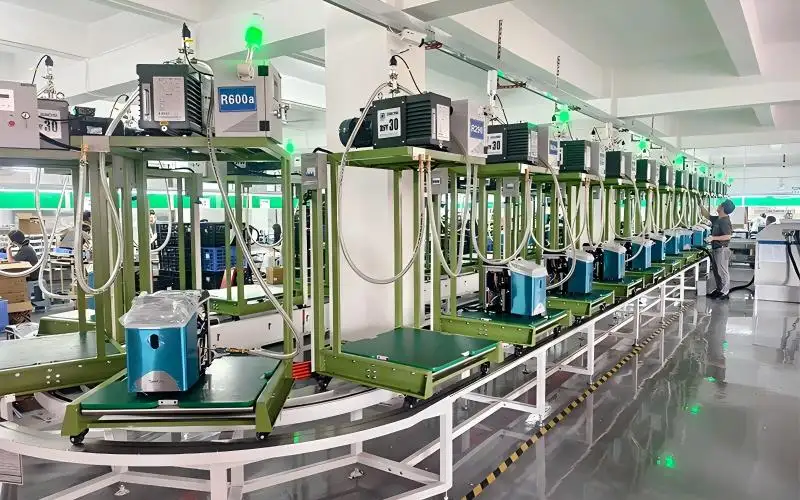
How We Test Every Ice Maker Before Packaging
2026-09-15
BY YUMYTH
A step-by-step look at refrigerant handling, cooling verification, leak detection, corrective action and electrical safety testing For an ice maker, reliable performance is determined long before the carton is sealed. ...
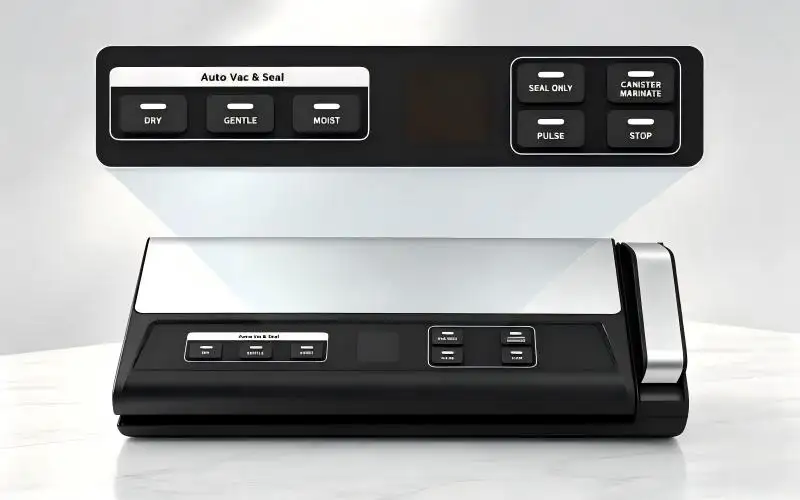
Guide for Brands Looking for a Reliable Vacuum Sealer OEM Supplier
2026-09-14
BY YUMYTH
When you are sourcing kitchen appliances for your retail brand, finding a dependable vacuum sealer OEM supplier is rarely just about getting the lowest unit price. It is about protecting ...

Why Ice Shape Matters: Understanding 10mm × 15mm Cylindrical Nugget Ice
2026-09-14
BY YUMYTH
More Than Ice Production — The Ice Itself Shapes the Consumer Experience When sourcing a nugget ice maker, buyers often focus first on production capacity, water tank size, ice basket ...

Ice Maker Sourcing Guide: How to Find the Right Factory
2026-09-10
BY YUMYTH
Sourcing an ice maker looks straightforward on paper. Find a supplier, agree on a price, place an order. But anyone who has actually done this knows the process is rarely ...