
Which parts of a slush machine can be customized?
Share:
-

-

-

-


Copied
Share:
-
-
-
-
Copied
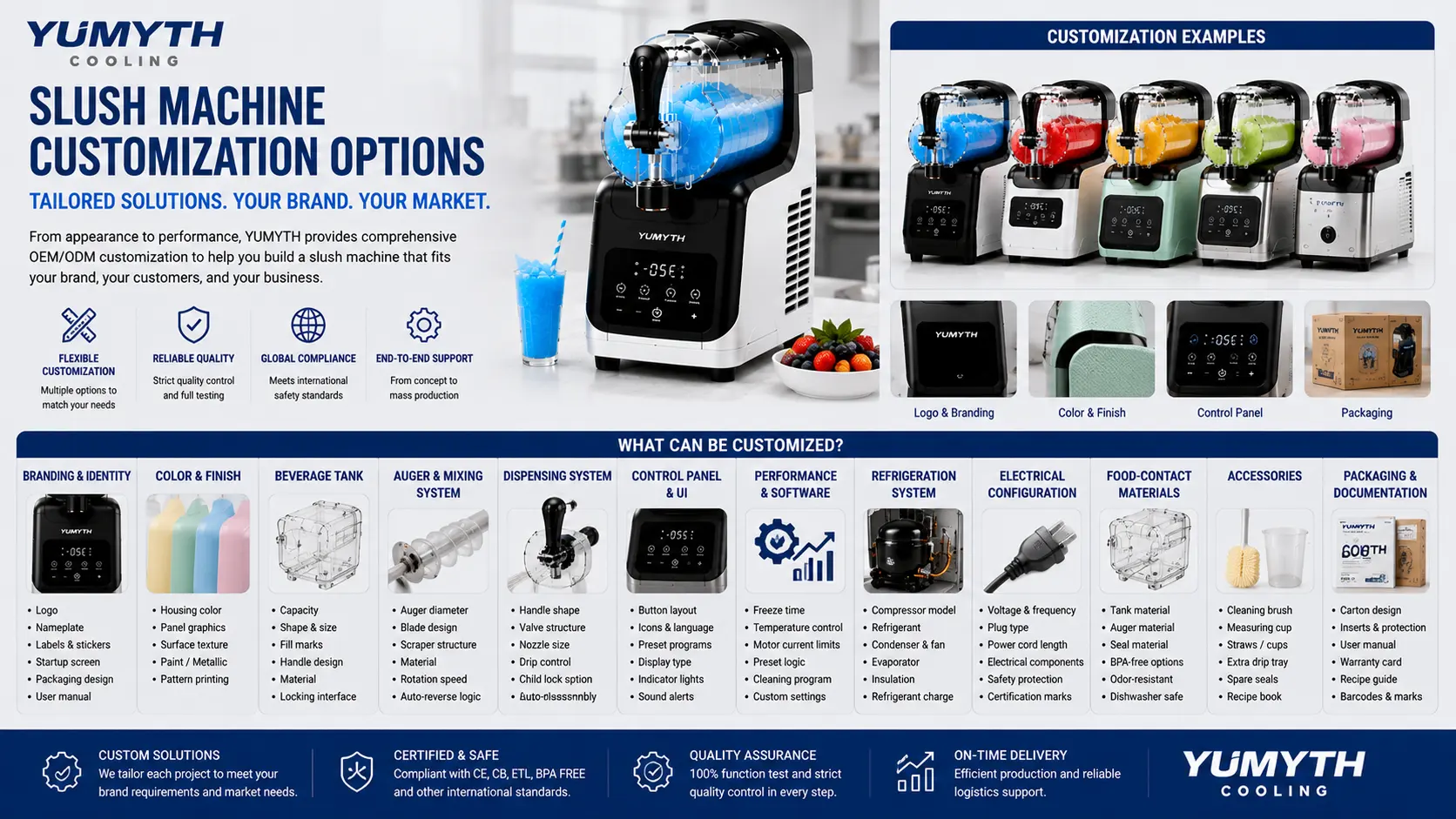
The customizations of slush machines can vary from one to another from simply adding the logo to designing a new refrigeration and control platform. Applying knowledge of these customization levels is vital to appliance brands as they will all impact development cost, the minimum order quantity, tooling, certification, production lead time and product reliability.
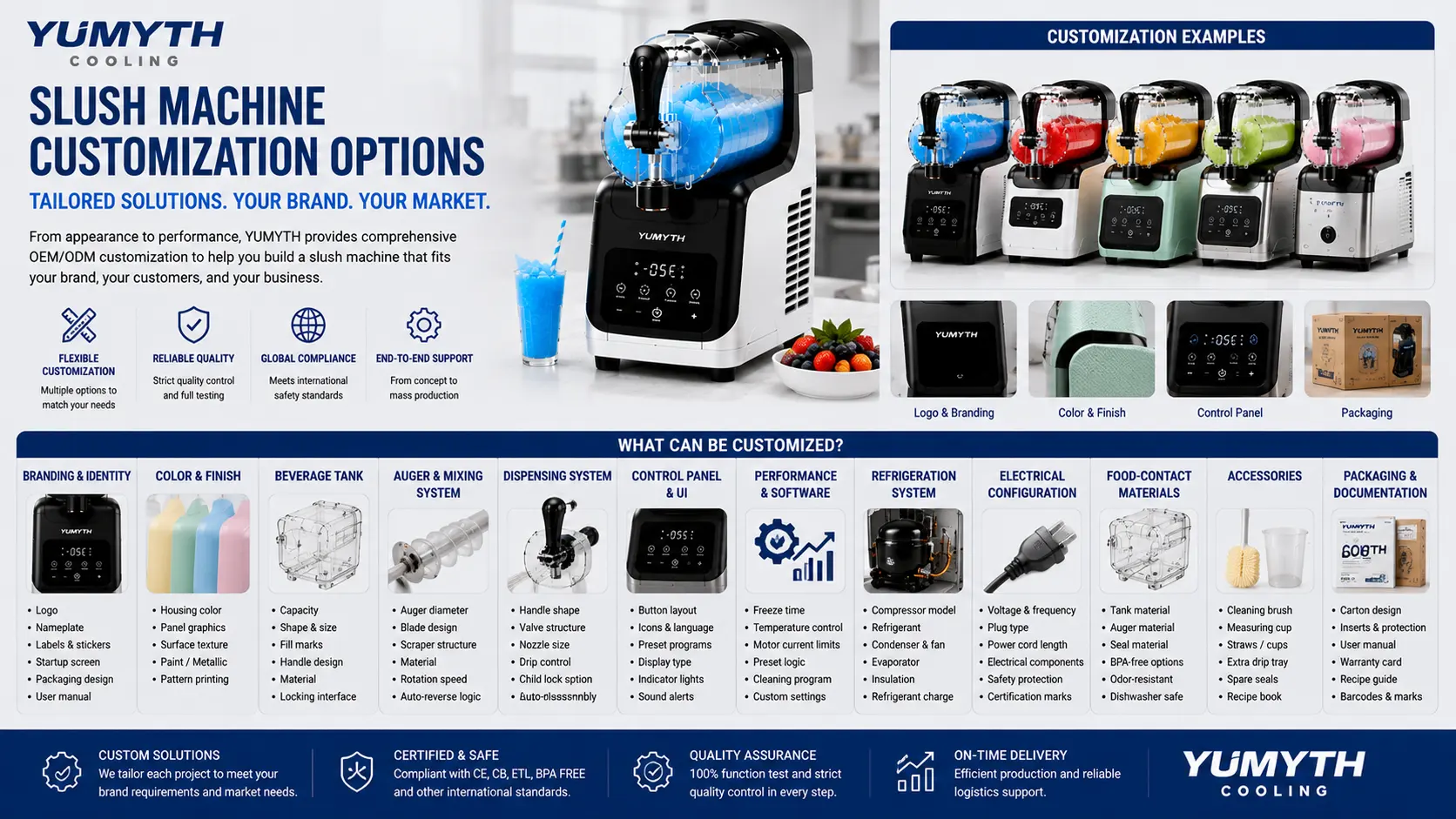
Structural, functional or refrigeration changes may need further engineering and validation or may be suitable for fast private label changes for an existing machine. The most successful OEM projects start with the separation of cosmetic customization from changes that impact performance, safety, food contact and regulatory compliance.
The name and image of the brand and the product.Name and image of the product and brand.
Generally, the easiest initial point to begin a private-label slush machine venture is logo customization.
A logo of a brand can be stamped onto:
- * The front housing;
- * Control panel;
- * Beverage tank;
- * Lid;
- * Product label;
- * Packaging;
- * User manual;
- * Recipe guide;
- * Accessories.
Popular logo printing methods are screen printing, pad printing, laser marking, molded logos, metal badges, labels and digital printing.
The type of process chosen should be determined by the surface material, anticipated cleaning exposure, aesthetic considerations, and quantity of order. The removable food contact part which bears a logo on it by printing must be waterproof, washable, durable to handling, and able to resist temperature change.
Brands need to approve the size, colour, position, appearance and durability standard of the logo prior to production.
The exterior's color and surface finish.Exterior color and surface finish.
The appliance housing can frequently be custom-made to fit a brand's product family or retail positioning.
Possible options include:
- * Custom plastic colors;
- * Painted panels;
- * Metallic finishes;
- * Color and black-and-white drawings; and
- * Stainless steel decoration;
- * Pattern printing;
- * Different control-panel graphics.
Normally custom colors will need an approved color reference (such as a Pantone code or physical sample). The colour appearance may vary according to the type of plastic resin, surface finish, lighting and manufacturing.
Other factors considered with a custom surface finish can also be scratch resistance, fingerprint visibility, cleaning, tooling cost, and production consistency. Production representative samples should be approved rather than computer renders, for the brands of appliances.
Determine the capacity and shape of a beverage tank.
One of the most noticeable parts of a home slush machine and one of the most technically significant is the transparent beverage tank.
Brands can ask for adjustments in the following:
- * Working capacity;
- * Maximum capacity;
- * Tank shape;
- * Fill markings;
- * Handle design;
- * Transparency;
- * Material;
- * Locking interface;
- * Dispensing position.
It's not just a cosmetic change to get a bigger tank. It reduces the mass of beverage to be cooled by the refrigeration system and may necessitate a larger evaporator, more powerful auger motor, adjust compressor capacity, modify software, and further testing.
The shape of the tank can also have an impact on the circulation of the beverages, ice formation, access to the tank for cleaning and the dispensing performance.
Dedicated tooling and full validation for a number of tests are typically needed for new designs in tanks such as leakage, impact, thermal cycling, food contact, cleaning, and assembly.
Auger and Mixing System
The auger that scrapes the cooling surface to form ice crystals and circulates the drink around the tank. Its geometry has a significant impact on its texture, freeze time, dispensing, motor load and potential for jamming.
These elements can be customized, such as:
- * Auger diameter;
- * Blade pitch;
- * Scraper structure;
- * Mixing direction;
- * Rotation speed;
- * Material;
- * Drive coupling;
- * Automatic reversal logic.
Several recipes and Brix levels should be used to test a new auger design. An aggressive scraper can help clear ice, but will cause more noise or wear. A larger blade can increase motor torque, but also enhance circulation.
Brands should not modify the auger just for the sake of a different look. Any changes must be backed up by tests of motor current, jam protection, durability, and texture.
The dispensing handle, valve and nozzle are also replaced.
The dispensing system may be customised for better look, flow, cleanability or comfort to the user.
Possible changes include:
- * Identify the materials and components; and
- * Handle color;
- * Valve structure;
- * Nozzle diameter;
- * Outlet position;
- * Drip-control features;
- * Child-resistant operation;
- * Removable cleaning components.
The valve should shut off every time it is operated and should not drip while it is holding. When supported by these recipes, its seals should be compatible with sugary, acidic, dairy-based and alcoholic drinks.
Leakage testing, flow testing, cleaning and assembly and durability testing are all needed for dispensing changes. A longer handle will make it easier to use, but will also increase the load on the valve pivot or tank connection.
Control Panel and User Interface,
One of the most flexible ways to differentiate brand is in their control panel.
Brands can customize:
- * Button names;
- * Icons;
- * Display layout;
- * Preset programs;
- * Language;
- * Indicator lights;
- * Startup screen;
- * Sound alerts;
- * colors, shades and tints;
- * Cleaning mode.
A simple project could involve only the changing of panel art. If it's a more sophisticated project, the new firmware, button functions, sensor logic, and display content may be needed.
Changes in software should be managed by a firmward version. All versions should be tested for startup, program change, compressor control, auger operation, error, power outage, and abnormal situations.
Symbols and translations need to be closely checked in international launches. The text used in the user-interface should be consistent with the user manual and packaging.
Choose the correct settings for Frozen Drink Programs.Select the appropriate settings for Frozen Drink Programs.
Programmes can be tailored to various types of beverages and consumer groups.
Examples of common programs may be:
- * Slush;
- * Frozen cocktail;
- * Frappé;
- * Milkshake;
- * Juice drink;
- * Cleaning;
- * Custom texture mode.
Target temperature, compressor cycling, auger speed, holding logic, motor current limits, and automatic reversal are a few of the program customization options.
It should not be altered just for the purpose of adding more menu options. There must be defined recipes, operating limits and validation conditions for each program.
For instance, a frozen cocktail program should be tested on an approved alcohol range. A low sugar mode should also provide protection against excessive auger load and hard freezing.
Refrigeration System
The refrigeration system can be adapted in some specific way, but it usually needs the most advanced engineering control.
Possible options include:
- * Compressor model;
- * Refrigerant;
- * Condenser size;
- * Fan specification;
- * Evaporator structure;
- * Capillary tube;
- * Insulation;
- * Refrigerant charge;
- * Airflow direction.
Brands can ask for shortened freezing time, reduced noise, improved high ambient performance, reduced energy consumption or use a refrigerant with low GWP, such as R290.
The changes that can be made to refrigeration can impact safety, certification, component temperature, cabinet structure and product size. Special flammable-refrigerant risk controls and factory production procedures are necessary for the R290 systems.
A refrigeration change is not just a component substitution and should be considered a platform-development.
Check the voltage, frequency, plug, and power cord.Inspect the voltage, frequency, plug and power cord.
Electrical setups need to be customised for the target market for sale.
Common options include:
- * 100–120V, 60Hz;
- * 220–240V, 50Hz;
- * Market-specific plugs;
- * Power-cord length;
- * Grounding configuration;
- * Rating labels;
- Damage to fuse or protective devices.
The compressor, fan, motor, PCB, relay, power supply and protection devices should be compatible with the voltage and frequency selected.
When the internal electrical components are intended for another market, its replacement is not sufficient. Electrical versions should be separately managed in bill of materials, labeling, certification and production testing.
Food-Contact Materials
Brands can ask for certain materials on the beverage tank, auger, seals, lid, valve or nozzle.
Common requirements include:
- * BPA-free plastic;
- * Transparent copolyester;
- * Food-contact silicone;
- * Stainless steel;
- * Odor-resistant materials;
- * Dishwasher-compatible components.
Appropriate materials should be selected based on the intended ingredients, contact temperature, alcohol content, acidity, cleaning chemicals, re-use and regulations of the intended target market.
Switching to another resin / colorant / silicone formulation / supplier may impact compliance and performance. The production material shall correspond to the approved declarations and test reports.
The removable components are easy to wash and clean.
The removal of the tank, auger, valve, seals, lid and drip tray can be customized to create a cleaning design.
Brands may request:
- * Tool-free disassembly;
- * Fewer loose components;
- * Larger grip areas;
- * Alignment markings;
- * Keyed connections;
- * Replaceable seal modules;
- * Dishwasher-compatible parts;
- * Built-in rinse programs.
These changes may lead to better user experience, but will need to be tested for leakage, incorrect assembly, repeated cleaning, thermal cycling and component wear.
The washable food area should be kept away from motors, electronics, and refrigeration system.
Accessories and Recipe Support
Accessories can be used to distinguish the retail package without the changes to the main appliance platform.
Options may include:
- * Cleaning brushes;
- * Measuring cups;
- * Reusable straws;
- * Drink containers;
- * Recipe books;
- * Replacement seals;
- * Extra drip trays;
- * Branded serving accessories.
Recipe guides should be based on established ranges for sugar, alcohol, volume and temperature. They should not suggest ingredients that they are not sure that the machine can process.
Packaging and Documentation
There is a lot of customization available in packaging for retail positioning and international distribution.
Brands can customize:
- * Carton graphics;
- * Product photography;
- * Color scheme;
- * Internal inserts;
- * Accessory boxes;
- * User manuals;
- * Warranty cards;
- * Recipe guides;
- * Barcodes;
- * Shipping marks.
Structural integrity of packaging must be confirmed by drop, vibration and compression testing and it must also be checked with functional testing. The carton should be decorative and its job is to protect the tank, the dispensing handle, compressor and refrigeration tubing.
Manuals and safety warnings should be of the same target market, product configuration and approved certification documents.
Certification and Market Versions.
A brand may seek differing versions for specific markets, such as the United States, European Union, United Kingdom, Australia and other markets.
Customization may include:
- * Electrical ratings;
- * Plug types;
- * Warning labels;
- * Language versions;
- * Refrigerant markings;
- * Certification marks;
- * Food-contact documentation;
- * Importer information.
If changes are made to any critical components or to the construction of the product, retesting or certification review may be needed. The brands need to verify the scope of certification, laboratory expenses, sample requirements, and document ownership prior to development.
Know and comprehend what the commercial impact is
There are four straightforward ways in which customization can be broken down:
Private label customization is the addition of logos, packaging, manuals, and basic colour.
Cosmetic customisation is the introduction of new control-panel graphics, finishes, handles and decorative parts.
Functional customization refers to software, presets, sensors, performance settings and user-interface behavior.
Structural customization refers to new tanks, augers, housings, refrigeration systems or internal structure.
The more complex the customization, the higher the investment in tools, the MOQ, prototype time, certification cost, and risk of development are usually.
Conclusion
While many components of the slush machine can be changed, many of them should not be considered as "cosmetic" modifications.
Sometimes the logos, colors, packaging and accessories can be easily modified. The engineering and validation of tank capacity, auger design, control programs, food-contact materials, dispensing components, and refrigeration systems need to be deeper engineered and validated.
For appliance manufacturers, it may be best to identify the customizations that actually provide value to customers and those that can be integrated into an existing platform. Customization can be a source of product differentiation without undue launch risk, via clear specifications, controlled prototypes, performance testing, certification planning and formal change management.
Related Articles
How We Test Every Ice Maker Before Packaging
2026-09-15
BY YUMYTH
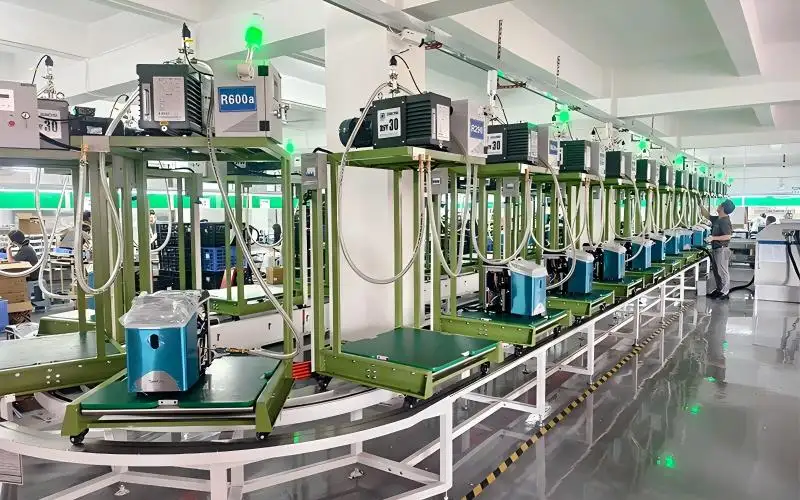
A step-by-step look at refrigerant handling, cooling verification, leak detection, corrective action and electrical safety testing For an ice maker, reliable performance is determined long before the carton is sealed. ...
Guide for Brands Looking for a Reliable Vacuum Sealer OEM Supplier
2026-09-14
BY YUMYTH
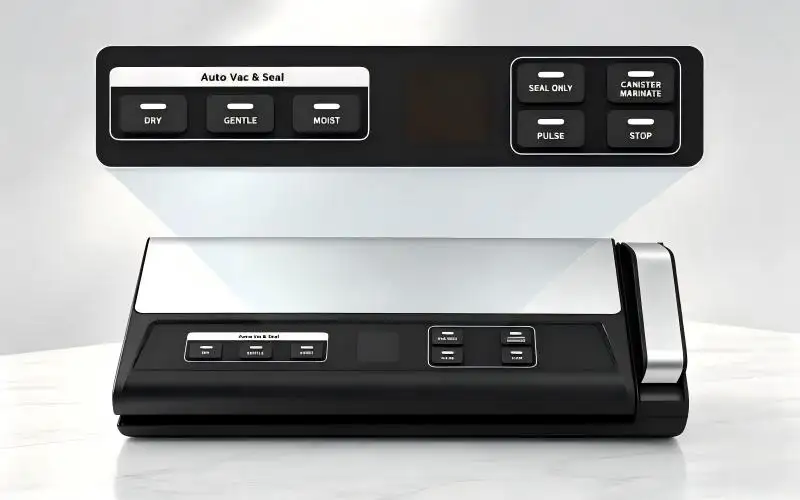
When you are sourcing kitchen appliances for your retail brand, finding a dependable vacuum sealer OEM supplier is rarely just about getting the lowest unit price. It is about protecting ...
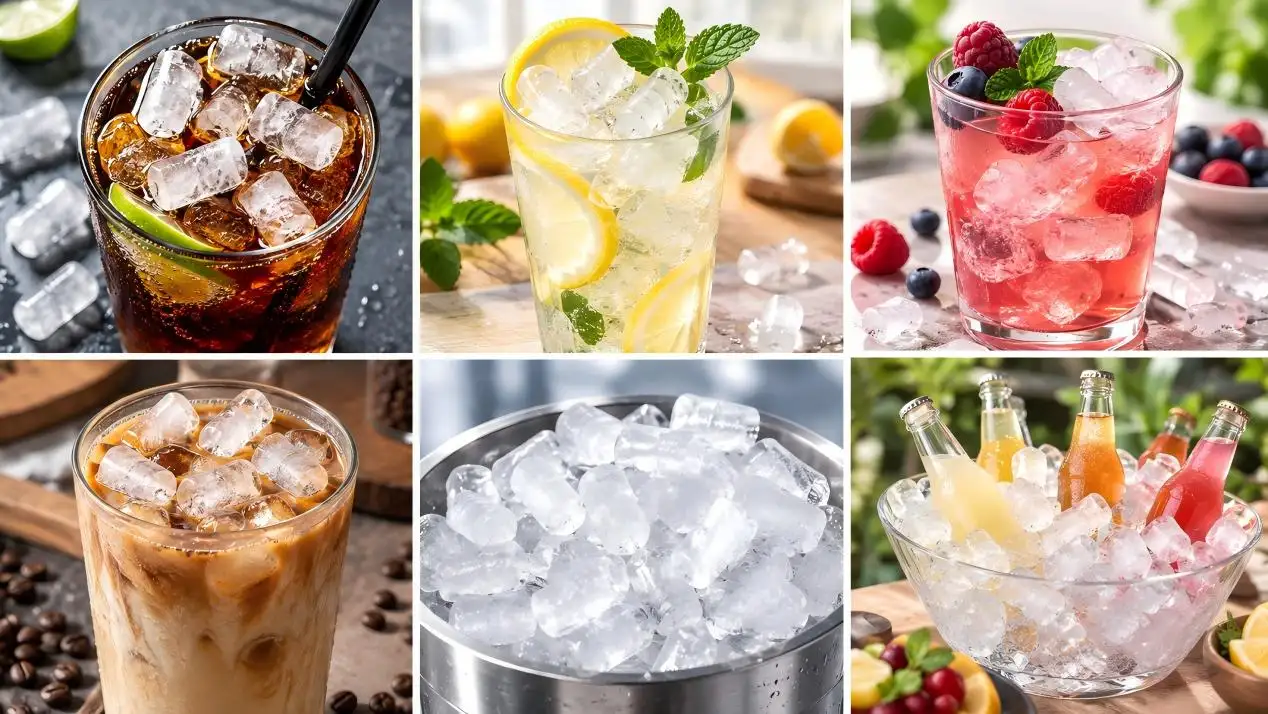
Why Ice Shape Matters: Understanding 10mm × 15mm Cylindrical Nugget Ice
2026-09-14
BY YUMYTH
More Than Ice Production — The Ice Itself Shapes the Consumer Experience When sourcing a nugget ice maker, buyers often focus first on production capacity, water tank size, ice basket ...

Ice Maker Sourcing Guide: How to Find the Right Factory
2026-09-10
BY YUMYTH
Sourcing an ice maker looks straightforward on paper. Find a supplier, agree on a price, place an order. But anyone who has actually done this knows the process is rarely ...