
What should a buyer inspect before selecting a factory?
Share:
-

-

-

-


Copied
Share:
-
-
-
-
Copied
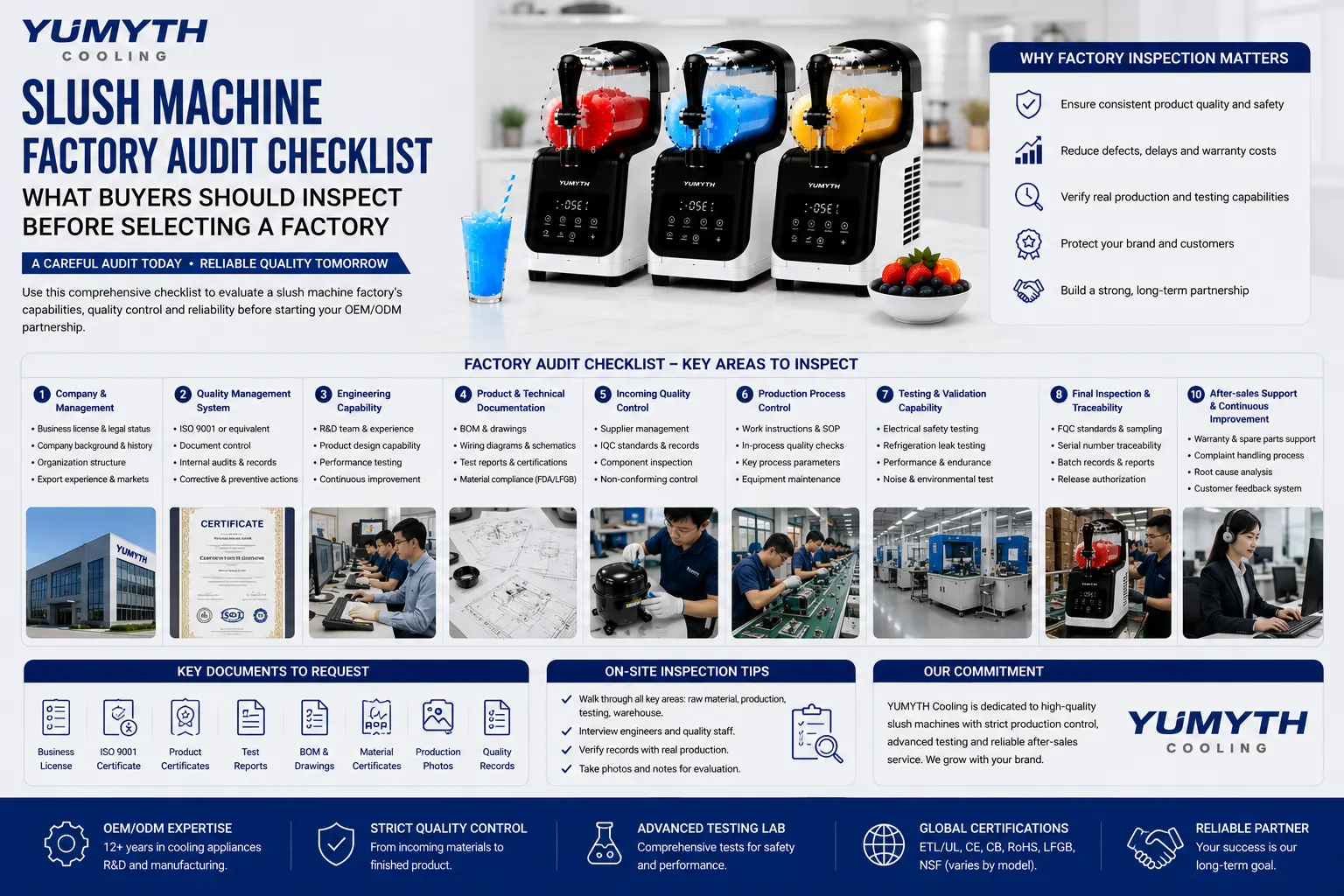
When it comes to choosing a slush machine factory, there is more to it than just looking at the products photos, estimates, certifications and workshop size. While a supplier may be able to make a good sample, they may not have the engineering knowledge, production controls, component tracking, testing facility or after-sales support to produce the same product on a mass scale.
A home slush machine includes the refrigeration, mechanical mixing, electronic control, food-contact materials, dispensing parts, cleaning systems, and packaging. It is, therefore, important that buyers check the entire factory management system as well as the factory's capacity to manage this particular product line.
A factory assessment can be done with a structured approach to help minimize delays in certification, inconsistent performance, shipment defects, warranty claims, and issues in the supply-chain.
Verify Legal and Business Information of the Factory
First of all, a buyer should check if the supplier is a genuine manufacturer or just a trading company selling another manufacturer's product.
Important information includes:
- * Registered company name;
- * Business license;
- * Factory address;
- * Year established;
- * Ownership structure;
- * Main product categories;
- * Export markets;
- * Employee count;
- * Production area;
- * Annual capacity.
The company name displayed on quotations, certificates, test reports, bank accounts and contracts must match. If the supplier is part of a group, the connection between the sales company, manufacturing company, and certificate holder should be explained in detail.
Another crucial issue for buyers should be whether vital operations are performed in-house or outsourced. Different suppliers can manufacture plastic molding, PCB assembly, production of refrigeration systems, testing and packaging. While outsourcing is not necessarily a bad thing, the factory needs to prove how the outsourcing processes are approved, monitored and controlled.
Review the Quality Management System (QMS)
ISO 9001 is a recognized framework to build, maintain and continuously improve a quality management system. It assists organizations to establish processes, responsibilities, performance checks, corrective actions, and improvement for customers. But an ISO 9001 certificate is not enough evidence of a factory's ability to consistently make reliable appliances.
The buyer is responsible for testing the system in operation.
Useful evidence includes:
- * Incoming inspection records;
- * Production work instructions;
- * Calibration records;
- * Nonconforming-product reports;
- * Corrective-action reports;
- * Supplier evaluations;
- * Training records;
- * Final inspection reports;
- * Customer complaint analysis.
Completed records for real production orders, not blank forms for inspection should be reviewed by Auditors.
A well-designed system should allow the finished appliance to be traced back to the compressor batch, motor batch, PCB version, firmware, refrigerant charge, electrical safety result and final inspection status of the appliance.
Review of the Engineering Team.
A slush machine supplier needs to know about the refrigeration, mechanical mixing, electronics, software, food contact material and safety requirements.
The consumer should check the factory for dedicated engineers with regard to:
- * Refrigeration-system development;
- * Mechanical design;
- * Electronic hardware;
- * Firmware;
- * Tooling;
- * Reliability testing;
- * Certification management.
Team members should be able to describe the effects of sugar concentration, alcohol content, Fill Volume, starting temperature and ambient temperature on freeze time and auger load of the team.
The buyer may also ask to see some examples of past engineering upgrades. This can be useful cases such as noise reduction, enhanced condenser air flow, prevention of auger jams, valve leakage correction, and better cleaning access.
A good supplier will provide an explanation for the original problem, the root cause, the design change, the test method, and the verified result.
Inspect Existing Product Documentation
It is recommended that the buyer should ask for the complete technical pack of the proposed slush machine platform.
This may include:
- * Product specification;
- * Bill of materials;
- * Refrigeration drawing;
- * Wiring diagram;
- * Critical component list;
- * Firmware version;
- * Food-contact material records;
- * Safety certificates;
- * Performance test reports;
- * Packaging specification.
The documentation have to correspond to the sample. If there is one compressor or PCB present in the sample, but there is another compressor or PCB identified in the technical file, it may be the case that the supplier does not have an effective configuration control.
Along with that, the buyer should also determine that documents are available for all the intended voltage, plug, refrigerant and market versions.
Ensure Safety and Certification Capability
The IEC 60335 series covers the safety of household and similar electrical appliances, such as electrical, mechanical, thermal, fire and other reasonably foreseeable hazards. Requirements should be verified as per the design and declared use of the slush machine and should be specific to each product.
Buyers should verify:
- * Certificate holder;
- * Factory address;
- * Product model;
- * Voltage and frequency;
- * Applicable standard;
- * Test-report number;
- * Critical component list;
- * Certification body.
For the US projects, buyers must ensure that the project selected laboratory is known for the product safety standard. The NRTL program identifies organizations that test and certify products to meet the appropriate safety standards under the United States and allow the use of registered certification marks by manufacturers.
Production controls should be in place to support certification. OSHA's NRTL includes both initial inspections of factories and ongoing surveillance of factories to ensure marked products are consistent with the marked construction.
Perform Food-Contact Material Control Inspection
The beverage tank, auger and related components, lid, seals and dispensing valve may come into direct or indirect contact with beverages.
The factory shall give the material specification and traceability of the exact production resin, colorant, silicone, coating and metal. When a statement like “food grade” or “BPA free” is used, it should be accompanied by relevant documentation.
NSF food-equipment standards cover material safety, hygienic design, construction, cleanability, and performance. NSF certification programs also have production facility audits that are designed to ensure that products are still being manufactured under controlled practices.
When making a factory inspection, buyers should check for the following food-contact components:
- * Rough surfaces;
- * Molding flash;
- * Deep grooves;
- * Odor;
- * Warping;
- * Cracks;
- * Poor seal fit;
- * Trapped-water areas;
- * Difficult cleaning access.
If there are any material changes, it is important that they are formalised, as a change in the type of resin or seal formulation can impact on compliance results, leakage, durability and cleaning performance.
Review Incoming Quality Control
Incoming quality control should be directed towards components that could impact on safety and performance.
The Buyer is required to check procedures for inspections of:
- * Compressors;
- * High quality hydraulic pumps; and
- * PCBs;
- * Sensors;
- * Power cords;
- * Fans;
- * Beverage tanks;
- * Augers;
- * Seals;
- * Dispensing valves;
- * Refrigeration tubing.
Inspectors to check supplier, model, size, electrical rating, look, operating characteristics and batch details.
Query the consequences of failure of a component to be inspected. Materials that are not accepted should be marked and set aside to prevent re-entry into production without permission.
The factory must also review the performance of suppliers and investigate and fix common defects, instead of constantly sorting the parts received.
Inspect Refrigeration Production
Compressor-based slush machines are particularly significant in the refrigeration production area.
The buyer is advised to examine:
- Cutting and forming of tubes;
- * Brazing procedures;
- * Evacuation equipment;
- * Refrigerant charging;
- * Charge-weight control;
- * Leak testing;
- * Compressor installation;
- * Tube protection;
- Condenser and fan set.
Current calibration documentation for charging scales, vacuum gauges, leak detectors and electrical test equipment should be available.
If R290 is used in the product, the factory must show appropriate ventilation, handling of refrigerants, training of operators, control of sources of ignition, leak detection, and traceable charging procedures.
The actual charge records should also be inspected, as should be done to confirm the amount of refrigerant specified, but not based on operating time alone.
Review Assembly-Line Controls
Controlled work instructions, fixtures, torque and inspection points should be followed in the assembly line.
Important checks include:
- * Belt alignment; and
- * Seal orientation;
- * Tank locking;
- * Dispensing-valve installation;
- * Wiring routing;
- * Fan clearance;
- * Compressor mounts;
- * Screw torque;
- * Control-panel installation.
It is important to buyers to see if workers are following instructions or using their own knowledge.
The visual aids must show correct and incorrect assembly conditions. Vital components should be designed or controlled to minimize the risk of correct reverse installation, missing components or wrong wiring.
Examine the characteristics of testing equipment and methods
A good slush machine factory ought to be able to check out if the device just operates or not.
Facilities that are useful can include:
- * Electrical safety testers;
- * Leak detectors;
- * Climate chambers;
- * Noise-test equipment;
- * Power meters;
- * Temperature data loggers;
- * Motor-current measurement;
- * Packaging drop-test equipment;
- * Vibration equipment;
- * Endurance-test fixtures.
Request to view actual testing procedures and reports.
The beverage recipe, Brix, fill volume, initial temperature, ambient temperature, voltage, program and texture endpoint should be determined by performance testing. Without these conditions a statement like “freezes in 15 minutes” is not very useful.
The factory should also illustrate the tests conducted on high temperature, auger jam protection, repeated cleaning, component durability, and extended holding.
Review Final Inspection and Batch Release.
Packaged and shipped finished appliances should be subjected to controlled checks.
The final inspection may contain:
- * Electrical safety;
- * Battery charging; and
- * Auger movement;
- * Control-panel functions;
- * Leakage;
- * Dispensing;
- * Noise;
- * Appearance;
- * Labels;
- * Accessories;
- * Packaging.
Each batch should have a representative sample that is subjected to a controlled freezing test.
The buyer should inquire about who can release/stop a shipment. The quality personnel should be able to stop the production when serious defect exists, instead of rushing to approve it just to keep up with the delivery schedule.
Check Packaging & Warehouse Conditions
Even when the final product is made, it can fail if improperly stored or packaged.
Buyers should inspect:
- * Carton specifications;
- * Air or molded-pulp trays;
- * Accessory placement;
- * Packing instructions;
- * Finished-goods storage;
- * Moisture control;
- * Palletization;
- * Batch identification.
The transparent tank, dispensing handle, compressor mounts, control panel and refrigeration tubing should be protected by packaging.
Production representative Drop, Vibration or Transport validation should be available from the supplier. Packaged materials for mass production should be the same as the tested construction.
Estimate production capacity realistically
The advertised capacity must be compared to real resources.
The buyer is advised to check:
- * Number of items on each line; and
- * Number of shifts;
- * Available workers;
- * Testing-station capacity;
- * Refrigerant charging capacity;
- * Component lead times;
- * Historical output.
A bottleneck in the production process is usually the final testing. A factory can build lots of machines and not have enough cooling, leakage or electrical test stations to ensure they're all built properly.
The unit for capacity should be set in terms of the number of "acceptable" finished products per day, not on the number of units entering assembly.
After-Sales Support is reviewed.After-Sales Support is reviewed.
Post-shipment considerations also should be taken into account in the factory selection process.
The supplier should have established processes in place for:
- * Technical questions;
- * Spare parts;
- * Warranty claims;
- * Failure analysis;
- * Corrective actions;
- * Engineering changes;
- * Customer complaints.
Customers should ask to see an example of a past corrective-action report. The defect, affected batches, containment, root cause, permanent action and effectiveness verification should be included.
If the supplier only says "we will do better next time" then they may not have a quality improvement system in place.
Conclusion
A factory should be based on the evidence, not just the quotations or certificates or even sample appearance.
The buyer needs to look at the supplier's engineering capability, quality system, process for food contact controls, refrigeration production, assembly process, testing facilities, traceability, packaging, capacity, and corrective-action process.
Largest and cheapest is not always the strongest factory. It is the supplier who can show that materials are under control, that testing is repeatable, that records are transparent, that mass production is stable, and that they are effective problem solvers.
The organized factory audit process facilitates the appliance brands to minimize the risk of launching the product while establishing a long-term reliable OEM relationship.
Related Articles
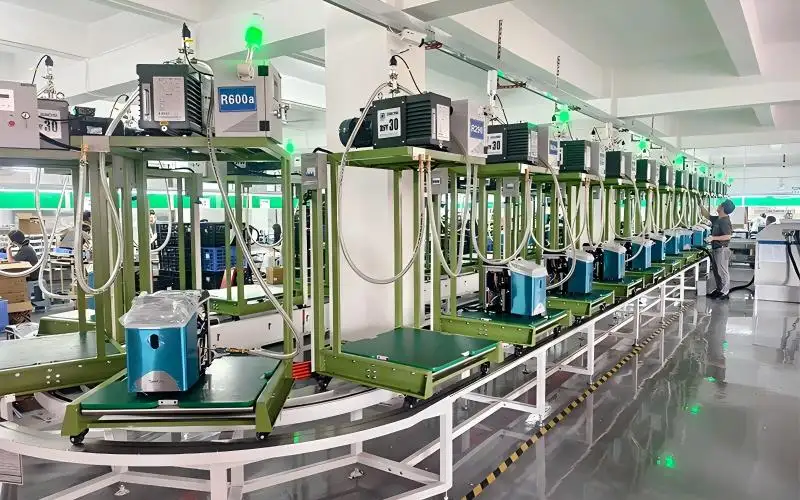
How We Test Every Ice Maker Before Packaging
2026-09-15
BY YUMYTH
A step-by-step look at refrigerant handling, cooling verification, leak detection, corrective action and electrical safety testing For an ice maker, reliable performance is determined long before the carton is sealed. ...
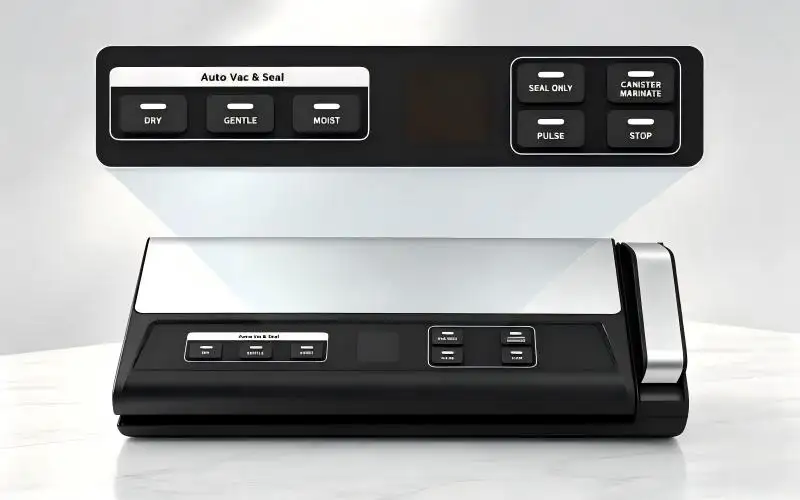
Guide for Brands Looking for a Reliable Vacuum Sealer OEM Supplier
2026-09-14
BY YUMYTH
When you are sourcing kitchen appliances for your retail brand, finding a dependable vacuum sealer OEM supplier is rarely just about getting the lowest unit price. It is about protecting ...

Why Ice Shape Matters: Understanding 10mm × 15mm Cylindrical Nugget Ice
2026-09-14
BY YUMYTH
More Than Ice Production — The Ice Itself Shapes the Consumer Experience When sourcing a nugget ice maker, buyers often focus first on production capacity, water tank size, ice basket ...

Ice Maker Sourcing Guide: How to Find the Right Factory
2026-09-10
BY YUMYTH
Sourcing an ice maker looks straightforward on paper. Find a supplier, agree on a price, place an order. But anyone who has actually done this knows the process is rarely ...