
FAQs for Slush Machine
Share:
-

-

-

-


Copied
Share:
-
-
-
-
Copied
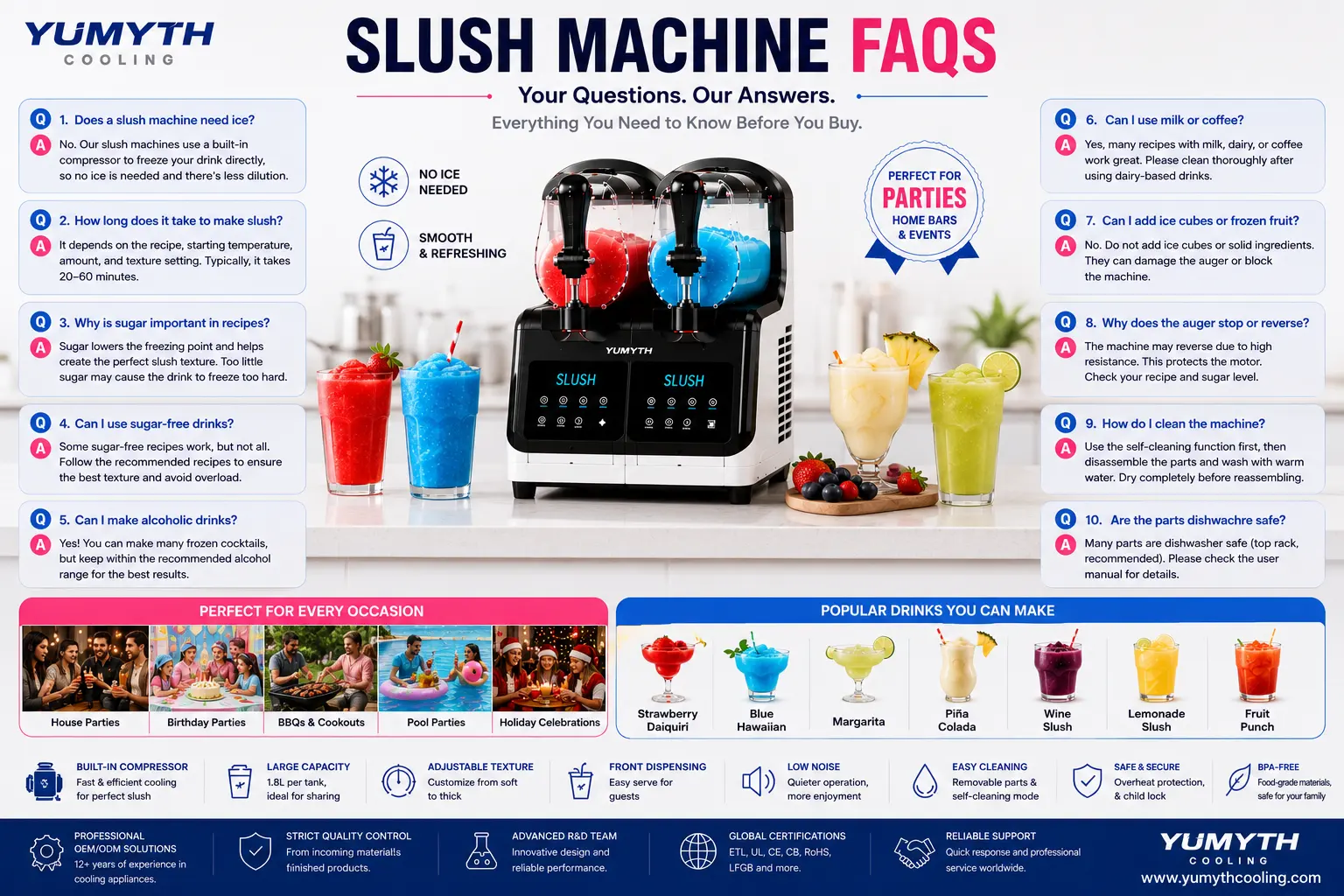
Here are some of the most frequently asked questions about slush machines and their answers.
Slush machines can help create the perfect smooth frozen drink for parties, home bars, cafés, family get-togethers, and seasonal events. New compressor-based models will freeze drinks directly, without the need for ice cubes or a frozen bowl.
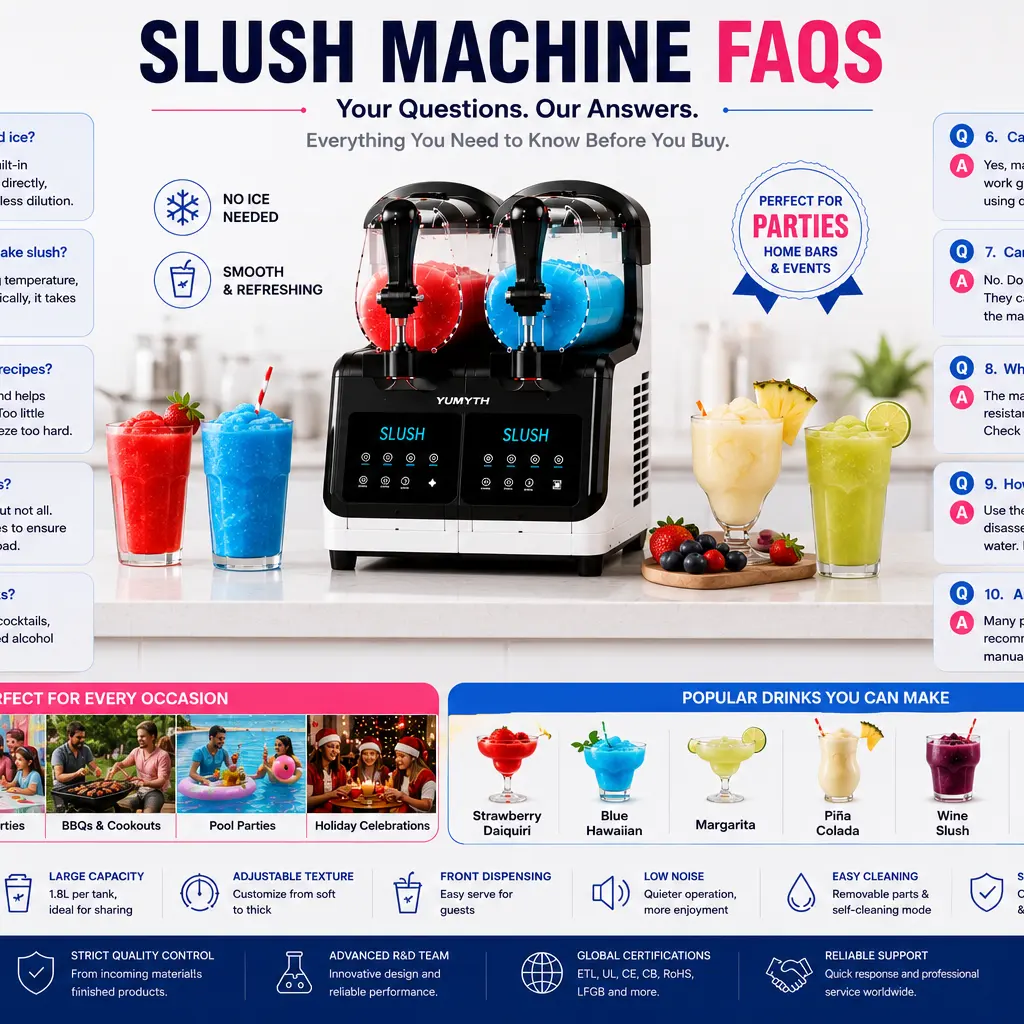
Over time there are a number of questions that users have regarding what ingredients are appropriate, sugar content, alcohol content, preparation time, cleaning, noise, capacity and protection of the augers. Awareness of the above helps in enhancing the texture of the drinks, avoid operating issues and assist the buyers in choosing the appropriate machine.
The following is a list of some of the most commonly asked questions about home and countertop slush machines.
A Slush Machine Needs Ice?
Typically, a compressor type slush machine does not need ice.
An integrated refrigeration unit will extract heat from the beverage within the machine. As the liquid cools, the auger rotates and removes small ice crystals from the evaporator surface, bringing them around in the tank.
The ice will be mixed in with the beverage itself, as opposed to mixing in separate ice cubes, so the beverage will be less diluted.
There are still some cheap frozen drink producers using crushed ice or a pre-frozen bowl. For a true "no-ice" product, buyers should ask if the product has a built-in compressor.
2. How long will it take for a drink to freeze in a slush machine?
The preparation time varies depending on the machine, recipe, fill volume, ambient temperature, starting liquid temperature and texture chosen.
Pre-chilled beverage may freeze faster than full tank of room temperature beverage. Condenser heat rejection may be more challenging and preparation time longer during high ambient temperature or low air exchange rates.
The freezing point is also changed by sugar and alcohol. If the beverage is high in sugar or alcohol, more cooling may be needed to get the ice crystals.
Therefore, the manufacturer's freeze time claims should include specifics on test conditions, and not just one all-purpose result for all recipes.
3. Why Is Sugar Important in Slush Recipes?
A beverage's freezing point is influenced by the amount of sugar it contains.
A proper slush should have a mixture of liquid and small ice chunks. If the sugar concentration is low, the water in the drink may freeze too rapidly and create a barrier of ice around the evaporator. This raises the resistance on the auger and can cause an overload protection to be activated.
If there's too much sugar in the mix, the liquid could stay syrupy, or it may take longer to freeze into a sufficient amount of ice.
It is recommended that the users follow the sugar or Brix range suitable for their machines. Some recipes for zero-sweetened beverages may require special validation because artificial sweetness isn't always adequate to provide the dissolved solids needed for stable slush.
4. Is the use of sugar-free drinks allowed?
There are some sugar-free drinks that can be used, but not all recipes will work.
High intensity sweeteners could give a drink a sweet taste without reducing the freezing point of the liquid as well as normal sugar. The mixture may then freeze too solid, putting too much pressure on the auger.
Specialized temperature control, motor-current monitoring, automatic reversal or recipe guidance are just a few of the options built into a machine that can be programmed for reduced-sugar operation.
Soda (regular zero sugar) or flavored water should not be used if not specifically stated as being supported by the manufacturer.
5. Does Alcoholic Drinks exist in Slush Machines?
Yes, there are many slush machines that can make frozen cocktails, wine slush, daiquiris, margaritas and other alcoholic drinks.
But alcohol decreases the freezing point. If the refrigeration system is working normally, but a recipe is set to use too much alcohol, it will still be liquid.
All the cocktail should be measured and mixed before it is added to the tank. If too much alcohol is added to a partly frozen mixed beverage, you may wind up with an uneven amount of alcohol or a different texture.
The recommended alcohol range and tested recipes provided by the manufacturer should be followed by users.
6. Are Milk, Coffee or Dairy Drinks acceptable?
This is dependent on what programs the machine is capable of and how it is designed to handle food-contact.
Some of the multifunction models can make milkshakes, frozen coffee, frappés or soft frozen desserts. There are others which are designed for only water-based beverages.
Dairy mixtures tend to be thicker and load the auger and dispense system more. They also need to be cleaned more carefully so that fat and protein residues may remain on seals, valves and around the tanks.
Always check whether the specific model is validated for use with milk, cream, yogurt or thick coffee recipes.
7. Is it OK to put Ice Cubes or Frozen Fruit in?
Normally do not use a compressor-based slush machine as a blender.
Solid food material such as ice cubes, frozen fruit, candy, nuts, seeds and other solid food material can be crushed between the auger and the tank wall. This may cause the auger to stall, break the scraper, cause the drive coupling to wear out or clog the dispensing valve.
The fruit ingredients will generally need to be blended, strained and channeled into a pourable liquid prior to feeding into the machine.
The decorative fruit pieces and toppings can be added to the cup post-dispensing.
8. How can the Auger stop or reverse?
If the machine senses too much resistance in the mechanism, the auger can stop or reverse.
Common causes include:
- * Insufficient sugar;
- A beverage which has become solid.
- Foods that have a high fat content or are thick;
- * Collected solid objects;
- * Overfilling;
- * Incorrectly installed components;
- Dried-up material near the drive system.
Normally automatic reversals are a protective feature and not a sign of a motor failure. It can clear the blockage, which is temporary, and avoid any damage to the gearbox, motor and coupling.
If the machine warns of an overload, the user should refer to the manual and not continually turn the machine back on and off.
9. What should be the fill volume?
All slush machines have a recommended capacity range.
If the beverage is over-filled, the circulation space is decreased, and the thickened liqueur may press against the lid, seal or upper auger structure. It can also lead to some frozen areas and others unfrozen.
If the beverage level is not maintained above the minimum level it will not cover the desired mixing and cooling area. If there is a thin layer of liquid on the evaporator, it can freeze quickly and cause auger resistance.
Even if the physical tank may seem to have room for an additional amount of liquid, the marked fill line should be adhered to.
10. How long does the slush stay in the machine?
There is a holding mode on many machines which keep the drink in the machine's bowl while it is being mixed and then start the compressor again after the desired texture has been achieved.
The safe holding time is dependent on the recipe, appliance design and instructions from the manufacturer. Fruit drinks consisting of water could react differently than dairy drinks or alcoholic beverages.
Beverage level also should be kept within the recommended operating range. If there is only a small residual, the temperature and flow stability may be reduced.
The drinks should not be kept in the machine for too long. Once service has been completed the leftover beverage must be removed and the food contact surface cleaned in a timely fashion.
12. Is it a fact or opinion?
Slush machines with compressors make some noise during operation, since they have a number of moving and refrigeration parts.
These are possible sources of sound:
- * Compressor vibration;
- * Condenser fan;
- * Auger motor;
- * Gearbox;
- * Refrigerant flow;
- * Cabinet panels.
A slush machine typically operates for a longer time than a blender, but the sound should be more steady and not as loud as the sound of high speed crushing.
Other factors that can influence noise may include countertop stability, wall clearance, component alignment, and beverage thickness. A machine should be operated on a flat and firm surface, with adequate ventilation.
12. What is self cleaning?
A self-cleaning or one-touch cleaning program usually means that the machine can automatically circulate rinse water through the tank while rotating the auger.
It is a process used for releasing sugar, syrup, coffee, fruit or dairy residues prior to part removal.
But, in some cases, the self-cleaning feature doesn't mean the appliance automatically takes care of the washing. Other removable food-contact parts such as seals, valves, lids, nozzles, drip trays and similar items may require manual cleaning.
More often, the term “automatic rinse” or “assisted cleaning” is a better fit.
Cleaning a Slush Machine #13
Typical Cleaning Process:
- Pass the rest of the beverage.
- 2. Add clean water to the tank.
- 3. Start the rinse or clean program.
- 4. Drain the rinse water.
- 5. Take out the tank, auger, valve, seals and drip tray.
- 7. Wash all approved food contact parts.
- 7. Wash and dry thoroughly.
- 9. Re-assemble the machine and test for leaks.
The refrigeration and electrical base should not be immersed in water. Wipe following manufacturer's instructions.
Immediate cleaning will avoid the sugars and other ingredients from drying in the narrow passages.
14. Do the Removable Parts Dishwasher Safe?
Not all materials and component designs are dishwasher-proof.
Some tanks, augers, lids, valves and trays can be put in the dishwasher, but some seals, printed parts or transparent parts can be hand washed.
Appropriate plastics may warp, cloud, crack or lose dimensional accuracy when exposed to dishwasher heat and detergent. Please be aware that certain top rack items and heated drying restrictions may apply.
Only approved parts should be put in the dishwasher.
15. What are some of the safety features that a good machine should have?
Safety and protection functions that will be useful are:
- * Auger overload detection;
- * Automatic reversal;
- * Motor thermal protection;
- * Compressor protection;
- * Anti-frost feature; and
- * Child lock;
- * Clear error messages;
- * Automatic shutdown;
- * Non-slip feet.
The product should also make moving parts inaccessible when running. Users must never use their fingers, cleaning tools, straws or spoons to place their fingers into the tank while the auger is in motion.
16. Which size Slush Machine works best in your home?
The size will depend on the needs of the household and countertop space.
For couples, small families and occasional use, a compact single tank might be appropriate. For parties, larger machines can come in handy, and two-tank machines can make two different flavors or two different alcoholic/nonalcoholic recipes.
Working capacity, dimensions, weight, ventilation clearance and cleaning requirements should be compared among buyers.
The larger the size of the tank, the more servings it will provide, but it will also take longer to freeze and need more space and cleaning up.
17. What are the things Buyers should check before buying?
Important factors include:
- * Built-in compressor refrigeration;
- * Working capacity;
- * Supported drink programs;
- * Healthy food recommendations and/or dietary changes; and
- * Adjustable texture;
- * Preparation time;
- * Operating noise;
- * Removable food-contact parts;
- * Cleaning mode;
- * Overload protection;
- * Replacement parts;
- Warranty and after sales support.
Not all of the largest tank and most buttons are the best machine. It should be equal to the user's recipes, volume, counter space and cleaning requirements.
Conclusion
Instead of repeatedly crushing the ice in the blender, a slush machine offers a convenient way to make smooth frozen beverages. Requires the interaction of refrigeration, auger transport, beverage formulation, temperature control and proper cleaning to be effective.
By observing the recommended sugar and alcohol intake, observing the fill limits, avoiding solid ingredients, leaving the system to air out, and cleaning removable parts after each use, users can avoid many common issues.
A machine with simple recipe instructions, safety features, easy-to-reach food contact surfaces and reliable customer service can lead to more predictable frosts and a good overall customer experience.
Related Articles
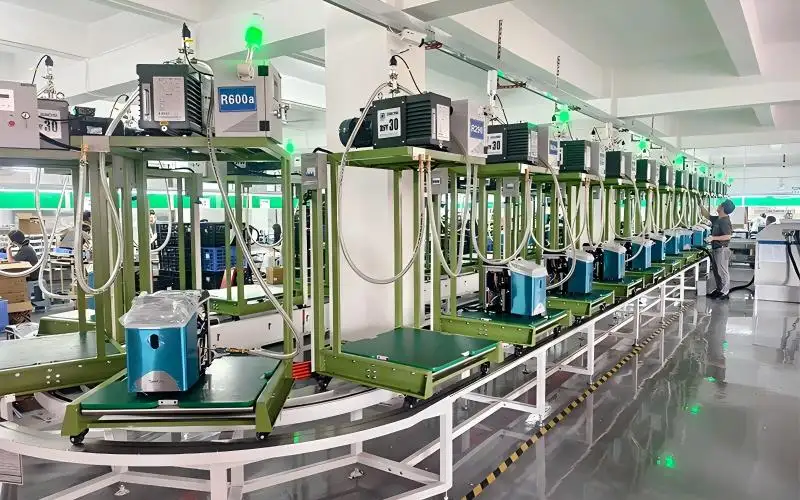
How We Test Every Ice Maker Before Packaging
2026-09-15
BY YUMYTH
A step-by-step look at refrigerant handling, cooling verification, leak detection, corrective action and electrical safety testing For an ice maker, reliable performance is determined long before the carton is sealed. ...
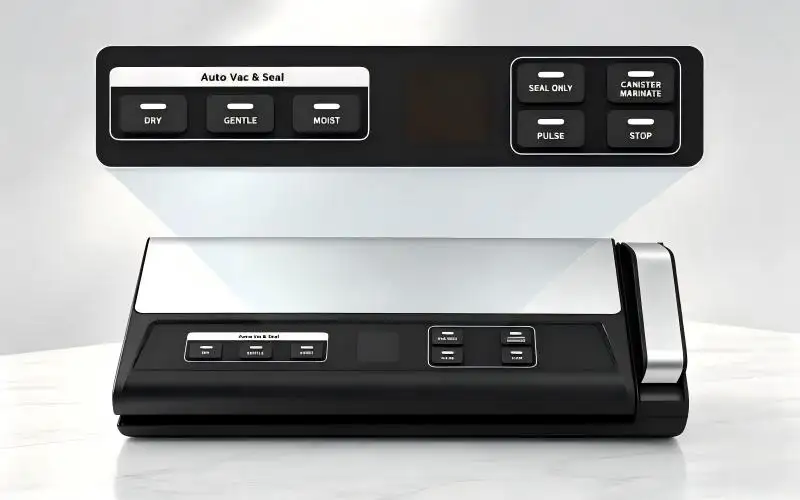
Guide for Brands Looking for a Reliable Vacuum Sealer OEM Supplier
2026-09-14
BY YUMYTH
When you are sourcing kitchen appliances for your retail brand, finding a dependable vacuum sealer OEM supplier is rarely just about getting the lowest unit price. It is about protecting ...
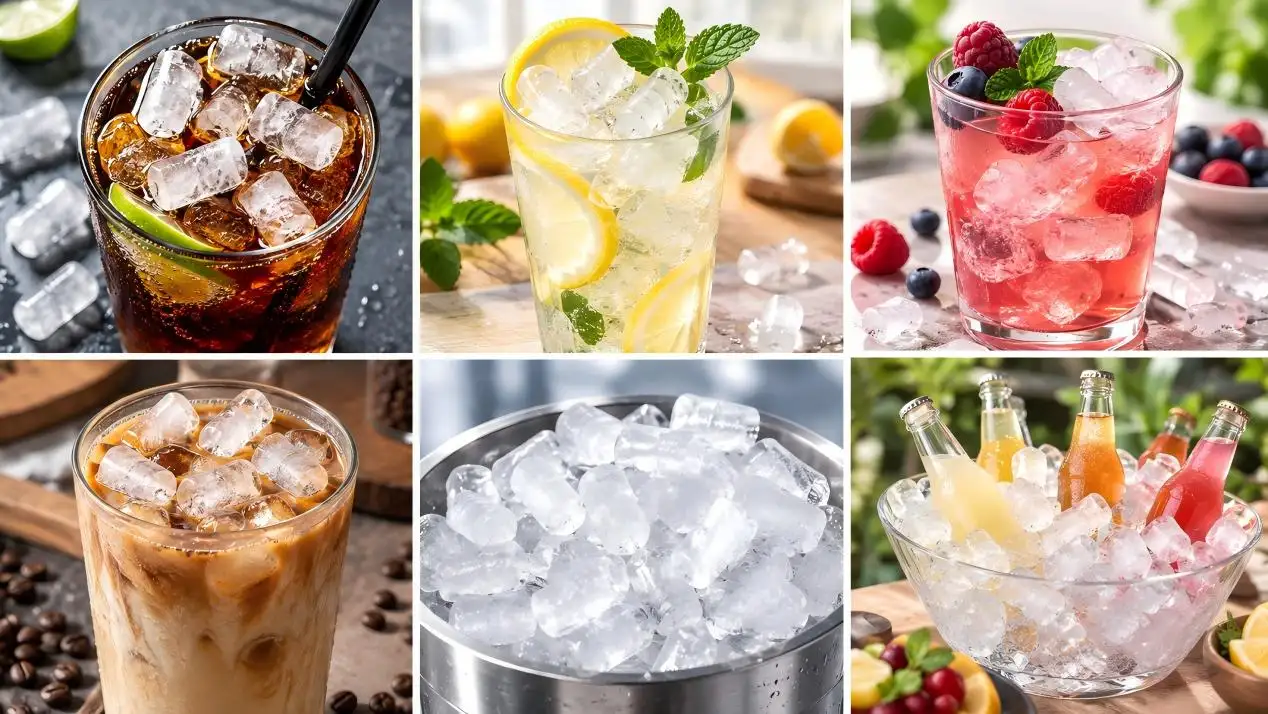
Why Ice Shape Matters: Understanding 10mm × 15mm Cylindrical Nugget Ice
2026-09-14
BY YUMYTH
More Than Ice Production — The Ice Itself Shapes the Consumer Experience When sourcing a nugget ice maker, buyers often focus first on production capacity, water tank size, ice basket ...

Ice Maker Sourcing Guide: How to Find the Right Factory
2026-09-10
BY YUMYTH
Sourcing an ice maker looks straightforward on paper. Find a supplier, agree on a price, place an order. But anyone who has actually done this knows the process is rarely ...