
How Should Slush Machine Noise Be Tested?
Share:
-

-

-

-


Copied

Share:
-
-
-
-
Copied
The noise from a slush machine should be measured in an appropriate and repeatable manner that is representative of the actual use in the home. The setting of a credible test should include the definition of the room, background noise, measuring instrument, microphone position, beverage recipe, fill volume, operation program, and machine stage.
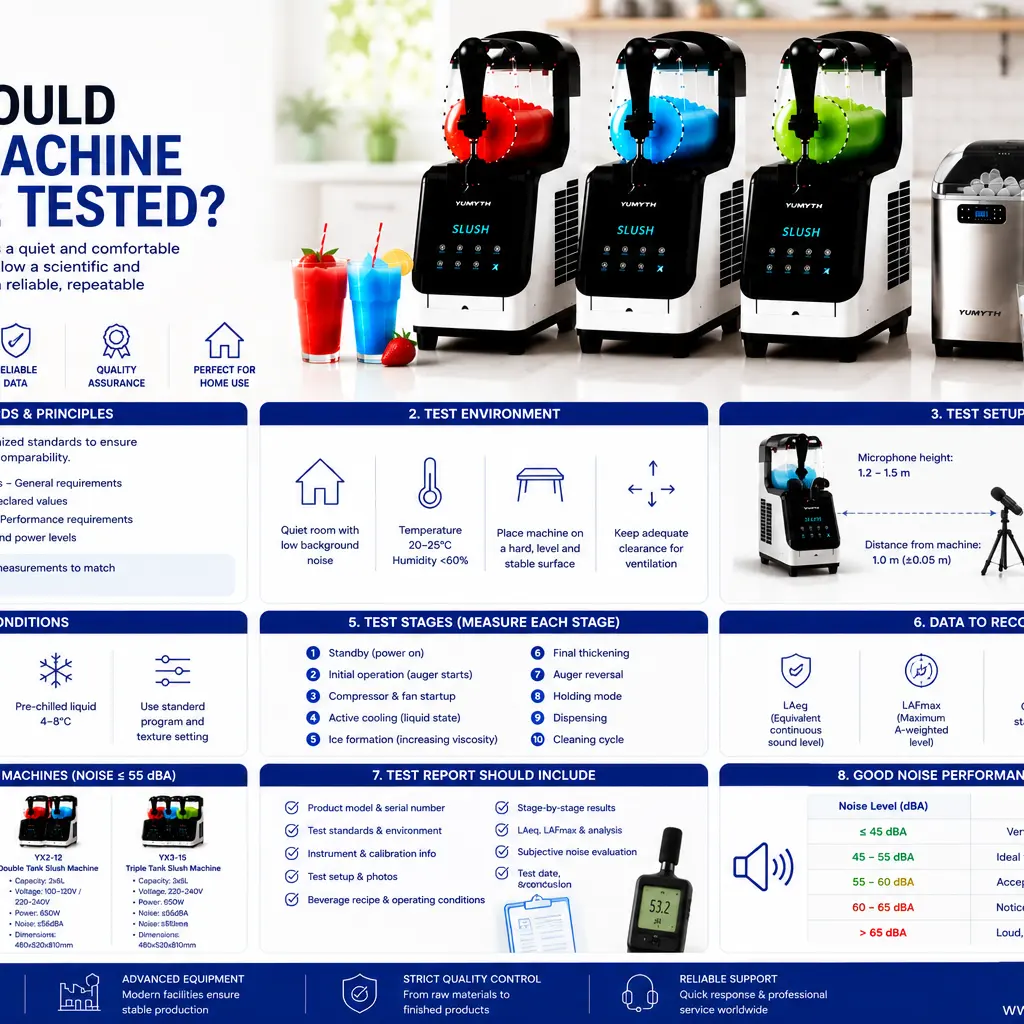
Record only a single instant reading with a phone next to the machine is not sufficient. Noise from the compressor, fan airflow, auger loading, ice scraping, refrigerant flow, dispensing and automatic cleaning can all result in varying noise levels during the operating cycle.
Manufacturers should use a documented procedure using recognized appliance and acoustic measurement principles for product development, factory quality control and marketing claims.
Use an Appropriate Noise-Test Standard
IEC 60704-1:2021 gives the general requirements for the determination of airborne acoustical noise from household and similar electrical appliances. It is applicable to appliances powered by mains electricity or batteries and provides a common basis for test environments, operation, instrumentation and acoustic measurements.
IEC 60704-3 gives procedures for determining and verifying declared values for noise-emission from appliances. This applies, for example, if a manufacturer issues a specification like ‘noise level ≤ 55 dBA' and requires a repeatable procedure for verifying the compliance for different production units.
There may be no dedicated test code that currently exists for countertop slush machines (IEC 60704 Part 2). It is important that the manufacturer consults a qualified acoustical lab to find out which general and product related requirements are suitable for the machine's design and construction.
For engineering applications of sound-power measurements, ISO 3744 outlines a method using sound-pressure measurements measured at a specific area around the equipment in an environment that closely resembles a free field over a reflecting plane.
Understand Sound Pressure and Sound Power
The sound is measured at a certain point and is referred to by sound-pressure level. It varies with the distance between the microphone and the object, reflections in the room, ambient noise, and the object's proximity to other surfaces.
The total acoustic energy emitted by the machine is called sound-power level. Calculates based on measures around the source and less sensitive to the position of one listener.
The word "sound" is part of the word "appliance" and is more easily understood by the consumer. But it is not in the spirit of comparisons to do so unless both manufacturers use the same distance, room, operating condition, and calculation method.
The complete engineering report should be clear on whether the result is:
- Sound-pressure level;
- Sound-power level;
- A-weighted average level;
- Maximum operating level;
- Peak level.
The report must not just show “55 dB” without stating what this number is.
Use a Calibrated Sound-Level Meter
For formal testing, a sound-level meter that meets the relevant IEC 61672 requirements should be used. Performance requirements for attended, automatic or continuous acoustic measurement sound-level meters are specified in IEC 61672-1.
The instrument needs to be acoustically calibrated before and after the test. The record of calibration should contain the name of the calibrator, calibration level, date of calibration and operator.
The NIOSH Sound Level Meter app can give A-, C-, and Z-weighted readings and record helpful noise metrics for internal screening. NIOSH explains that if greater accuracy is desired, an external calibrated microphone is recommended. Use of a smartphone can assist in product-development sampling, but is not intended to substitute for instrumentation in a laboratory setting for certification or published performance statements.
Measure in A-Weighted Decibels
Household appliance noise is usually measured in A-weighted decibels (dBA). A-weighting changes the way of measuring the response to make it more representative of the sensitivity of human hearing at average sound levels.
According to the Sound Level Meter documentation provided by NIOSH, the A-weighting is the default response that is typically used for many noise evaluations in the workplace and environment.
Typically, a slush machine report should contain:
- LAeq: equivalent (total) A-weighted sound level for a fixed period;
- LAFmin: the lowest A-weighted fast-response level; and
- Operating-stage readings: results as the cooling, thickening, holding, dispensing and cleaning processes take place.
Better representation of the overall user experience than a single instant in time is provided by LAeq. LAFmax is used to detect and identify the short but disturbing sounds, which occur when the compressor starts up, when the auger reverses, when the valve is moving or when the cabinet is vibrating.
Control the Test Environment
The background noise level should be adequate so as not to significantly influence the machine measurement.
Record the background level prior to turning the appliance on. During the test there should be no untimely equipment, talking, foot steps, traffic noise, change of air conditioning or open window noise in the room.
The test environment should also be recorded, such as:
- Room dimensions;
- All materials for floors, walls and ceiling;
- Room temperature;
- Humidity;
- Background noise;
- Reflecting surfaces;
- Microphone locations.
A formal sound-power test may call for one of the free-field, semi-anechoic or other controlled acoustic environment. ISO 3744 has set out principles for engineering-grade sound-power determination in environments and on measurement-surfaces.
A standard kitchen-type test room is also available to the factory for the testing of operation within the house. These results should not be compared directly with laboratory results using a different method, however.
Position the Machine Consistently
Set the slush machine on a firm flat surface, which is a typical kitchen counter top. The appliance should not be in contact with a wall, cabinet, bottle or object which may vibrate.
Follow the ventilation clearance recommended in the product manual. Blowing restrictions can cause higher noise, higher fan speed, higher compressor load, longer freezing time and higher internal temperature.
Indicate the position of the machine so that all units can be tested at the same spot. The power cord, drip tray, lid, tank, auger and dispensing parts should be installed in the same manner as they are used normally.
Rubber mats or soft pads should not be placed on top of the product unless they are part of the product or part of the stated test configuration. Vibration dampening and an artificially good result may result from using an unofficial pad.
Define the Microphone Position
Microphone distance has a major effect on the reported sound-pressure level. A reading at 50 centimeters cannot be compared directly with one measured at two meters.
For an internal comparative test, a practical arrangement may include microphones at:
- One meter in front of the appliance;
- One meter from the compressor or ventilation side;
- One meter above or diagonally from the machine.
The exact positions should be fixed and included in the test method. A rotating microphone or multiple positions around the appliance can provide a better understanding of noise direction.
Keep the test operator away from the microphone and machine during measurement. Clothing movement, breathing, keyboard activity, and body reflections can influence low-level results.
Use a Standard Beverage Recipe
Noise should be tested with the machine performing real slush production, not only while operating empty or circulating water.
The beverage formulation affects auger load, compressor runtime, ice scraping, and reversal frequency. The report should identify:
- Recipe ingredients;
- Brix level;
- Alcohol concentration;
- Starting liquid temperature;
- Fill volume;
- Selected program;
- Texture setting.
The same beverage should be used for every comparison unit. A thin liquid may make the auger sound unusually quiet, while a very thick or incorrectly formulated drink may create excessive gearbox and scraping noise.
For a standard nonalcoholic evaluation, the manufacturer can select a controlled reference recipe within the machine’s validated Brix range. Alcoholic, dairy, and low-sugar programs should be tested separately when they are advertised functions.
Test Every Important Operating Stage
Slush machine noise changes throughout the cycle. Testing should include at least:
- Standby with the machine powered on;
- Initial auger operation;
- Compressor and fan startup;
- Active cooling while the beverage remains liquid;
- Ice formation and increasing viscosity;
- Final thickening;
- Automatic auger reversal;
- Holding mode;
- Dispensing;
- Automatic rinse or cleaning.
The loudest stage may occur near the end of freezing when the auger moves a thick mixture. Testing only the first five minutes can therefore produce a misleading result.
YUMYTH currently publishes household slush machine noise claims below 55 dB and states that final functional checks include extended operating tests. A model-specific declaration should still be supported by a documented production-representative test method.
Record Sound Quality, Not Only Decibels
A machine can produce an acceptable average sound level but still have unpleasant tonal or intermittent noises.
The test operator should record observations such as:
- High-frequency fan whine;
- Compressor startup impact;
- Gearbox clicking;
- Auger scraping;
- Refrigerant gurgling;
- Panel rattling;
- Loose drip-tray vibration;
- Repeated overload alarms.
These problems may not increase LAeq substantially, but they can strongly affect perceived quality.
Frequency analysis can help engineering teams identify tonal sources. Comparing the machine with and without specific removable components may reveal whether the noise comes from the compressor, fan, auger, tank, cabinet, or dispensing structure.
Test Multiple Production Units
One engineering sample does not demonstrate production consistency.
Manufacturers should test several units selected from pilot or mass production. The sample size should reflect the product risk, production volume, and declared noise tolerance.
Record the average result, highest result, lowest result, and unit-to-unit variation. A product advertised at no more than 55 dBA needs enough production margin to account for compressor, fan, motor, assembly, and cabinet variation.
Units exceeding the internal limit should be investigated for component differences, incorrect mounts, tube contact, fan imbalance, auger alignment, or loose fasteners.
Prepare a Complete Noise-Test Report
A professional report should contain:
- Product model and serial numbers;
- Voltage and frequency;
- Instrument and calibrator information;
- Test standard or internal method;
- Room and background conditions;
- Machine and microphone positions;
- Beverage recipe and volume;
- Operating program;
- LAeq and LAFmax results;
- Stage-by-stage measurements;
- Observed tonal or intermittent noise;
- Photos of the setup;
- Test date and operator;
- Pass or fail conclusion.
The report should also explain whether the published value is a maximum guarantee, typical result, or laboratory average.
Conclusion
Slush machine noise should be tested with calibrated equipment, controlled background conditions, fixed microphone positions, a standardized beverage recipe, and a complete operating cycle.
The most useful result is not one isolated decibel reading. Manufacturers should record average A-weighted noise, maximum noise, operating-stage variation, sound character, and production-unit consistency.
Following IEC 60704 principles for household appliances, IEC 61672 requirements for sound-level meters, and recognized sound-power methods such as ISO 3744 creates more repeatable and defensible results.
A transparent test method allows appliance brands and consumers to compare products more fairly and helps engineering teams reduce compressor vibration, fan tones, auger noise, and cabinet resonance before mass production.
Related Articles
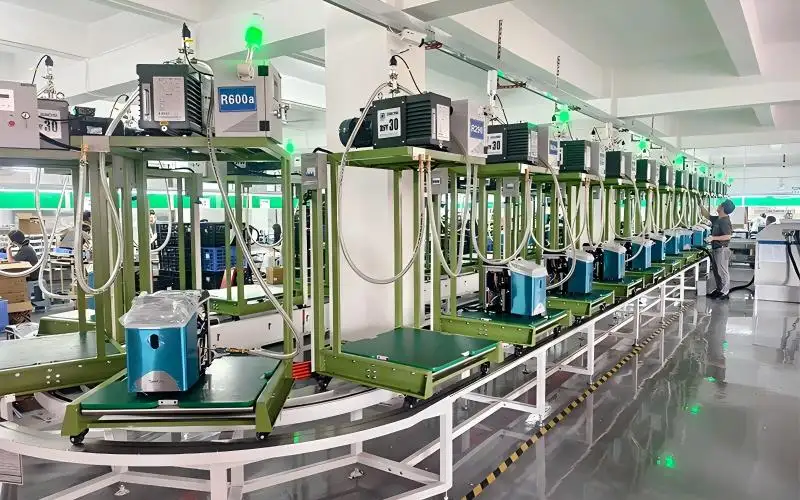
How We Test Every Ice Maker Before Packaging
2026-09-15
BY YUMYTH
A step-by-step look at refrigerant handling, cooling verification, leak detection, corrective action and electrical safety testing For an ice maker, reliable performance is determined long before the carton is sealed. ...
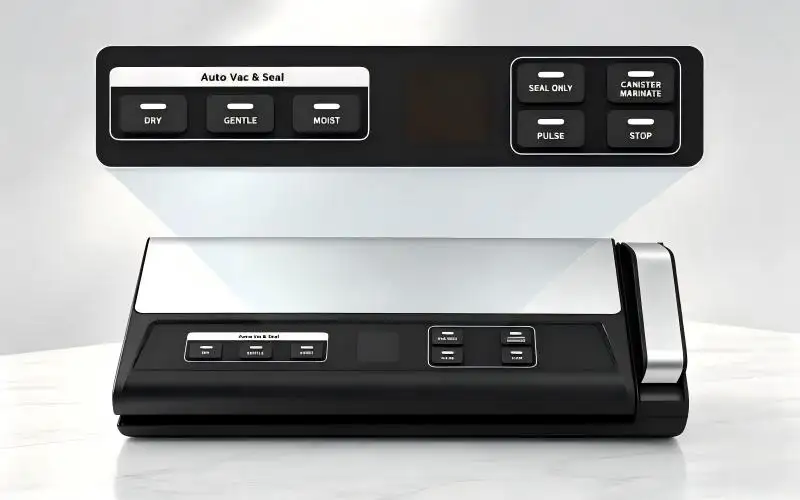
Guide for Brands Looking for a Reliable Vacuum Sealer OEM Supplier
2026-09-14
BY YUMYTH
When you are sourcing kitchen appliances for your retail brand, finding a dependable vacuum sealer OEM supplier is rarely just about getting the lowest unit price. It is about protecting ...

Why Ice Shape Matters: Understanding 10mm × 15mm Cylindrical Nugget Ice
2026-09-14
BY YUMYTH
More Than Ice Production — The Ice Itself Shapes the Consumer Experience When sourcing a nugget ice maker, buyers often focus first on production capacity, water tank size, ice basket ...

Ice Maker Sourcing Guide: How to Find the Right Factory
2026-09-10
BY YUMYTH
Sourcing an ice maker looks straightforward on paper. Find a supplier, agree on a price, place an order. But anyone who has actually done this knows the process is rarely ...