Quiet Slush Machine: Why Noise Matters in Home Kitchens
Share:
-

-

-

-


Copied
Share:
-
-
-
-
Copied
A slush machine that runs quietly with a liquid beverage may become noticeably louder as ice crystals develop. The compressor continues removing heat while the auger works against increasing resistance. If vibration reaches the housing or countertop, even a relatively small appliance can produce an irritating hum, rattle, or intermittent scraping noise.
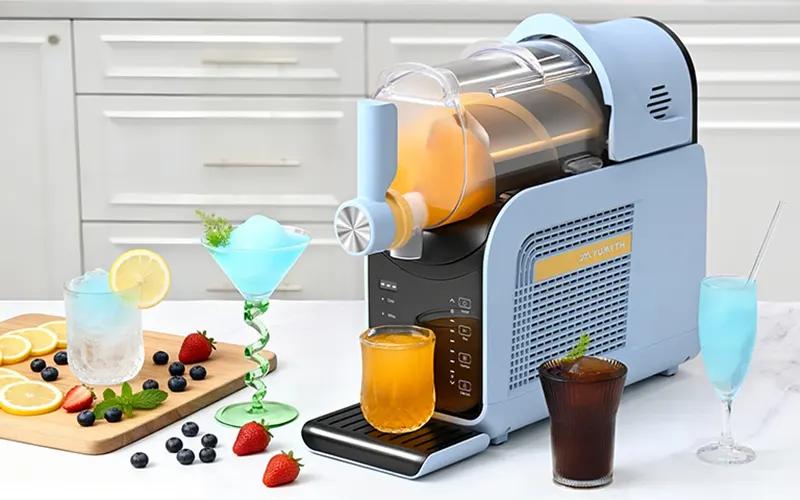
For appliance brands and OEM buyers, a quiet Slush Machine cannot be evaluated by its advertised decibel rating alone. Noise changes with freezing conditions, mechanical loading, installation, and component assembly.
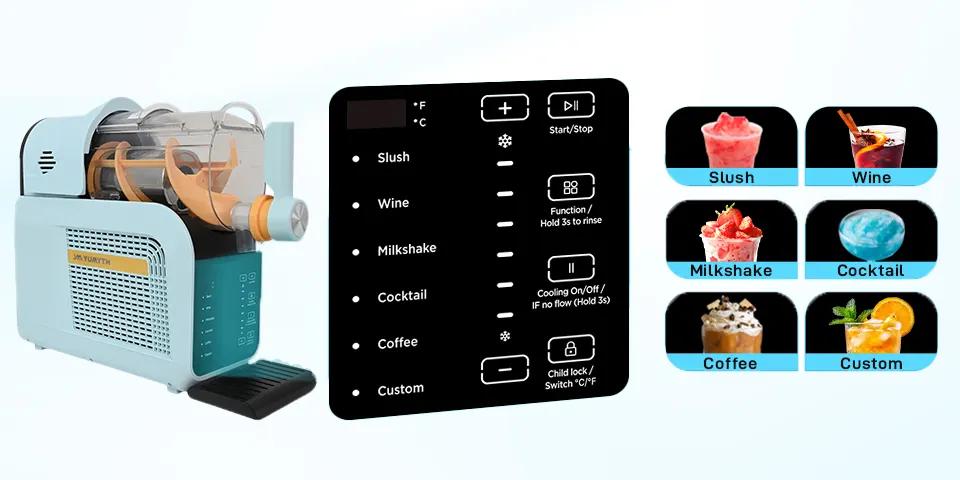
At YUMYTH, our YX1801 Mini Slush Machine has a published noise specification of ≤55 dB. Understanding what that figure represents—and how the machine behaves during a complete freezing cycle—is essential for meaningful supplier comparisons.
What Makes a Slush Machine Noisy?
Compressor-type frozen drink equipment noise is mainly caused by refrigeration vibration, mixing resistance and structural resonance.
Vibration in a compressor is due to the mechanical movement and compression of the refrigerant. The effect of vibration absorbing mounts is dependent on the stiffness of the mounts and the mass of the compressor. Excessive vibration may cause failure of the tubing due to torsional fatigue of the refrigerant tubing.
Depending on the nature of the mixture being frozen, the load on the auger varies throughout the freezing cycle. Loads may result in localized stalling or irregular scraping.
Resonance of the housing may amplify vibration. Insufficient clearances between internal components may result in buzzing at a particular operating frequency. This is particularly a problem with large unsupported panels.
The airflow of the condenser may create noise through the vibration of the fan blades. Restrictive grilles may increase turbulence in the airflow.
Different corrective measures are required for the various sources of noise. Adding acoustic insulation to a vibrating housing panel would have little to no effect on auger loading.
Why Does Auger Control Affect Noise During Freezing?
Unlike an ice maker, where water is frozen in a mold, a slush machine continuously moves a mixture to freeze only part of it. The portion that remains unfrozen affects how resistant the mixture is to being frozen. The resistance increases as the fraction of ice in the mixture increases. Resistance depends on many factors such as the beverage constituents, temperature, the distribution of the ice crystals, and the geometry of the auger.
The effects of sugar and alcohol on this process are similar. Both drive freezing-point depression. So a low-sugar drink can begin freezing at a higher temperature than a comparable high-sugar one. In an unfavorable scenario, too much ice can create a motor resistance condition or local freezing.
Repeated motor overload or constant scraping can indicate an imbalance between the rate of cooling and the capability of the mechanical system to adequately mix.
The YUMYTH YX1801 features intelligent auger reversal. Under the control of a microprocessor, the system automatically adjusts auger rotation, evaluates the volume of liquid, and provides jam protection.
Reversing the auger helps reduce localized buildup, and also helps redistribute partially frozen product. The YX1801 is not guaranteed to be fully silent. How much it helps, however, does depend on the recipe, environment and how often it is done.
During procurement testing, both standard recipes for slush products as well as more challenging recipes mentioned in the operating instructions should be included.
How Do Design Elements of Housing and Cooling Influence Noise?
Compact size of countertop appliances poses an acoustic design challenge: how do you house the compressor, drive motor, refrigeration elements, and mixer in a small enclosure?
Increased panel stiffness can help reduce vibration; however, additional ribs and a thicker panel may only shift the structural resonant frequencies to a lower range.
Flexibility in ABS housings, as well as integrated mounting features, are a value add. However, the acoustic behaviors of ABS panels depend on geometry, joints and how components are mounted.
Thermal design creates a trade-off.
Restricting condenser ventilation may decrease airborne noise; however, it can increase the condensing temperature, which adds load to the compressor and prolongs freezing time, eliminating any benefit of reducing noise.
In order to reduce noise for a Slush Machine, trade-offs between noise and the function of the machine must be considered.
Why Can the Same Machine Sound Louder in Different Kitchens?
There may be residential uses which result in lab test results that do not apply to the specific use.
Some countertops (and cabinets) may act as resonators and amplify mechanical vibrations. Tiled surfaces may reflect sound. Restricting the ventilation may change the way the compressor operates.
Other variables introduced during installation and maintenance can also change how a machine sounds.
Even a slight change in surface levels can increase rattling. Unseated components, after being cleaned, can make contact and create noise. Residue around the mixer can increase mechanical operation, reducing the functioning of the machine.
These conditions help explain why a machine that sounds acceptable in a showroom may behave differently beneath kitchen cabinets.
For OEM acceptance testing, the installation surface, surrounding clearance, beverage volume, and starting temperature should be controlled. Otherwise, differences between test results may reflect environmental variation rather than manufacturing quality.
Evaluating the YUMYTH YX1801 Mini Slush Machine
The YUMYTH YX1801 is a compact frozen beverage appliance intended for home kitchens and similar household applications.
Its specifications include:
| Parameter | UMYTH YX1801 |
| Rated Power | 200 W |
| Noise Specification | ≤55 dB |
| Beverage Capacity | 1.8 L |
| Refrigerant | R290 |
| Materials | ABS, Silicone, SUS304 |
| Mixing Mechanism | Intelligent auger reversal |
| Texture Adjustment | Six selectable levels |
| Cleaning | Quick rinse and detachable components |
The 200 W electrical rating should not be interpreted as a measure of acoustic output. Similarly, R290 refrigerant selection does not independently determine compressor noise.
How Should OEM Buyers Verify Acoustic Performance?
Noise acceptance criteria should be defined before production approval.
IEC 60704-1:2021 provides general requirements for determining airborne noise from household electrical appliances. ISO 3744:2025 describes engineering methods for determining sound power levels from sound pressure measurements under specified acoustic conditions.
A useful supplier validation plan should cover the following operating states:
| Test Condition | What Buyers Should Verify |
| Compressor startup | Transient vibration and cabinet rattling |
| Initial liquid cooling | Steady-state compressor and drive noise |
| Thick-slush operation | Auger loading and intermittent scraping |
| Auger reversal | Mechanical noise and recovery behavior |
| Extended operation | Changes in noise and refrigeration stability |
| Post-transport inspection | Loose components and vibration-related defects |
Testing should document beverage formulation, fill level, ambient temperature, microphone arrangement, and acoustic measurement method.
A single decibel reading can't measure performance for the full freezing cycle. Buyers should evaluate repeated measurements on multiple units, look at average noise levels, and consider short duration high noise events.
For brands sourcing a quiet Slush Machine, YUMYTH offers the YX1801 Mini Slush Machine for OEM/ODM with branded/packaged options, voltage variations, plugs and other changes. Please reach out to us to confirm product specifications and verify acoustic performance with your target market.
FAQs
Q1: How quiet is the YUMYTH YX1801 Slush Machine?
A: The YUMYTH YX1801 has a published noise level of ≤55 dB. Buyers should confirm the measurement method and operating conditions before comparing ratings.
Q2: What causes noise in the YUMYTH Slush Machine?
A: Potential sources include compressor vibration, auger resistance, cooling airflow, and housing resonance. Noise may change as the beverage freezes.
Q3: How does YUMYTH reduce auger-related noise?
A: The YX1801 uses intelligent auger reversal to reduce ingredient buildup and irregular mixing resistance. Actual noise depends on operating conditions.
Q4: Does the YUMYTH Slush Machine become louder during freezing?
A: Noise can increase as ice concentration rises and auger resistance changes. Acoustic testing should cover both liquid cooling and thick-slush operation.
Q5: What compressor does the YUMYTH YX1801 use?
A: The YX1801 uses a compressor-based refrigeration system with R290 refrigerant. Its rated electrical power is 200 W.
Related Articles

How Does a Slush Machine Work Without Ice?
2026-10-29
BY arafatshuvo509
Traditional blender's use of crushed ice to mix an ingredient into a thick, cold drink is replaced by today's slush makers which are able to achieve the same result using ...
Compressor Slush Machine: Cooling System and Mixing Technology
2026-10-29
BY arafatshuvo509
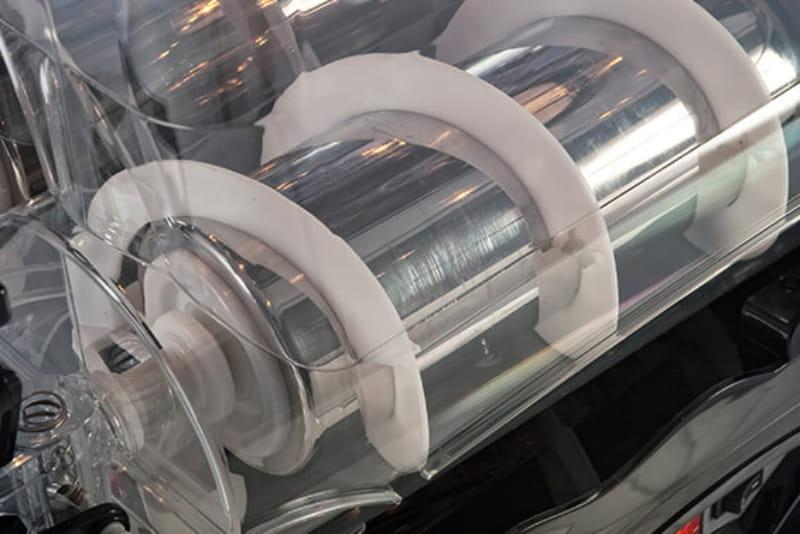
A compressor slush machine utilizes an integral refrigeration process with continuous mechanical agitation of the refrigerated liquid to produce semi-frozen (slushy) liquids by creating ice crystals directly from the liquid. ...
Ice Maker for Small Kitchen: Compact Design for Apartment Living
2026-10-27
BY YUMYTH
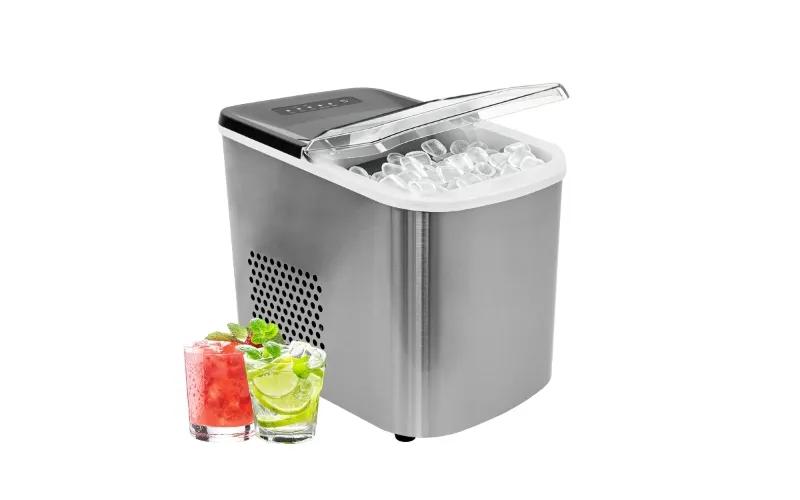
An ice maker that fits on an apartment countertop may still be difficult to operate. A wall can obstruct condenser airflow, an overhead cabinet can prevent the lid from opening ...
2026 Freestanding Ice Maker Trends: Clear Ice, R290, and Smart Controls
2026-10-27
BY YUMYTH
A freestanding ice maker that can produce 12.6 kg of ice in a day may still not meet expectations. Its ice may turn cloudy because of short freezing cycles, it ...