
Why do sugar-free drinks not freeze properly in a slush machine?
Share:
-

-

-

-


Copied

Share:
-
-
-
-
Copied
Sugar-free beverages will not necessarily have a smooth, dispensible consistency in the slush machine as sweetness and freezing properties are not the same.
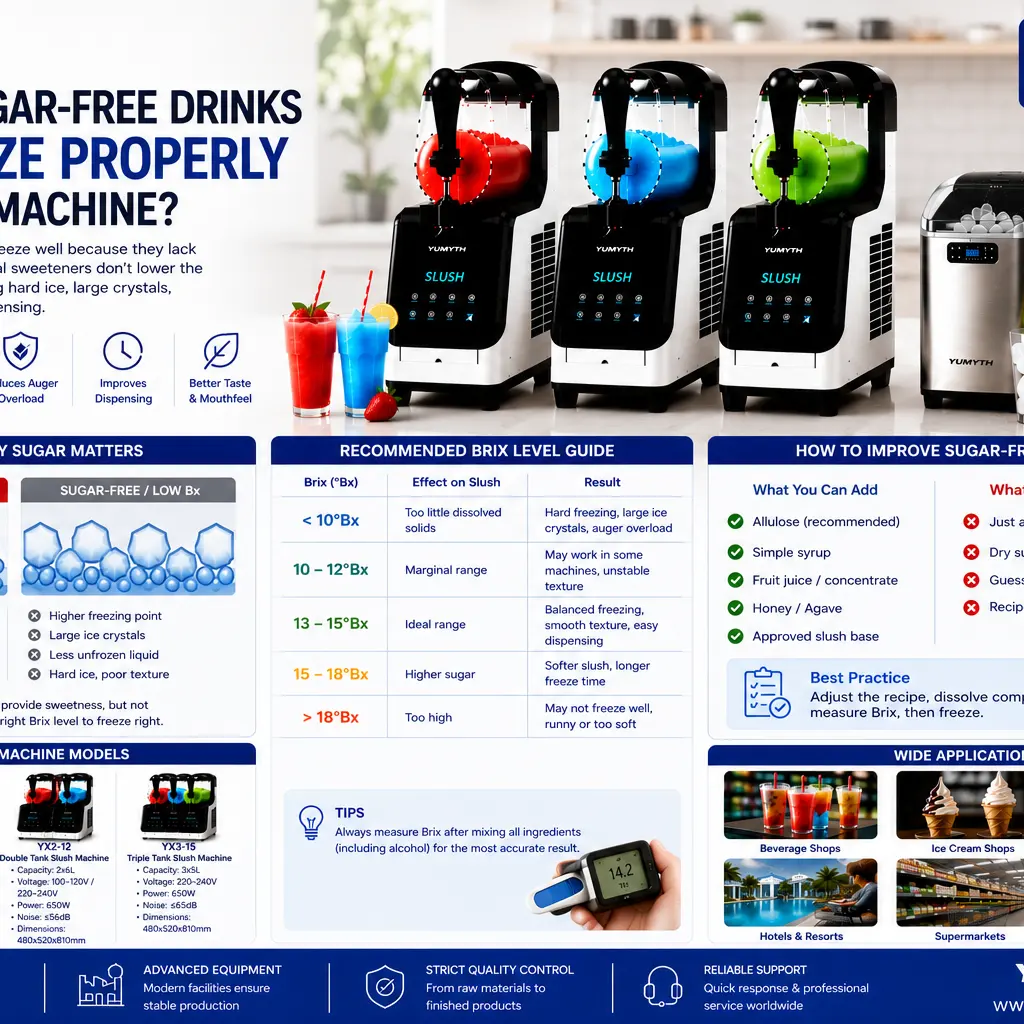
Even though a diet soda is as sweet as a regular soda, it has very little sugar or dissolved solids. The water, when added to a compressor based slush machine, has the potential of freezing too rapidly to form a balanced water/ice mixture, but to freeze into a hard crust around the evaporator.
This can result in the machine creating coarse ice, stopping the auger, running the auger in reverse automatically, or an overload warning being displayed, or the drink being dispensed incorrectly. Otherwise, the appliance can terminate the program before the beverage has reached a desirable consistency.
By understanding the role of sugar, users can make safe adjustments to low-sugar drinks, and appliance manufacturers can better guide users to create more consistent recipes.
Slush Is Not Completely Frozen
A well-prepared slush does not form a block of ice. It's composed of two phases:
- * Small ice crystals;
- * Concentrated unfrozen liquid.
A refrigeration system cools the drink and a rotating auger rakes ice from the evaporator and feeds it into the tank. The liquid carries the contents and the ice crystals give the mixture the ice structure.
Sugar decreases the freezing point of the mixture, and helps to slow the process of ice crystal formation and growth. Sugar research in food sciences has proved that sugars have a depressant effect on the freezing point and control the development of ice which affects the amount of frozen water and the hardness of the frozen products.
If the dissolved substance is not sufficient, too much water could freeze at the machine's normal operating temperature. This yields hard ice instead of a slush.
Promote the use of artificial sweeteners that do not act like sugar.
The vast majority of sugar free beverages contain either a high intensity sweetener (such as sucralose, aspartame, acesulfame potassium, stevia or others) or a combination of them.
The sweetness these sweeteners provide can be very intense and requires very little amount to be sweet. It will substitute for several grams of sugar from a flavor standpoint, but it will not have the same number of dissolved molecules to control freezing.
This results in a drink that is extremely sweet but not different in texture from something flavored with little or no sugar.
In the traditional sugar it's doing a number of things at once:
- * It adds sweetness;
- It raises the amount of dissolved solids;
- * It reduces the amount of ice that can form; and
- * It increases the resistance to freezing; and
- It affects the size of ice crystals;
- It impacts on body and mouthfeel.
High intensity sweetener is a sweetener that provides a predominant sweetness. Typically will not provide enough bulk material to replicate the freezing characteristics of a traditional sugar recipe.
The drink will freeze too firmly without sugar.
If the machine doesn’t make slush, people think that a sugar-free drink “does not freeze”. Often the opposite is occurring, the drink will freeze too readily.
When the evaporator is cold water starts to condense on its surface to form almost pure water and hard ice. The auger should be scraping and moving this material but the resistance can also increase quickly.
Possible symptoms include:
- A thick frozen ring around the evaporator;
- * Wet and cold berries; and
- * Repeated auger reversal;
- * Motor-overload warnings;
- * Late or incorrect order;
- * Distorted or broken gears; and
- * Automatic program shutdown.
Spaceman USA recommends a BRIX level of 13-18°Bx for most commercial frozen beverages, and suggests that newer viscosity controlled machines be operated above 12°Bx. According to its technical guidance, too low of a Brix can add to freeze-up and product texture problems.
These ranges are not actually universal to all household appliances, but they serve as an excellent illustration of the importance of the operating condition of dissolving-solids concentration.
Why the machine cannot just use a higher temperature?Why is it that the machine would not be able to just use a higher temperature?
The solution of the problem may appear to be achieved by increasing the operating temperature. But the temperature is not enough to produce the proper slush structure.
If too warm, it can result in very little or no ice output. A low solids drink could suddenly harden on the evaporator if it's running just a bit cooler.
The tolerable temperature range can then be quite restricted.
A normal sugar recipe has a wider range of temperature where some of the drink freezes and some doesn't. This allows for greater stability of texture by the control system.
A sugar-free recipe can easily go from liquid to too much ice due to the lack of freezing point control.
Manufacturer Requirements Vary by Machine: Please contact your manufacturer for details.
Various slush machines have different refrigeration systems, augers, temperature controls, motor protection features, and control algorithms. Always use according to the specification of the particular model.
Beverages sold as part of its original FS300 SLUSHi platform need to have at least 4% sugar. It's newer SLUSHi Max and Twist guidance calls for a minimum sugar content of 4.5% for the inputs they support. The company states that if there is not enough sugar, the machine will not make the desired amount of slush.
The recommendations for YUMYTH are that the formulation should contain enough dissolved material or be modified with an appropriate recipe for the diet to avoid inadequate freezing.
These requirements are not meant to be swapped out for one another. A recipe that is successful in one appliance might not work in another.
Brix Helps Measure Dissolved Solids.
Brix is a good practical measurement of the concentration of dissolved solutes in beverages.
The refractometer is used to determine the extent of liquid light bending and report in degrees Brix. The outcome is similar to the mass per cent of sucrose in a simple solution of sucrose and water.
The reading also reacts to other soluble components in a complex beverage, and is not a simple measurement of sugar, and should be used as a process-control reading.
A typical starting reference for conventional commercial frozen drinks is a Brix range between 13- to 18°Bx. The minimum may vary in the case of household machines and the manufacturer's instructions should be followed.
When taking a complete drink measurement prior to putting it in the machine it can assist identify the recipes that are likely to lead to hard freezing or weak slushes.
Can Allulose be used to make Sugar-Free Drinks Slushy?
In the past few years, allulose has emerged as a popular ingredient for low-sugar frozen drink formulations due to its ability to impart dissolved solids and impact on the freezing point, but with lower calorie content than traditional sugar.
Allulose is not used in a high concentration like a sweetener is and is used in gram level quantities. It can therefore affect the actual freezing characteristics of the drink as well as its attribute of sweetness.
Ninja's SLUSHi Max platform offers model-specific guidance on changing diets or sugar-free beverages to include liquid allulose and lemon juice. Also it provides syrup, honey, agave, maple syrup and grenadine as options for beverages that don't otherwise qualify for sugar minimums.
Users should not however copy a formula created for one appliance to all of the slush machines. The capacity, temperature program, auger load and ingredient restrictions vary between different models.
The best one to go with is a low-sugar recipe that has been tested by the manufacturer.
Other bulk ingredients may alter their freezing characteristics.
Other soluble ingredients can be added to recipes and/or to the appliance to enhance low-sugar slush formation, as required by the recipe or appliance.
These can include:
- * Allulose;
- * Erythritol blends;
- * Soluble fibers;
- * Glycerol;
- * Fruit concentrate;
- * Approved slush bases;
- * Small quantities of ordinary syrup.
Not every add-in is the same. The molecular weight, solubility, sweetness, digestive tolerance, and freezing-point effect of their molecules vary.
Certain sugars can crystallize, give a cooling effect or lead to gastrointestinal discomfort at high doses. The effect of fibers can be to increase the viscosity without reducing the freezing point enough. Fruit concentrates may be used to add natural sugar, but can also contain pulp or acidity.
The design of any new product for freezing should consider both the freezing qualities and consumer acceptability of the product.
Do Not Add Dry Sugar Directly to a Running Machine
If a beverage becomes too solid to pour into the operating tank, the user should not dump the dry granulated sugar into the tank without consulting the manufacturer.
Frozen crystals may not dissolve, form uneven concentrations, scratch surfaces or dissolve the frozen layer rapidly. Commercial advice suggests that the entire mix should be prepared and measured before it's introduced into the machine, not during its processing.
What is a better way to do it is:
- 2. Ensure the machine is stopped in a safe manner.
- 2. Permit mixture to soften as needed
- 3. Take away or drain the drink.
- 4. Make the recipe in a different container.
- 5. Dissolve all the ingredients thoroughly.
- 7. If applicable, measure final Brix.
- 7. Re-start with the recommended product formulation.
If you've got the wrong recipe, you can't make it work by flipping it over.
To get rid of temporary ice build-ups, a modern slush machine might include motor-current monitoring and automatic auger reversal.
If resistance increases, the controller may stop the auger, reverse it for a short time, pause the refrigeration cycle and try to resume normal operation.
This function is designed to safeguard the motor, gearbox, drive coupling and auger. It is not, however, a solution for a beverage formulation that freezes too hard to be permanently.
If the recipe is still not appropriate, the auger can now reverse back and forth until the machine hits its retry limit and an error is thrown. Repeated reversals should be regarded by the user as a warning to review the drink and not as an invitation to fly forever.
Appliance Brands: How to validate Sugar Free Programs?
An OEM manufacturer that offers a low sugar mode or sugar-free mode must back these claims by providing specific recipes.
Testing should include:
- * Exact ingredient formulation;
- * Potassium levels; and
- The final Brix/Refractometer reading;
- * Minimum and maximum fill levels;
- * Starting beverage temperature;
- * Ambient temperature;
- * Freeze time;
- * Auger current;
- * Reversal frequency;
- * Dispensing performance;
- * Holding stability.
The user manual should indicate specific recipes or instructions for making adjustments not “all sugar-free drinks are supported.”
Labels might list the same number of calories, but a zero sugar cola, flavored water, protein drink and low sugar fruit beverage can react very differently.
Conclusion
Artificial sweeteners in soft drinks do not carry enough dissolved solids to effectively regulate freezing and frequently a sugar free drink breaks in the slush machine.
If the water doesn't have enough sugar or some other appropriate bulk ingredient, the water may freeze too hard against the evaporator. This could result in coarse ice or auger resistance, automatic reversal, discharge plugging, or machine stoppage.
It's not just a case of choosing a colder or a warmer setting. Proper proportions of water, dissolved solids, sweeteners and other ingredients should be provided in the recipe.
It is important for users to take model-specific information, consider taking a Brix reading if applicable, and be prepared to utilize tested low-sugar recipes. Allulose or another approved bulk ingredient will help, but the amounts need to be that of the appliance manufacturer, and not random guesses.
A drink properly formulated to be sugar-free can make smooth slush, and avoid undue stress to the auger, motor, gearbox, and refrigeration system.
Related Articles
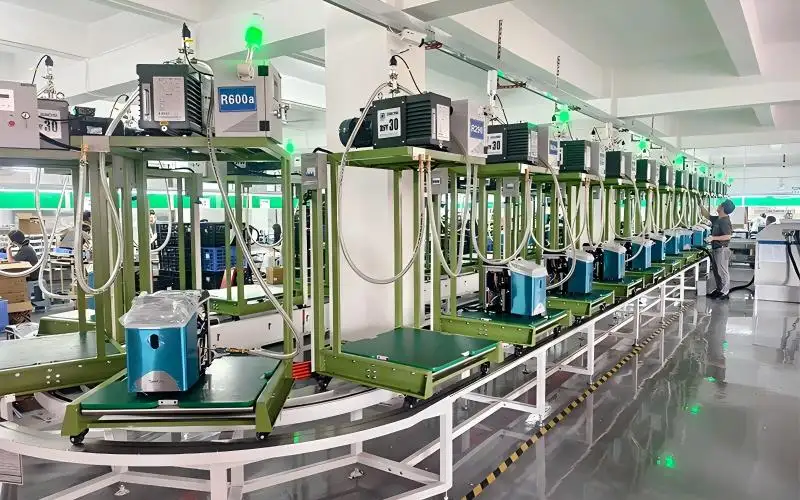
How We Test Every Ice Maker Before Packaging
2026-09-15
BY YUMYTH
A step-by-step look at refrigerant handling, cooling verification, leak detection, corrective action and electrical safety testing For an ice maker, reliable performance is determined long before the carton is sealed. ...
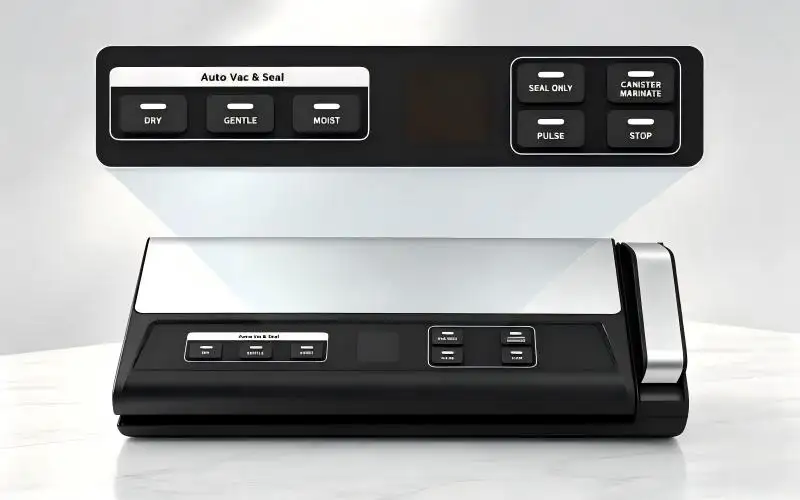
Guide for Brands Looking for a Reliable Vacuum Sealer OEM Supplier
2026-09-14
BY YUMYTH
When you are sourcing kitchen appliances for your retail brand, finding a dependable vacuum sealer OEM supplier is rarely just about getting the lowest unit price. It is about protecting ...
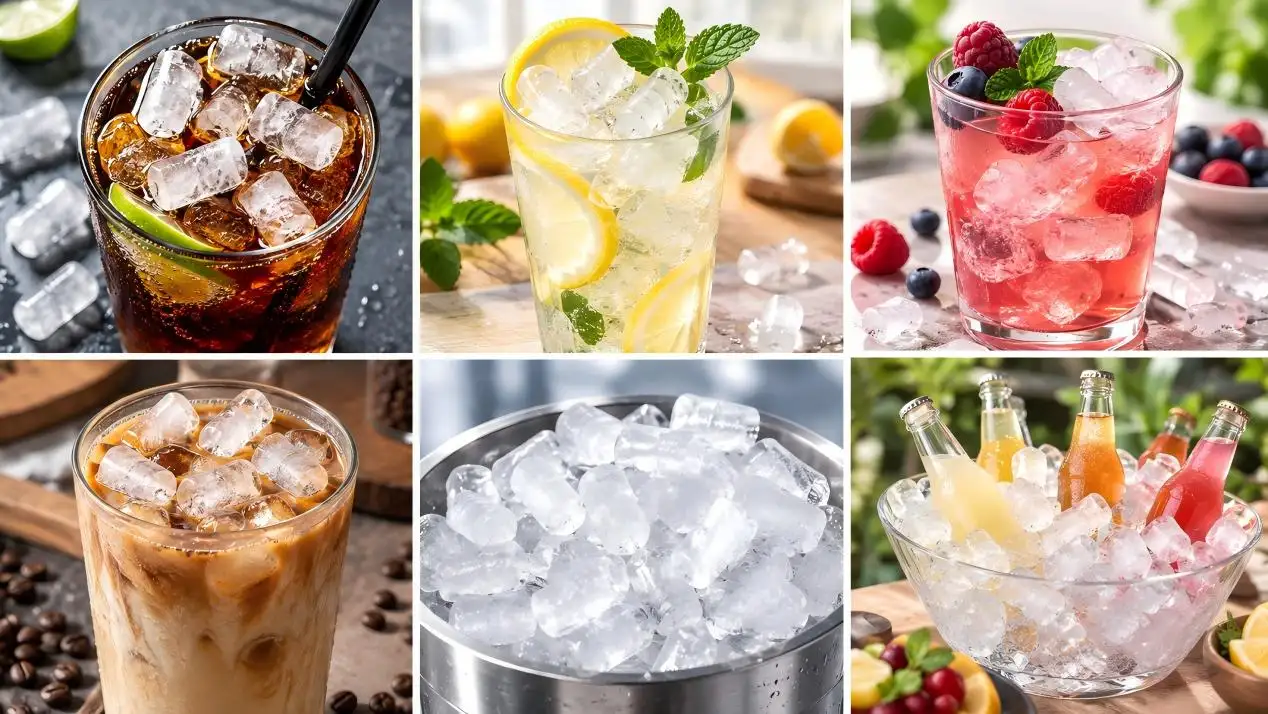
Why Ice Shape Matters: Understanding 10mm × 15mm Cylindrical Nugget Ice
2026-09-14
BY YUMYTH
More Than Ice Production — The Ice Itself Shapes the Consumer Experience When sourcing a nugget ice maker, buyers often focus first on production capacity, water tank size, ice basket ...

Ice Maker Sourcing Guide: How to Find the Right Factory
2026-09-10
BY YUMYTH
Sourcing an ice maker looks straightforward on paper. Find a supplier, agree on a price, place an order. But anyone who has actually done this knows the process is rarely ...