
Dry Mode vs. Moist Mode: Why Your Desktop Vacuum Sealer Needs Both
Share:
-

-

-

-


Copied
Share:
-
-
-
-
Copied
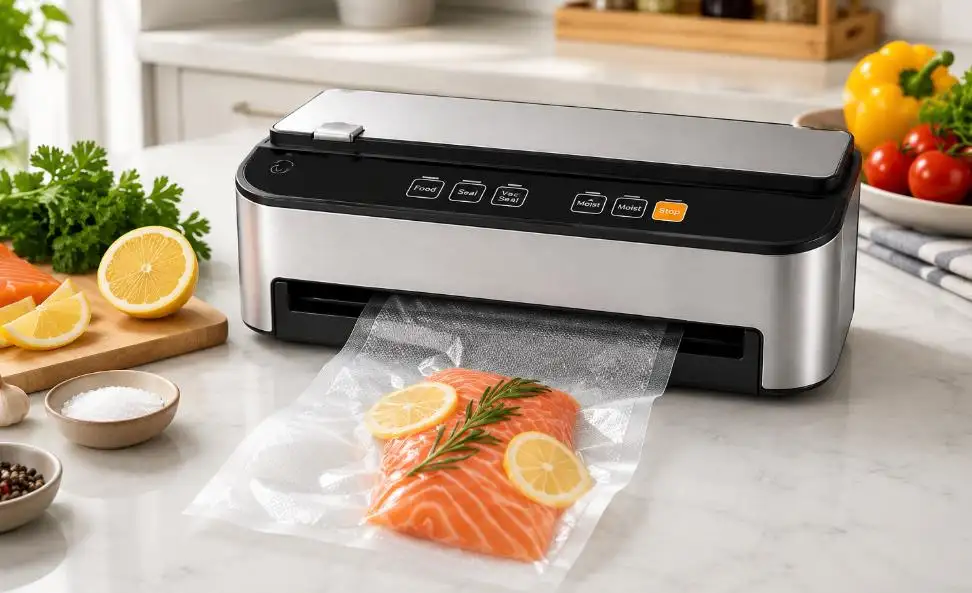
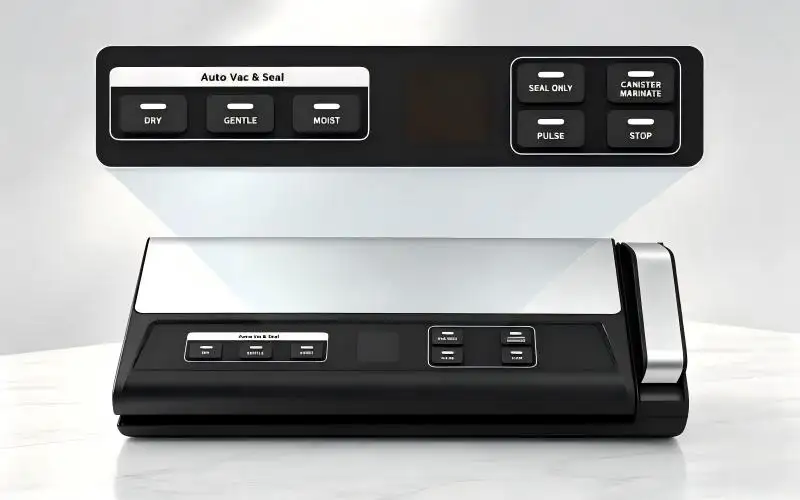
The core principle of food preservation is deceptively simple: remove oxygen. Eliminating surrounding air does indeed halt spoilage for aerobic bacteria and mold, but not all foods are affected in the same way. Something like the YUMYTH Tabletop Vacuum Sealer has many functions to address the various needs that food can have. These appliances come equipped with "Dry" and "Moist" settings. What makes these settings important for your kitchen?
Moist Foods Bring Unique Problems
Vacuum sealing involves air extraction from the food bag into a vacuum chamber. However, in the case of vacuum sealing marinated steak or leftover soup, the liquid will get sucked out alongside the air.
Utilizing the "Dry" mode for these kinds of foods will likely ruin the vacuum sealer system because liquid will be sucked into the pump. This will also result in an ineffective vacuum seal since the liquid will be sucked over the sealing bar. Even if the liquid does not interfere with the sealing bar, it will also coat the sealing bar, and will likely remain on the sealing strip. In either case, the moisture will also prevent the heat fusing the plastic layers, and will result in an ineffective vacuum seal. This will allow the food to suffer freezer burn.
What "Dry" and "Moist" Modes Offer
A good Tabletop Vacuum Sealer will offer distinction of foods based on the variation of vacuum stress coupled with an adjustment of sealing time. Here are a couple key differences that "Dry" and "Moist" settings will offer:
Dry Mode: Efficiency for Solid Items
"Dry" mode will likely be the fastest among the various modes because it offers little resistance in the vacuum chamber.
•Normal Shorter Heating Cycle: Because the bar is dry, standard heating cycles can be used.
•Best For: Nuts, grains, coffee beans, cookies, dried fruits, powders, hardware, and similar items.
Moist Mode: For Tender Ingredients
Moist Mode is a response to high moisture concerns. The following issues are addressed for an improved vacuum cycle:
•Weaker, Slower Vacuum: A slower vacuum is less vigorous and helps keep water in the bag.
•Extended Sealing Time: Some moisture in the bag cools the heating element, leaving a bag needing more time to seal.
•Improved Preheating: Some vacuum sealers have an extended preheating stage to ensure the heating element reaches optimum sealing temperature.
•Ideal for: fish, marinated and jerky meats, broth and soup stews, and fresh fruits.
How YUMYTH Engineering Improves the Dual-Mode Functionality
Usually, a simple button press will do. However, a thoughtfully designed Tabletop Vacuum Sealer leverages new, supportive additional hardware to stretch the limits of the Dry vs. Moist classification.
1. Built in Drip Tray Protection
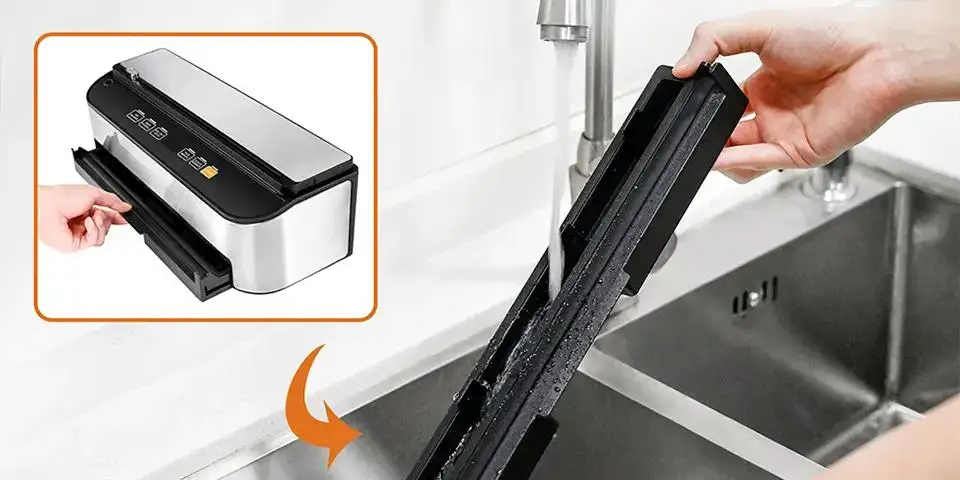
"Moist Mode" still displaces some liquids. A Drip Tray, which can be removed, has been installed to cover the vacuum channel and catch any overflow that would have come into contact with the internal pump, ensuring that the pump is safe and the workspace is uncluttered.
2. Pulse Function for Manual Wet Control
YUMYTH's Pulse (Manual) Function is a strategic add-on for the regular moist setting. This feature is typically used for very soft, or very liquid items, for which you will need to halt the vacuum the moment liquid gets close to the sealing bar. This guarantees that no liquid will intrude the sealing zone, while still achieving the maximum possible removal of air.
3. Dual-Cycle Synergy
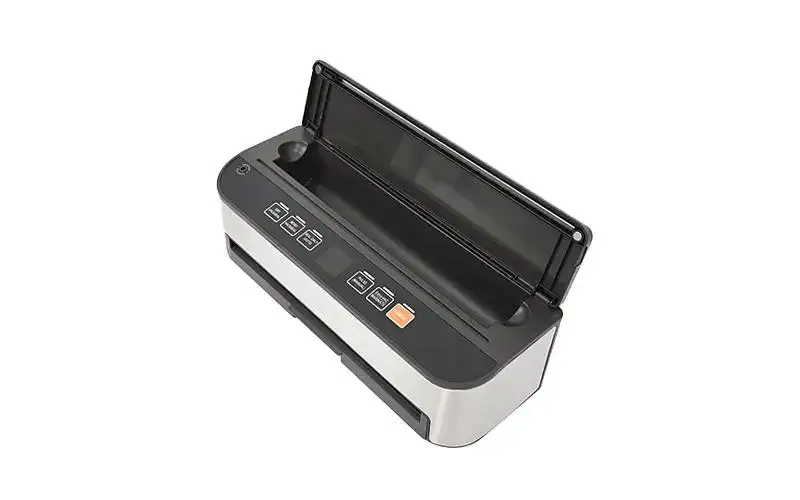
The YUMYTH Tabletop Vacuum Sealer brings together all these modes in a one-touch fully automated function. Whether you press "DRY VAC&SEAL" for the weekly grain refill or "MOIST VAC&SEAL" for the BBQ leftover ribs, the machine automatically coordinates the lid closure, vacuum intensity, and the precise heat cycle duration required for a perfect result.
Practical Tips for Optimal Results
To get the best results from your Tabletop Vacuum Sealer, keep these scientifically aligned practices in mind:
•Pre-freeze for Perfect Results: For very liquid items like soups or sauces, pre-freeze them in the bag (or a container) for 1–2 hours before vacuuming. This turns the liquid into a solid block, allowing you to use Dry or standard mode without any risk of suction loss.
•Use the Drip Tray: Be sure to empty the removable drip tray each ‘Moist’ session. Position the drip tray to minimize the risk of overflow.
•Avoid Overfilling: Leave 2–3 inches of space between the vacuum bag and the food to leave space for the inward pulling of the vacuum bag.
Why Two Modes Are a Necessity, Not a Luxury
Sealers without a dry/moist differentiation remind us of early camera technology with a fixed lens. They get the job done, but lack functionality. When it comes to meal sealing, be it grilled chicken, dry pantry items, or fish that you want to marinate, using the wrong mode can hurt your machine or jeopardize the vacuum. By using the right mode for the physical properties of your ingredients, you will get the best bag sealing, pump longevity, and food preservation possible.
Introducing the YUMYTH Tabletop Vacuum Sealer with Dry and Moist Modes will help take your food storage systems to the next level.
FAQ
Q1: Can I seal wet food in Dry mode?
It can hurt the machine as the liquid can be sucked into the pump or the bag can fail to seal.
Q2. Why does Moist mode have a removable drip tray?
To collect drippings.
Q3. Can you vacuum seal soup using Moist mode?
Only if the soup is frozen or, as an alternative, the soup can be frozen to prevent a mess.
Q4. What differentiates the Pulse function from Moist mode and what is something that is the same?
Similarities are that the Pulse function is great for vacuum sealing juicy things and also for things that are really fragile.
Q5. What foods are not safe to vacuum seal?
Mushrooms, cheese, and garlic should be avoided because they have a high likelihood of spoiling.
Related Articles
How We Test Every Ice Maker Before Packaging
2026-09-15
BY YUMYTH
A step-by-step look at refrigerant handling, cooling verification, leak detection, corrective action and electrical safety testing For an ice maker, reliable performance is determined long before the carton is sealed. ...
Guide for Brands Looking for a Reliable Vacuum Sealer OEM Supplier
2026-09-14
BY YUMYTH
When you are sourcing kitchen appliances for your retail brand, finding a dependable vacuum sealer OEM supplier is rarely just about getting the lowest unit price. It is about protecting ...

Why Ice Shape Matters: Understanding 10mm × 15mm Cylindrical Nugget Ice
2026-09-14
BY YUMYTH
More Than Ice Production — The Ice Itself Shapes the Consumer Experience When sourcing a nugget ice maker, buyers often focus first on production capacity, water tank size, ice basket ...

Ice Maker Sourcing Guide: How to Find the Right Factory
2026-09-10
BY YUMYTH
Sourcing an ice maker looks straightforward on paper. Find a supplier, agree on a price, place an order. But anyone who has actually done this knows the process is rarely ...