
What Can You Vacuum Seal? 25 Foods You Can and Can't Vacuum Seal
Share:
-

-

-

-


Copied

Share:
-
-
-
-
Copied
If you only use a vacuum sealer for steaks and leftovers, you may be getting less out of it than you think.
A good food vacuum sealer can be useful for much more: vegetables from the grocery run, coffee beans, cheese, dry foods, bread and even prepared meals. We see this quite often when talking with customers. They start with meat, then gradually find other things around the kitchen that are easier to store after vacuum sealing.
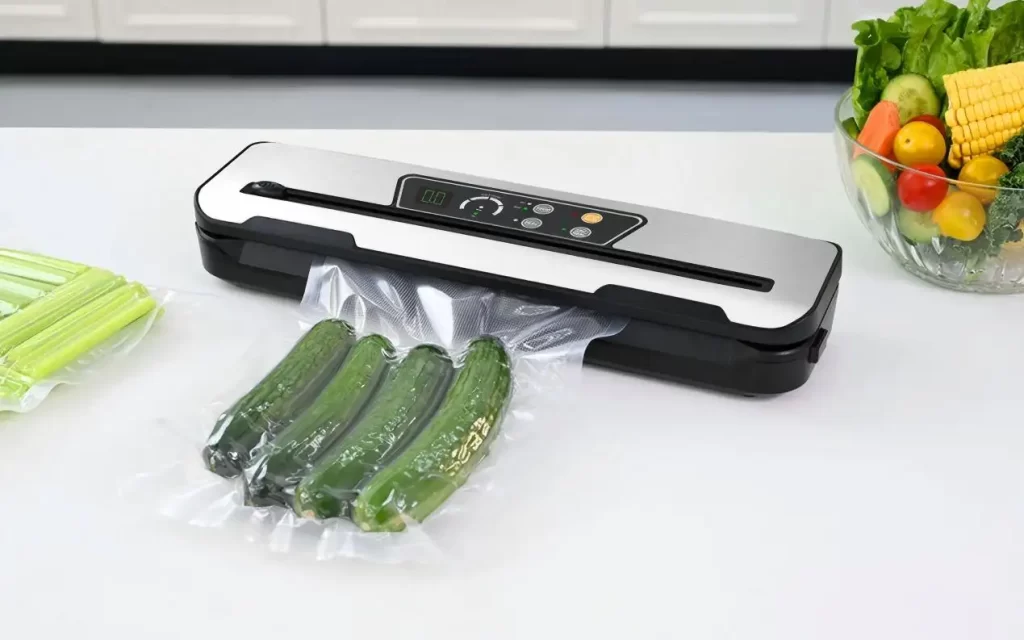
There is one catch, though. Not every food should be vacuum sealed in exactly the same way. Some foods are almost effortless. Others need a gentle vacuum, less moisture or a little preparation first.
Here are 25 foods that work well, along with a few cases where you should be more careful.
25 Foods You Can Vacuum Seal
Meat and Seafood
1. Beef
Steaks, ground beef, short ribs and other cuts are among the easiest foods to vacuum seal. Portioning them before freezing also makes the freezer much easier to manage.
2. Chicken
Chicken breasts, thighs and wings can be sealed individually or in meal-sized portions.
3. Pork
Pork chops, tenderloin and ribs are all suitable for vacuum sealing.
4. Lamb
If you buy lamb in larger quantities, dividing it into portions before freezing is particularly convenient.
5. Fish
Salmon, cod, tuna and similar fish can be vacuum sealed before refrigeration or freezing. Pat the surface dry first.
6. Shrimp
Shrimp contains quite a bit of moisture, so don't overfill the bag. Leave enough room around the top for a clean seal.
Vegetables
7. Carrots
Whole carrots or prepared portions are easy to package.
8. Broccoli
Useful for preparing freezer portions, especially when you buy more than you can eat in a few days.
9. Green beans
Divide them into the amount you normally cook rather than sealing one large bag.
10. Corn
Corn kernels and prepared corn can both be vacuum sealed.
11. Bell peppers
Sliced peppers are particularly convenient for meal preparation.
12. Asparagus
Vacuum sealing works well when you want to keep prepared portions together.
One thing worth mentioning: vacuum sealing doesn't replace normal food preparation. If you're freezing certain vegetables for longer-term storage, blanching may still be appropriate.
Fruit
13. Strawberries
They can be vacuum sealed, but don't use more suction than necessary. Very ripe strawberries can turn into jam pretty quickly.
14. Blueberries
Their firmer skin makes them easier to handle than soft berries.
15. Grapes
You can portion grapes into bags and freeze them for later use.
16. Apples
Apple slices can be vacuum sealed, although some preparation may be needed if you want them to retain their appearance.
Dry Foods
17. Coffee beans
A useful option if you buy coffee in larger quantities and want to divide it into smaller portions.
18. Rice
Simple, dry and easy to portion.
19. Pasta
Vacuum sealing can make opened packages easier to organize in the pantry.
20. Nuts
Almonds, walnuts, peanuts and similar foods can be sealed in suitable bags.
21. Flour
Flour can be vacuum sealed, although it's important to avoid getting fine particles into the sealing area.
22. Dried beans
Another easy pantry item to divide into smaller packages.
Cheese, Bread and Prepared Food
23. Hard cheese
Cheddar, Parmesan and other firm cheeses are generally good candidates.
24. Bread
Yes, you can vacuum seal bread. Just don't pull all the air out as aggressively as you would with a steak. Otherwise, you may end up with very flat bread.
25. Cooked meals
Once properly cooled, many solid cooked foods can be portioned and vacuum sealed for later storage.
Can and Can't You Vacuum Seal?
Here's the quick version:
| Food | Can You Vacuum Seal It? | What We Recommend |
| Beef, pork, lamb | Yes | Refrigerate or freeze as needed |
| Chicken | Yes | Keep properly chilled |
| Fish and shrimp | Yes | Remove excess surface moisture |
| Carrots, broccoli, beans | Yes | Prepare properly before freezing |
| Berries | Yes, carefully | Use gentle suction |
| Hard cheese | Yes | Use a suitable bag |
| Bread | Yes, carefully | Avoid strong suction |
| Coffee beans | Yes | Portion before sealing |
| Rice and pasta | Yes | Keep completely dry |
| Nuts | Yes | Use suitable bags |
| Cooked meals | Yes | Cool before packaging |
| Soup | With care | Freeze first or use suitable equipment |
| Sauce | With care | Choose a suitable moist-food method |
| Marinade | With care | Avoid pulling liquid into the pump |
| Very soft fruit | With care | Use pulse/gentle vacuum |
| Fresh garlic | Extra care | Follow appropriate food-safety guidance |
The important thing to remember is that vacuum sealing does not make perishable food safe to leave at room temperature. If a food normally needs refrigeration or freezing, it still does after vacuum sealing.
What About Liquids?
This is probably one of the first questions people ask after buying a vacuum sealer machine.
“Can I just put soup in the bag and turn the machine on?”
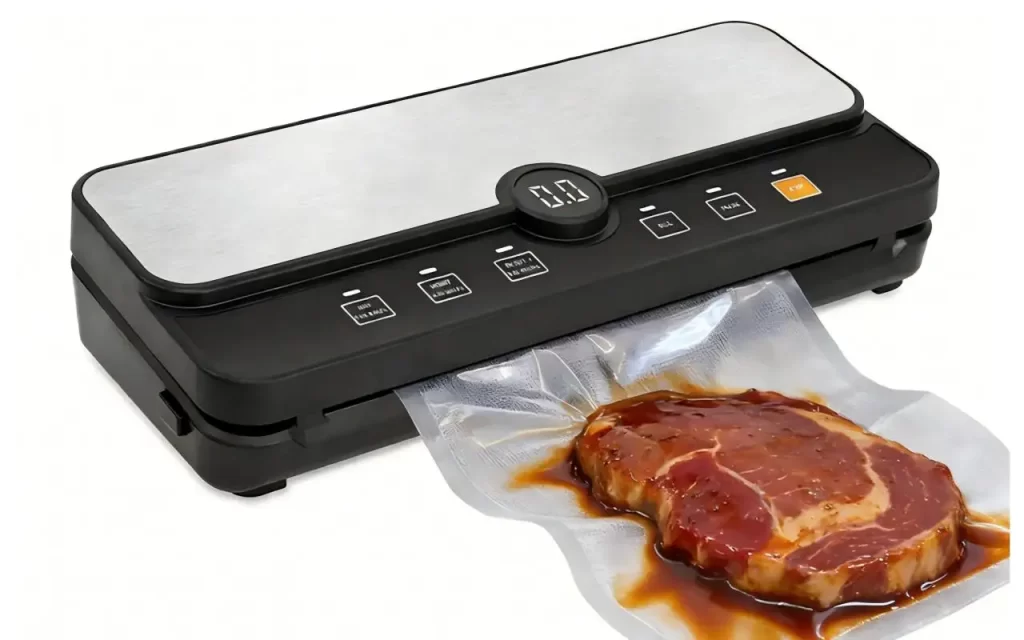
We wouldn't recommend doing that with a standard external vacuum sealer.
As the machine removes air, the liquid can move toward the vacuum channel. If enough liquid gets there, it can make a mess and may interfere with the machine.
For soup, sauce or marinade, freezing the food first is often the simpler solution. Once frozen, it can be vacuum sealed without liquid running toward the pump.
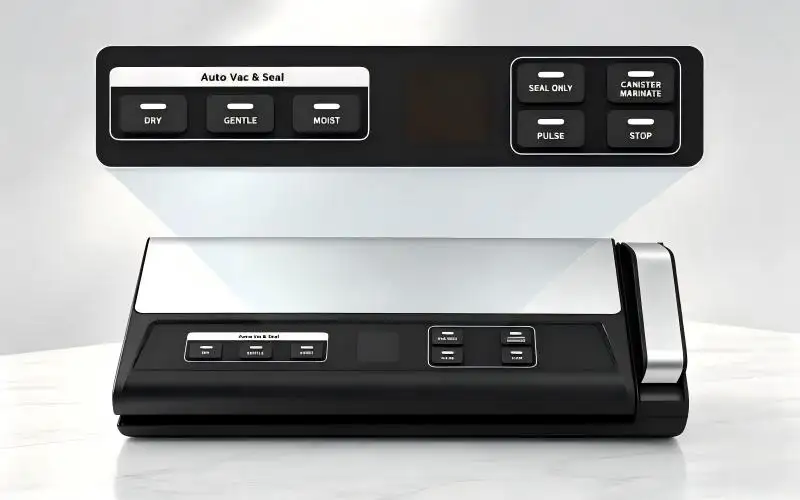
Some machines also offer dedicated moist-food settings. For example, our VS6607BX has Dry, Moist and Super Moist Vac&Seal modes. That extra control is useful if you regularly work with foods that are not completely dry.
Vacuum Sealing Meat: A Few Things That Actually Matter
Meat is probably the easiest place to start with a vacuum sealer.
Keep the meat cold while preparing it. If the surface is wet, pat it dry before putting it into the bag. Don't fill the bag right to the top either; leave enough empty space for the machine to create a proper seal.
Bones are another small issue. A sharp bone can eventually puncture a thin bag, especially after the package has been moved around in a freezer. A thicker bag or an extra layer around the sharp area can save you from finding a leaking package later.
For everyday use, portioning is also worth the extra minute. One large bag of chicken may look efficient, but five smaller portions are much easier when you're cooking during the week.
What About Vegetables?
Vegetables are a little different.
You can vacuum seal many vegetables, but if you're preparing them for longer-term freezing, some vegetables may benefit from blanching first. The goal isn't simply to remove air; you also want the food to keep a reasonable texture and quality after storage.
Delicate vegetables and soft produce are another reason we don't recommend automatically choosing the strongest possible vacuum setting.
YUMYTH Industry Perspective: Is More Vacuum Power Always Better?
We've worked with different household vacuum sealer configurations, and one thing we would point out is that the highest vacuum pressure isn't necessarily the right choice for every food.
For example, our VS6611PX is a compact household model with -60 kPa or -80 kPa options, five function buttons and a maximum working width of 30 cm. For someone mainly sealing meat, dry foods and everyday leftovers, that's already a practical setup.
The VS6607BX adds more control. It has seven functions, including Dry Vac&Seal, Moist Vac&Seal and Super Moist Vac&Seal. That's a more useful direction for people who frequently switch between dry and moist foods.
Then there's the VS8001, which reaches 95 kPa and offers eight functions, including Pulse, Inflate and double sealing. It also accepts bags up to 300 mm wide.
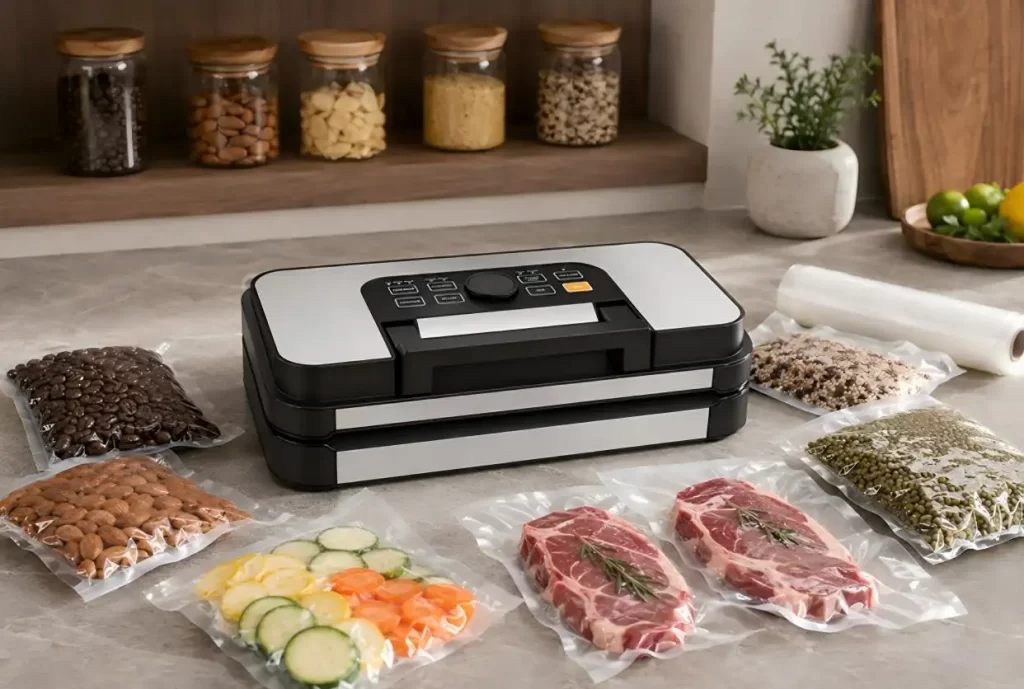
We don't think every customer needs the premium model. If you mostly seal steaks and dry ingredients, a basic machine can do the job. If you often package wetter foods, additional modes may matter more than simply having a higher pressure number.
Choose the machine around the food you actually store. That's usually a better approach than buying based on one specification alone.
Vacuum Sealer FAQ
Can I vacuum seal raw meat?
Yes. Beef, pork, chicken, lamb and many types of seafood can be vacuum sealed. Keep them refrigerated or frozen according to normal food-storage requirements.
Can I vacuum seal cooked food?
Yes. Let cooked food cool appropriately before packaging, then refrigerate or freeze it as needed.
Can I vacuum seal bread?
Yes, but use a gentle setting if your machine offers one. Too much suction can flatten the bread.
Can I vacuum seal cheese?
Hard and semi-hard cheeses are generally easier to vacuum seal than soft cheeses.
Can I vacuum seal frozen food?
Yes. Many people vacuum seal meat, vegetables and other foods after freezing or before placing them in the freezer.
Does vacuum sealing make food last forever?
No. It removes much of the air from the package, but it doesn't replace refrigeration, freezing or proper food handling.
Final Thoughts
A vacuum sealer is one of those kitchen appliances that often becomes more useful after you've had it for a while.
You start with steaks. Then you try coffee. A bag of vegetables. Some cheese. Maybe portions of a meal you're preparing for the week.
The important thing is not to treat every food exactly the same. Dry foods, moist foods and delicate foods each behave differently under vacuum.
And when you're choosing a food vacuum sealer, don't focus only on the biggest vacuum-pressure number. Think about the foods you actually buy, how often you use the machine, and whether you need different vacuum modes.
That's where the right vacuum sealer machine makes a noticeable difference.
Related Articles
Guide for Brands Looking for a Reliable Vacuum Sealer OEM Supplier
2026-09-14
BY YUMYTH
When you are sourcing kitchen appliances for your retail brand, finding a dependable vacuum sealer OEM supplier is rarely just about getting the lowest unit price. It is about protecting ...
Why Ice Shape Matters: Understanding 10mm × 15mm Cylindrical Nugget Ice
2026-09-14
BY YUMYTH
More Than Ice Production — The Ice Itself Shapes the Consumer Experience When sourcing a nugget ice maker, buyers often focus first on production capacity, water tank size, ice basket ...

Ice Maker Sourcing Guide: How to Find the Right Factory
2026-09-10
BY YUMYTH
Sourcing an ice maker looks straightforward on paper. Find a supplier, agree on a price, place an order. But anyone who has actually done this knows the process is rarely ...
Custom Vacuum Sealer & Nugget Ice Maker Development Cases | OEM/ODM Manufacturer
2026-09-08
BY YUMYTH
In today’s competitive small kitchen appliance market, offering the same products as every other brand is often not enough. Importers, distributors and appliance brands increasingly need exclusive products that reflect their ...