What Makes Good Nugget Ice? Texture, Size and What Really Matters
Share:
-

-

-

-


Copied

Share:
-
-
-
-
Copied
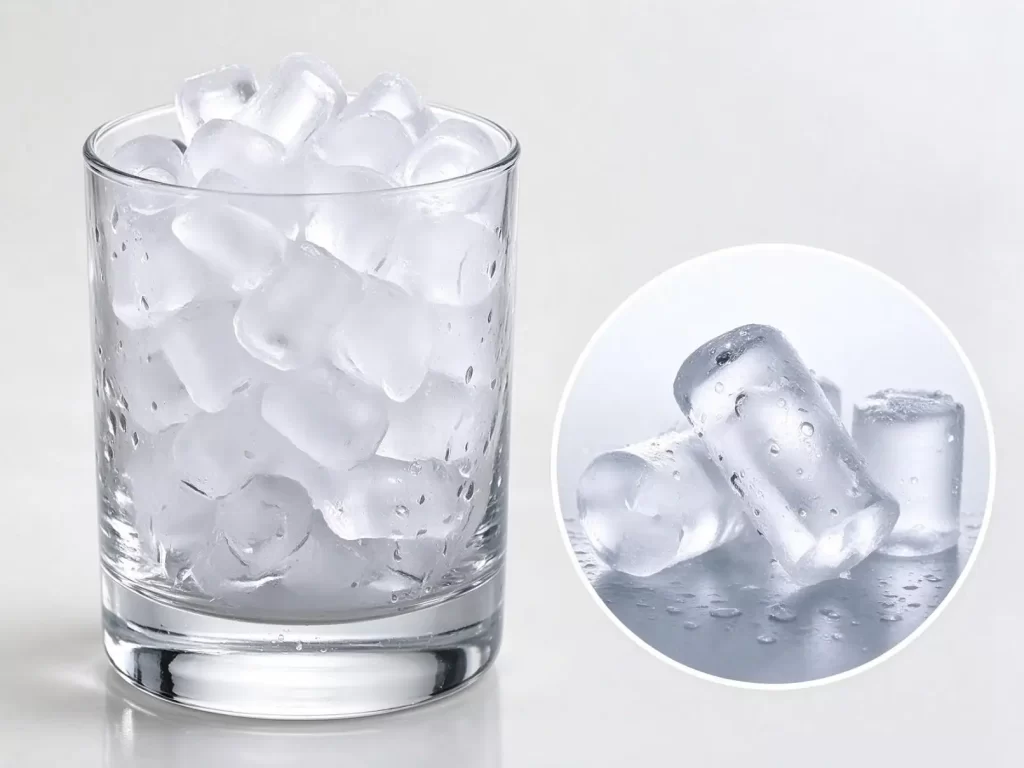
You can usually tell quite quickly whether you like a particular type of nugget ice. Drop a few pieces into a glass, take a sip, and you will notice the difference. Some pellets are pleasantly soft and easy to chew. Others feel harder than expected, or break apart before you have finished your drink.
So what makes good nugget ice?
It is not just the shape, and it certainly is not just how much ice a machine can produce in a day. The texture matters, the size needs to suit the intended use, and the machine has to keep producing a similar result. For anyone choosing a nugget ice maker, these details are worth looking at before settling on a model.
The Texture Is What Sets Nugget Ice Apart
Nugget ice has a character of its own. It is softer and more chewable than a conventional solid ice cube, which is a big part of its appeal.
That texture comes from the way it is made. Water freezes on a cold surface, and an auger scrapes away the ice as it forms. The small flakes are then compressed into the familiar pellets.
It sounds simple, but the result can vary from one machine to another. The freezing process, the movement of the auger and the way the flakes are compressed all play a part. If you are comparing machines, try the ice rather than relying on a photograph. A close-up can show the shape; it cannot tell you how the ice feels between your teeth.
There is also no need to assume that the softest ice is always the best. Some users prefer a little more firmness. What matters is whether the texture suits the people who will actually use the machine.
Does Nugget Ice Need to Be a Certain Size?
Not necessarily. There is no single ideal size for every drink or every customer.
Smaller pellets may be convenient for everyday drinks, while other applications may call for a different shape or size. Consistency is often more useful than chasing one supposedly perfect measurement. If the pieces coming out of a machine vary considerably, the ice may look less uniform in a glass and feel different from one serving to the next.
YUMYTH's YI210004, for example, produces pellets approximately 10 mm in diameter and 10–20 mm long. Those dimensions describe this particular model, not a universal standard for nugget ice.
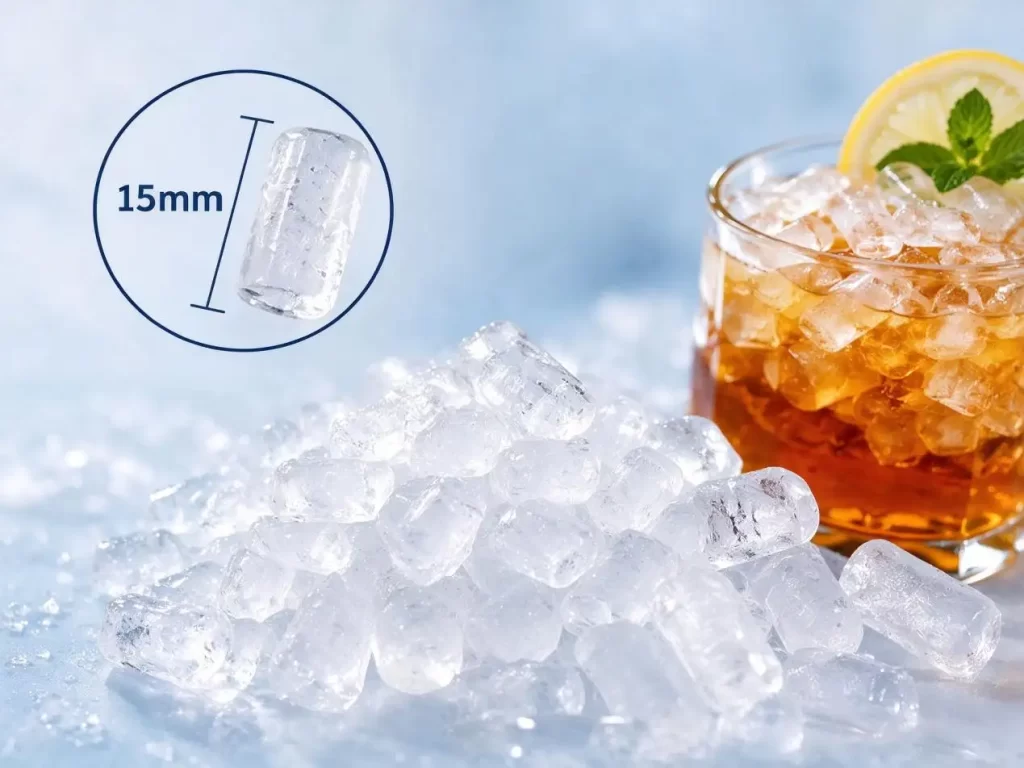
For a brand developing its own product, it helps to settle the target size early. That gives the team something concrete to assess during prototype testing, rather than relying on vague descriptions such as “small pellets” or “soft ice.”
A Good First Batch Is Not the Whole Story
A machine can make an attractive batch of ice and still leave questions about how it performs over time.
What happens after it has been running for a while? Does the ice remain reasonably consistent? Can the machine keep up with the intended demand? These are more useful questions than simply asking whether it can make nugget ice.
Production depends on several things working together: refrigeration, water circulation, the freezing cylinder and the auger mechanism. Room temperature and incoming water temperature can also affect performance. If the machine is poorly ventilated or maintenance is neglected, results may change.
That does not mean every variation is a sign of a faulty machine. Operating conditions matter. But when comparing products, buyers should ask how the rated output was measured and, where possible, look at performance over repeated cycles.
How Much Ice Do You Actually Need?
Daily capacity is an easy number to compare on a specification sheet. It is also easy to give it too much weight.
A household may need ice for drinks throughout the day, with extra capacity for weekends or visitors. A small café or other light-commercial setting may have a different pattern of demand. Buying the highest-capacity model is not automatically the sensible choice if the machine is larger than the application requires.
YUMYTH's YI210004 has a rated output of up to 20 kg in 24 hours under specified conditions. The first batch can be ready in approximately 7–15 minutes, depending on operating conditions.
Those figures help establish what the machine is designed to deliver. They do not mean every user will get exactly the same output in every environment. When assessing a model, consider the expected daily demand, storage arrangements and the conditions in which it will operate.
Cleaning Is Part of Owning an Ice Maker
Cleaning is not the most exciting feature to read about, but it can make a real difference to the ownership experience.
Nugget ice makers circulate water through an internal system. Over time, mineral deposits can build up, particularly when the water contains a high level of dissolved minerals. Following the manufacturer's cleaning and descaling instructions helps keep the machine in good working order.
YI210004 includes a one-touch self-cleaning function with an approximately 10-minute cleaning cycle. It makes routine cleaning more convenient, although users still need to follow the manual for any additional maintenance.
If you are comparing models, look beyond the words “self-cleaning.” Check what the cycle does, how easy it is to use and whether there are other steps the owner needs to complete.
What the Machine's Design Can Tell You
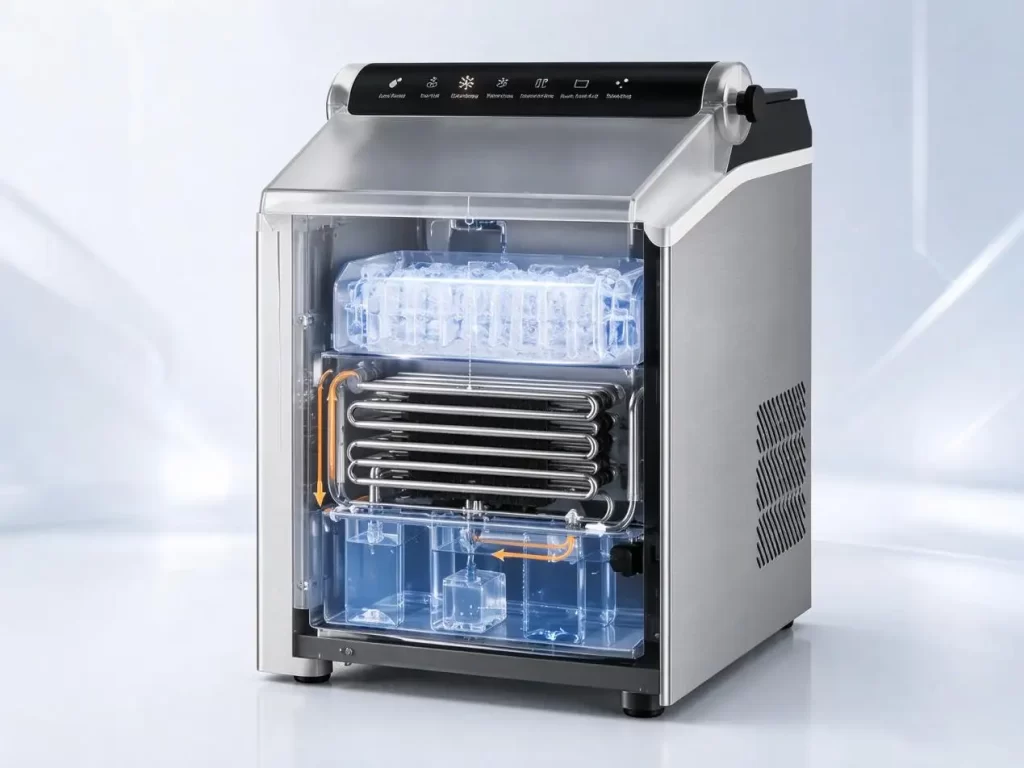
The finished ice is only part of the picture. Inside the machine, the refrigeration system, auger, motor, water circulation and heat dissipation all have to work together.
This is where product development can become less straightforward than it first appears. A change to the internal layout may affect airflow. A different relationship between the auger and freezing cylinder may change how the ice moves through the system. One adjustment can lead to another.
During development, these interactions need to be checked rather than assumed. Buyers do not need to understand every mechanical detail, but it is reasonable to ask how a manufacturer evaluates prototypes and checks that production units meet the intended specifications.
Practical features matter, too. Water-level alerts, an ice-full indicator and protection against abnormal operating conditions can make a machine easier to live with, even though they do not directly determine the texture of the ice.
YUMYTH Industry Perspective: Looking Beyond the Ice Sample
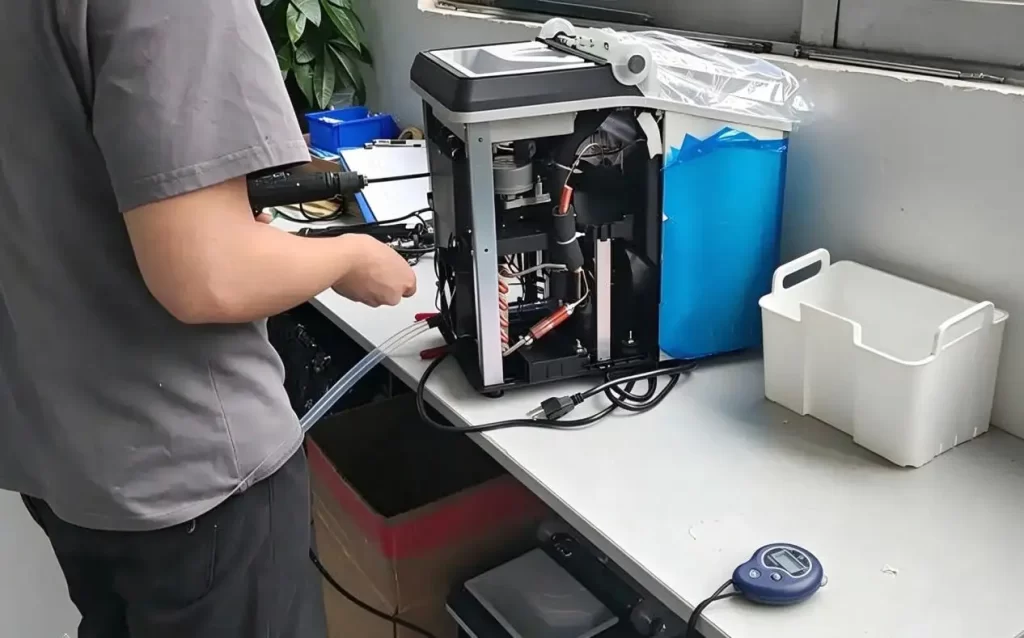
In YUMYTH's YI210004 project, co-developed with Haier, the target was a compact nugget ice maker with a rated output of up to 20 kg per 24 hours. Reaching the production target was only part of the work. The machine also needed to deliver the expected pellet size and chewable texture in a household and light-commercial format.
Our development work included prototype evaluation and adjustments to the freezing system, water circulation, auger mechanism, internal layout and heat dissipation. These parts could not be assessed entirely on their own; how they worked together was just as important.
That is a useful lesson for brands planning an OEM or ODM project. A sample can show whether the basic concept works, but it cannot answer every question about long-term use or manufacturing consistency. Those questions need to be considered during product evaluation and before a design moves into mass production.
It helps to agree on the requirements at the beginning: what the ice should feel like, the preferred dimensions, the expected output and the maintenance experience. With those points established, prototype reviews become more practical and less subjective.
What Should Buyers Look for in Good Nugget Ice?
If you are sourcing a nugget ice maker, start with the ice itself. Is the texture right for your market? Are the pieces reasonably consistent? Then look at the machine: its rated capacity, cleaning requirements, operating features and the manufacturer's approach to testing.
There is no magic number that guarantees good nugget ice. A product needs to suit its intended use, and the machine must be capable of producing the expected result under realistic operating conditions.
FAQ
What makes nugget ice soft and chewable?
Nugget ice is formed from small ice flakes that are scraped from a freezing surface and compressed together. This gives it a different structure from solid cube ice.
Is smaller nugget ice better?
Not always. The preferred size depends on the drink, the user and the machine's intended application. Consistency may matter more than a particular measurement.
Why does nugget ice vary between machines?
Differences in the freezing system, auger design, compression process and operating conditions can affect the finished ice.
Does a higher production capacity mean better ice?
No. Daily output is only one specification. Texture, consistency, maintenance and performance during regular use should also be considered.
What should I check before buying a nugget ice maker?
Look at the actual ice, confirm the rated output and test the machine over repeated cycles if possible. It is also worth reviewing cleaning requirements and asking how the manufacturer checks product quality.
Final Thoughts
Good nugget ice is easy to recognize once you know what you prefer, but producing it consistently takes more than a good-looking design. The freezing system, auger, water circulation and everyday maintenance all have a part to play.
For buyers, the best starting point is the ice itself, followed by a closer look at how the machine performs. For brands developing their own product, defining the expected texture, size and output early can make the evaluation process much more useful.
Suggested Internal Links
What Is Nugget Ice? — An introduction to nugget ice and its distinctive texture.
How Does a Nugget Ice Maker Work? — A closer look at the freezing and compression process.
Nugget Ice vs. Cube Ice Guide — A comparison of common ice types.
Nugget Ice Maker Buying Guide — Practical factors to consider when choosing a machine.
Nugget Ice Maker OEM & ODM Solutions — YUMYTH's product development and customization options.
Nugget Ice Maker Quality Control — What buyers should ask about before mass production.
Related Articles

How Does a Slush Machine Work Without Ice?
2026-10-29
BY arafatshuvo509
Traditional blender's use of crushed ice to mix an ingredient into a thick, cold drink is replaced by today's slush makers which are able to achieve the same result using ...
Compressor Slush Machine: Cooling System and Mixing Technology
2026-10-29
BY arafatshuvo509
A compressor slush machine utilizes an integral refrigeration process with continuous mechanical agitation of the refrigerated liquid to produce semi-frozen (slushy) liquids by creating ice crystals directly from the liquid. ...
Ice Maker for Small Kitchen: Compact Design for Apartment Living
2026-10-27
BY YUMYTH
An ice maker that fits on an apartment countertop may still be difficult to operate. A wall can obstruct condenser airflow, an overhead cabinet can prevent the lid from opening ...
2026 Freestanding Ice Maker Trends: Clear Ice, R290, and Smart Controls
2026-10-27
BY YUMYTH
A freestanding ice maker that can produce 12.6 kg of ice in a day may still not meet expectations. Its ice may turn cloudy because of short freezing cycles, it ...