Wholesale Ice Maker: Ice Shape and Performance
Share:
-

-

-

-


Copied
Share:
-
-
-
-
Copied
A countertop ice maker can meet its advertised 24-hour production capacity and still disappoint customers. The problem often appears in the glass: hollow ice melts too quickly for a slow-sipping drink, nugget ice clumps during storage, or large cubes take longer to produce than the serving schedule allows.
These differences originate in ice geometry and the freezing process, not simply compressor capacity. For Wholesale Ice Maker buyers, selecting an ice format means choosing a particular combination of heat transfer, production speed, mechanical complexity, and maintenance requirements.
At YUMYTH, we have countertop bullet, nugget, and cube ice makers. Each is made for a different type of beverage application. We also understand the constraints of engineering that may affect your decision to make a large purchase.
How Does the Shape of Ice Affect Cooling and Dilution?
Heat is absorbed by ice to melt it. The more surface area of ice in contact with a beverage, the faster the ice can melt and the faster the beverage can be cooled.
Bullet ice is made in the shape of a single, hollow, cylinder. The interior of bullet ice, if liquid is present, can enhance the surface area of heat transfer. Since nugget ice is made up of multiple, small, spheres, it also has a soft, internal structure, allowing it to break apart easily.
Cube ice, with a single large piece, melts more slowly and is better at retaining its shape than nugget ice. However, it takes longer to consume than nugget ice.
For a purchaser, it's important to consider:
• Bullet ice, while effective at quickly cooling a beverage, can dilute the beverage more quickly due to a greater surface area of ice in contact with the beverage.
• Nugget ice can contact a greater surface area of a beverage, and is more readily consumed, but tends to break apart and melt more quickly.
In order to retain its shape, cube ice takes longer to consume. It also takes a longer time to produce compared to nugget ice.
Why Does Ice Shape Change the Freezing Mechanism?
Hollow Bullet Ice: Wall Thickness Controls the Cycle
Bullet ice makers freeze water around refrigerated metal fingers. Ice forms on the finger surfaces until harvesting is initiated by a controller.
Approximate wall thickness is determined by freezing time. Shorter freezing times yield thinner ice, while longer times can cause complications during harvesting.
The YUMYTH YZ1501 Bullet Ice Maker produces ice in either a nine piece small cycle that lasts 3.5 minutes or a nine piece large cycle that lasts 5 minutes.
It should be noted that the ice produced during a large cycle is not always greater than the ice produced during a small cycle. Procurement teams should take the weight of the ice produced during each cycle into consideration in order to determine average ice produced per hour.
Thin walled ice may fracture during harvesting. Consistent operation of a YZ1501 depends on balancing the freezing time against the demands of harvesting.
Nugget Ice: Texture Introduces Mechanical Load
Nugget ice machines freeze a thin layer of ice on a refrigerated surface from which a rotating auger peels the ice. The ice and a compression or extrusion element combine to create small nuggets of ice.
The consistency of the nuggets is influenced by the pressure of the compression element, the temperature of the ice, and the moisture content of the ice.
The principle concern for the reliability of these systems is mechanical. Deposits of calcium carbonate or other materials may obstruct the discharge of the ice and therefore increase the mechanical load on the auger.
According to the product specifications, the YUMYTH's YI210004 Countertop Nugget Ice Maker can produce up to 20kg of ice a day. It features an anti-jam rotation mechanism, and automatic cleaning and filter replacement reminders. The first batch of ice takes about 6 minutes to make at a room temperature of 25°C.
The anti-jam rotation mechanism does not automatically eliminate the need for jam testing. There are other problems that can occur from repeated starts, changing water conditions and prolonged ice accumulation.
Clear Cube Ice: Freezing Direction Influences Clarity
Cloudy ice forms because the freezing front captures dissolved gases and other impurities.
Clearness of the ice can be improved by controlling the freezing direction, but results may vary, depending on the quality of water, condition of the equipment, and surrounding environment.
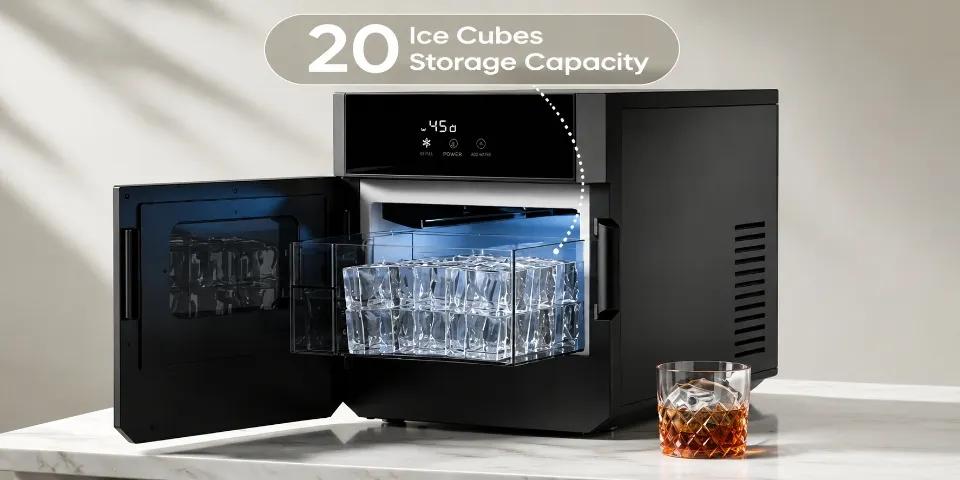
The YUMYTH's YI220007 Cube Ice Maker has four different modes (15, 30, 45 and 60 minutes) to choose from.
Fully clear and developed ice cubes may form if the equipment is set to the longer operating mode. The buyer needs to ensure that the operating mode selected by them meets the clarity level of ice cubes and the demand for the ice cubes within an hour.
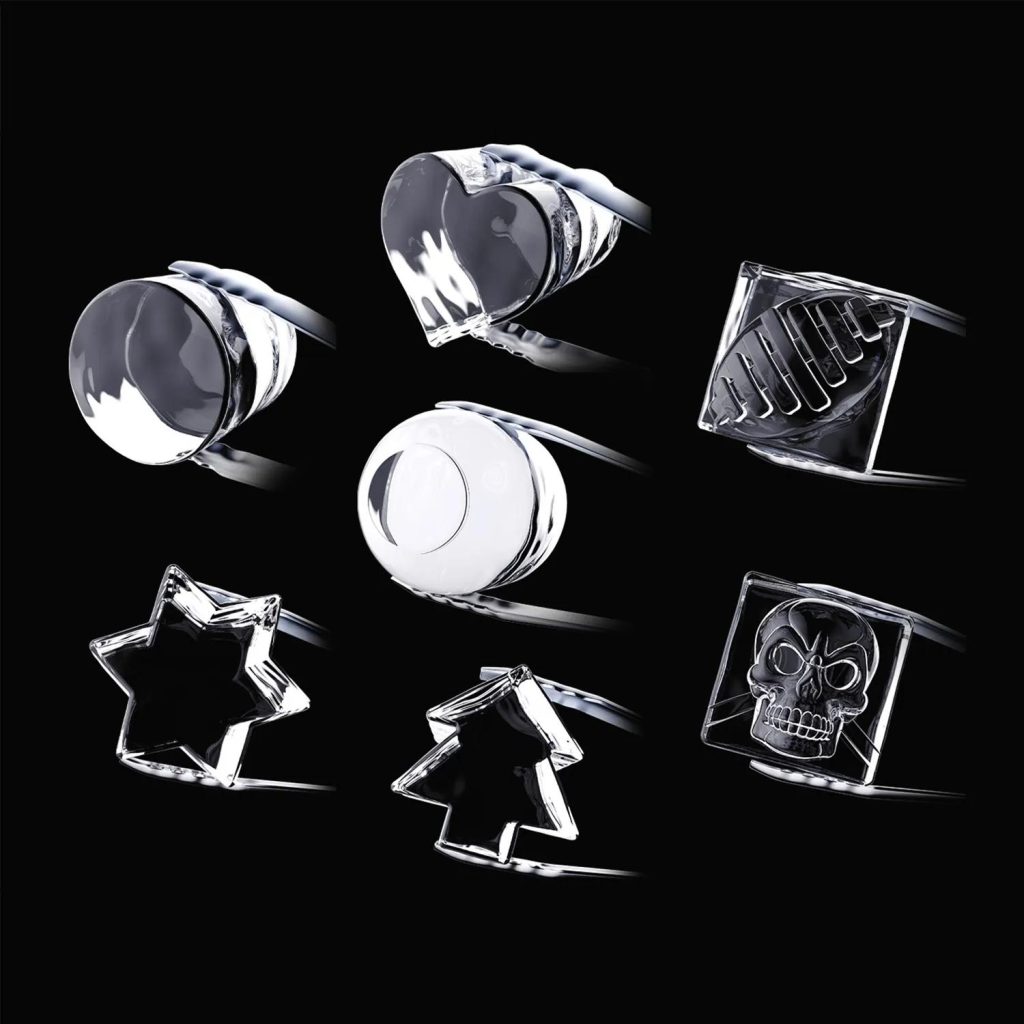
Additionally, the use of specialty shapes, for example, if the mold has sharp corners and narrow projections, may cause the ice to not completely freeze or to crack when released. New designs need to be sample-tested, rather than assuming that an existing cube-making cycle would be effective.
Why Can Two Ice Makers with Similar Ratings Deliver Different Usable Output?
Ice machines produce ice based on specified operating conditions. Ice used during a serving period may not be available if conditions are not ideal.
The heat in water needs to be removed before freezing can occur. High ambient temperatures can reduce condenser heat rejection and increase the length of the refrigeration cycle.
Storage design creates a separate limitation. Many countertop machines use insulated collection baskets rather than actively refrigerated storage. Ice left in the basket may melt, drain, and return to the water system.
A machine can therefore continue operating while providing less immediately usable ice than its nominal daily capacity suggests.
For small café applications, it's better to evaluate ice consumption during the busiest service period rather than divide the 24 hour rating into equal hourly components. This is because basket capacity, the number and duration of harvesting interruptions, and how quickly the basket can be refilled can all become limiting factors before the refrigeration system reaches its limit.
What Should Wholesale Buyers Verify Before Approving a Model?
A sample evaluation should simulate the intended application, which may include the type of beverage being evaluated, the temperature of the incoming water, the conditions of the environment in which the evaluation will be conducted, and the anticipated duration of the evaluation.
These checks provide useful evidence to a buyer:
- The geometry of the ice: This may include the mass, dimensions, and breakage of the ice; and how consistent the ice is from one harvesting cycle to the next.
- Cooling performance: This may include the temperature of the beverage being evaluated and the level of dilution.
- Sustained production: This may include how long the basket can be harvested before it's necessary to stop production and the mass of ice harvested during a cycle.
- Responsiveness to water quality: This may include an assessment of freezing surfaces and water passages after the evaluation.
- Cleaning: This may include an assessment of food-contact surfaces and/or food-contact materials.
There should be instructions, whether in a manual or on a label, that explain to the user when a self-cleaning program should be run and when a more thorough cleaning (i.e., descaling) should occur.
For imported appliances, food-contact documentation, electrical safety documents, and compliance evidence for the destination market also need to be verified. A supplier's general product description is not a substitute for the documents covering the purchased configuration.
Correlation of Ice Shape to the Intended Product Market
Some brands use Bullet ice to signal swiftness in production. Others use it to signal everydayness. The shape of nugget ice serves a texture, where larger, clearer cubes serve melting and appearance.
Differences in ice shapes impact manufacturing and design. Altering the geometry of ice requires changes to evaporators, other subsystems and controls. It is not always as simple as a software adjustment.
YUMYTH offers OEM and ODM countertop ice maker machines that cover a range of functions, appearances, voltages, branding and packaging. Buyers developing a Wholesale Ice Maker program can check out our ice maker range, and discuss needed modifications to ice types, operating conditions and sample verification before determining a final production configuration.
FAQs
Q1. What ice shapes does YUMYTH offer?
YUMYTH offers countertop bullet, nugget, and clear cube ice makers. Each type serves different beverage, texture, and cooling requirements.
Q2. Which YUMYTH ice maker is best for everyday drinks?
The YZ1501 bullet ice maker suits everyday beverages, while the YI210004 produces soft, chewable nugget ice. Selection depends on preferred texture and serving demand.
Q3. Can YUMYTH bullet ice makers produce different ice sizes?
Yes. The YZ1501 offers small and large bullet ice settings, with published cycle times of approximately 3.5 and 5 minutes, respectively.
Q4. How much nugget ice can YUMYTH produce daily?
The YI210004 is rated for up to 20 kg per 24 hours, with first ice available in approximately six minutes at 25°C ambient temperature.
Q5. Does YUMYTH manufacture clear cube ice makers?
Yes. The YI220007 produces clear ice cubes and supports selectable freezing modes of 15, 30, 45, and 60 minutes.
Related Articles

How Does a Slush Machine Work Without Ice?
2026-10-29
BY arafatshuvo509
Traditional blender's use of crushed ice to mix an ingredient into a thick, cold drink is replaced by today's slush makers which are able to achieve the same result using ...
Compressor Slush Machine: Cooling System and Mixing Technology
2026-10-29
BY arafatshuvo509
A compressor slush machine utilizes an integral refrigeration process with continuous mechanical agitation of the refrigerated liquid to produce semi-frozen (slushy) liquids by creating ice crystals directly from the liquid. ...
Ice Maker for Small Kitchen: Compact Design for Apartment Living
2026-10-27
BY YUMYTH
An ice maker that fits on an apartment countertop may still be difficult to operate. A wall can obstruct condenser airflow, an overhead cabinet can prevent the lid from opening ...
2026 Freestanding Ice Maker Trends: Clear Ice, R290, and Smart Controls
2026-10-27
BY YUMYTH
A freestanding ice maker that can produce 12.6 kg of ice in a day may still not meet expectations. Its ice may turn cloudy because of short freezing cycles, it ...