
How to Choose a Slushie Machine for Home: Size, Noise, Cleaning, and Freeze Time
Share:
-

-

-

-


Copied
Share:
-
-
-
-
Copied
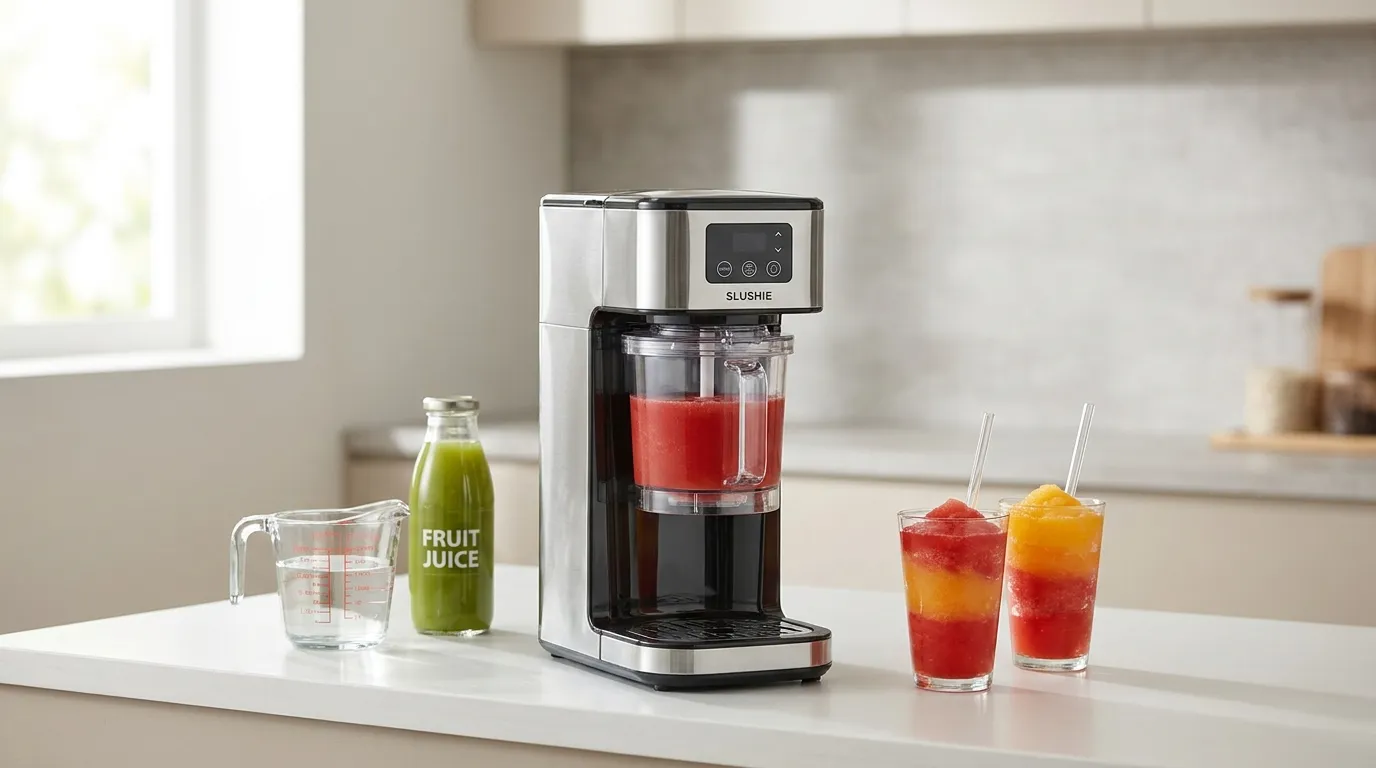
To choose a slushie machine for home, start with five checks: capacity, counter footprint, noise, cleaning, and freeze time. A good home model should make enough servings for your use, fit your kitchen, stay comfortable indoors, clean easily after sugary drinks, and freeze liquid consistently without requiring ice.
A home slushie machine looks simple until you compare the specs. Some machines are compact but slow. Some freeze well but take up half the counter. Others look great in videos, then become annoying after one sticky cleaning session. The right choice depends on how often you’ll use it, what drinks you make, and where the machine will sit.
What should you check before choosing a slushie machine for home?
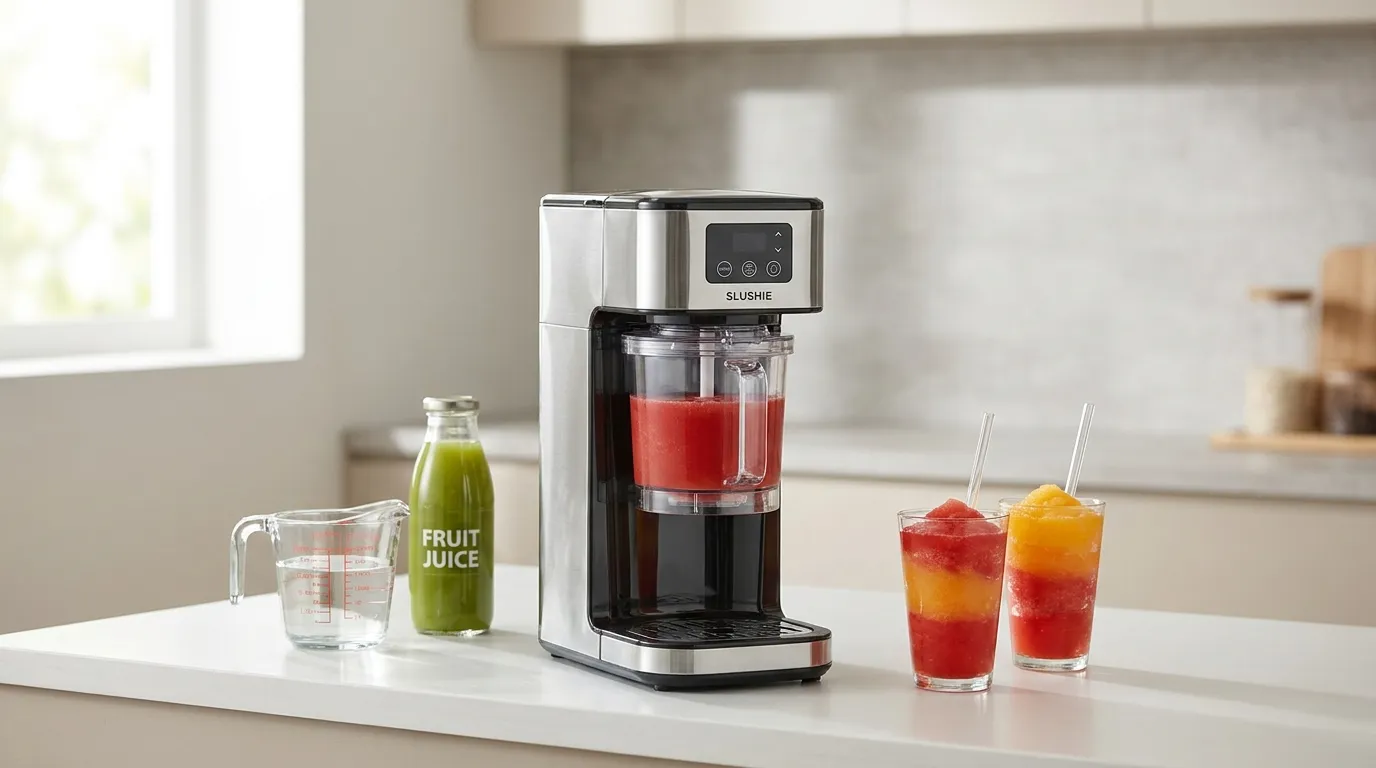
To choose a slushie machine for home, check capacity, counter footprint, noise level, cleaning design, and freeze time first. These five specs tell you more about daily usability than color, presets, or viral product claims.
A good home machine should feel easy to use after the first week, not only on the first day. For normal buyers, the best machine is the one that fits the kitchen, makes the right number of servings, freezes reliably, and cleans without a long process.
| Factor | What to check | Good sign | Warning sign | Best for |
|---|---|---|---|---|
| Capacity | Maximum fill level and servings | Enough for your normal batch | Too large for daily use | Families and parties |
| Footprint | Height, width, depth, weight | Fits under or near cabinets | Hard to move or store | Small kitchens |
| Noise | Measured dB claim | Around quiet conversation level | Only says “quiet” | Apartments |
| Cleaning | Removable parts and spout access | Vessel, tray, seals, and spout are easy to rinse | Hidden sticky areas | Syrup, dairy, cocktails |
| Freeze time | Typical freeze range | Works faster with pre-chilled drinks | Claims instant results | Regular use |
The largest tank is not always the best home choice. It works for parties, but a smaller, easier-to-clean vessel is safer for daily family use.
What size slushie machine is best for your household?
The best size depends on how many servings you make at once. A compact machine works for one or two people, while families and party hosts should prioritize batch capacity, refill convenience, and enough vessel volume to avoid constant restarting.
Start with your real serving pattern. A solo user making one frozen coffee does not need the same machine as a family making drinks for movie night. A party host needs more room for repeat servings, but daily users may prefer a smaller vessel that is faster to wash.
| Household use | Best capacity priority | What to avoid | Practical example |
|---|---|---|---|
| Solo user | Small batch size | Oversized tank | One drink after work |
| Couple | Compact vessel | Hard-to-clean large parts | Two mocktails |
| Family | Medium batch | Constant refilling | Four juice slushies |
| Party host | Larger vessel | Tiny serving volume | Multiple rounds |
| Home bar | Texture control | Poor cocktail support | Frozen margaritas |
One independent test of a home slushie appliance noted a 1.9L maximum fill and about 2.6L output, equal to roughly nine serves, depending on recipe and texture setting. That type of detail is more useful than a vague “large capacity” claim because it shows how the machine works in real use.
Will it fit your counter and storage space?
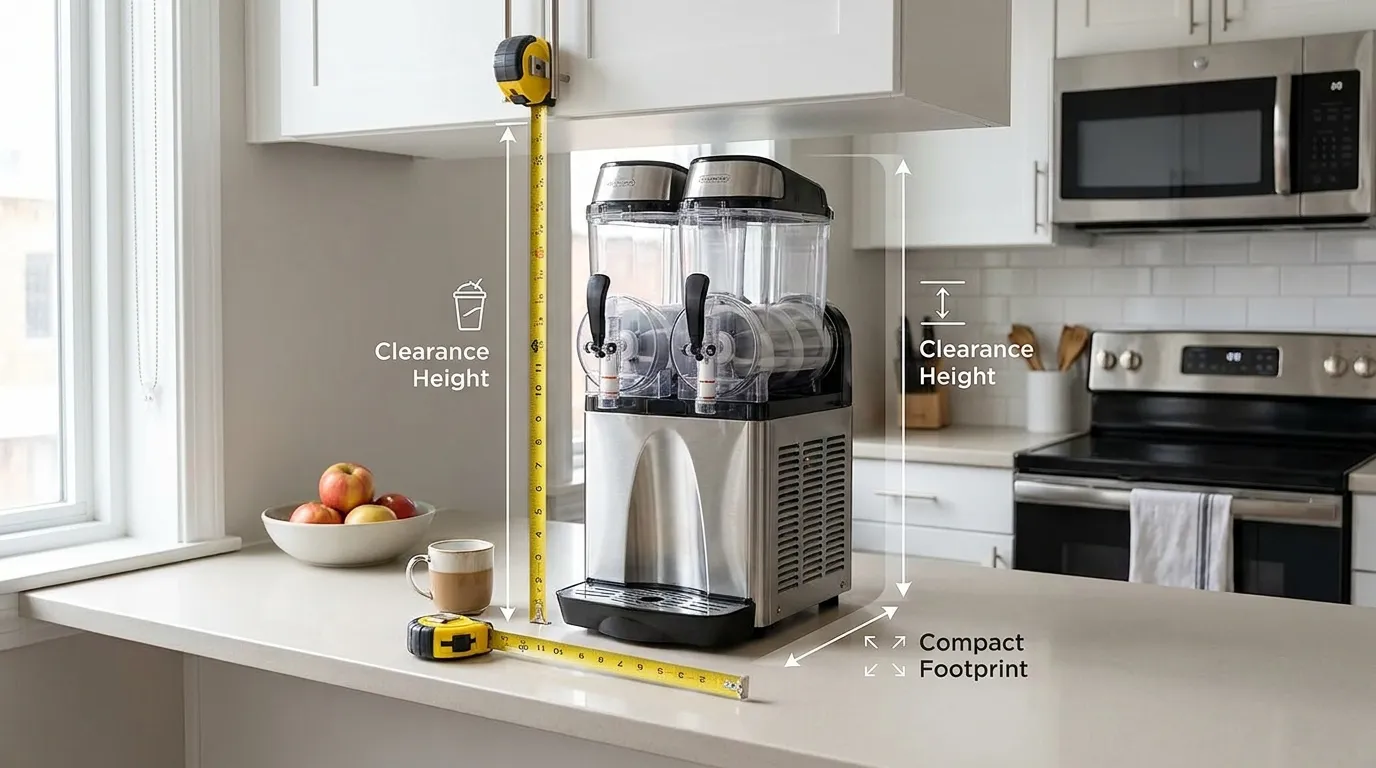
A home slushie machine should fit where you will actually use it, not only where you can store it. Check height, weight, rear clearance, handle access, and whether the machine is practical to leave on the counter.
Counter space matters because many people stop using appliances that are hard to move. A machine may fit in a cabinet, but that doesn’t mean it is easy to lift out, fill, rinse, and put back after each use.
- Height under upper cabinets
- Depth with the handle and drip tray in place
- Weight when empty
- Cord location
- Space around vents
- Sink access for cleaning parts
This is important for apartment users and small kitchens. CHOICE’s review found one tested unit took noticeable bench space, weighed 11 kg, and stood 43 cm high. That may be fine for a party kitchen, but awkward for someone who needs to move it often.
How fast should a home slushie machine freeze drinks?
A realistic freeze time for a no-ice home slushie machine is often around 20 to 60 minutes, depending on liquid temperature, batch volume, room temperature, and recipe. Pre-chilled drinks usually give faster, smoother results.
No-ice machines freeze the liquid inside the machine. They are not instant drink makers. The compressor cools the mix, and an auger keeps it moving so small ice crystals form instead of one hard block.
| Situation | What usually happens | Better choice |
|---|---|---|
| Pre-chilled juice | Freezes faster | Best for planned use |
| Room-temperature soda | Takes longer | Chill first |
| Large batch | Needs more time | Start early |
| High-sugar drink | Forms smoother texture | Follow recipe range |
| Alcohol mix | May freeze slower | Use tested ratios |
| Hot kitchen | Slower cooling | Use smaller batches |
The best habit is simple: chill the drink first, then pour. That gives the machine less work and helps texture. Tests and manufacturer guidance in the brief showed typical ranges near 20 to 45 minutes for many home-use drinks, but recipe and room conditions still matter.
How noisy is too noisy for home use?
For home use, look for a measured noise claim, not just the word “quiet.” A machine around 50 to 55 dB may be acceptable for parties, but it can still be noticeable in a quiet kitchen or apartment.
A slushie machine makes sound from the compressor, fan, motor, and auger. During a party, that may not matter. During late-night use in an open kitchen, the same sound can feel much louder.
| Use setting | Noise concern | What to check |
|---|---|---|
| Apartment | Disturbing others | Measured dB rating |
| Open kitchen | Background hum | Fan and compressor sound |
| Family party | Less sensitive | Stable operation |
| Night use | More noticeable | Quiet mode or lower-noise design |
| Retail testing | Buyer comfort | Repeatable noise target |
CHOICE measured one machine at around 50 dB, and YUMYTH’s home-use slushie machine page describes operation under 55 dB. For general context, CDC/NIOSH notes EPA public-noise guidance around long exposure and indoor comfort, though home appliance comfort depends on the room.
How easy should cleaning be after sugary drinks?
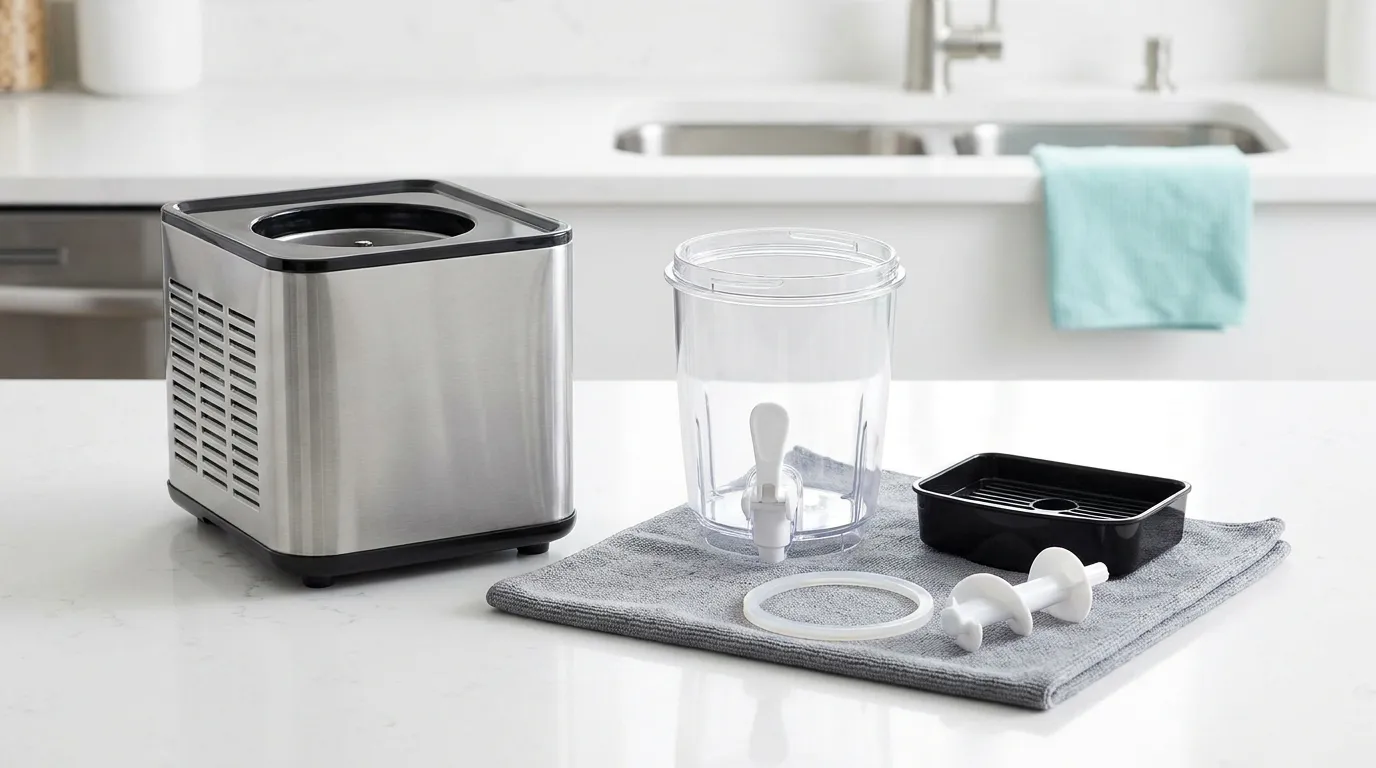
Cleaning should be simple enough to do after every use. Choose a machine with removable food-contact parts, a cleanable spout, accessible seals, and a rinse cycle, because syrup, dairy, and cocktail residue become harder to remove when dry.
Cleaning is not a small detail with frozen drinks. Sugar, juice, milk, coffee, and cocktail mixes can stick around the vessel, outlet, and seal areas. If those parts are hard to reach, the machine will feel less convenient over time.
Cleaning parts to check before buying
Look for removable parts that touch the drink. The vessel, stirring part, spout, drip tray, blade area, and seal ring should be easy to remove or rinse. A smooth container wall also helps because sticky liquid has fewer corners to sit in.
A rinse cycle is helpful, but it is not the same as easy deep cleaning. If syrup can sit inside a spout, seal, or blade area, cleaning design matters more than the word “self-cleaning.”
CDC guidance explains that cleaning removes dirt and germs before sanitizing. FoodSafety.gov also stresses cleaning hands, utensils, and surfaces often. For a home slushie machine, that means the buyer should choose parts they will actually clean after use.
Do you need a no-ice machine or is crushed ice enough?
Choose a no-ice slushie machine if you want smoother texture and less dilution. Choose a blender or ice crusher only if you want a cheaper, faster, occasional drink and do not mind a more icy texture.
This is one of the biggest buying decisions. A no-ice machine uses compressor cooling to freeze the drink mixture while it moves. A blender or ice crusher starts with ice, then breaks it down into the drink.
| Option | How it works | Best for | Tradeoff |
|---|---|---|---|
| No-ice slushie machine | Freezes liquid directly | Smooth frozen drinks | Needs time |
| Blender | Crushes ice into liquid | Fast casual drinks | More dilution |
| Ice shaver | Adds shaved ice | Simple summer drinks | Less machine texture |
| Commercial-style unit | Larger cooling system | Heavy use | Takes more space |
A no-ice machine is worth it when texture matters. If the buyer only wants a casual crushed-ice drink a few times each summer, a blender may be more practical. If they want repeatable slush texture for mocktails, soda, or frozen cocktails, compressor cooling is the better direction.
Which drinks and recipes should your machine support?
A good home slushie machine should support the drinks you actually make, not the longest preset list. Check soda, juice, mocktail, cocktail, coffee, milkshake, and sugar-free limitations before choosing.
Sugar helps slush texture because it affects how the liquid freezes. A drink with the wrong sugar level may freeze too hard, stay too liquid, or form an uneven texture. Alcohol can slow freezing, and dairy drinks need more careful cleaning.
| Drink type | What to check | Buyer note |
|---|---|---|
| Soda | Sugar content and carbonation | Works better when chilled |
| Juice | Natural sugar level | Easy family option |
| Mocktails | Recipe balance | Good for parties |
| Cocktails | Alcohol ratio | Too much alcohol slows freezing |
| Frozen coffee | Milk and sugar level | Clean soon after use |
| Milkshake | Dairy residue | Needs better cleaning access |
| Sugar-free drink | Recipe support | Artificial sweeteners may not freeze the same |
CHOICE notes that sugar helps make a slushy texture, and artificial sweeteners may not work the same way. That is why recipe guidance matters more than the number of preset buttons.
Which buyer scenario matches your best choice?
Choose by use case, not by the longest feature list. The right machine for a party host may be wrong for a solo apartment user, even if both machines make good slushies.
| Buyer scenario | Best machine priority | Avoid | Why it fits |
|---|---|---|---|
| Solo apartment user | Compact size and lower noise | Large heavy tanks | Easy to use after work |
| Family with kids | Medium capacity and simple cleaning | Tiny vessels | Better for movie nights |
| Weekend party host | Larger batch and keep-cool ability | Slow small units | Handles repeat servings |
| Home bar user | Texture control and cocktail support | Poor alcohol guidance | Better frozen drinks |
| Small kitchen owner | Low height and easy storage | Tall bulky design | Easier to use often |
| Brand owner or distributor | OEM options and cleanable design | Cosmetic-only changes | Better retail fit |
For example, a family movie night may need four juice slushies in one batch. A home bar user may care more about texture control for frozen cocktails. A private-label brand owner should think beyond color and packaging because cleaning, noise, and recipe performance shape customer satisfaction.
What should brand owners check before sourcing a home-use slushie machine?
Brand owners should check the machine as a household appliance first, then review customization. A good home-use platform needs safe food-contact parts, stable freezing, easy cleaning, suitable noise control, and market-ready electrical options.
- Food-contact material documentation
- Detachable vessel, spout, tray, and seals
- Motor protection and clog prevention
- Noise target
- Voltage and plug versions
- Packaging options
- Certification requirements for the target market
- OEM and ODM customization scope
The FDA explains that food-contact substances can include equipment, food preparation surfaces, and cookware. For a slushie machine, this makes material selection and cleanable design part of the product’s real value, not only a compliance detail.
Getting the Next Step Right
The safest way to choose is to match the machine to one real use case first. Decide whether you are buying for daily family drinks, party hosting, home bar use, or private-label sourcing. Then check capacity, footprint, noise, cleaning, and freeze time against that use case.
For anyone still comparing models, use the 5-factor table before looking at presets or colors. That is the most practical way to answer how to choose a slushie machine for home without getting pulled into features you may never use.
Frequently Asked Questions
What’s the best slushie machine for home use?
The best home slushie machine is the one that matches your serving size, kitchen space, noise tolerance, cleaning habits, and drink recipes. For most homes, a compact no-ice model with removable parts and adjustable texture is more practical than the biggest machine.
How does a slush machine work?
A no-ice slush machine chills liquid around a cooling cylinder while an auger keeps the drink moving. That constant motion helps form small ice crystals instead of one solid frozen block.
Do you put normal ice cubes in a slushie machine?
No-ice slushie machines do not need normal ice cubes because they freeze the liquid directly. Cheaper ice-crushing machines and blenders do use ice, but the texture is usually more crushed and diluted.
How long does a home slushie machine take?
Many no-ice home slushie machines take about 20 to 60 minutes, depending on liquid temperature, recipe, volume, and room temperature. Pre-chilled drinks usually freeze faster and produce a smoother texture.
Do you have to clean a slushie machine after every use?
Yes, you should clean the food-contact parts after each use, especially after syrup, dairy, or cocktail recipes. Sticky residue dries quickly and can make the next cleaning harder.
Do you need sugar to make a slushie?
Usually yes, sugar helps keep the drink from freezing into a hard block and supports a smoother slush texture. Diet or low-sugar drinks may need recipe adjustments depending on the machine.
Is a slushie machine worth it for home?
A slushie machine is worth it if you make frozen drinks often, host guests, or want smoother no-ice results than a blender can provide. If you only want occasional crushed-ice drinks, a blender may be enough.
Related Articles
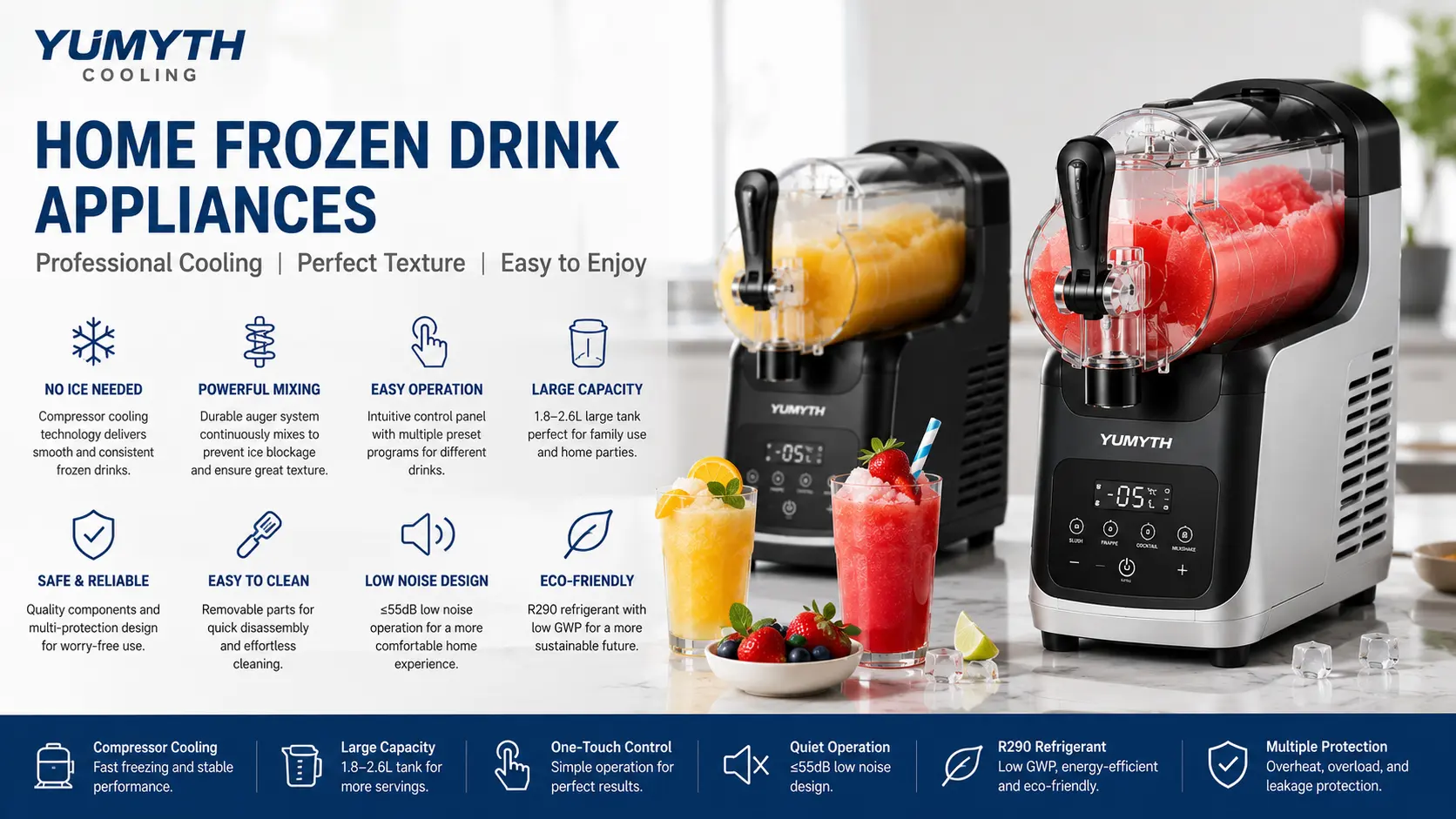
Home Frozen Drink Appliance Market Engineering Trends
2026-07-17
BY LIN
Home frozen drink equipment are changing from mere seasonal gadgets into a different class of counter-top refrigeration machines. These types of machines are expected to turn all kinds of drinks ...
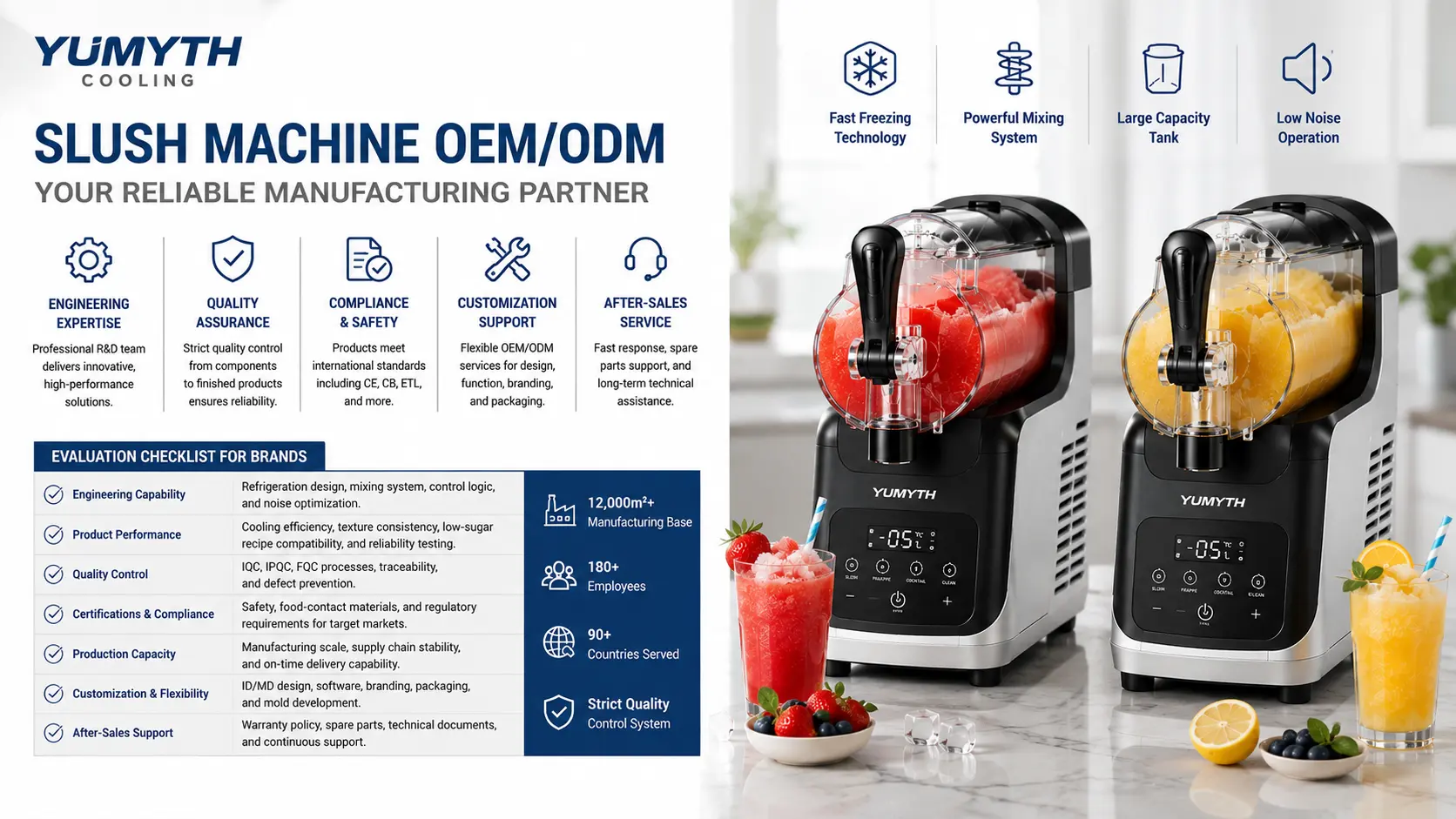
How appliance brands evaluate slush machine OEM suppliers
2026-07-17
BY LIN
Choosing the slush machine OEM supplier is not just a product selection process but a strategic decision. The home frozen drink machine consists of a refrigeration circuit, compressor, auger drive, ...
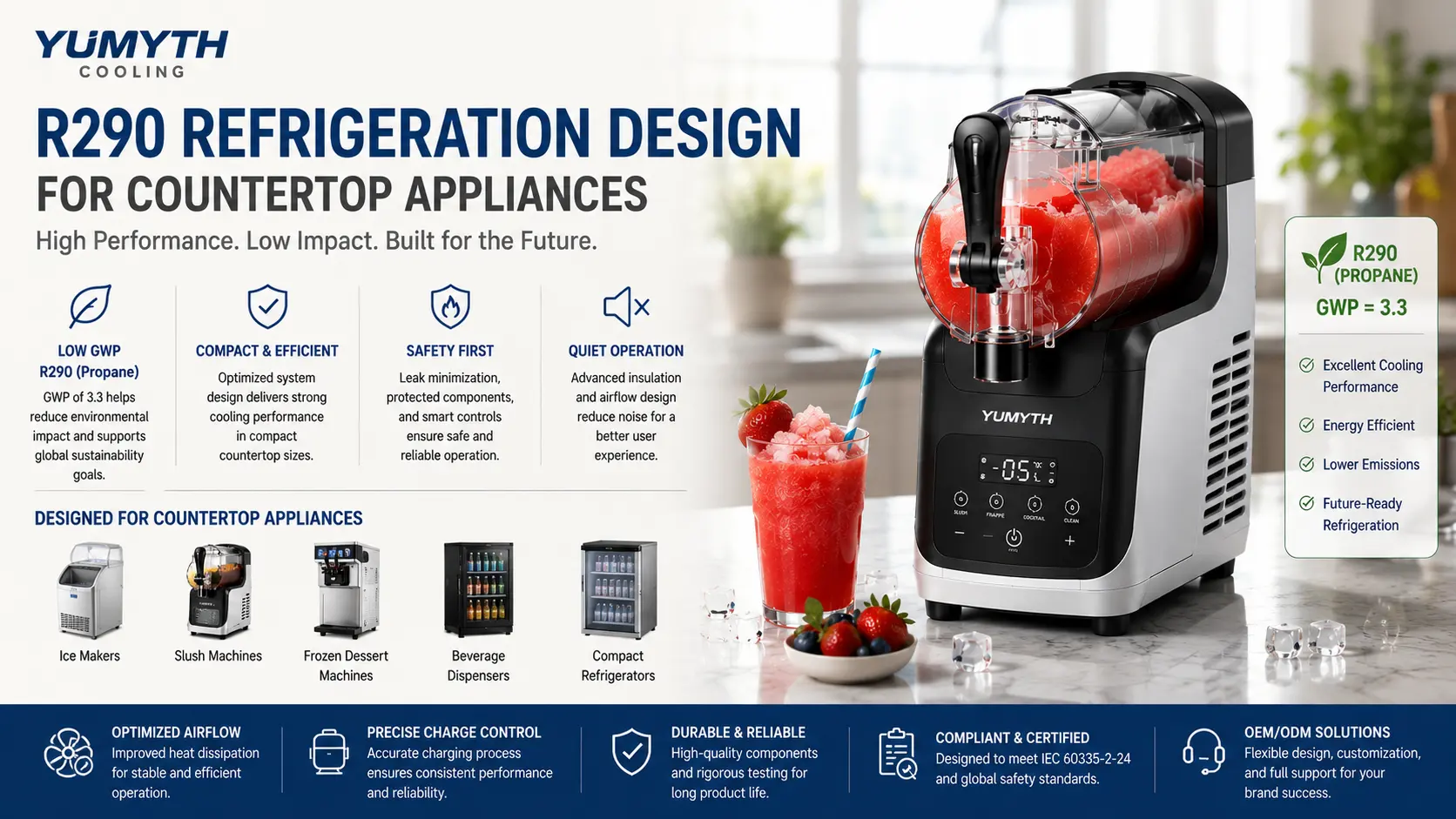
R290 refrigeration design in countertop appliances
2026-07-17
BY LIN
R290 refrigeration is gaining momentum for use in countertop refrigeration products, including home slush machines, compact ice makers, frozen dessert machines, and beverage dispensers. R290 is also known as propane, ...

Common reasons home slush machines jam
2026-07-17
BY LIN
Here are the top 5 most frequent causes of home slush machines jamming: Home slush machines are used to mix liquid beverages into a smooth, partially frozen concoction by refrigerating ...