
Slushie Machine vs. Margarita Machine: What's Actually the Difference?
Share:
-

-

-

-


Copied
Share:
-
-
-
-
Copied
Both machines use the same core technology — a compressor and auger — to freeze liquid into slush. The real difference is calibration: margarita machines are specifically tuned to freeze alcohol-containing recipes without over- or under-freezing. A standard slushie machine can make frozen margaritas, but only if you keep the ABV below approximately 8–10% and your brix between 12–18°.
You want to make frozen margaritas at home. You search for a machine and immediately hit a wall: "slushie machine," "margarita machine," "frozen drink maker," "frozen cocktail machine" — all described with nearly identical hardware photos and overlapping feature lists, but different names and wildly different prices. You need to know: are these genuinely different machines, or is this just marketing?
The answer is both — and understanding why will save you from buying the wrong machine or overspending on a dedicated margarita unit when your existing slushie machine could do the job perfectly. This guide explains the real mechanical differences, the science of why alcohol changes everything, and gives you a direct decision framework so you know exactly which machine fits your situation before you spend a dollar.
Both Machines Work the Same Way — Here's What That Means
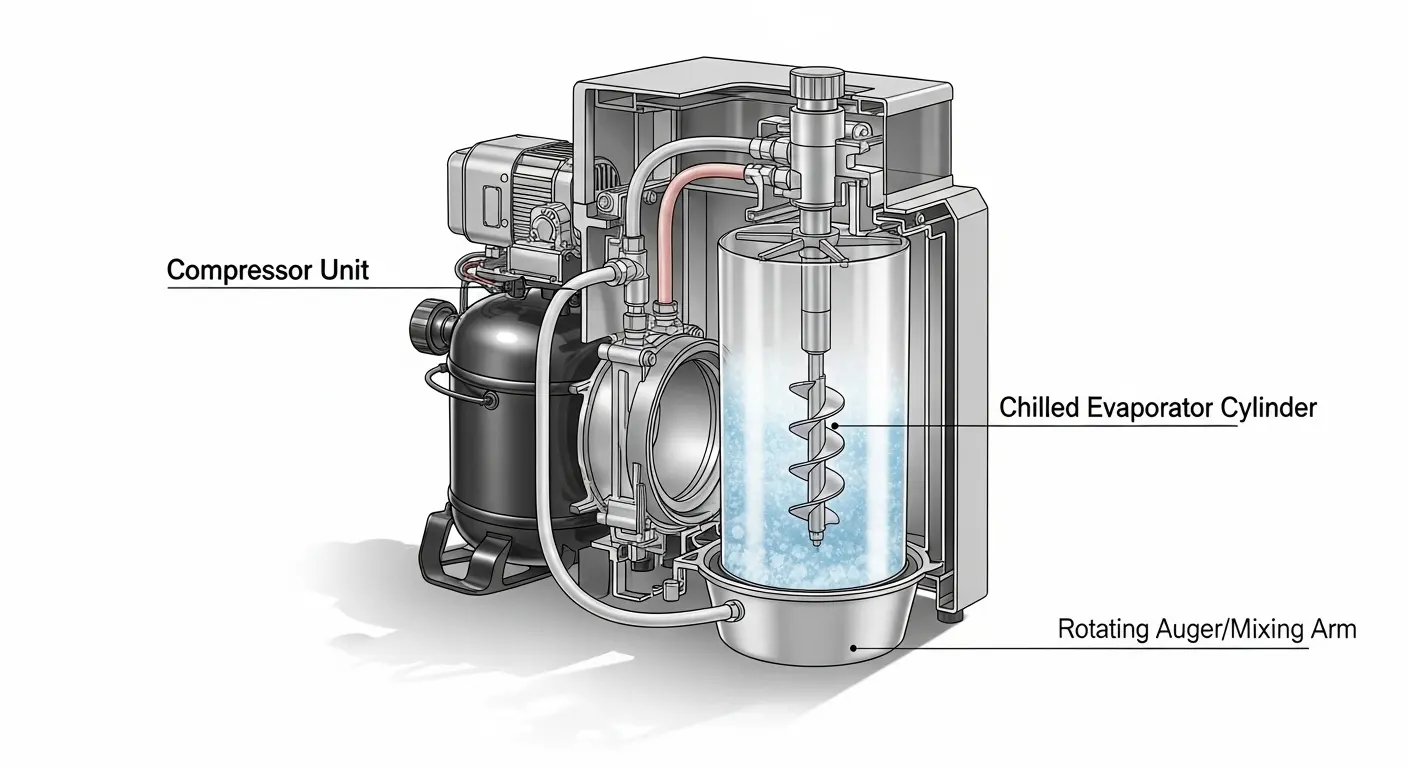
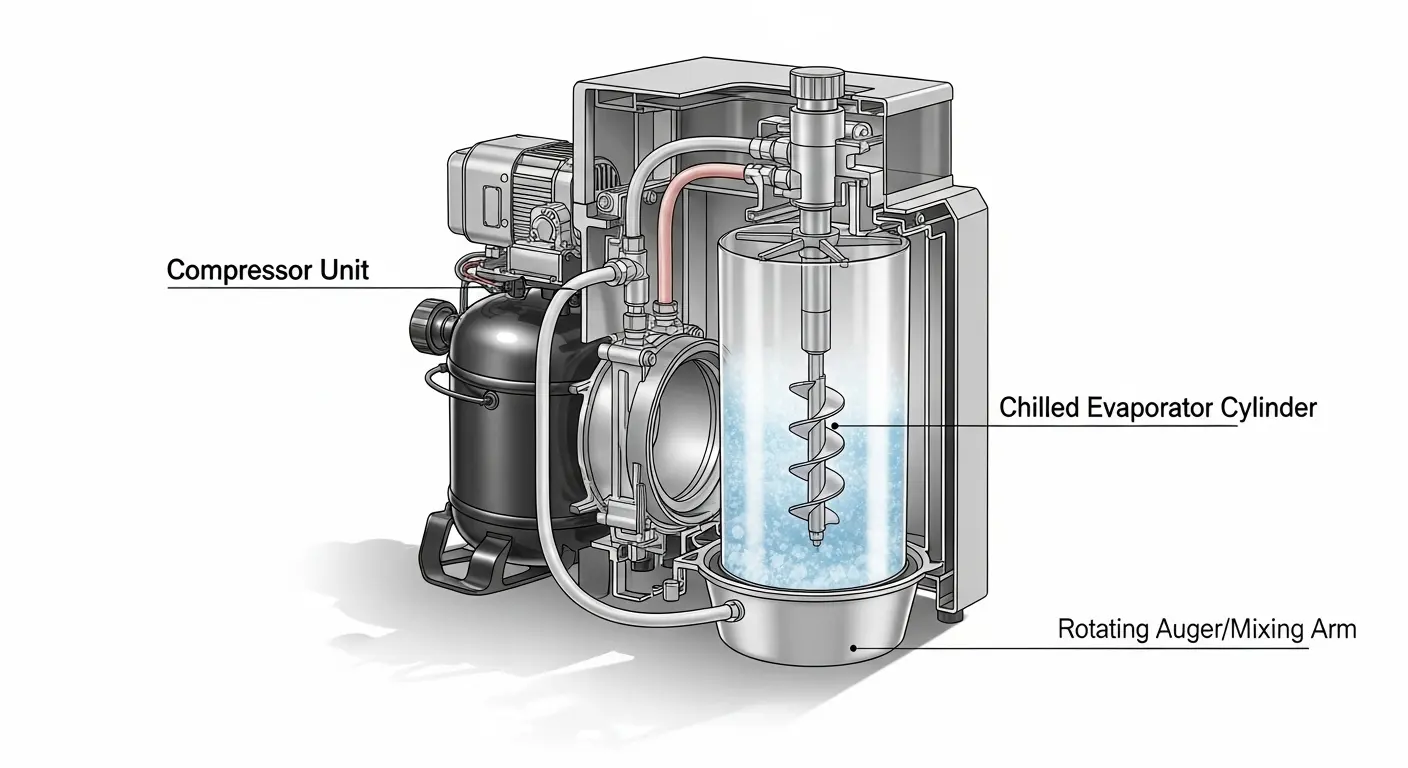
Here is the foundational fact that most buyers don't know: a modern home margarita machine and a modern home compressor slushie machine use identical core technology — vapor-compression refrigeration with a rotating auger.
The mechanism works like this: a built-in compressor pumps refrigerant through a coiled evaporator cylinder inside the machine's tank. As the refrigerant expands and absorbs heat, the cylinder gets cold. The liquid you poured in — margarita mix, juice, soda — comes into contact with that chilled cylinder and begins to freeze at the edges. An auger, a rotating mixing arm, continuously scrapes those forming ice crystals off the cylinder walls, breaking them into tiny particles and redistributing them throughout the liquid. The result is millions of fine ice crystals suspended in semi-frozen liquid — that smooth, scoopable, pourable texture we call slush.
As Taylor Company puts it: "The slushy machine freezing mechanism is designed to keep the mixture right at the edge of freezing, where ice crystals form slowly and evenly." It's not about freezing fast — it's about freezing in controlled increments so the texture stays right.
This same mechanism is why a frozen margarita machine and a compressor slushie machine look identical side by side. They share the same compressor, the same auger, the same evaporator cylinder, the same tank design. The difference lies in calibration, operating range, and what they're designed to freeze.
What "Vapor-Compression Refrigeration" Means in Plain Terms
Strip away the technical language and here is what's actually happening inside your machine: the compressor is doing the same job as your home refrigerator — pumping refrigerant to absorb heat from whatever's inside. The auger is doing the same job as a stand mixer — preventing the liquid from sitting still long enough to freeze solid. Together, they hold the liquid in a permanent state of "almost frozen": cold enough for ice crystals to form, moving enough for those crystals to stay tiny and even.
This is fundamentally different from a blender that crushes pre-made ice cubes. A blender doesn't control temperature — it applies mechanical force to ice that's already at -18°C. The result: larger, irregular ice chunks that melt unevenly, dilute your drink quickly, and create an inconsistent texture from the first sip to the last. A compressor machine, by contrast, creates ice from the actual liquid itself, preserving every bit of flavor with no dilution whatsoever.
For a deeper look at how this same technology relates to ice cream machines — which share the identical core mechanism — see our guide on how slush machines compare to ice cream makers.
So What IS Different Between a Slushie Machine and a Margarita Machine?
Given that both machines use compressor + auger technology, the differences are real but specific. There are three:
1. Calibrated operating temperature range. A standard home compressor slushie machine is calibrated to produce optimum slush at -3°C to -8°C — appropriate for high-sugar, zero-alcohol drinks like sodas and fruit juices. A dedicated margarita machine runs a more powerful compressor that can reach -8°C to -12°C, giving it the cold-side power to overcome the antifreeze effect of alcohol in cocktail recipes.
2. Intended brix operating range. Both machine types have a brix "sweet spot" — the range of sugar concentration at which the liquid freezes correctly. Wikipedia documents the margarita machine's brix range as 12–18°, derived from Mariano Martinez's original machine design from 1971. Standard home slushie machines target 14–18° Brix. These ranges overlap significantly — which is exactly why a properly recipe-balanced margarita will freeze well in a quality home slushie machine.
3. Branding and designation. "Margarita machine" is a commercial food service designation — it tells a bar operator that the machine is rated and tested for alcohol-containing frozen drink production. "Slushie machine" is a consumer brand designation. In 2026, many home machines (including YUMYTH's compressor-based range and the Ninja SLUSHi) function as both, with dedicated cocktail modes calibrated for alcohol recipes.
KaTom's commercial food service guide defines slush machines as "designed primarily for creating slushies and other non-alcoholic frozen beverages" while margarita machines are "specifically designed for frozen cocktails, particularly margaritas — these machines are rated for freezing alcohol." That is the clearest commercial distinction. For home use, the line is much blurrier.
The Brix Factor — Why Sugar Is the Real Secret
Before alcohol enters the equation, sugar is the key variable that determines whether any liquid freezes into slush properly. Brix is a measurement of dissolved sugar concentration — and it directly controls the freeze behavior of your liquid inside the machine.
Here is why this matters: plain water freezes solid at 0°C. Add sugar and you lower the freezing point — the water molecules are disrupted by the dissolved sugar and can't form a rigid ice lattice as easily. At 14–16° Brix (roughly the sweetness of a properly formulated fruit juice drink or commercial margarita mix), the liquid hits a perfect middle zone: cold enough to form fine ice crystals, sweet enough to prevent freezing solid.
- Below 12° Brix: Liquid freezes too aggressively — you get a solid block inside the tank, machine strains, texture is chunky
- 12–18° Brix: The perfect operating zone — smooth, consistent fine-crystal slush, proper texture maintained for hours
- Above 18° Brix: Liquid is too sweet and thick — ice crystals can't form properly, the mixture stays semi-liquid and syrupy
Practical implication: Most commercial margarita mixes sold in bottles are already formulated to hit 14–16° Brix — they're designed to work right out of the bottle in any compressor machine. DIY recipes using fresh lime juice, tequila, and triple sec require careful balancing to hit this range. We'll give you the exact recipe math below.
The Alcohol Factor — Where the Real Difference Lies
This is the most practically important concept for any home buyer who wants to make frozen cocktails. Alcohol depresses the freezing point of liquid — beyond what sugar does on its own. The more alcohol in your mix, the lower the temperature your machine needs to reach to freeze it into proper slush.
The freeze point data:
| ABV in Final Mix | Approximate Freeze Point | Within Standard Home Slushie Machine Range? |
|---|---|---|
| 0% ABV (pure soda/juice) | 0°C to -2°C | ✅ Yes |
| 5% ABV (hard seltzer, light beer) | -2°C to -4°C | ✅ Yes |
| 8–10% ABV (diluted cocktail) | -4°C to -7°C | ✅ Yes (at limit) |
| 12–15% ABV (standard margarita ratio) | -7°C to -10°C | ⚠️ Difficult — needs dedicated machine |
| 20%+ ABV (undiluted spirit ratio) | -12°C to -15°C | ❌ No — won't freeze |
A standard home compressor slushie machine typically operates in the -3°C to -8°C range. That covers everything up to approximately 8–10% ABV in your final mix. Push beyond that and the alcohol's antifreeze effect drops the effective freeze point below what the machine can reach — the liquid chills but never achieves true slush consistency.
A dedicated margarita machine's more powerful compressor reaches -8°C to -12°C, covering the 12–15% ABV range that a standard cocktail recipe typically hits before dilution.
For engineering-level detail on how compressor calibration differences affect frozen drink machine performance, see our industry insights blog.
Can a Slushie Machine Make Frozen Margaritas?
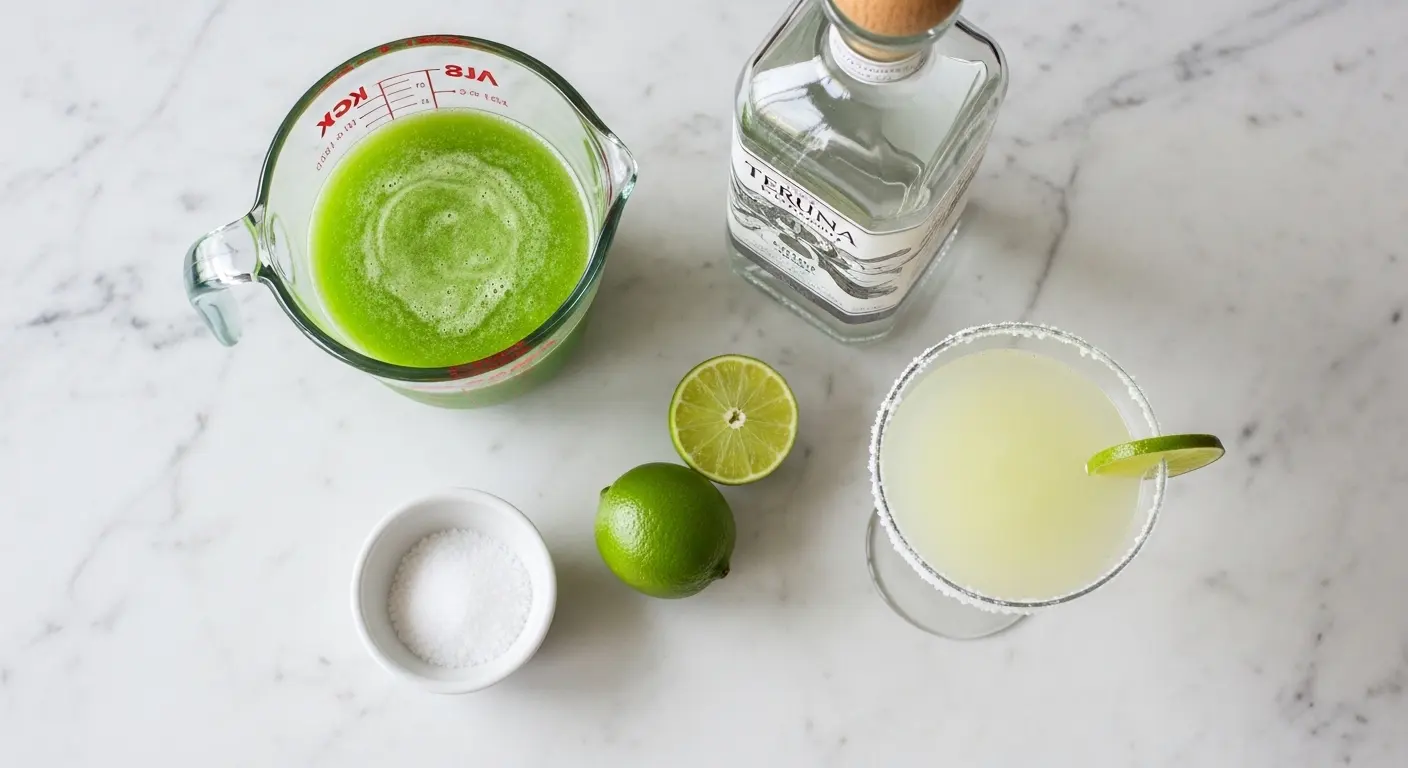
Yes — with specific conditions. This is the top question home buyers ask, and the answer is more useful than a simple yes or no.
The conditions for making frozen margaritas in a standard home compressor slushie machine:
- Keep total ABV in the final mix below 8–10% — this is the most critical rule
- Keep brix between 12–18° — commercial margarita mix handles this automatically; DIY recipes need balancing
- Pre-chill your liquid to 4–6°C before pouring in — cuts freeze time from ~30 minutes to ~20 minutes
- Use the machine's cocktail/frozen drink mode if your machine has one — it adjusts compressor intensity for the alcohol chemistry
Stay Snatched's practical tested recipe guidance for the Ninja SLUSHi confirms this: "Stick to 1–1.5 oz alcohol per serving. Any more and the drink won't freeze properly." At 1.5 oz tequila per 12 oz of mix, the final ABV sits at approximately 7–8% — comfortably within range.
Worked recipe example for a 1.5L batch in a standard home compressor slushie machine:
| Ingredient | Amount | Purpose |
|---|---|---|
| Tequila (40% ABV) | 90 ml (3 oz) | Spirit base |
| Triple sec (40% ABV) | 45 ml (1.5 oz) | Orange flavor, sweetness |
| Fresh lime juice | 90 ml (3 oz) | Acid / flavor |
| Commercial margarita mix | 450 ml (15 oz) | Brix calibration, sweetness |
| Water or sugar water | 450 ml (15 oz) | ABV dilution |
| Total | ~1.1L | Final ABV: ~7–8% / Brix: ~14–16° ✅ |
This recipe freezes cleanly in a quality home compressor slushie machine in 20–25 minutes from pre-chilled liquid. The result: a proper frozen margarita texture — slightly creamier than a pure slushie due to the citrus acid softening the ice crystal structure, with the characteristic tart-sweet-salty flavor profile.
Our Mini Slush Machine is tested with recipe ratios in this ABV/brix range. See the spec sheet for operating temperature range and MIN/MAX fill levels.
Why Your Margarita Won't Freeze — and How to Fix It
This is the most common frustration in home frozen drink communities. If your margarita won't reach proper slush consistency in your compressor machine, one of five things is wrong. Work through this checklist in order:
1. Too much alcohol → ABV is above 10%
Fix: Dilute with more commercial margarita mix, water, or simple syrup. Add 150–200ml of water to your batch and re-run.
2. Too little sugar → brix is below 12°
Fix: Add 2–3 tablespoons of simple syrup (equal parts sugar and water, dissolved). Stir into the mix before pouring in. Re-run the machine.
3. Liquid too warm → starting temperature too high
Fix: Move your premixed batch to the refrigerator for 2+ hours before using. Room-temperature liquid takes 35+ minutes to freeze; pre-chilled liquid takes 18–22 minutes.
4. Machine evaporator not pre-cooled → cylinder isn't cold enough at the start
Fix: Run the machine empty for 5 minutes before adding your mix. This pre-chills the evaporator cylinder so it hits the correct temperature the moment your liquid makes contact.
5. Fill level incorrect → above MAX or below MIN line
Fix: Check your tank's MIN and MAX fill lines. Overfilling prevents even temperature distribution; underfilling doesn't give the auger enough liquid to agitate properly. Both result in poor slush consistency.
Work through these five steps in order and the vast majority of "my margarita won't freeze" problems resolve completely.
When Should You Get a Dedicated Margarita Machine?
A dedicated margarita machine is worth the extra $70–$150 over a quality home compressor slushie machine in four specific situations:
Get a dedicated margarita machine if:
- You regularly make cocktail recipes at full bartender ratios (2 oz spirit per 6 oz total — ~15–18% ABV before any dilution) and don't want to reformulate
- You host frequent cocktail parties and want a machine that handles strong recipes without monitoring brix or ABV
- The creamy, semi-liquid frozen margarita texture (vs. granular slushie texture) is important to your serving style
- You are running a pool bar, event, or commercial setup where a commercial-grade machine is appropriate
A quality home compressor slushie machine is entirely sufficient if:
- You use commercial margarita mix (pre-formulated to 14–16° Brix, designed to work in any compressor machine right out of the bottle)
- You dilute your recipe to bring ABV below 8–10% in the final mix — a one-time recipe adjustment
- You make margaritas a few times per week for home entertaining, not for commercial throughput
- Budget is a real consideration: home compressor slushie machines start at $80–$130; dedicated margarita machines start at $150–$350
Cost reality check: The performance gap between a correctly used $120 home compressor slushie machine and a $250 dedicated margarita machine — for home margarita use with a diluted recipe — is minimal to undetectable for most users. The only scenario where the dedicated machine clearly wins is high-ABV, undiluted cocktail recipes.
Our Slush and Ice Cream Maker handles frozen cocktail recipes at correct home-use ABV ratios while also giving you the option to make homemade ice cream from the same unit — a compelling value proposition for families who want both adult frozen cocktails and frozen treats for kids from a single machine.
Is the Ninja SLUSHi a Margarita Machine?
This is the third most-searched sub-question for this topic — and the answer is nuanced.
The Ninja SLUSHi uses a compressor and auger — the same mechanism as a dedicated margarita machine — and includes a dedicated "Spiked Slush" or cocktail mode calibrated for alcohol-containing recipes. In that sense: yes, it functions as a margarita machine for home use. With a properly diluted recipe (1–1.5 oz tequila per 12–16 oz total mix, ~7–8% ABV final), it produces excellent frozen margaritas with the right texture and consistency.
What it is not: a commercial margarita machine. It cannot handle undiluted bartender-ratio cocktail recipes at 15–20% ABV without significant recipe adjustment. The Ninja SLUSHi FS300 at 88 oz (2.6L) capacity, ~$180 price point, sits squarely in the same category as YUMYTH's home compressor machines — cocktail-capable for home use with correct recipe ratios, but not a commercial-grade frozen cocktail unit.
The Reddit community's summary of why the modes differ is accurate: "Frozen drink has alcohol in it, which makes it easier on the blade to cut through, so less power. Slushi is just basically ice, so more power for the blade." Less compressor intensity + reduced auger speed = the cocktail mode. The machine senses that the antifreeze chemistry of alcohol means it doesn't need to push as hard to achieve proper slush consistency.
Texture Difference: Slushie vs. Frozen Margarita
The texture difference between a standard slushie and a properly made frozen margarita is real — but it's caused by recipe differences, not machine differences. Both can come from the same compressor machine.
A standard slushie (high-sugar, zero-alcohol juice or soda) produces dense, fine, vivid ice crystals — the smooth, consistently firm texture you know from convenience store Slurpees. The high sugar content draws the freeze to a precise zone, producing evenly distributed microcrystals throughout the liquid.
A frozen margarita (alcohol + citrus + sugar) produces a softer, slightly creamier texture with a semi-translucent appearance. Why? Two reasons: (1) alcohol softens the freeze, preventing crystals from forming as tightly; (2) citric acid from lime juice creates a different molecular environment that produces lighter, less dense ice structures. The result is a drink that pours more fluidly from the dispenser and feels creamier on the palate — closer to a frozen cocktail than a granular fruit slushie.
Neither texture is "better" — they suit different occasions. For kids' fruit punch slushies, you want Type 1 dense-crystal slushie texture. For adult frozen cocktail entertaining, the softer margarita texture is exactly right. The machine doesn't determine which you get — the recipe does.
Head-to-Head: Slushie Machine vs. Margarita Machine
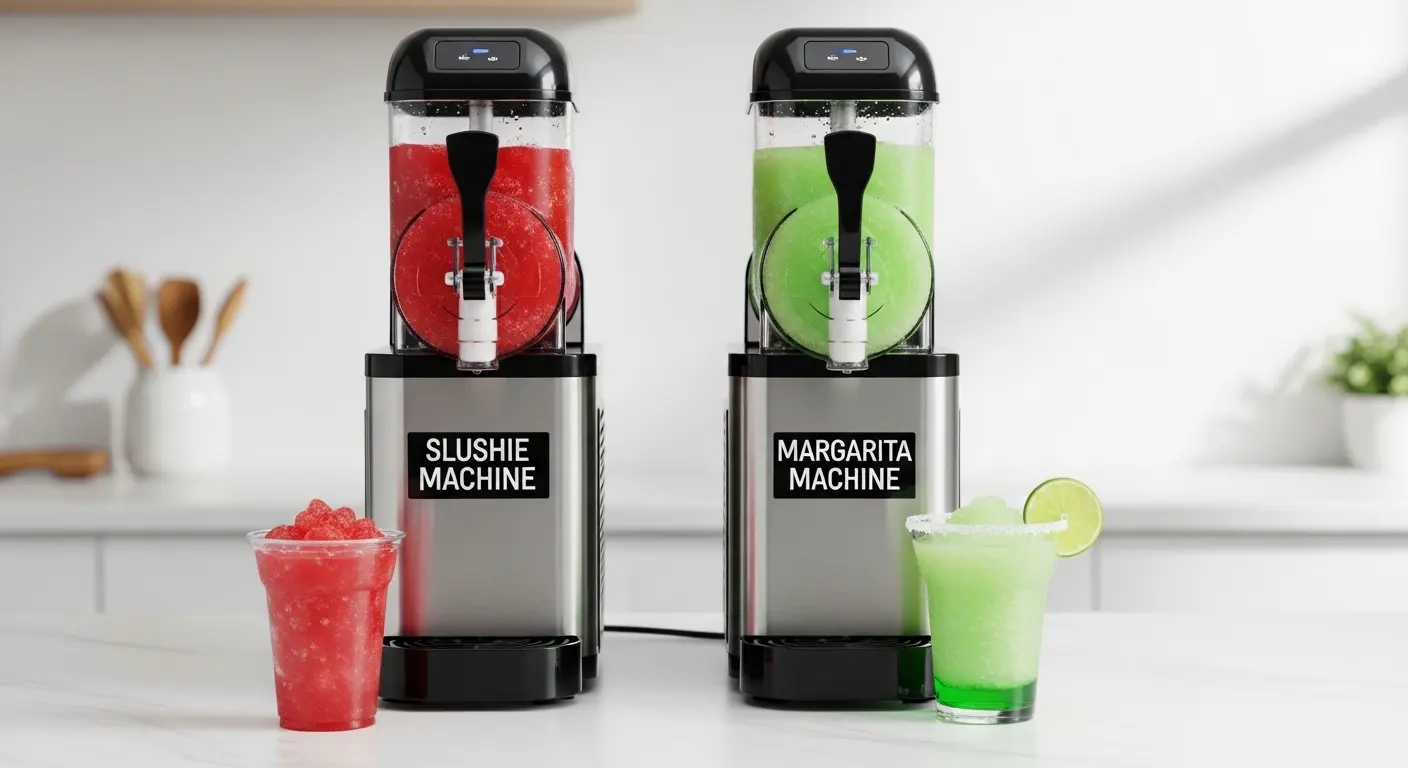
Frozen Margarita Machine vs. Slushie Maker — Key Differences
| Feature | Home Compressor Slushie Machine | Dedicated Margarita Machine | Ice-Crusher Margarita Maker |
|---|---|---|---|
| Mechanism | Compressor + auger | Compressor + auger (higher power) | Motor + blades + pre-made ice |
| Ice Required? | No | No | Yes |
| ABV Limit | ~8–10% (with proper recipe) | ~12–15% | No limit |
| Brix Operating Range | 14–18° optimal | 12–18° | Not applicable |
| Texture Output | Fine, granular, smooth slush | Creamy, semi-liquid frozen cocktail | Chunky, variable, melts quickly |
| Cocktail Mode? | Some models (Ninja SLUSHi, YUMYTH) | Yes — built for it | Basic only |
| Noise Level | ~55–68 dB | ~60–72 dB (more powerful compressor) | ~75–85 dB (crushing phase) |
| Home Price Range | $80–$180 | $150–$350 | $30–$100 |
| Best For | Daily slushies + low-ABV cocktails | Dedicated cocktail entertaining | Budget occasional margaritas |
| Requires Recipe Adjustment for Margaritas? | Yes (dilute to <10% ABV) | No | No (but texture suffers) |
Frequently Asked Questions
Can a slushie machine make margaritas?
Yes — with two conditions. Keep the total ABV of your margarita mix below approximately 8–10% by diluting with commercial margarita mix or water, and keep brix between 12–18° (commercial margarita mix is already pre-formulated to this range). With those conditions met, a quality home compressor slushie machine produces excellent frozen margaritas. Use pre-chilled liquid to reach proper slush consistency in 20–25 minutes.
Does a margarita machine need ice?
Modern compressor margarita machines do not require ice — they self-freeze using built-in vapor-compression refrigeration, exactly like a compressor slushie machine. Only older, budget "margarita machines" that use a blender-style ice-crushing mechanism require pre-made ice. When buying, check the product description for "compressor," "no ice needed," or "self-freezing" to confirm which type you're getting.
How much alcohol can you put in a slushie machine?
Standard home compressor slushie machines handle up to approximately 8–10% ABV in the final mixed recipe. Practical recipe rule: no more than 1–1.5 oz of spirit per 12–16 oz of total mix. Beyond that threshold, the alcohol's antifreeze effect prevents proper slush consistency from forming. For full-strength cocktail ratios above 10% ABV, a dedicated margarita or frozen cocktail machine with a more powerful compressor is the better choice.
What brix level does margarita mix need for a slushie machine?
The operating brix range for both slushie and margarita machines is 12–18°. Below 12° Brix, the machine over-freezes (mix solidifies). Above 18° Brix, the mix is too thick and sweet to freeze properly — it stays syrupy. Most commercial margarita mixes are pre-formulated to hit 14–16° Brix and work right out of the bottle in any quality home compressor machine. DIY fresh-ingredient recipes require manual brix balancing with added simple syrup.
Is the Ninja SLUSHi a margarita machine?
Functionally yes — for home use. The Ninja SLUSHi uses a compressor and auger (the same mechanism as a margarita machine) and includes a dedicated frozen cocktail mode calibrated for alcohol-containing recipes. With a properly diluted margarita mix (~7–9% ABV final, commercial margarita mix for brix calibration), it produces excellent frozen margaritas. It is not a commercial-grade margarita machine — it cannot handle undiluted full-strength cocktail ratios without recipe adjustment.
Why won't my margarita freeze in my slushie machine?
Work through this checklist: (1) Too much alcohol — dilute to below 10% ABV with water or extra margarita mix; (2) Too little sugar — add 2–3 tablespoons of simple syrup to raise brix above 12°; (3) Liquid too warm — pre-chill ingredients in the fridge for 2+ hours before using; (4) Machine not pre-cooled — run empty for 5 minutes first to pre-chill the evaporator cylinder; (5) Fill level wrong — check MIN and MAX lines and ensure you're within the correct range.
What is the difference between a frozen margarita and a slushie texture?
A slushie made from high-sugar, zero-alcohol juice produces dense, fine, vivid ice crystals — the firm, consistent texture of a convenience store slush. A frozen margarita produces a slightly creamier, softer texture because alcohol and citric acid from lime juice interrupt the ice crystal formation process, resulting in smaller, lighter crystals with a more fluid pour. Both are produced by the same compressor machine; the texture difference is driven entirely by the recipe.
Do I need a dedicated margarita machine or will a slushie machine work?
For most home margarita enthusiasts, a quality compressor slushie machine is entirely sufficient — as long as you use commercial margarita mix (already brix-calibrated) and keep ABV below 10% with recipe dilution. A dedicated margarita machine is worth the extra $100–$200 only if you regularly make full-strength undiluted cocktail recipes above 10% ABV, or host high-volume cocktail parties where continuous-flow margarita output at restaurant ratios is required.
Ready to Make Frozen Margaritas at Home?
YUMYTH builds compressor-based home slushie machines that handle frozen cocktail recipes with the right recipe ratios — no ice needed, no dedicated margarita machine required for home entertaining.
Our machines are compressor-cooled, engineered with accurate MIN/MAX fill design, quiet enough for a home kitchen (55–65 dB), and backed by 8+ years of frozen drink appliance manufacturing for brands across 92+ global markets.
Choose your machine:
- Mini Slush Machine — compact, cocktail-capable home compressor machine perfect for 1–2 person households. Handles frozen margaritas with the recipe ratios outlined in this guide.
- Slush and Ice Cream Maker — dual function for families: frozen cocktails for adults and homemade ice cream for kids from one mid-size unit.
- Explore all YUMYTH home machines — full range, direct from the manufacturer, with complete spec sheets.
Related Articles
How We Test Every Ice Maker Before Packaging
2026-09-15
BY YUMYTH
A step-by-step look at refrigerant handling, cooling verification, leak detection, corrective action and electrical safety testing For an ice maker, reliable performance is determined long before the carton is sealed. ...
Guide for Brands Looking for a Reliable Vacuum Sealer OEM Supplier
2026-09-14
BY YUMYTH
When you are sourcing kitchen appliances for your retail brand, finding a dependable vacuum sealer OEM supplier is rarely just about getting the lowest unit price. It is about protecting ...
Why Ice Shape Matters: Understanding 10mm × 15mm Cylindrical Nugget Ice
2026-09-14
BY YUMYTH
More Than Ice Production — The Ice Itself Shapes the Consumer Experience When sourcing a nugget ice maker, buyers often focus first on production capacity, water tank size, ice basket ...

Ice Maker Sourcing Guide: How to Find the Right Factory
2026-09-10
BY YUMYTH
Sourcing an ice maker looks straightforward on paper. Find a supplier, agree on a price, place an order. But anyone who has actually done this knows the process is rarely ...