
Vacuum Sealer Accessories: Bags, Rolls, Canisters, and More
Share:
-

-

-

-


Copied

Share:
-
-
-
-
Copied
Vacuum sealer accessories include flexible bags, rolls, rigid canisters, reusable zipper bags, hoses, adapters, jar attachments, and bottle stoppers. The right choice depends on more than the food being packed. The machine type, bag structure, sealing width, accessory port, valve, connector, and intended storage conditions must also match.
A bag that fits inside the machine may still be incompatible with its vacuum method. Likewise, a canister cannot work unless the machine, hose, connector, and lid valve form an airtight system. For a deeper breakdown of bag-to-machine matching, see Vacuum Sealer Bag Compatibility.
Choose an Accessory by Machine Type and Storage Job
Start with the vacuum sealer, then match the accessory to the storage task.
| Machine or storage need | Common accessory direction | What to confirm |
|---|---|---|
| External suction sealer | Textured bags, embossed rolls, compatible valve bags, canisters, or bottle accessories | Bag channels, maximum width, accessory port, hose and valve fit |
| Chamber vacuum sealer | Compatible smooth chamber pouches or textured bags where the model permits | Chamber dimensions, seal-bar length, operating mode |
| Dual-mode sealer | Chamber pouches in chamber mode and compatible textured bags in external mode | Requirements for each operating mode |
| Handheld vacuum system | Valve zipper bags or containers designed for that pump | Valve design and proprietary compatibility |
| Dry portions | Pre-cut bags, rolls, reusable zipper bags, or jars for properly dried foods | Bag size, valve compatibility, storage conditions |
| Liquids and marinades | Suitable chamber pouches or rigid containers | Machine capability, liquid handling, lid and valve design |
| Delicate foods | Rigid canisters or controlled-vacuum packaging | Crushing risk and container dimensions |
| Opened bottles | Compatible bottle stopper and hose or pump | Bottle-neck fit and connector design |
Compatibility should be verified at the exact model level. Two accessories may look similar but use different valve shapes, hose diameters, connector geometries, or sealing methods.
Vacuum Bags and Rolls: Size, Structure, and Best Use
Vacuum bags are ready-sized pouches with one open end. Rolls are continuous material that users cut to the required length before sealing both ends around the product.
Both formats must fit the machine’s usable sealing area. A bag opening that extends beyond the seal bar may wrinkle, remain partly unsealed, or fail to hold a vacuum. The food should also fit without contaminating the open edge with oil, moisture, crumbs, or sharp fragments.
Pre-Cut Bags vs Rolls
| Factor | Pre-cut bags | Vacuum rolls |
| Preparation | Ready to fill and seal | Must be measured, cut, and sealed at one end first |
| Size flexibility | Limited to available dimensions | Length can be adjusted for the product |
| Workflow speed | Faster for repeated portions | Better for products with varying lengths |
| Portion consistency | High | Depends on how each section is cut |
| Equipment features | No built-in cutter required | Easier with roll storage and a cutter |
| Best fit | Standard portions and frequent packing | Irregular, long, or mixed-size products |
Roll width is still fixed, even when length is adjustable. Buyers should therefore compare roll width with the machine’s maximum supported bag width.
YUMYTH’s VS6606X provides a model-specific example. Its product page lists built-in roll storage, a cutter, a maximum bag width of 30 cm, a 3 mm sealing width, and an accessory hose. These details should not be applied automatically to other machines.
Textured Bags vs Smooth Chamber Pouches
External suction sealers commonly rely on textured or embossed channels inside the bag. These channels create a path through which the machine can pull air while the bag opening is positioned across the sealing area.
A chamber machine removes air from the chamber surrounding the entire pouch. Compatible smooth chamber pouches can therefore work without the internal channels normally needed by an external suction system.
Dual-mode equipment may have different requirements for each mode. YUMYTH’s CVS101 page, for example, lists textured and smooth chamber bags for chamber operation but specifies textured bags for external operation. This is a model-specific example of why users should check the operating mode rather than assuming that one pouch works in every configuration.
Bag structure is only one consideration. The pouch must also meet the required dimensions, sealing conditions, food-contact use, and temperature range. Claims such as freezer-safe, boil-safe, microwave-safe, or suitable for sous vide should come from product-specific documentation.
Canisters, Reusable Bags, Jar Attachments, and Bottle Stoppers
Rigid and reusable accessories solve storage problems that ordinary heat-sealed bags do not always handle well.
| Accessory | Best suited to | Main limitation or check |
| Vacuum canister | Delicate foods, loose ingredients, repeat access, or items that should not be compressed | Lid gasket, valve, hose compatibility, material and cleaning instructions |
| Reusable zipper vacuum bag | Frequently opened dry goods or compatible short-term storage applications | Valve fit, cleaning method, food suitability |
| Jar attachment | Properly dried foods stored in compatible jars | Jar-mouth and lid compatibility; not a replacement for canning |
| Bottle stopper | Compatible opened bottles | Neck size, stopper valve, hose or pump connection |
| Accessory hose | Connecting the machine to an external container, bag, or stopper | Machine-end and accessory-end connector fit |
| Adapter | Joining a hose to a specialized valve or accessory | Exact geometry and intended system |
Canisters are useful when a bag could crush the contents or when the user needs regular access without cutting and resealing a pouch. Reusable zipper bags offer similar convenience in a flexible format, but their valves must match the machine or handheld pump.
Jar attachments require careful wording. A vacuum on a jar does not prove that food has been safely canned or sterilized. The National Center for Home Food Preservation explains that a sealed lid alone does not establish a safe preservation process. Vacuum jar accessories are more appropriately discussed as storage tools for suitable products, such as properly dried foods, rather than as substitutes for validated water-bath or pressure-canning methods.
What Hoses, Valves, and Adapters Must Match
Before buying an external accessory, check the complete connection path:
-
Confirm that the machine has an external accessory port or supported VAC function.
-
Identify the connector used at the machine end of the hose.
-
Check the connector or adapter required at the accessory end.
-
Confirm that the canister, zipper bag, stopper, or jar attachment uses a compatible valve.
-
Check whether the accessory needs a proprietary hose or adapter.
-
Make sure liquids cannot be pulled into the hose or machine.
-
Test a sample before placing a bulk order.
Visual similarity is not enough. Small differences in diameter, locking tabs, sealing surfaces, or valve depth can prevent the system from creating a stable vacuum.
Check Compatibility Before Ordering
A short technical checklist can prevent most accessory-ordering problems.
-
Record the exact machine model. Do not rely only on the brand name.
-
Identify the machine type. Determine whether it is an external suction, chamber, dual-mode, or handheld system.
-
Measure the usable sealing width. The bag opening must fit fully within the seal bar.
-
Check the required bag structure. Confirm whether the machine needs textured bags, smooth chamber pouches, or different materials for separate modes.
-
Inspect the accessory port. Verify its location, connector shape, and supported functions.
-
Match the hose and valve. Confirm both ends of the connection.
-
Define the food application. Dry food, liquids, sharp edges, moisture, and delicate textures create different packaging requirements.
-
Set the temperature conditions. Freezing, reheating, boiling, or sous vide may require documented material limits.
-
Confirm package contents. A compatible accessory may still be optional rather than included.
-
Request samples. Test the accessory with the actual machine before approving a volume order.
Seal-bar configuration can also matter for demanding packages. Readers comparing sealing systems can review the dedicated guide to a double seal bar vacuum sealer rather than treating seal design as an accessory specification alone.
Match Accessories to Food and Storage Applications
The food and workflow should influence accessory selection after machine compatibility has been confirmed.
| Application | Practical accessory direction | Important check |
| Dry portions | Pre-cut textured bags, rolls, or reusable valve bags | Required bag structure and portion size |
| Moist meat or seafood | Suitable bags with a clean sealing area or a compatible chamber system | Keep liquid and residue away from the seal |
| Soups, sauces, or marinades | Compatible chamber pouches or rigid containers | Confirm the machine and accessory support liquids |
| Delicate bakery or produce items | Rigid canister or controlled-vacuum option | Avoid crushing |
| Bone-in meat or sharp foods | Suitable pouch with added protection around sharp points | Puncture resistance and seal integrity |
| Sous vide preparation | Product documented for the intended time and temperature | Do not assume every vacuum bag is suitable |
| Frequently accessed pantry goods | Reusable zipper bags, canisters, or compatible jars | Cleaning, valve, and lid condition |
| Opened bottles | Compatible bottle stopper | Neck and connector fit |
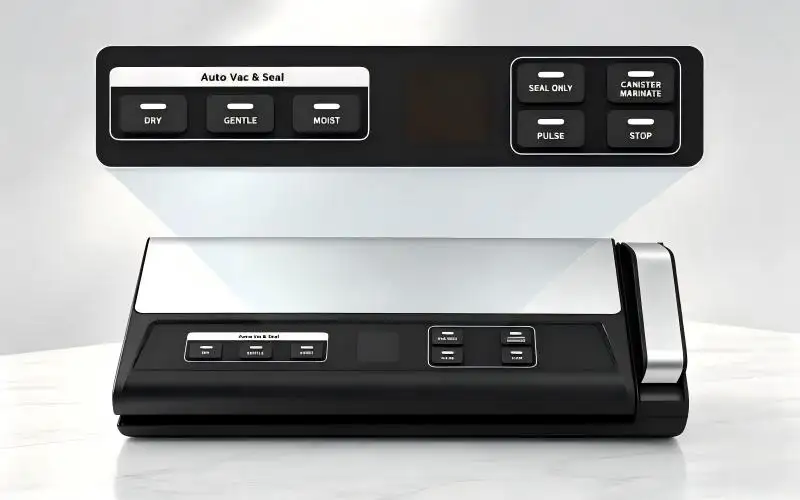
Moisture affects both the accessory and the machine settings. A tabletop vacuum sealer with separate dry and moist controls may help manage different food conditions, but the bag opening still needs to remain flat and clean.
Liquids require additional care because they can interfere with sealing or enter the vacuum channel. Detailed liquid-handling methods belong in a dedicated guide rather than being treated as a simple bag choice.
Vacuum packaging also creates reduced-oxygen conditions; it does not sterilize food. Refrigeration, handling, processing, and storage controls remain necessary. The FDA Food Code addresses hazard controls for reduced-oxygen packaging in regulated food establishments.
Common Accessory Problems and How to Prevent Them
| Problem | Likely cause | What to check |
| The machine removes little or no air | Smooth pouch used in an incompatible external sealer | Confirm the required bag structure |
| The bag seals only partly | Opening is too wide, folded, or outside the usable seal area | Reposition the bag and verify maximum width |
| The bag loses vacuum later | Puncture, contaminated seal, wrinkle, or incomplete seal | Inspect the pouch and sealing line |
| A canister will not evacuate | Loose lid, damaged gasket, closed valve, or incompatible hose | Check each sealing surface and connector |
| A reusable bag will not hold vacuum | Valve contamination, damaged closure, or pump mismatch | Clean and inspect according to product instructions |
| Liquid enters the hose | Unsuitable application or excessive liquid near the port | Stop use and follow the machine instructions |
| Adapter disconnects during use | Incorrect diameter or locking system | Confirm the specified adapter |
| A jar lid appears sealed but safety is uncertain | Vacuum formation confused with validated canning | Follow recognized preservation guidance |
Food residue is a frequent cause of bag failure. Before sealing, flatten the open edge and remove moisture, oil, crumbs, and folds. Sharp bones, shells, or product corners may also puncture the pouch after evacuation.
Reusable components require inspection. A worn gasket, cracked lid, damaged valve, or distorted zipper may allow air to return even when the machine initially creates a vacuum.
Included Accessories and Custom Bundles for Brands and Distributors
“Compatible” does not mean “included.” A machine may support several accessories while shipping with only a starter selection.
YUMYTH’s VS6612X product page, for example, lists five 15 × 20 cm bags, five 20 × 30 cm bags, and one accessory hose in the package. The VS6606X lists built-in roll storage, a cutter, an accessory hose, and support for bottles, containers, and zipper bags.
These examples show why package contents should be checked model by model.
YUMYTH also lists several accessory and packaging customization directions for commercial projects:
-
Personalized bags and rolls
-
Accessory tools and hoses
-
Bottle-sealing adapters
-
External containers
-
Zipper bags
-
Custom retail boxes
-
Branding, labels, and artwork
-
Multilingual manuals
-
Bundled machine-and-accessory packages
Exact specifications, quantities, materials, prices, lead times, and minimum order requirements need project confirmation. The website does not establish that every accessory category is manufactured in-house or available for every machine.
Companies evaluating a vacuum sealer manufacturer china can review the broader sourcing and customization process separately from the accessory selection covered here.
Confirm Package Contents Before Ordering
Separate the package into five categories:
-
Built-in features: roll storage, cutter, accessory port, or container mode.
-
Included consumables: starter bags or roll material.
-
Included attachments: hose, adapter, or other external-vacuum tool.
-
Optional accessories: containers, bottle stoppers, jar attachments, or additional bags.
-
Customized additions: branded consumables, boxes, labels, manuals, or market-specific bundles.
The quotation, approved sample, and final packing list should identify each category clearly.
What Commercial Buyers Should Confirm With an Accessory Supplier
Importers, distributors, and private-label buyers should request enough information to verify both functional compatibility and intended use.
Ask for:
-
Compatible machine models
-
Bag or roll dimensions
-
Textured or smooth surface structure
-
Port, connector, hose, valve, and adapter drawings
-
Food-contact documentation for the target market
-
Intended temperature and time conditions
-
Cleaning and reuse instructions where applicable
-
Sample availability
-
Accessory-only and bundled ordering requirements
-
Branding, packaging, label, and manual options
-
Replacement hose, valve, gasket, or lid availability
-
Final package contents
-
Inspection and acceptance criteria
Food-contact suitability should be supported at product level. The U.S. Food and Drug Administration’s food-packaging guidance explains that packaging materials and their components are food-contact substances whose intended use matters. A general statement about the machine does not automatically verify every bag, ink, adhesive, valve, gasket, or container.
Request a Compatible Vacuum-Sealer Accessory Package
A useful accessory recommendation begins with complete application details. Before requesting a quotation, prepare:
-
The machine model or required machine type
-
Required bags, rolls, containers, hoses, or adapters
-
Bag dimensions or container capacities
-
Food and storage applications
-
Intended storage or cooking temperature
-
Connector, valve, or port information
-
Target market
-
Expected quantities
-
Branding and packaging requirements
-
Sample-testing needs
YUMYTH accepts inquiries for bulk and customized vacuum-sealer projects. Use the contact page to discuss machine compatibility, accessory packages, samples, documentation, and private-label requirements.
Related Articles
How We Test Every Ice Maker Before Packaging
2026-09-15
BY YUMYTH
A step-by-step look at refrigerant handling, cooling verification, leak detection, corrective action and electrical safety testing For an ice maker, reliable performance is determined long before the carton is sealed. ...
Guide for Brands Looking for a Reliable Vacuum Sealer OEM Supplier
2026-09-14
BY YUMYTH
When you are sourcing kitchen appliances for your retail brand, finding a dependable vacuum sealer OEM supplier is rarely just about getting the lowest unit price. It is about protecting ...

Why Ice Shape Matters: Understanding 10mm × 15mm Cylindrical Nugget Ice
2026-09-14
BY YUMYTH
More Than Ice Production — The Ice Itself Shapes the Consumer Experience When sourcing a nugget ice maker, buyers often focus first on production capacity, water tank size, ice basket ...

Ice Maker Sourcing Guide: How to Find the Right Factory
2026-09-10
BY YUMYTH
Sourcing an ice maker looks straightforward on paper. Find a supplier, agree on a price, place an order. But anyone who has actually done this knows the process is rarely ...