
Food-Safe Slushie Machines: Materials, Cleaning, and Safe Home Use Basics
Share:
-

-

-

-


Copied
Share:
-
-
-
-
Copied
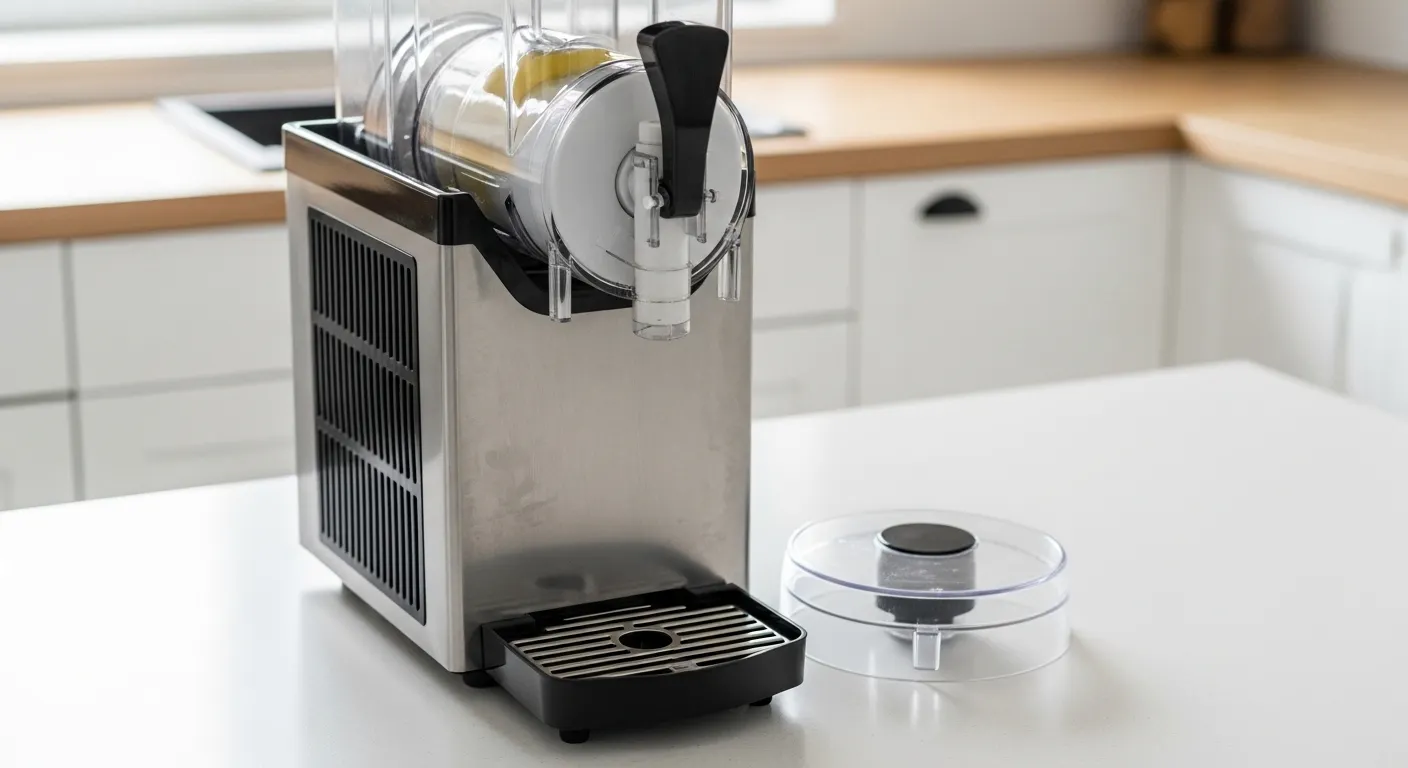
A food safe slushie machine is not safe just because the product page says “BPA-free.” For home use, the safer question is simple: which parts touch the drink, what are those parts made from, and can you clean them properly after each use?
The main things to check are the tank, auger, seal ring, spout, lid, drip tray, and any area where syrup, dairy, fruit pulp, or melted slush can sit. A good machine should make these areas easy to wash, inspect, dry, and reassemble.
What makes a slushie machine food safe?
A food safe slushie machine is one whose drink-contact parts are made from suitable food-contact materials and can be cleaned after use. Focus on the bowl, auger, seal ring, spout, drip tray, and any internal channels.
The outer shell matters less than the parts touching the drink. A shiny body or modern display does not prove the tank, gaskets, and spout are safe for repeated beverage contact. The FDA explains that food-contact substances can include materials used in packaging, processing equipment, and other surfaces that contact food. You can read more from the FDA food-contact substances guidance.
For a home buyer, food safety usually comes down to three things:
- The machine uses suitable materials for drink-contact areas.
- The drink-contact parts are removable or easy to access for cleaning.
- The manual gives clear washing, drying, and maintenance instructions.
- The product listing gives specific material details instead of vague claims.
If a product only says “food safe” but does not explain the bowl, seals, spout, or cleaning process, treat that claim carefully. Specific details are more useful than broad marketing wording.
Which food-contact parts should you check first?
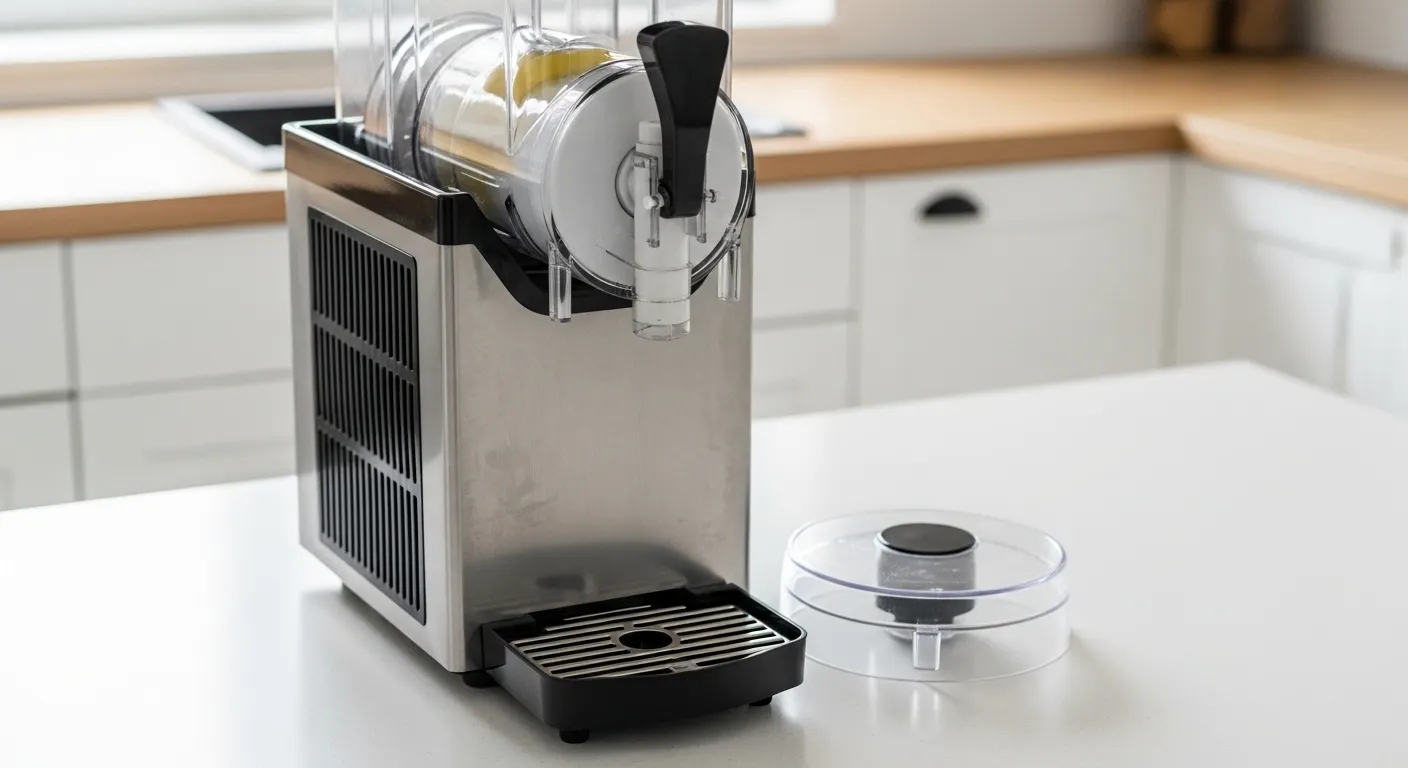
Before using or buying a slushie machine, look at every part that touches the drink. Sticky sugar, fruit pulp, dairy residue, and melted slush can sit in small areas if the design is hard to clean.
| Part | Why it matters | Safe sign | Red flag | What to do before use |
|---|---|---|---|---|
| Tank or bowl | It holds the drink for the longest time. | Clear material information and smooth cleanable surfaces. | Cloudy plastic, odor, cracks, or unclear material claims. | Wash before first use and inspect after cleaning. |
| Auger or stirrer | It moves syrup, ice crystals, pulp, and dairy. | Easy access for cleaning and no trapped residue. | Sticky buildup around the moving area. | Clean according to the manual after each use. |
| Seal ring or gasket | It can trap syrup and residue in tight gaps. | Removable or easy to inspect. | Cracks, smell, discoloration, or sticky edges. | Remove if allowed, wash, dry, and re-seat properly. |
| Spout | It is where liquid exits and residue often collects. | Detachable or flushable design. | Slow dripping, odor, or visible buildup. | Rinse and clean after every drink session. |
| Drip tray | It catches spilled sugary liquid. | Removable and washable. | Standing liquid or sticky surface. | Empty and wash after use. |
| Lid | It can touch splashes and condensation. | Smooth surface and easy washing. | Hidden grooves with residue. | Wash and dry before storage. |
If removable parts are a major buying concern, a separate guide on removable contact parts can help readers compare designs more closely.
Is BPA-free the same as food safe?
No, BPA-free is only one plastic-related claim. A safer buying check also looks for appropriate food-contact material descriptions, removable seals, cleanable surfaces, and washing guidance in the manual or product listing.
BPA-free can be helpful, but it does not automatically prove that the whole machine is suitable for safe drink use. It may only refer to one plastic part. It may not tell you anything about the seal ring, spout, auger, coating, tank durability, or cleaning design.
The FDA discusses BPA in food-contact applications through safety assessment, current exposure, and migration context. That means the real safety question is broader than one label. You can review the FDA’s BPA explanation on its BPA food-contact application page.
| Claim | What it helps answer | What it does not answer |
|---|---|---|
| BPA-free | Whether the named plastic avoids BPA. | Whether every drink-contact part is safe and cleanable. |
| Food-grade plastic | Whether the plastic is described for food contact. | Whether seals, spouts, and moving parts are also suitable. |
| Dishwasher-safe parts | Whether some parts can go in a dishwasher. | Whether all drink-contact areas are dishwasher-safe. |
| Food safe | A broad safety claim. | Which standard, material, part, or test supports the claim. |
The better listing is not the one with the loudest claim. It is the one that clearly names the parts, materials, cleaning method, and limits.
Why do stainless steel, silicone, and seals matter?
Material labels matter because different parts face different problems. The tank holds liquid for a long time. The auger keeps the mixture moving. The spout handles sticky syrup. The seal ring sits in a tight area where residue can hide.
Stainless steel components are often valued because they are corrosion-resistant and easier to clean when designed well. Silicone seal rings can be useful, but only if they are easy to remove, inspect, and dry. A seal that traps old syrup can create more hygiene concern than the main bowl.
Seal rings and gaskets deserve extra attention
Seals are small, but they can decide whether cleaning is easy or annoying. If the seal ring smells, cracks, turns sticky, or does not sit properly after washing, the machine should not be treated as ready for safe drink use.
- Check whether the seal ring is removable.
- Look for cracks, odor, stickiness, or discoloration.
- Dry the gasket fully before putting it back.
- Do not force a damaged seal back into place.
For readers comparing machines by cleaning access, a guide on removable seal design is a useful next step.
How should you clean a slushie machine after home use?
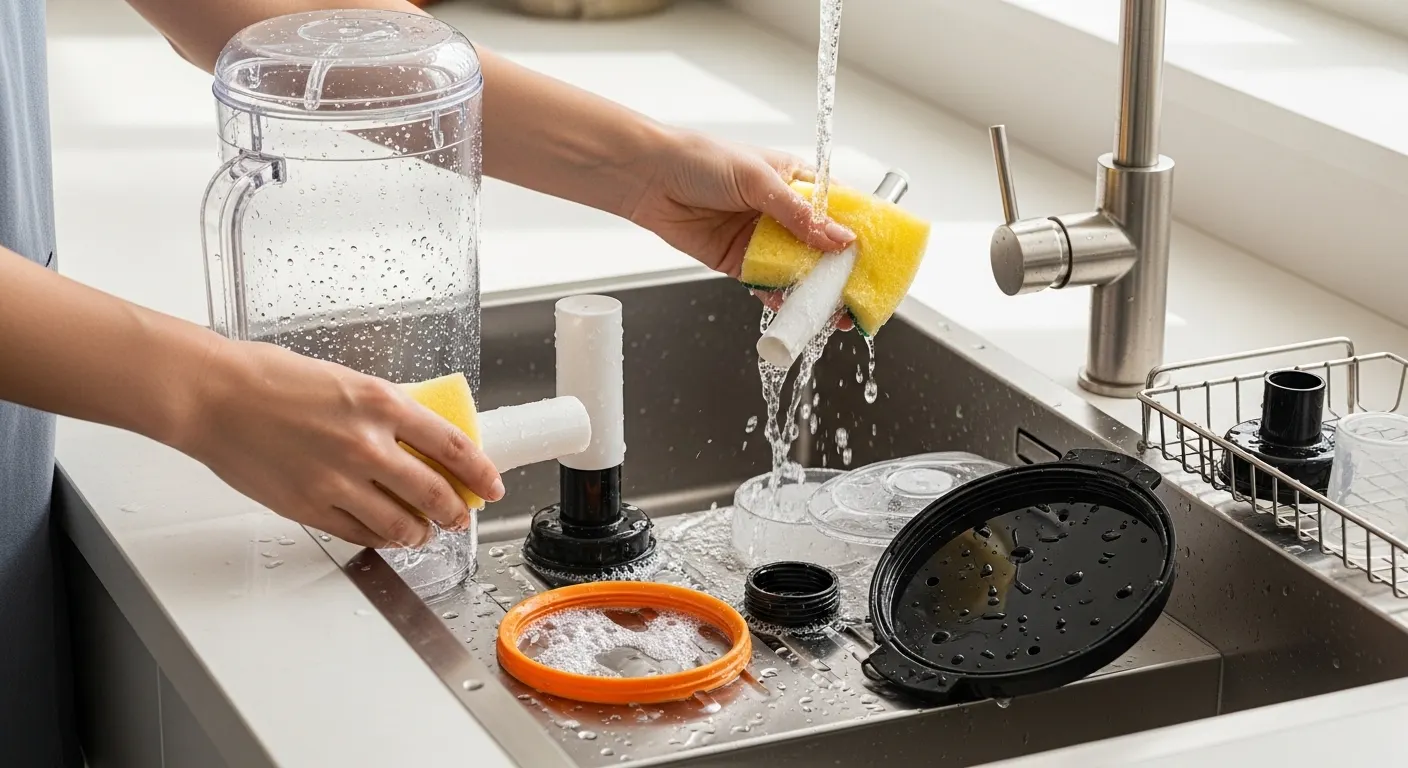
Clean first, then sanitize when needed. Rinse cycles help flush liquid residue, but removable drink-contact parts still need washing, inspection, drying, and safe reassembly so sugar or dairy residue does not remain trapped.
The USDA explains the basic idea as “clean then sanitize.” Cleaning removes dirt, grime, and some bacteria. Sanitizing after cleaning helps reduce remaining bacteria more effectively. You can read the USDA explanation here: Clean THEN Sanitize.
- Turn off and unplug the machine before cleaning, unless the manual gives another safe process.
- Empty leftover drink mix from the tank.
- Run the rinse cycle if the machine has one and the manual allows it.
- Remove washable parts such as the tank, lid, spout parts, seal ring, and drip tray.
- Wash allowed parts with warm soapy water.
- Inspect seals, spout openings, and corners for sticky residue.
- Sanitize after cleaning when needed or when the manual requires it.
- Air dry fully before reassembly and storage.
Food-contact surfaces should be cleaned as often as needed to protect against contamination, according to 21 CFR 110.35 sanitary operations. For home use, the practical rule is simple: do not let residue sit in the machine after a drink session.
If cleaning is a major buying factor, readers can compare design details in an easy cleaning routine guide.
What should you do with leftover mix or dairy-based drinks?
Leftover mix should not become a hidden storage problem inside the machine. For dairy-based drinks, remove and wash contact parts after use, then dry them fully before reassembly unless the manufacturer gives stricter instructions.
A slushie machine should not be treated like a storage container unless the manual clearly allows it. Juice, syrup, dairy, alcohol mixes, and children’s slush drinks each need slightly different caution.
| Situation | Main risk | Safe action | When to check the manual |
|---|---|---|---|
| Fruit juice slush | Pulp and sugar residue. | Empty, rinse, wash contact parts, and dry. | Always check for allowed ingredients and cleaning steps. |
| Dairy-based drink | Dairy residue and odor. | Clean soon after use and inspect seals and spout. | Check whether dairy drinks are supported. |
| Alcohol slush | Wrong mix ratio or poor freezing. | Use only if the machine supports alcohol mixes. | Check alcohol limits and recipe guidance. |
| Kids’ slush drinks | Ingredient concerns such as glycerol or E422. | Check labels and avoid unsupported mixes. | Check ingredient warnings before serving. |
| Leftover mix | Hidden residue inside tank, spout, or seals. | Store separately only if the mix label allows it. | Check whether the machine can hold mix between uses. |
Dairy, alcohol, and kids’ drinks need different caution
Dairy drinks need faster cleaning because creamy residue can sit in seals and spouts. Alcohol drinks should follow the machine’s allowed recipe range. For children’s slush ice drinks, ingredient labels matter too.
The Food Safety Authority of Ireland advises that slush ice drinks containing glycerol are not recommended for children aged ten and under. It also notes that consumers can check for glycerol or E422 on ingredient labels. Read the FSAI advice here: advice on slush ice drinks containing glycerol.
Which food-safety claims should you treat carefully when shopping?
Trust specific, checkable claims over broad labels. A listing that names materials, removable parts, dishwasher-safe items, and cleaning steps gives a buyer more useful safety evidence than vague wording like food safe or premium plastic.
This does not mean every simple listing is unsafe. It means the buyer should not rely on one attractive phrase. A better product page usually explains which parts are removable, which parts are dishwasher-safe, what the tank is made from, and how cleaning should be done.
| Product claim | How to read it | Better proof to look for |
|---|---|---|
| Food safe | Too broad by itself. | Named food-contact materials and cleaning instructions. |
| BPA-free | Useful, but limited. | Material details for the tank, lid, seals, spout, and auger. |
| Dishwasher-safe | Helpful only if it names the parts. | A list of which parts can go in the dishwasher. |
| Easy clean | Good idea, but often vague. | Removable tank, spout, seal ring, and drip tray. |
| Certified | Potentially useful, but needs detail. | Which product, part, market, or use case the claim applies to. |
One honest buying rule is this: BPA-free is not enough. It helps with one plastic concern, but safe daily use depends more on complete material information, cleanable seals, and access to the spout and tank.
What is the safe-use checklist before your first slush?
Before making the first drink, do a simple safety check. This matters most if the machine is new, has been stored for a long time, or will be used for dairy, fruit pulp, or children’s drinks.
- Read the manual before first use.
- Wash removable drink-contact parts before making a drink.
- Check the tank, auger, lid, spout, seal ring, and drip tray.
- Look for cracks, odor, sticky residue, or loose seals.
- Use only drink mixes allowed by the machine instructions.
- Do not treat the tank as long-term storage unless the manual allows it.
- Clean, dry, and reassemble parts after use.
- Check ingredient labels for glycerol or E422 when serving slush ice drinks to children.
After safety and cleaning are clear, readers can compare secondary buying factors like fast freezing safety and quiet home use. Those details matter, but they should come after material safety and cleaning access.
FAQs
What materials make a slushie machine food safe?
A food safe slushie machine uses drink-contact materials that are suitable for repeated contact with beverages and easy to clean. The most important areas are the tank, auger, seal ring, spout, lid, and drip tray because these parts touch liquid or residue.
Is BPA-free the same as food safe on a slushie machine?
No, BPA-free is not the same as fully food safe. It only addresses one plastic-related concern, while a safer machine also needs cleanable drink-contact parts, safe seals, clear material information, and maintenance instructions.
Do home slushie machines need NSF certification?
Most home buyers should not treat NSF-style certification as the only safety signal. It can be useful, especially for commercial use, but home safety still depends on food-contact materials, removable parts, proper cleaning, and following the manual.
Can I use a slushie machine for dairy-based drinks safely?
Yes, you can use dairy-based drinks only if the machine manual allows it and you clean drink-contact parts carefully after use. Dairy residue should not sit in the tank, spout, seals, or internal channels because it can create odor and hygiene problems.
How do you clean a slushie machine?
Clean a slushie machine by emptying it, rinsing residue, removing washable parts, washing with warm soapy water where the manual allows, then drying parts before reassembly. Sanitize after cleaning when the product instructions or use situation calls for it.
How do I know if a slush ice drink contains glycerol?
Check the ingredient label for glycerol or E422, and look for point-of-sale warnings where required. FSAI advises that slush ice drinks containing glycerol are not recommended for children aged ten and under.
Related Articles
How We Test Every Ice Maker Before Packaging
2026-09-15
BY YUMYTH
A step-by-step look at refrigerant handling, cooling verification, leak detection, corrective action and electrical safety testing For an ice maker, reliable performance is determined long before the carton is sealed. ...
Guide for Brands Looking for a Reliable Vacuum Sealer OEM Supplier
2026-09-14
BY YUMYTH
When you are sourcing kitchen appliances for your retail brand, finding a dependable vacuum sealer OEM supplier is rarely just about getting the lowest unit price. It is about protecting ...
Why Ice Shape Matters: Understanding 10mm × 15mm Cylindrical Nugget Ice
2026-09-14
BY YUMYTH
More Than Ice Production — The Ice Itself Shapes the Consumer Experience When sourcing a nugget ice maker, buyers often focus first on production capacity, water tank size, ice basket ...

Ice Maker Sourcing Guide: How to Find the Right Factory
2026-09-10
BY YUMYTH
Sourcing an ice maker looks straightforward on paper. Find a supplier, agree on a price, place an order. But anyone who has actually done this knows the process is rarely ...